


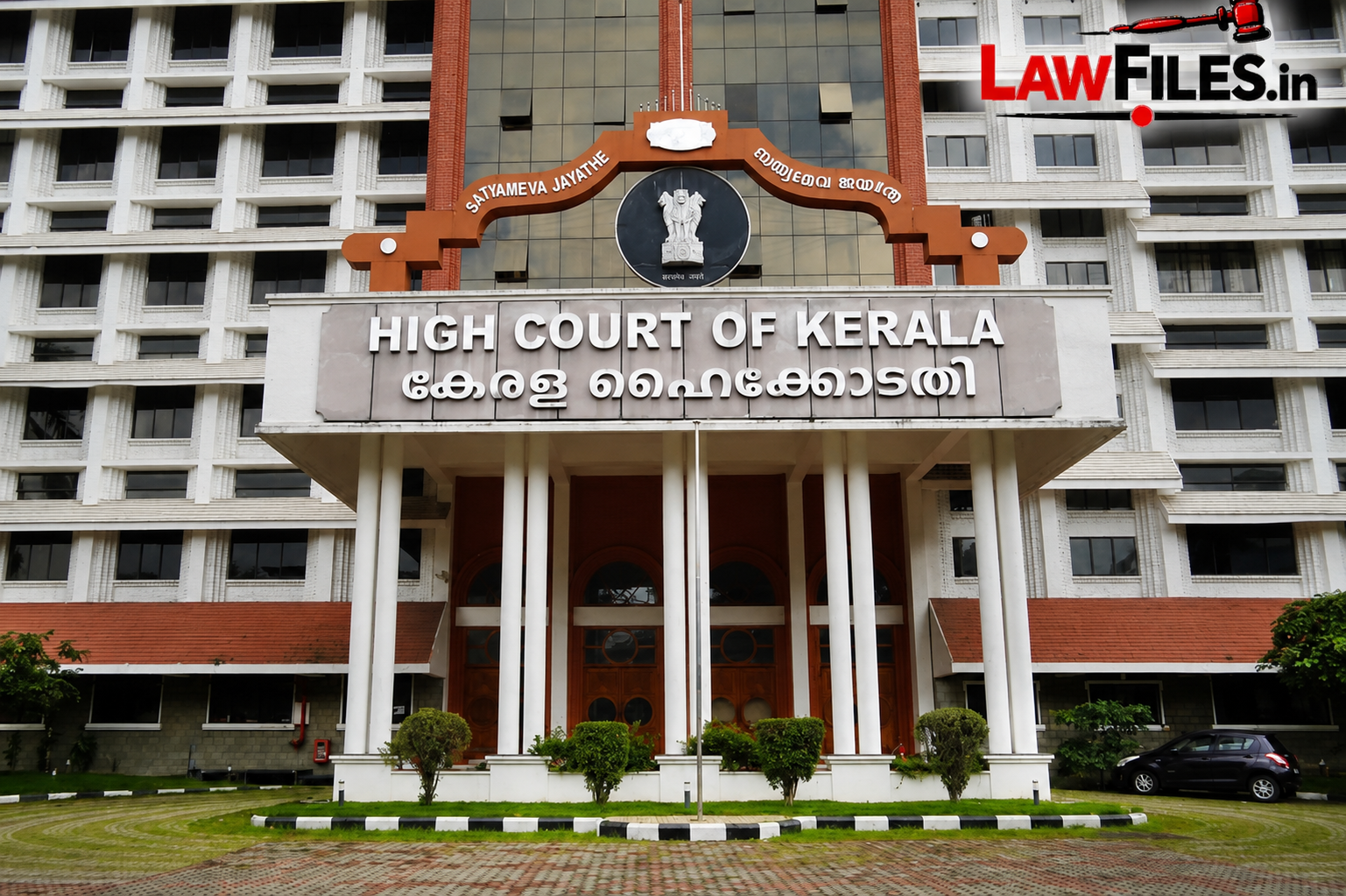
In an unexpected highly turn of events inside a courtroom, the Kerala High Court has ordered a full-scale registry probe, backed by CCTV analysis, to hunt down an anonymous advocate. The lawyer’s unauthorized approach to a six-year-old boy during a custody battle left the child deeply traumatized and effectively paralyzed a scheduled judicial interaction.
A Division Bench comprising Justice J. Nisha Banu and Justice Shoba Annamma Eapen took a deep view of the structural breach of ethics, noting that the unnamed lawyer’s actions seemed to carry suspicious undertones.
The Bench observed:
“The lawyer, who unauthorisedly approached the child in the court hall and showed the courage to convey the message to the child about the arrival of the father, has done great injustice to the court as well as to the minor child.”
In the judicial procedure which began in mid-morning during the family court hearing of Sreedhanya Bhaskaran v. Balakrishnan V.S .By Division Bench the mother was instructed to bring her six-year-old son to the court hall so the judges could sit down with him privately in the neutrality of their chambers for minor’s true comfort level, emotional state, and personal wishes away from the heavy, pressuring presence of either parent.
To guarantee that the boy felt entirely safe and uninhibited, the court had taken the deliberate step in its prior order to explicitly exempt the father from appearing that morning. By intentionally keeping the father out of the equation, the judges hoped to create a secure atmosphere for the child. Court records show that the plan was working perfectly at first. By around 11:45 AM, the six-year-old was sitting quietly in the very last row of the court hall alongside his mother and her legal team. Witnesses later recalled that the little boy was visibly happy, energetic, and completely at ease, showing no signs of the distress that was about to ambush him.
The peaceful atmosphere shattered when an unidentified male advocate breached professional boundaries and approached the child’s seating area. Seizing a moment when the mother’s attention was likely divided, this stranger leaned over the back row, got close to the six-year-old, and quietly whispered a targeted message (that his father had arrived and was waiting for him downstairs). The efficiency of the act pointed to a calculated move by invoking the father’s presence, the intruder introduced the exact element of anxiety the judges had explicitly tried to protect the child from experiencing.
The rogue lawyer’s covert operation was cut when an alert junior advocate working with the mother’s legal counsel noticed the strange interaction. Stepping in immediately, the junior lawyer confronted the stranger, firmly demanding to know his name, which party he represented, and exactly why he was speaking to a minor child under the court’s care. Caught red-handed, the unidentified advocate instantly panicked. Refusing to utter a single word of explanation, he turned on his heel and fled the court hall in a rush. He bolted straight toward the building’s public transport corridor, utilizing a nearby escalator to escape upward to the second floor, disappearing into the crowded hallways of the complex before security could intercept him.
The psychological impact on the little boy was immediate and devastating. When the judges called him into their chambers shortly after the encounter, the previously cheerful child was trembling, crying uncontrollably, and suffering from severe anxiety. He froze in terror and absolutely refused to separate from his mother.
The judges noted that because of the child’s acute emotional destabilization, they were completely unable to conduct their planned evaluation. Left with no choice, the Bench directed the mother to take the weeping child home immediately to protect his mental well-being.
The Bench remarked with heavy disappointment:
“But for the said incident, the child would have remained comfortable, and we could have interacted with him to arrive at a proper conclusion.”
Recognizing that the courtroom ambush had entirely destabilized the child’s emotional equilibrium, the High Court moved swiftly to insulate him from further trauma. The Division Bench immediately modified the immediate ruling that temporary interim custody would remain strictly and exclusively with the mother for the foreseeable future. The judges made it clear that after such a severe psychological shock within the geographic confines of the court itself, the child’s immediate need for stability and a sense of absolute safety took precedence all other procedural considerations.
To justify this firm stance, the Bench explicitly examined into the existing case history, recalling highly telling observations already documented in the case file. The judges pointed to a documented pattern of behavior showing that while the six-year-old was consistently happy, relaxed, and perfectly at ease when under his mother’s care, his behaviour shifted drastically in the presence of his father. Past evaluations had shown that the boy regularly exhibited intense fear, and deep-seated anxiety whenever the father attempted to approach or interact with him. The Bench reasoned, directly triggered those exact deep-rooted fears.
Behind the scenes, the machinery of the High Court has shifted into an active investigation. The High Court Registry is currently spearheading a meticulous inquiry to definitively unmask the rogue advocate. Technical teams are combing through timestamped logs of the courtroom’s video-conferencing streams, matching them frame-by-frame with public-area CCTV footage tracking the escalator routes and corridor exits on the second floor. Simultaneously, institutional pressure is being applied as the Registry coordinates with the Bar Council of Kerala and the Kerala High Court Advocates’ Association (KHCAA) to run facial identification checks against their registered member databases.
With the initial groundwork laid and the child safely removed from the environment, the Bench has officially adjourned the matter, scheduling a high-stakes follow-up hearing for June 19, 2026. This upcoming session is expected to be a reckoning for the legal fraternity. Once the Registry tables its final investigative report and names the individual responsible, the identified lawyer will almost certainly face a barrage of severe disciplinary measures. Because the act was a physical disruption of a scheduled judicial interaction, the court is expected to initiate suo motu criminal contempt proceedings for a deliberate, bad-faith interference with the administration of justice.
