

Close Menu
LawFilesLawFiles

    Subscribe to Updates

    Get the latest creative news from FooBar about art, design and business.

    What's Hot

    Advocacy Is Not Influencing, It Is a Public Trust: Bar Council of India Draws Ethical Boundaries for Lawyers in the Age of Social Media

    July 18, 2026

    ‘No Passenger Is Second-Class in a Constitutional Democracy’: Supreme Court Urges Railways to Curb Overcrowding, Reconsider Terminology and Strengthen Passenger Safety

    July 18, 2026

    Electoral Exclusion Is Not Citizenship Determination: Supreme Court Reaffirms Constitutional Limits on Election Commission’s Powers in West Bengal SIR Proceedings

    July 17, 2026
    Facebook X (Twitter) Instagram Threads
    Sunday, July 19
    LawFilesLawFiles
    Facebook X (Twitter)
    • Home
      • Who We Are
      • Our Mission
      • Advisory board
      • Contact US
    • Supreme Court
    • High Courts
      • Gujarat High Court
      • Jharkhand High Court
      • Rajasthan High Court
      • Karnataka High Court
      • Andhra Pradesh High Court
      • Allahabad High Court
      • Himachal Pradesh High Court
      • Chhattisgarh High Court
      • Jammu & Kashmir and Ladakh High Court
      • Kerala High Court
      • Punjab and Haryana High Court
      • Patna High Court
      • Madhya Pradesh High Court
      • Madras High Court
      • Bombay High Court
      • Orissa High Court
      • Calcutta High Court
      • Meghalaya High Court
      • Delhi High Court
      • Manipur High Court
      • Gauhati High Court
    • Corporate
    • Taxation Laws
      • Income Tax
      • GST
      • Customs & Excise
    • Global Affairs
    • Articles
      • Sitting Judge’s’ Views
      • Senior Advocate
      • Policy Analysis
      • Tax Expert
    • PILS
      • Free/Affordable Legal Aid
      • PIL Cell
      • Law student Volunteer Cell (research & Drafting)
      • NGO & Legal services Authority Tie-ups
      • Online Legal Formats
      • Online Legal Help Form
    Subscribe Premium
    LawFilesLawFiles
    Home»Political News»“SC Raises Red Flags Over NGO’s Standing in Sabarimala Case, Signals Tighter PIL Scrutiny”
    Political News

    “SC Raises Red Flags Over NGO’s Standing in Sabarimala Case, Signals Tighter PIL Scrutiny”

    Anvita DwivediBy Anvita DwivediMay 5, 2026No Comments4 Mins Read
    WhatsApp Facebook Twitter Copy Link
    Share
    Facebook Twitter Pinterest Copy Link WhatsApp

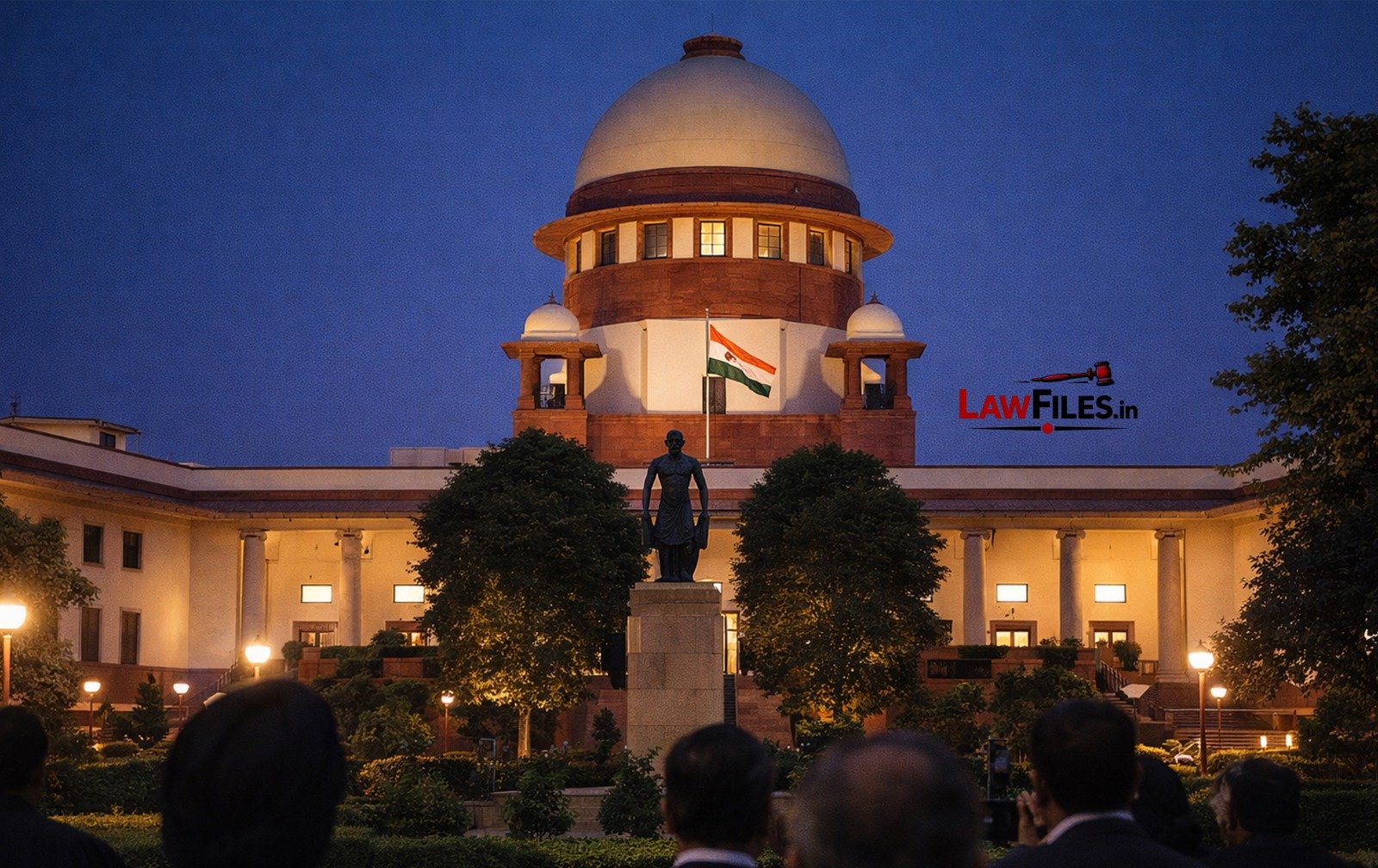
    In a sharply worded exchange during the ongoing Sabarimala reference hearings, the Supreme Court of India questioned the very foundation and purpose of a Public Interest Litigation (PIL) filed by the Indian Young Lawyers’ Association, which had originally sought the entry of women into the Sabarimala temple. The Court’s remarks signal a deeper judicial unease with the evolving nature of PIL jurisprudence, particularly where such petitions intersect with questions of faith, standing, and institutional legitimacy.

    The controversy traces back to the 2006 PIL that eventually culminated in the landmark 2018 judgment permitting women of all ages to enter the Sabarimala temple. That verdict, grounded in constitutional principles of equality and non-discrimination, marked a transformative moment in Indian constitutional law. However, the present proceedings before a nine-judge Constitution Bench are not concerned with the correctness of that verdict per se, but with broader questions relating to the interplay between religious freedom and other fundamental rights.

    During the hearing, the Court subjected the very maintainability of the original PIL to scrutiny. It questioned how an organisation, as a juristic entity, could claim a right to worship or assert standing in matters intrinsically linked to religious belief. Justice B.V. Nagarathna, in particular, posed pointed questions to the counsel, asking what tangible outcome had emerged from the PIL and why it was filed at all. The Bench also raised concerns regarding whether the petitioning body represented genuine devotees or was acting on abstract or external considerations.

    The Court’s critique extended beyond mere standing. It highlighted that the PIL had been instituted on the basis of newspaper reports and without demonstrable institutional backing, including the absence of a formal board resolution. Such observations indicate a possible characterisation of the petition as an abuse of process, raising serious concerns about the threshold for invoking the Court’s extraordinary jurisdiction under Article 32.

    Further amplifying its scepticism, the Bench questioned the broader trend of PILs being used as instruments of publicity, political positioning, or ideological assertion rather than genuine public interest. In related observations reported during the hearing, the Court remarked that PILs have increasingly transformed into vehicles of “publicity, paisa, and political interest litigation,” reflecting a systemic concern about misuse of this otherwise vital constitutional tool.

    This judicial discomfort is doctrinally significant. Public Interest Litigation, historically conceived as a mechanism to expand access to justice and protect the rights of marginalised groups, has over time undergone both expansion and dilution. The present remarks of the Court suggest a recalibration an attempt to restore doctrinal discipline by insisting on genuine locus standi, credible material, and demonstrable public interest.

    The Court’s interrogation also intersects with a deeper constitutional question: who has the authority to challenge religious practices? The Bench’s queries suggest a cautious approach toward allowing non-believers or unconnected entities to litigate issues of faith. This aligns with emerging judicial thought that religious autonomy under Articles 25 and 26 must be balanced against external interventions, particularly where the petitioner lacks a proximate or genuine connection to the faith in question.

    At a critical level, the Court’s remarks may be read as a subtle reconsideration of the procedural pathway through which the Sabarimala issue reached constitutional adjudication. While the substantive outcome of the 2018 judgment remains a milestone for gender equality, the present scrutiny raises questions about whether the process itself met the rigorous standards expected of PIL litigation. This distinction between substantive justice and procedural legitimacy is central to the Court’s evolving reasoning.

    However, the implications of such an approach are complex. On one hand, stricter scrutiny of PILs may prevent frivolous or motivated litigation and preserve judicial resources. On the other, an overly restrictive approach could potentially deter genuine public-spirited interventions, especially in cases where affected individuals may lack the capacity or resources to approach the Court directly.

    Ultimately, the proceedings reflect a moment of introspection within Indian constitutional jurisprudence. The Supreme Court appears to be re-examining not just the boundaries of religious freedom, but also the procedural architecture through which such questions are brought before it. By questioning the very premise of the Sabarimala PIL, the Court is signalling that the legitimacy of constitutional adjudication depends as much on the integrity of the process as on the correctness of the outcome.


    “SC Raises Red Flags Over NGO’s Standing in Sabarimala Case Signals Tighter PIL Scrutiny”
    Share. WhatsApp Facebook Twitter Pinterest Email
    Anvita Dwivedi

    Related Posts

    Advocacy Is Not Influencing, It Is a Public Trust: Bar Council of India Draws Ethical Boundaries for Lawyers in the Age of Social Media

    July 18, 2026

    ‘No Passenger Is Second-Class in a Constitutional Democracy’: Supreme Court Urges Railways to Curb Overcrowding, Reconsider Terminology and Strengthen Passenger Safety

    July 18, 2026

    Electoral Exclusion Is Not Citizenship Determination: Supreme Court Reaffirms Constitutional Limits on Election Commission’s Powers in West Bengal SIR Proceedings

    July 17, 2026
    Add A Comment
    Leave A Reply Cancel Reply

    Demo
    Top Posts

    Digital Forensics Fail to convince Supreme Court: Bail Denied to Gagan Khanna in BNS Assault Case

    June 15, 2026246 Views

    Wrongful Claim Rejection Amounts to Deficiency in Service: Delhi Consumer Commission Holds Star Health Liable

    March 16, 202673 Views

    Banking Negligence and Consumer Accountability: Supreme Court Reinforces Duty of Care in Cheque Handling

    April 16, 202668 Views

    Bombay High Court Quashes POCSO Case, Directs Accused to Fund MacBook for Victim’s Education

    February 28, 202662 Views
    Don't Miss

    Advocacy Is Not Influencing, It Is a Public Trust: Bar Council of India Draws Ethical Boundaries for Lawyers in the Age of Social Media

    By Anvita DwivediJuly 18, 2026

    In one of the most significant regulatory interventions concerning the legal profession in the digital…

    ‘No Passenger Is Second-Class in a Constitutional Democracy’: Supreme Court Urges Railways to Curb Overcrowding, Reconsider Terminology and Strengthen Passenger Safety

    July 18, 2026

    Electoral Exclusion Is Not Citizenship Determination: Supreme Court Reaffirms Constitutional Limits on Election Commission’s Powers in West Bengal SIR Proceedings

    July 17, 2026

    Witness Protection, Fair Trial and Investigative Neutrality: Supreme Court Records UP Police Report Clearing Ashish Mishra and Ajay Mishra in Separate Witness Intimidation Probe

    July 16, 2026
    Stay In Touch
    • Facebook
    • Twitter

    Subscribe to Updates

    Get the latest creative news from SmartMag about art & design.

    Top Posts

    Digital Forensics Fail to convince Supreme Court: Bail Denied to Gagan Khanna in BNS Assault Case

    June 15, 2026246 Views

    Wrongful Claim Rejection Amounts to Deficiency in Service: Delhi Consumer Commission Holds Star Health Liable

    March 16, 202673 Views

    Banking Negligence and Consumer Accountability: Supreme Court Reinforces Duty of Care in Cheque Handling

    April 16, 202668 Views
    Don't Miss

    Advocacy Is Not Influencing, It Is a Public Trust: Bar Council of India Draws Ethical Boundaries for Lawyers in the Age of Social Media

    By Anvita DwivediJuly 18, 2026

    In one of the most significant regulatory interventions concerning the legal profession in the digital…

    ‘No Passenger Is Second-Class in a Constitutional Democracy’: Supreme Court Urges Railways to Curb Overcrowding, Reconsider Terminology and Strengthen Passenger Safety

    July 18, 2026

    Electoral Exclusion Is Not Citizenship Determination: Supreme Court Reaffirms Constitutional Limits on Election Commission’s Powers in West Bengal SIR Proceedings

    July 17, 2026

    Witness Protection, Fair Trial and Investigative Neutrality: Supreme Court Records UP Police Report Clearing Ashish Mishra and Ajay Mishra in Separate Witness Intimidation Probe

    July 16, 2026
    Stay In Touch
    • Facebook
    • YouTube
    • TikTok
    • Instagram
    Top Trending
    About Us
    About Us

    LawFiles.in is a comprehensive legal news platform delivering real-time updates from the Supreme Court, High Courts, Tribunals, Corporate and Tax law, Regulators, Politics, Crime, Consumer cases, and Global Affairs.

    Email Us: lawfilesoffical@gmail.com
    Contact: +91 8800026066

    Contact Us:
    India International Centre
    40, Max Mueller Marg
    Lodhi Estate, New Delhi-110003

    Facebook X (Twitter)
    Our Picks

    Advocacy Is Not Influencing, It Is a Public Trust: Bar Council of India Draws Ethical Boundaries for Lawyers in the Age of Social Media

    July 18, 2026

    ‘No Passenger Is Second-Class in a Constitutional Democracy’: Supreme Court Urges Railways to Curb Overcrowding, Reconsider Terminology and Strengthen Passenger Safety

    July 18, 2026

    Electoral Exclusion Is Not Citizenship Determination: Supreme Court Reaffirms Constitutional Limits on Election Commission’s Powers in West Bengal SIR Proceedings

    July 17, 2026

    Witness Protection, Fair Trial and Investigative Neutrality: Supreme Court Records UP Police Report Clearing Ashish Mishra and Ajay Mishra in Separate Witness Intimidation Probe

    July 16, 2026

    Remission Is a Constitutional Process, Not an Automatic Right: Supreme Court Directs Odisha Government to Decide Dara Singh’s Premature Release Plea in Graham Staines Murder Case

    July 15, 2026
    Most Popular

    Supreme Court Rules Limitation Period Under CrPC Starts When Offender’s Identity Is Known, Not From First Complaint

    February 27, 20260 Views

    Maharashtra State Consumer Commission Slams HP Employees’ Co-operative Credit Society for Enforcing Undisclosed Restriction, Orders Refund with Interest and Compensation

    March 2, 20260 Views

    Repeated Vehicle Defects Amount to Deficiency in Service: Chandigarh Consumer Commission Awards ₹4 Lakh Compensation to Ford Owner

    March 9, 20260 Views

    Order VI Rule 17 Proviso Not Applicable to Pre-2002 Suits: Allahabad High Court Allows Amendment in 1997 Plaint

    March 9, 20260 Views

    India’s Tribunal Crisis: Supreme Court Questions Who Guards the Guardians

    March 10, 20260 Views
    © 2026 LawFiles. Owned by Varta24 Media.
    • Articles
    • Careers
    • Corporate
    • Global Affairs
    • Law Firms & Lawyers
    • PILS
    • Regulatory

    Type above and press Enter to search. Press Esc to cancel.