

Close Menu
LawFilesLawFiles

    Subscribe to Updates

    Get the latest creative news from FooBar about art, design and business.

    What's Hot

    Advocacy Is Not Influencing, It Is a Public Trust: Bar Council of India Draws Ethical Boundaries for Lawyers in the Age of Social Media

    July 18, 2026

    ‘No Passenger Is Second-Class in a Constitutional Democracy’: Supreme Court Urges Railways to Curb Overcrowding, Reconsider Terminology and Strengthen Passenger Safety

    July 18, 2026

    Electoral Exclusion Is Not Citizenship Determination: Supreme Court Reaffirms Constitutional Limits on Election Commission’s Powers in West Bengal SIR Proceedings

    July 17, 2026
    Facebook X (Twitter) Instagram Threads
    Saturday, July 18
    LawFilesLawFiles
    Facebook X (Twitter)
    • Home
      • Who We Are
      • Our Mission
      • Advisory board
      • Contact US
    • Supreme Court
    • High Courts
      • Gujarat High Court
      • Jharkhand High Court
      • Rajasthan High Court
      • Karnataka High Court
      • Andhra Pradesh High Court
      • Allahabad High Court
      • Himachal Pradesh High Court
      • Chhattisgarh High Court
      • Jammu & Kashmir and Ladakh High Court
      • Kerala High Court
      • Punjab and Haryana High Court
      • Patna High Court
      • Madhya Pradesh High Court
      • Madras High Court
      • Bombay High Court
      • Orissa High Court
      • Calcutta High Court
      • Meghalaya High Court
      • Delhi High Court
      • Manipur High Court
      • Gauhati High Court
    • Corporate
    • Taxation Laws
      • Income Tax
      • GST
      • Customs & Excise
    • Global Affairs
    • Articles
      • Sitting Judge’s’ Views
      • Senior Advocate
      • Policy Analysis
      • Tax Expert
    • PILS
      • Free/Affordable Legal Aid
      • PIL Cell
      • Law student Volunteer Cell (research & Drafting)
      • NGO & Legal services Authority Tie-ups
      • Online Legal Formats
      • Online Legal Help Form
    Subscribe Premium
    LawFilesLawFiles
    Home»High Courts»Delhi High Court’s Deepfake Takedown Order in Bhuvan Bam Case: Towards a Coherent Doctrine of Personality Rights in the Age of AI
    High Courts

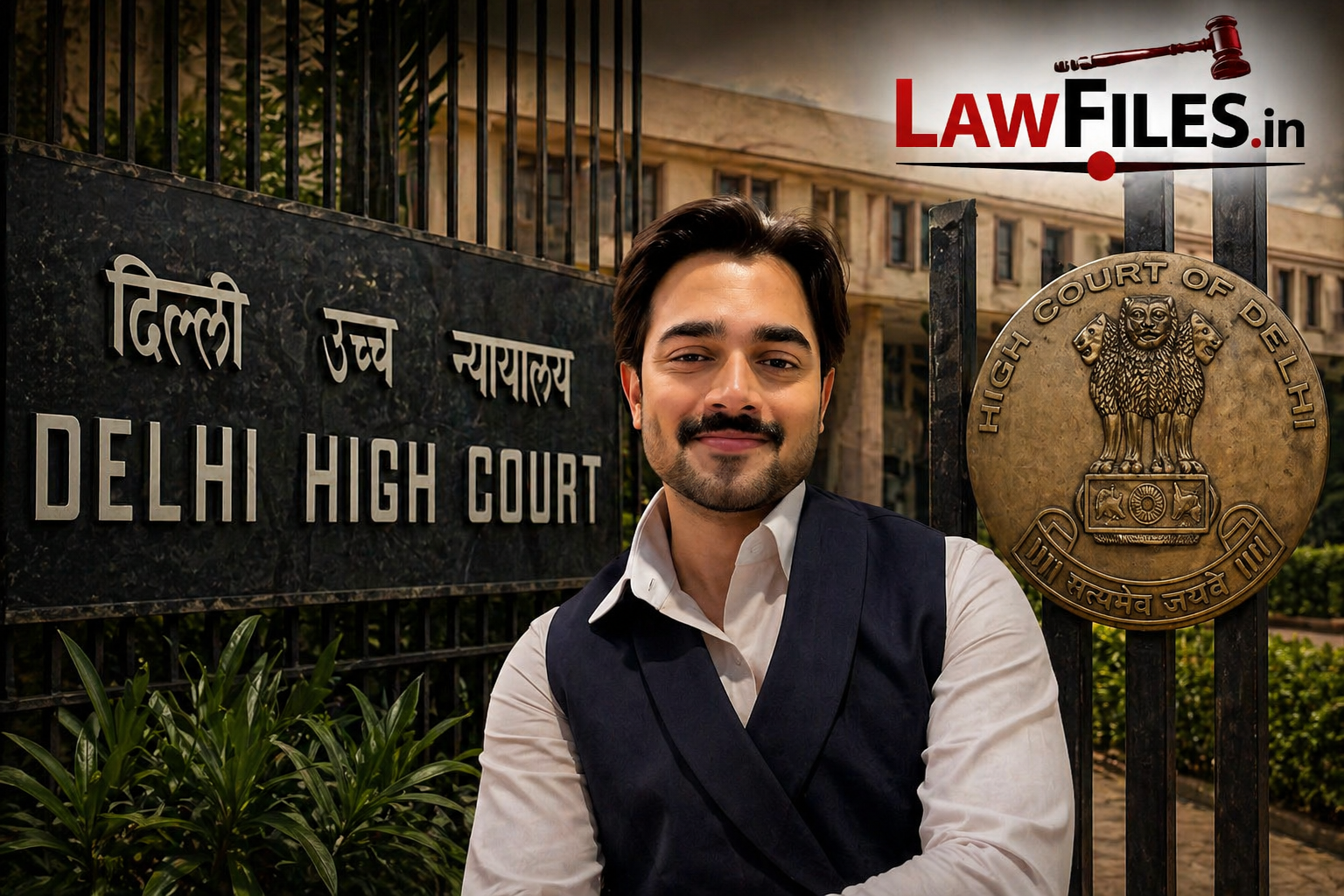
    Delhi High Court’s Deepfake Takedown Order in Bhuvan Bam Case: Towards a Coherent Doctrine of Personality Rights in the Age of AI

    Anvita DwivediBy Anvita DwivediApril 30, 2026No Comments4 Mins Read
    WhatsApp Facebook Twitter Copy Link
    Share
    Facebook Twitter Pinterest Copy Link WhatsApp

    The Delhi High Court’s recent intervention in the plea filed by digital creator Bhuvan Bam marks another significant step in India’s evolving jurisprudence on personality rights in the era of artificial intelligence and deepfake technology. The case, arising from the unauthorised circulation of manipulated content using Bam’s likeness, situates itself within a broader judicial trend increasingly attentive to the intersection of technology, identity, and legal protection.

    At the heart of the dispute lies the unauthorised use of Bam’s name, image, and persona across digital platforms often through AI-generated or morphed content capable of misleading viewers. The Court, recognising the prima facie harm caused by such misuse, directed the removal of objectionable material, thereby reaffirming that digital impersonation can amount to a violation of personality and publicity rights. This aligns with the judiciary’s consistent concern that deepfake content not only infringes proprietary aspects of identity but also risks reputational harm and public deception.

    However, what renders the present case particularly significant is not merely the grant of takedown relief, but the Court’s cautious approach toward granting expansive, omnibus protection over personality rights at an interim stage. By deferring a conclusive determination on the broader contours of such rights, the Court implicitly acknowledges the doctrinal fluidity of personality rights within Indian law an area still largely shaped through judicial innovation rather than comprehensive statutory codification.

    This restrained judicial posture must be read alongside a series of recent rulings where the Delhi High Court has grappled with similar claims. In matters involving figures such as Swami Ramdev and Gautam Gambhir, the Court has unequivocally condemned the use of AI-generated deepfakes and fake endorsements, recognising them as prima facie violations of personality and publicity rights. Likewise, in cases involving actors and public personalities, the judiciary has shown a willingness to intervene where digital manipulation threatens to distort identity or exploit goodwill for commercial gain.

    Yet, the Bam case reveals a subtle but crucial tension: the need to balance personality rights against competing constitutional values such as freedom of speech and expression. Courts have repeatedly emphasised that not every use of a public figure’s image warrants restraint only those that are misleading, defamatory, or commercially exploitative justify judicial interference. This distinction becomes increasingly complex in the context of parody, satire, and user-generated content, where the boundaries between legitimate expression and unlawful appropriation are often blurred.

    From a doctrinal standpoint, personality rights in India continue to draw from a hybrid foundation rooted in the right to privacy under Article 21, passing off principles in trademark law, and evolving notions of publicity rights. The absence of a dedicated statutory framework leaves courts to engage in case-by-case adjudication, leading to incremental but uneven development of the law. The Bam litigation underscores this gap, particularly in addressing technologically sophisticated harms such as deepfakes, which traditional legal categories struggle to fully capture.

    Critically, the case also foregrounds the role of intermediaries and digital platforms. While courts have directed takedown of infringing content, the question of proactive monitoring obligations and platform liability remains underdeveloped. As deepfake technology becomes more accessible, reactive remedies may prove insufficient, necessitating a shift toward regulatory accountability and algorithmic governance.

    In analytical terms, the Delhi High Court’s approach reflects a cautious pragmatism. Rather than articulating sweeping principles, it prefers targeted relief removal of specific infringing content while leaving broader doctrinal questions open. This incrementalism may be justified given the rapidly evolving technological landscape, yet it also signals the urgent need for legislative intervention to provide clarity and consistency.

    Ultimately, the Bhuvan Bam case is emblematic of a larger legal transition. It highlights how courts are increasingly called upon to safeguard identity in a digital ecosystem where the boundaries of the self can be technologically manipulated and commercially exploited. The jurisprudence emerging from these cases suggests a gradual recognition of personality as a legally protectable asset one that demands both immediate remedial protection and long-term normative structuring.

    As India confronts the challenges posed by generative AI, the trajectory set by the Delhi High Court indicates an emerging rights-based framework tentative yet responsive seeking to reconcile innovation with the preservation of individual dignity in the digital age.

    Delhi High Court’s Deepfake Takedown Order in Bhuvan Bam Case Towards a Coherent Doctrine of Personality Rights in the Age of AI
    Share. WhatsApp Facebook Twitter Pinterest Email
    Anvita Dwivedi

    Related Posts

    Advocacy Is Not Influencing, It Is a Public Trust: Bar Council of India Draws Ethical Boundaries for Lawyers in the Age of Social Media

    July 18, 2026

    ‘No Passenger Is Second-Class in a Constitutional Democracy’: Supreme Court Urges Railways to Curb Overcrowding, Reconsider Terminology and Strengthen Passenger Safety

    July 18, 2026

    Electoral Exclusion Is Not Citizenship Determination: Supreme Court Reaffirms Constitutional Limits on Election Commission’s Powers in West Bengal SIR Proceedings

    July 17, 2026
    Add A Comment
    Leave A Reply Cancel Reply

    Demo
    Top Posts

    Digital Forensics Fail to convince Supreme Court: Bail Denied to Gagan Khanna in BNS Assault Case

    June 15, 2026245 Views

    Wrongful Claim Rejection Amounts to Deficiency in Service: Delhi Consumer Commission Holds Star Health Liable

    March 16, 202673 Views

    Banking Negligence and Consumer Accountability: Supreme Court Reinforces Duty of Care in Cheque Handling

    April 16, 202668 Views

    Bombay High Court Quashes POCSO Case, Directs Accused to Fund MacBook for Victim’s Education

    February 28, 202662 Views
    Don't Miss

    Advocacy Is Not Influencing, It Is a Public Trust: Bar Council of India Draws Ethical Boundaries for Lawyers in the Age of Social Media

    By Anvita DwivediJuly 18, 2026

    In one of the most significant regulatory interventions concerning the legal profession in the digital…

    ‘No Passenger Is Second-Class in a Constitutional Democracy’: Supreme Court Urges Railways to Curb Overcrowding, Reconsider Terminology and Strengthen Passenger Safety

    July 18, 2026

    Electoral Exclusion Is Not Citizenship Determination: Supreme Court Reaffirms Constitutional Limits on Election Commission’s Powers in West Bengal SIR Proceedings

    July 17, 2026

    Witness Protection, Fair Trial and Investigative Neutrality: Supreme Court Records UP Police Report Clearing Ashish Mishra and Ajay Mishra in Separate Witness Intimidation Probe

    July 16, 2026
    Stay In Touch
    • Facebook
    • Twitter

    Subscribe to Updates

    Get the latest creative news from SmartMag about art & design.

    Top Posts

    Digital Forensics Fail to convince Supreme Court: Bail Denied to Gagan Khanna in BNS Assault Case

    June 15, 2026245 Views

    Wrongful Claim Rejection Amounts to Deficiency in Service: Delhi Consumer Commission Holds Star Health Liable

    March 16, 202673 Views

    Banking Negligence and Consumer Accountability: Supreme Court Reinforces Duty of Care in Cheque Handling

    April 16, 202668 Views
    Don't Miss

    Advocacy Is Not Influencing, It Is a Public Trust: Bar Council of India Draws Ethical Boundaries for Lawyers in the Age of Social Media

    By Anvita DwivediJuly 18, 2026

    In one of the most significant regulatory interventions concerning the legal profession in the digital…

    ‘No Passenger Is Second-Class in a Constitutional Democracy’: Supreme Court Urges Railways to Curb Overcrowding, Reconsider Terminology and Strengthen Passenger Safety

    July 18, 2026

    Electoral Exclusion Is Not Citizenship Determination: Supreme Court Reaffirms Constitutional Limits on Election Commission’s Powers in West Bengal SIR Proceedings

    July 17, 2026

    Witness Protection, Fair Trial and Investigative Neutrality: Supreme Court Records UP Police Report Clearing Ashish Mishra and Ajay Mishra in Separate Witness Intimidation Probe

    July 16, 2026
    Stay In Touch
    • Facebook
    • YouTube
    • TikTok
    • Instagram
    Top Trending
    About Us
    About Us

    LawFiles.in is a comprehensive legal news platform delivering real-time updates from the Supreme Court, High Courts, Tribunals, Corporate and Tax law, Regulators, Politics, Crime, Consumer cases, and Global Affairs.

    Email Us: lawfilesoffical@gmail.com
    Contact: +91 8800026066

    Contact Us:
    India International Centre
    40, Max Mueller Marg
    Lodhi Estate, New Delhi-110003

    Facebook X (Twitter)
    Our Picks

    Advocacy Is Not Influencing, It Is a Public Trust: Bar Council of India Draws Ethical Boundaries for Lawyers in the Age of Social Media

    July 18, 2026

    ‘No Passenger Is Second-Class in a Constitutional Democracy’: Supreme Court Urges Railways to Curb Overcrowding, Reconsider Terminology and Strengthen Passenger Safety

    July 18, 2026

    Electoral Exclusion Is Not Citizenship Determination: Supreme Court Reaffirms Constitutional Limits on Election Commission’s Powers in West Bengal SIR Proceedings

    July 17, 2026

    Witness Protection, Fair Trial and Investigative Neutrality: Supreme Court Records UP Police Report Clearing Ashish Mishra and Ajay Mishra in Separate Witness Intimidation Probe

    July 16, 2026

    Remission Is a Constitutional Process, Not an Automatic Right: Supreme Court Directs Odisha Government to Decide Dara Singh’s Premature Release Plea in Graham Staines Murder Case

    July 15, 2026
    Most Popular

    Supreme Court Rules Limitation Period Under CrPC Starts When Offender’s Identity Is Known, Not From First Complaint

    February 27, 20260 Views

    Maharashtra State Consumer Commission Slams HP Employees’ Co-operative Credit Society for Enforcing Undisclosed Restriction, Orders Refund with Interest and Compensation

    March 2, 20260 Views

    Repeated Vehicle Defects Amount to Deficiency in Service: Chandigarh Consumer Commission Awards ₹4 Lakh Compensation to Ford Owner

    March 9, 20260 Views

    Order VI Rule 17 Proviso Not Applicable to Pre-2002 Suits: Allahabad High Court Allows Amendment in 1997 Plaint

    March 9, 20260 Views

    India’s Tribunal Crisis: Supreme Court Questions Who Guards the Guardians

    March 10, 20260 Views
    © 2026 LawFiles. Owned by Varta24 Media.
    • Articles
    • Careers
    • Corporate
    • Global Affairs
    • Law Firms & Lawyers
    • PILS
    • Regulatory

    Type above and press Enter to search. Press Esc to cancel.