


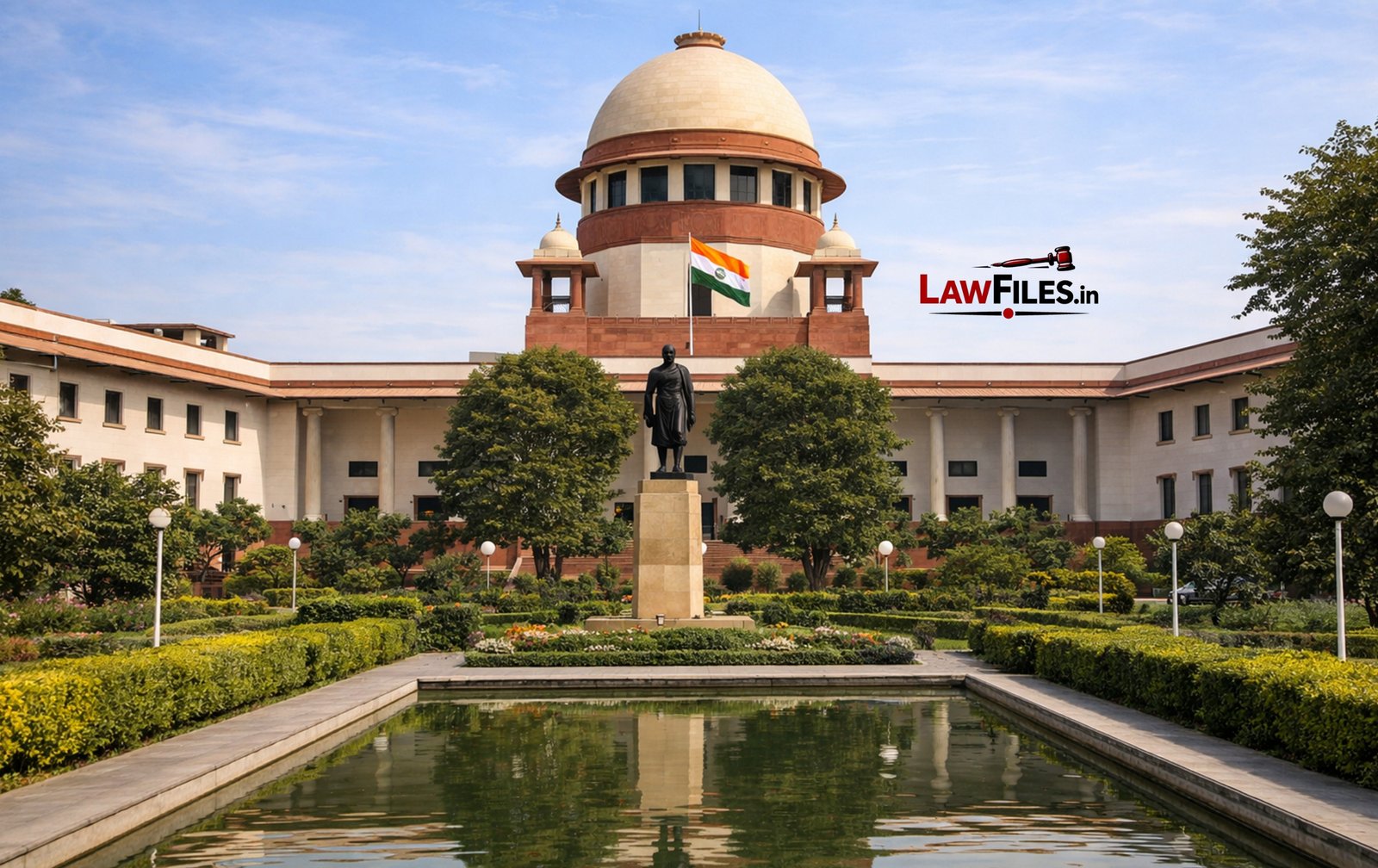
The constitutional controversy surrounding the police action against student protesters has acquired a new legal dimension, with the Supreme Court of India now being approached by an advocate who alleges that he himself became a victim of custodial violence while attempting to provide legal assistance to detained students. Advocate Manik Gupta, practising before various courts in Delhi including the Supreme Court, has filed an intervention application in the pending writ proceedings concerning the alleged use of excessive police force during the nationwide student protests over examination paper leaks. The application alleges that while visiting the Nizamuddin Police Station on the night of 23 July to assist students who had reportedly been detained following the demonstrations at Jantar Mantar, he was allegedly assaulted, abused, threatened and unlawfully detained by police officials inside the police station itself. Besides seeking an independent investigation, the application requests preservation of CCTV footage, initiation of departmental proceedings against the officers concerned and judicial oversight over the inquiry. The matter has been placed before the Bench led by Chief Justice of India Surya Kant, which is already examining broader allegations concerning police action against student protesters across the country.
According to the intervention application, the advocate received distress calls late in the evening from students who claimed that they had been detained by the police after participating in, or travelling in connection with, the ongoing student demonstrations. Responding to those requests for legal assistance, he reached the Nizamuddin Police Station with the intention of meeting the detainees and facilitating their release in accordance with law. The application alleges that instead of being permitted to discharge his professional responsibilities, he was allegedly intimidated by the Station House Officer, who directed subordinate officials to detain him as well. The advocate claims that he was thereafter taken into a separate room where he was physically assaulted, including being allegedly grabbed by the neck, slapped and punched. When he identified himself as a practising advocate, the officers allegedly abused him and warned that he would be “taught a lesson”. The application further states that he was threatened with the registration of a false criminal case and that the Station House Officer allegedly contacted his father during the night to convey that he was “roaming on the streets”. According to the application, he was eventually released only after fellow advocates reached the police station.
The application further asserts that following his release, the advocate underwent medical examination at Lady Hardinge Medical College Hospital, where a Medico-Legal Case (MLC) was prepared recording his injuries. Relying upon the MLC, he contends that there exists contemporaneous medical evidence supporting his allegation that physical violence was inflicted while he was inside police custody. The application also states that formal complaints were subsequently submitted to the Commissioner of Police, Delhi, and the Deputy Commissioner of Police (South-East District) requesting registration of a First Information Report against the officials allegedly involved. According to the applicant, despite the complaint disclosing cognisable offences relating to wrongful confinement, voluntarily causing hurt and criminal intimidation, no FIR has yet been registered. It is this alleged inaction that has prompted the request for an independent investigation under judicial supervision, together with directions for immediate preservation of CCTV recordings before any electronic evidence is lost or overwritten.
The intervention application assumes significance because it is not an isolated proceeding. It has been filed in the broader batch of writ petitions already pending before the Supreme Court concerning allegations of excessive police force used against students participating in nationwide protests over alleged examination paper leaks. During the earlier hearing of those petitions, the Bench headed by Chief Justice Surya Kant orally observed that peaceful and lawful protests enjoy constitutional protection and that mere agitation cannot by itself justify a lathi-charge. The Court also indicated that allegations of police excess require independent examination and expressed the need for uniform national protocols governing police responses to public demonstrations. The advocate’s application therefore expands the factual canvas before the Court by alleging that the controversy extends beyond the treatment of protesters to include the treatment of legal professionals attempting to represent detained persons.
From a constitutional perspective, the allegations raise issues that go beyond individual criminal liability. At the heart of the controversy lies the constitutional right of every detained person to have meaningful access to legal representation. Although the Constitution does not expressly enumerate every procedural safeguard available immediately after detention, the combined operation of Articles 21 and 22 has consistently been interpreted by the Supreme Court as guaranteeing procedural fairness whenever personal liberty is curtailed. Article 22(1) expressly recognises the right of an arrested person to consult and be defended by a legal practitioner of his or her choice. This constitutional guarantee is not merely a privilege available during trial; it constitutes an essential safeguard against arbitrary exercise of police power from the earliest stages of criminal process. If lawyers are obstructed, intimidated or prevented from meeting detainees without lawful justification, the effectiveness of that constitutional guarantee itself may come under strain.
The controversy also engages the statutory framework governing arrests and detention under the Bharatiya Nagarik Suraksha Sanhita, 2023 (BNSS), which continues the long-established principle that police powers remain subject to procedural safeguards designed to protect individual liberty. The Supreme Court has repeatedly held that arrest is not an instrument of punishment but a procedural step regulated by law. Every person taken into custody is entitled to know the grounds of detention, communicate with relatives and legal representatives and receive medical examination wherever necessary. The allegations made in the present application, if ultimately established through investigation, would therefore raise questions not merely of individual misconduct but of compliance with statutory safeguards intended to ensure accountability within police administration.
Equally significant is the institutional position occupied by advocates within the justice delivery system. Lawyers are not ordinary visitors to police stations when they appear on behalf of clients. They perform an integral function within the administration of justice by ensuring that constitutional and statutory rights remain meaningful during investigation. The Supreme Court has on numerous occasions described advocates as officers of the court, emphasising that they perform duties extending beyond representation of private interests. Consequently, allegations that a lawyer was assaulted while attempting to provide legal assistance inevitably assume wider institutional significance because they touch upon the functioning of the justice delivery system itself. If legal representatives are unable to meet detained persons without fear of intimidation, the adversarial system contemplated by criminal procedure risks becoming substantially weakened.
The request for preservation of CCTV footage also highlights the growing importance of electronic evidence in modern constitutional litigation. Courts across India have increasingly directed preservation of surveillance recordings in cases alleging custodial violence, police excesses and disputed encounters. Digital evidence often provides objective contemporaneous material capable of corroborating or disproving competing factual narratives. Recognising this evidentiary significance, constitutional courts frequently issue preservation directions at the earliest stage to ensure that potentially relevant recordings are neither erased through routine overwriting nor otherwise rendered unavailable. In the present case, the applicant has specifically requested judicial directions requiring preservation of CCTV footage from the police station for the relevant period, thereby seeking to secure what may become crucial evidence in any future investigation.
The allegations also revive judicial attention towards the law governing custodial violence, an area in which the Supreme Court has consistently emphasised constitutional accountability. Beginning with landmark decisions such as D.K. Basu v. State of West Bengal, the Court evolved detailed procedural safeguards intended to reduce abuse of police powers during arrest and detention. Those safeguards—including preparation of arrest memoranda, medical examination, maintenance of custody records and communication with relatives—were designed to make custodial processes transparent and capable of effective judicial scrutiny. While the present application contains allegations that remain to be judicially tested, it nevertheless illustrates why constitutional courts have repeatedly insisted that police stations cannot function as spaces insulated from legal oversight.
Another dimension of the case concerns the relationship between professional independence of advocates and the administration of criminal justice. The legal profession performs an indispensable constitutional role by ensuring that unpopular individuals, political dissidents and vulnerable citizens alike receive legal representation. That obligation frequently requires advocates to appear in politically sensitive or socially contentious matters. Democratic constitutional systems therefore attach considerable importance to protecting lawyers from interference while performing legitimate professional functions. The allegations made before the Supreme Court consequently raise broader institutional questions regarding the extent to which legal professionals can effectively discharge their duties if they themselves become vulnerable to coercive action while seeking access to detained clients.
It is equally important, however, to recognise the procedural posture of the matter. At present, the allegations contained in the intervention application represent the applicant’s version of events placed before the Supreme Court. They have not yet been tested through judicial fact-finding, nor has the Delhi Police’s response been adjudicated on merits within these proceedings. The Court’s eventual consideration will necessarily require examination of official records, medical documents, CCTV footage, station diary entries and any response filed by the authorities. The principles of natural justice require that all concerned parties receive an opportunity to present their respective versions before any definitive judicial conclusions are reached. The significance of the present development therefore lies not in establishing liability but in bringing the allegations within the framework of constitutional adjudication.
The proceedings also reflect the increasingly interconnected nature of the litigation arising from the recent student protests. Separate petitions concerning alleged police excesses, internet shutdowns, detention of protesters and now the alleged assault on an advocate all point towards a broader judicial examination of the constitutional limits governing police responses to public demonstrations. Collectively, these proceedings may ultimately contribute to the evolution of clearer national standards regarding arrests during protests, access to legal counsel, preservation of evidence, accountability for alleged misconduct and the balance between maintaining public order and protecting civil liberties.
Ultimately, the intervention application filed by Advocate Manik Gupta places before the Supreme Court an issue that extends beyond the personal grievance of a single lawyer. It raises a deeper constitutional question concerning whether access to legal representation remains effective if lawyers themselves allege intimidation while performing their professional duties. The outcome of the proceedings may therefore influence not only the investigation into the specific allegations but also the broader constitutional understanding of police accountability, advocates’ independence and procedural fairness during detention. As the Supreme Court continues its examination of the police response to the nationwide student protests, the allegations contained in this application reinforce an enduring constitutional principle: the legitimacy of criminal justice depends not merely upon maintaining public order but equally upon ensuring that the processes through which State power is exercised remain transparent, accountable and firmly anchored in the rule of law.
