


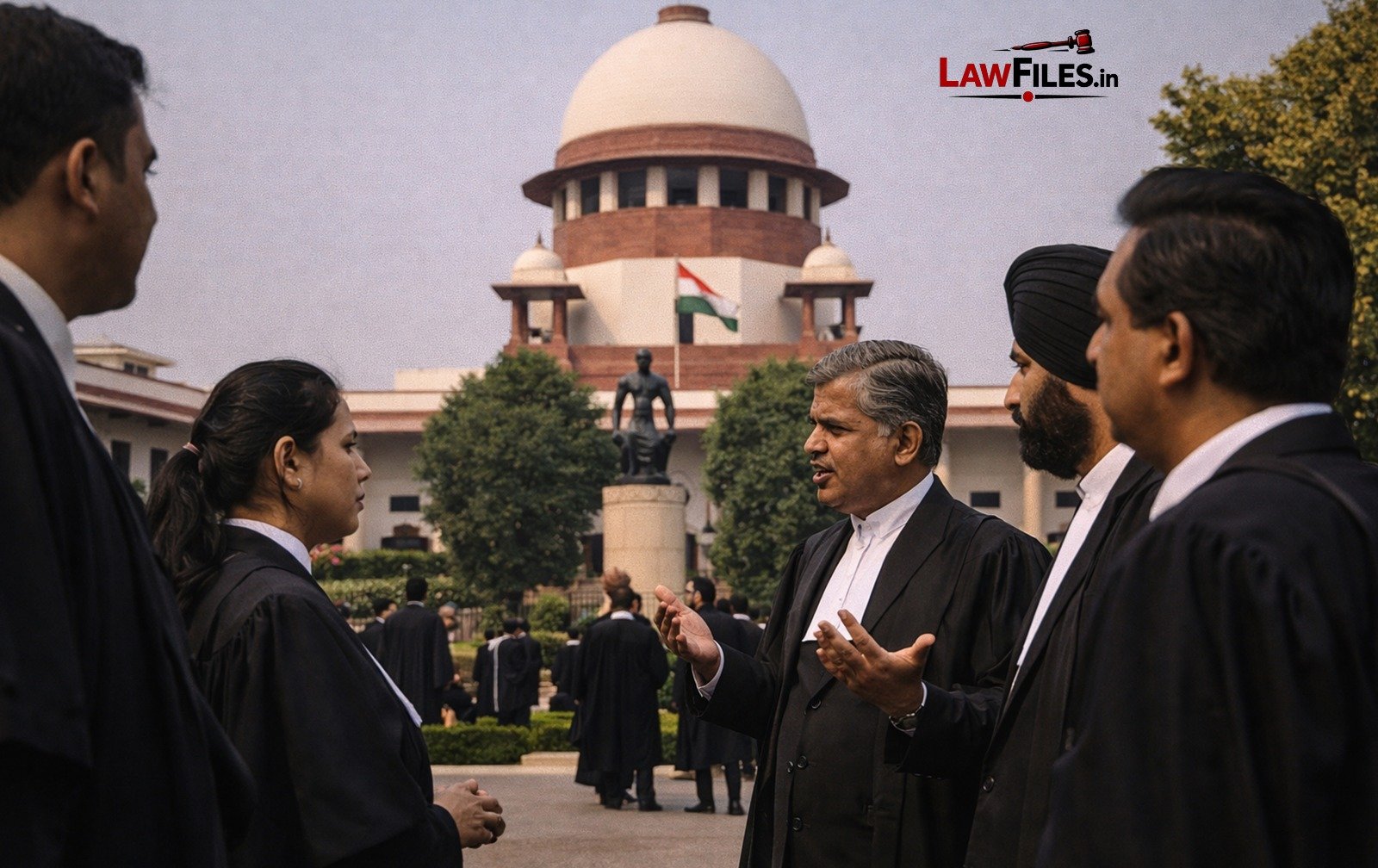
The functioning of constitutional courts does not depend solely upon judges and lawyers. It equally depends upon the ability of litigants, court staff and members of the Bar to physically access the courts. This seemingly administrative concern acquired constitutional significance when the Supreme Court of India took note of the closure of several Delhi Metro stations, including the Supreme Court Metro Station, amid large-scale student protests in the national capital. Responding to concerns raised by the Supreme Court Bar Association (SCBA), Chief Justice of India Surya Kant observed that if the issue remained unresolved by lunchtime, the Court itself would intervene. Simultaneously, the Chief Justice directed that no adverse orders should be passed merely because advocates were unable to reach court owing to the prevailing situation, thereby ensuring that litigants did not suffer prejudice because of circumstances beyond their control.
The issue arose during the morning proceedings when SCBA President Senior Advocate Vikas Singh mentioned before the Bench that the closure of the Supreme Court Metro Station and several adjoining stations had caused severe disruption to lawyers, litigants, registry officials and court employees attempting to reach the apex court. Singh submitted that while security arrangements may be necessary in light of the ongoing student demonstrations, completely preventing access to one of the country’s most important constitutional institutions had created an extraordinary situation requiring immediate attention. He proposed a practical solution whereby only persons possessing valid Supreme Court proximity cards, registry identification or official entry passes could be permitted to exit at the Supreme Court Metro Station after undergoing appropriate security screening.
The Chief Justice responded by informing the Bar that the Supreme Court administration had already initiated discussions with the Delhi Metro Rail Corporation (DMRC) to explore workable alternatives. Indicating that the Court was willing to allow the executive authorities reasonable time to resolve the matter administratively, the CJI observed that if a satisfactory solution emerged by lunchtime, judicial intervention would become unnecessary. However, if the problem persisted, the Court would consider stepping in. The Bench also reassured the legal fraternity that no litigant or advocate would be penalised because of the transportation disruptions caused by the extraordinary security arrangements.
The controversy arose against the backdrop of widespread student-led protests in Delhi, following which security agencies advised the temporary closure of 16 Delhi Metro stations, including Supreme Court, ITO, Mandi House, Central Secretariat, Janpath, Rajiv Chowk, Delhi Gate and several others. The Delhi Metro Rail Corporation clarified that the closures had been implemented on the advice of security agencies in view of concerns regarding law and order during the demonstrations. Although train services continued to operate through many of these stations, passengers were not permitted to enter or exit until further instructions.
At first glance, the proceedings appeared to concern little more than a logistical inconvenience. Yet, from a constitutional perspective, the issue raises far deeper questions regarding the relationship between public order, freedom of movement, access to justice and the administration of constitutional courts.
The Indian Constitution simultaneously guarantees multiple rights which occasionally intersect during periods of public unrest. Article 19(1)(a) protects freedom of speech and expression, while Article 19(1)(b) guarantees the right to assemble peacefully and without arms. Equally, Article 19(1)(d) guarantees the freedom to move freely throughout the territory of India. Although these rights remain subject to reasonable restrictions in the interests of public order, sovereignty and security, constitutional jurisprudence has consistently required that such restrictions satisfy the doctrine of reasonableness and proportionality.
The present controversy illustrates this constitutional balancing exercise. The executive undoubtedly possesses the authority to adopt preventive security measures where intelligence inputs indicate possible disturbances or threats to public safety. Temporary closure of public transport infrastructure may therefore be legally permissible where necessary to prevent violence or maintain public order. However, constitutional governance equally demands that such restrictions remain proportionate, minimally impair fundamental rights and avoid unnecessary disruption of essential public institutions.
The Supreme Court’s response reflects precisely this principle of constitutional proportionality. Rather than immediately questioning the executive’s security assessment, the Court first encouraged administrative dialogue between the Registry and the Delhi Metro authorities. At the same time, it recognised that prolonged closure of transport facilities serving the nation’s highest constitutional court could indirectly impair the administration of justice by preventing lawyers, litigants and court personnel from discharging their respective responsibilities.
The proceedings also bring renewed attention to the constitutional concept of access to justice, increasingly recognised as an integral component of Article 21. The Supreme Court has repeatedly held that the right to life and personal liberty extends beyond mere physical existence to encompass meaningful access to legal remedies. Constitutional rights become illusory if citizens cannot effectively approach courts for enforcement of those very rights.
Although the Constitution does not expressly use the phrase “access to justice,” Indian constitutional jurisprudence has gradually elevated it into a foundational constitutional value. Decisions such as Hussainara Khatoon, Anita Kushwaha v. Pushap Sudan, and numerous subsequent judgments have recognised that access to courts constitutes an indispensable feature of the rule of law. The inability of lawyers or litigants to physically reach the Supreme Court therefore assumes significance extending beyond ordinary commuter inconvenience.
Equally noteworthy was the Chief Justice’s direction that no adverse judicial orders should be passed merely because advocates were absent owing to the metro closures. This observation reflects another important constitutional principle—that litigants should not suffer procedural prejudice because of circumstances entirely beyond their control. Civil procedure, criminal procedure and constitutional adjudication all rest upon the broader doctrine that justice must remain fair not only in substance but also in process.
The events also highlight the increasingly complex constitutional relationship between the right to protest and the rights of third parties. Democratic societies necessarily accommodate peaceful demonstrations, public assemblies and political dissent. Indeed, the Supreme Court has repeatedly recognised peaceful protest as an essential feature of participatory democracy. At the same time, constitutional rights exist in a framework of coexistence rather than exclusivity. Protest cannot ordinarily extinguish the rights of other citizens to movement, livelihood, education or access to essential public services. Similarly, security measures intended to regulate protests cannot disproportionately interfere with unrelated constitutional rights unless demonstrably necessary.
This tension has repeatedly surfaced before Indian constitutional courts. In decisions concerning protests at Shaheen Bagh, farmers’ demonstrations, road blockades and other public agitations, the judiciary has consistently emphasised that democratic dissent deserves constitutional protection but must operate within a framework balancing competing public interests. The present proceedings differ because the immediate issue was not the legality of the protest itself but the collateral consequences of security measures adopted in response to the protest.
The Supreme Court’s restrained approach also reflects the constitutional doctrine of institutional comity. Rather than immediately issuing coercive directions against executive authorities, the Chief Justice allowed the administration an opportunity to resolve the issue through dialogue. Judicial intervention was consciously presented as a measure of last resort rather than first response. Such institutional restraint strengthens constitutional governance by recognising that complex administrative challenges often admit of practical solutions without immediate judicial mandates.
Another important aspect concerns the role of the Supreme Court Bar Association. The proceedings demonstrate how institutional stakeholders such as Bar Associations contribute not merely to professional welfare but also to the functioning of constitutional institutions. By raising concerns regarding the practical difficulties faced by advocates, registry staff and litigants, the SCBA effectively highlighted an issue affecting the administration of justice itself rather than the convenience of a particular professional class.
The controversy also raises broader questions concerning urban governance in modern constitutional democracies. Metro systems today constitute critical public infrastructure upon which millions depend daily for employment, education, healthcare and legal proceedings. Decisions regarding closure of transport networks therefore carry consequences extending well beyond traffic management. As metropolitan cities increasingly rely upon integrated public transport, future constitutional adjudication may witness greater judicial scrutiny regarding the proportionality of restrictions imposed upon such infrastructure during emergencies or public demonstrations.
From an administrative law perspective, the issue equally engages the doctrine of least restrictive means. Even where restrictions upon movement become necessary, constitutional principles encourage authorities to adopt alternatives causing minimal interference with fundamental rights. The proposal advanced before the Court—to permit controlled access for persons possessing Supreme Court identification after security screening—illustrates precisely the type of narrowly tailored administrative response often favoured under proportionality analysis.
Ultimately, the Supreme Court did not issue an immediate judicial direction compelling the reopening of metro stations. Instead, it conveyed a broader constitutional message: public safety and constitutional accessibility must coexist rather than compete. Security concerns undoubtedly justify preventive administrative action, yet such measures cannot unnecessarily impair the functioning of constitutional institutions or obstruct citizens seeking access to justice.
The proceedings therefore transcend the immediate controversy surrounding metro closures. They reaffirm that constitutional governance requires continuous balancing rather than absolute prioritisation of competing public interests. Protest remains a protected democratic right; public order remains a legitimate constitutional objective; security agencies retain operational discretion; and constitutional courts remain guardians of access to justice. The challenge lies in ensuring that none of these values is pursued in a manner that disproportionately diminishes the others.
The Chief Justice’s assurance that the Court would intervene only if administrative efforts failed reflects this balanced constitutional philosophy. It underscores that the judiciary does not seek to administer public transport or security operations. Yet, where executive measures begin to substantially affect the functioning of constitutional courts or the public’s ability to seek justice, judicial oversight remains both legitimate and necessary. In that sense, the proceedings serve as a timely reminder that the Constitution protects not only the right to protest and the duty to maintain public order, but also the equally fundamental right of every citizen to reach the doors of justice without unreasonable obstruction.
