


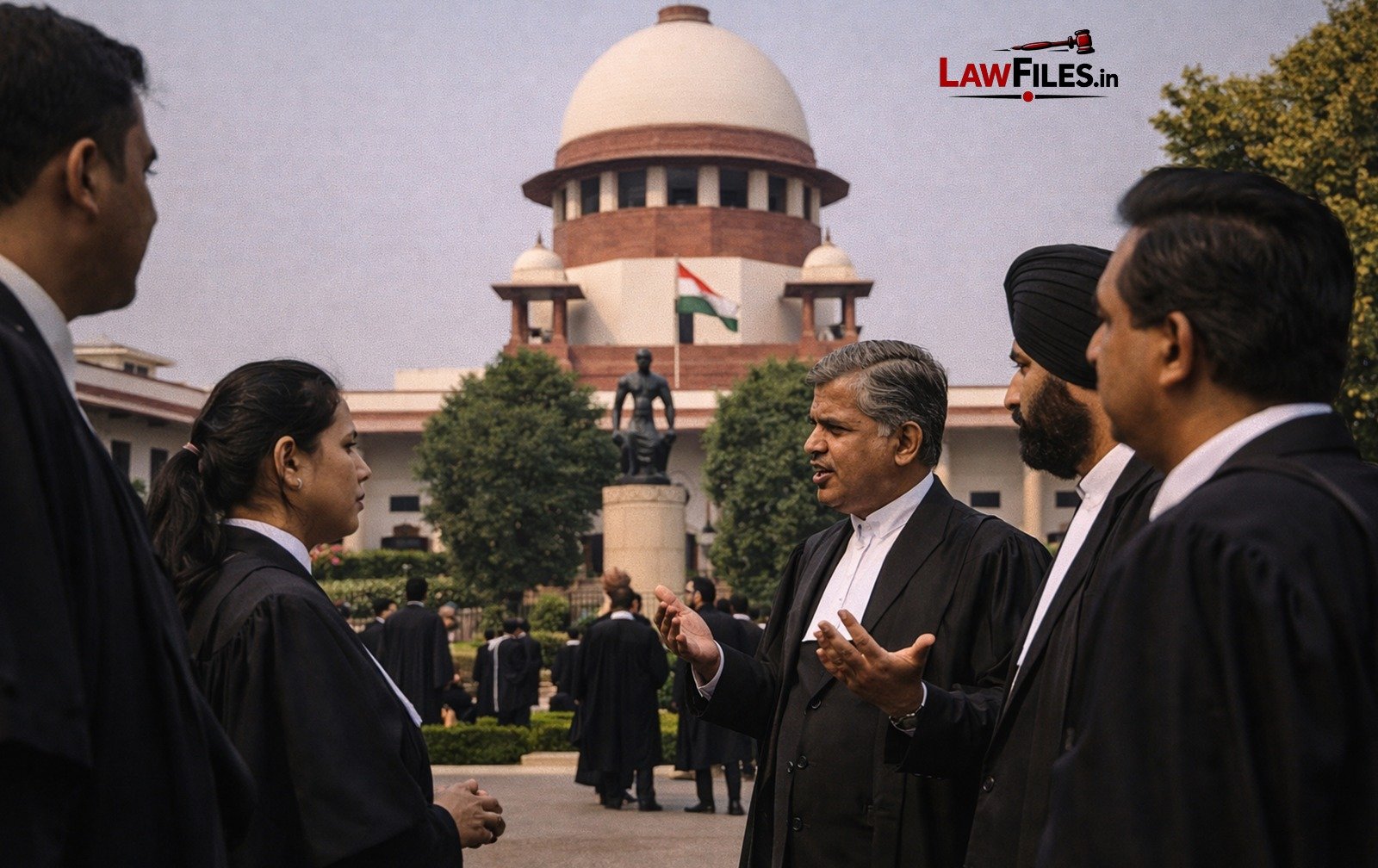
In one of the most disturbing criminal proceedings to come before the Supreme Court of India in recent years, the Court’s continuing scrutiny of the rape and murder of a four-year-old girl in Ghaziabad has shifted the focus beyond the brutality of the crime itself to what the Bench described as a series of grave institutional failures that allegedly followed the incident. During the latest hearing, the Court was informed that the Special Investigation Team (SIT) constituted pursuant to its earlier directions had recommended action against the private hospitals that allegedly refused emergency treatment to the child when she was still alive. The SIT also reported serious lapses in the initial police response, following which the concerned Station House Officer (SHO) was removed from his post. Hearing the matter, a three-judge Bench led by Chief Justice Surya Kant, along with Justice Joymalya Bagchi and Justice V. Mohana, expressed deep concern that the legal system had failed the child not only at the stage of investigation but also at the most fundamental level of emergency medical care. The proceedings have transformed the case from an ordinary criminal prosecution into an examination of the constitutional obligations of police authorities, medical institutions and the State itself towards victims of heinous crimes.
The case traces its origins to the tragic events of March 2026, when the four-year-old child was allegedly lured away by a neighbour on the pretext of buying chocolates. After an anxious search, the family found the child lying unconscious and grievously injured. According to the father’s allegations, the child remained alive for a significant period after being discovered and was immediately taken to two private hospitals in Ghaziabad. However, both hospitals allegedly refused to admit or provide emergency medical assistance. The child was thereafter transported to a government hospital where she was declared dead. The family subsequently approached the Supreme Court alleging not merely deficiencies in the criminal investigation but a complete collapse of institutional responsibility—from refusal of emergency medical care to serious irregularities in police investigation and alleged intimidation of family members seeking justice.
When the matter first came before the Supreme Court, the Bench was visibly disturbed by the manner in which the investigation had been conducted. It noted that despite the post-mortem indicating injuries suggestive of sexual assault, the initial First Information Report did not invoke the provisions of the Protection of Children from Sexual Offences Act, 2012 (POCSO) or the offence of rape. The Court questioned why such obvious statutory provisions had been omitted despite available medical material. Equally troubling were allegations that the victim’s parents, instead of receiving assistance from law enforcement, had themselves been subjected to harassment while attempting to register the offence. Observing that the facts “shocked the conscience” of the Court, the Bench summoned the Commissioner of Police, Ghaziabad, sought original records and eventually directed the constitution of a court-monitored Special Investigation Team headed by a senior police officer.
The latest status report placed before the Court marked a significant development in the proceedings. The SIT reportedly concluded that there was substance in the allegations that the child had been denied timely treatment by private hospitals. It recommended action against the institutions and individuals responsible for refusing emergency care. The report also examined the conduct of the investigating police officers and identified serious deficiencies warranting administrative intervention. Acting upon these findings, the concerned SHO was removed from the police station, reflecting the Court’s insistence that accountability within investigative agencies must accompany accountability for the principal criminal offence. These developments demonstrate that the Court’s concern extends beyond securing conviction of the accused and encompasses institutional responsibility wherever public authorities fail to discharge statutory duties.
During the hearing, the Supreme Court made some of its strongest observations regarding the professional obligations of medical practitioners. Addressing one of the doctors associated with the hospitals, the Bench remarked that a person has “no business writing doctor” after his or her name if unwilling to perform the basic duty of rendering emergency medical assistance. The Court questioned whether the child had been ignored because the family was poor and unable to immediately pay medical charges. It further observed that even if a hospital lacked specialised facilities, elementary medical ethics required that stabilising treatment be provided and the child be transferred appropriately rather than being turned away. The Court’s remarks revive a principle deeply embedded in Indian constitutional jurisprudence that preservation of life constitutes the first duty of every medical institution, irrespective of financial considerations or procedural formalities.
These observations are firmly anchored in established constitutional precedent. In Parmanand Katara v. Union of India (1989), the Supreme Court unequivocally held that every doctor, whether in a government or private hospital, possesses a professional obligation to provide immediate medical assistance to preserve human life. The judgment recognised that procedural questions regarding jurisdiction, police formalities or payment cannot supersede the constitutional imperative of saving life. This principle subsequently received statutory reinforcement through various regulatory frameworks, including obligations imposed under the Clinical Establishments Act, professional ethics regulations of the National Medical Commission, and judicial interpretations of Article 21. The Ghaziabad proceedings therefore do not create a new legal obligation; rather, they illustrate the judiciary’s determination to enforce an obligation that has existed in constitutional jurisprudence for decades.
Equally significant is the Court’s examination of police conduct through the lens of constitutional accountability. Criminal investigation is not merely an administrative exercise but an essential component of the right to fair procedure guaranteed under Article 21. Failure to promptly register appropriate offences, preserve evidence, protect witnesses and conduct impartial investigation can irreversibly compromise the administration of criminal justice. In the present matter, the Court repeatedly questioned why provisions relating to sexual offences were initially omitted despite medical indications suggesting sexual assault. The Bench also expressed concern regarding allegations that the victim’s family was discouraged from pursuing the complaint. Such observations reflect the Court’s continuing insistence that investigative agencies owe constitutional duties not only to the accused but equally to victims and society.
The proceedings also underscore the expanding judicial understanding of victims’ rights within Indian criminal jurisprudence. Historically, criminal proceedings largely revolved around the relationship between the State and the accused, leaving victims with a limited procedural role. Over the past two decades, however, constitutional courts have increasingly recognised that victims possess independent rights to dignity, participation, protection and effective investigation. The Supreme Court’s continuing supervision in the present matter reflects this evolving philosophy. The Court has repeatedly emphasised that justice cannot be measured solely by eventual conviction if institutional failures at earlier stages deprived the victim of medical assistance, compromised investigation or undermined public confidence in the administration of justice.
Another important aspect of the case concerns the growing use of court-monitored investigations in exceptional circumstances. Ordinarily, investigation falls exclusively within the executive domain, and constitutional courts exercise considerable restraint before interfering with police functions. However, where serious allegations emerge regarding suppression of evidence, investigative bias or systemic institutional failure, the Supreme Court has occasionally directed constitution of Special Investigation Teams to restore public confidence. The present proceedings fall squarely within that exceptional category. The Court has consistently clarified that its intervention is not intended to substitute judicial supervision for routine investigation but to ensure that fundamental constitutional obligations are not defeated by administrative indifference.
The role of the private hospitals also raises broader questions concerning the legal responsibilities of healthcare institutions in emergency situations. Commercial considerations cannot legally override the duty to provide stabilising treatment where life is at immediate risk. Numerous judicial pronouncements have held that refusal of emergency care may attract civil liability, professional disciplinary proceedings and, in appropriate cases, criminal consequences where such refusal contributes to the death of a patient. The Supreme Court’s observations in the present case reinforce that healthcare institutions perform a public function extending beyond contractual relationships with patients. Their obligations derive not merely from private law but from constitutional values protecting life and human dignity.
The case further demonstrates how Article 21 continues to expand as a source of positive constitutional obligations. Originally conceived as protection against arbitrary deprivation of life and personal liberty, Article 21 has gradually evolved into a guarantee imposing affirmative duties upon the State. Effective policing, emergency medical treatment, victim protection and fair investigation have all been recognised as integral components of the constitutional right to life. The Ghaziabad proceedings illustrate the practical application of this constitutional evolution. The Court is not merely adjudicating criminal liability but ensuring that every public institution involved discharges its corresponding constitutional responsibilities.
From a criminal justice perspective, the proceedings also expose the continuing challenges confronting child protection mechanisms. The POCSO Act establishes a specialised statutory framework designed to ensure prompt investigation, child-sensitive procedures and expeditious prosecution of offences involving minors. Delays in invoking appropriate statutory provisions or failures in initial investigation risk frustrating the legislative purpose underlying the Act. The Court’s repeated emphasis upon investigative sensitivity reflects recognition that crimes against children require immediate, scientifically informed and legally accurate responses from law enforcement agencies.
The latest developments may also influence future regulatory approaches towards private healthcare institutions. If hospitals can refuse emergency treatment without meaningful consequences, the constitutional guarantee recognised in Parmanand Katara risks becoming merely symbolic. The Court’s insistence upon accountability may therefore encourage stronger enforcement of emergency care obligations through regulatory authorities, professional disciplinary bodies and statutory licensing frameworks. Simultaneously, the administrative action against the SHO underscores that police accountability cannot remain confined to internal departmental procedures where serious investigative lapses undermine public confidence in criminal justice.
Ultimately, the Ghaziabad case is no longer only about the prosecution of an accused neighbour for an unspeakably brutal crime. It has evolved into a searching judicial examination of how multiple public institutions responded or allegedly failed to respond when confronted with a gravely injured child whose life depended upon immediate action. The Supreme Court’s intervention sends a powerful constitutional message that justice begins long before a criminal trial commences. It begins with a doctor’s willingness to treat without hesitation, a police officer’s readiness to register the correct offence without delay, and a State’s commitment to ensuring that every institution entrusted with protecting life performs its duty without fear, favour or indifference. The Court’s continuing oversight thus serves not merely to secure accountability in one tragic case but to reaffirm a foundational constitutional principle: the right to life loses meaning if those entrusted with preserving it fail at the very moment their duty becomes most urgent.
