


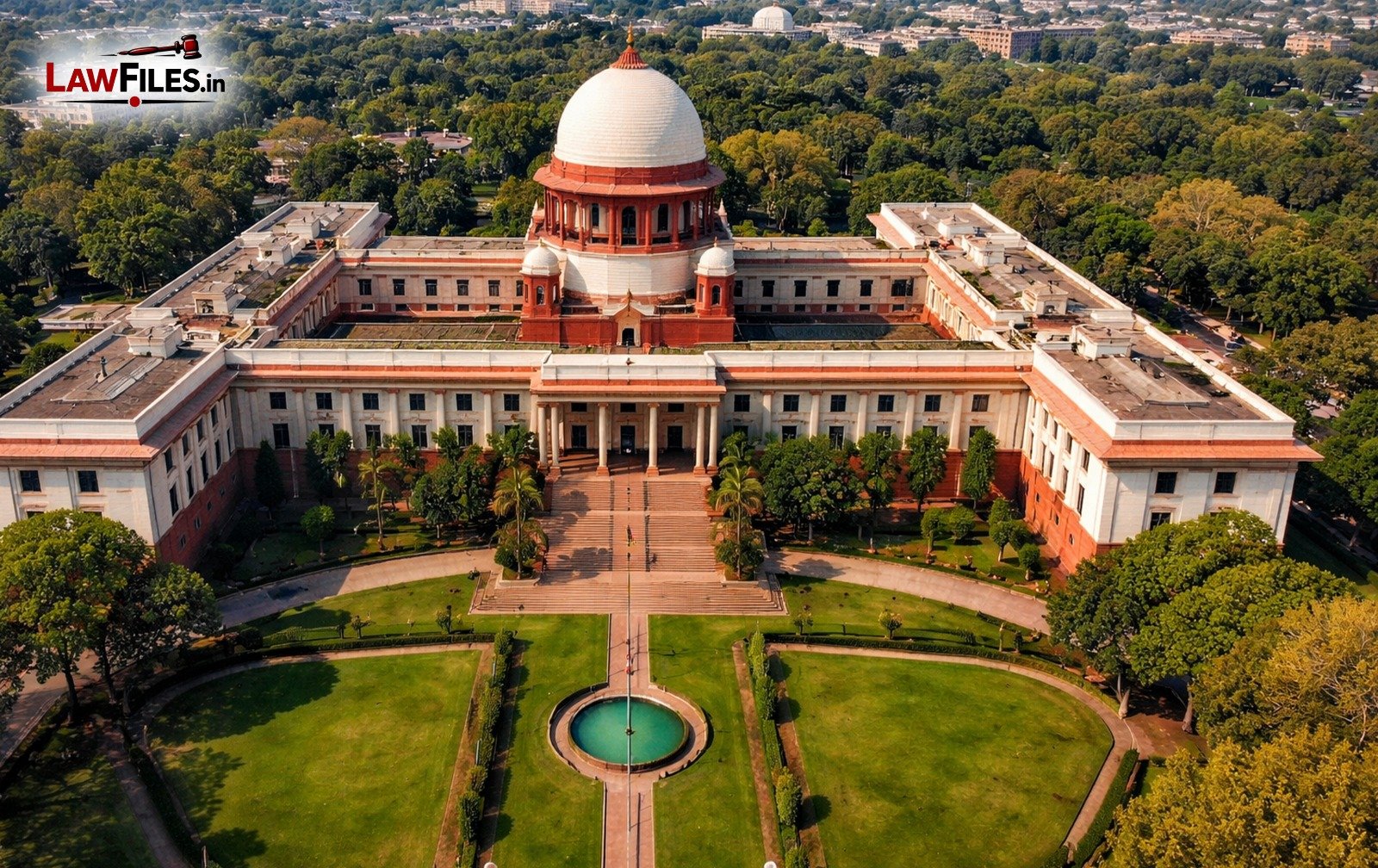
In a development reflecting the judiciary’s cautious approach to regulating law enforcement communication in the digital age, the Supreme Court of India has disposed of a public interest plea seeking guidelines to regulate police social media postings of accused persons, observing that the issue is already under consideration in a broader framework concerning police media briefings.
A bench comprising the Chief Justice and Justices Joymalya Bagchi and Vipul Pancholi declined to issue immediate directions, instead indicating that the petitioner should await the outcome of guidelines being framed pursuant to an earlier judicial mandate on police–media interactions.
The petition raised serious concerns over the growing practice of police departments across several states posting images and videos of accused persons on official social media platforms.
Senior Advocate Gopal Sankaranarayanan, appearing for the petitioner, argued that such posts often depict individuals in degrading circumstances handcuffed, paraded, or physically restrained thereby violating the dignity and privacy of the accused, creating prejudicial public narratives andCcontributing to a form of “trial by social media” even before judicial determination
The plea specifically highlighted instances involving police units in states such as Gujarat, Maharashtra, Haryana, Assam, and Chhattisgarh.
Rather than issuing parallel guidelines, the Supreme Court noted that it had already directed states to frame comprehensive policies on police press briefings in criminal cases, which would likely encompass social media conduct as well.
Recognising the overlap, the Court suggested that the concerns raised in the present petition could be addressed within that broader regulatory framework. Acting on this indication, the petitioner chose to withdraw the plea.
This approach signals judicial restraint avoiding fragmented rule-making and instead promoting a unified policy governing how police communicate with the public.
Judicial Concern: Rise of “Media Trial” in Digital Era
During the hearing, the bench engaged with the evolving challenge posed by social media-driven narratives in criminal justice.
Justice Joymalya Bagchi observed that earlier jurisprudence on media trials such as in Sahara India Real Estate Corp. Ltd. v. SEBI (2012) was developed in a time when social media was far less pervasive. Today, the ecosystem is fundamentally different, with digital platforms amplifying information instantly and widely.
The Court also remarked on a broader societal shift, noting how individuals increasingly prioritise recording events over assisting victims highlighting the transformative and potentially distorting role of digital media in real-time justice perception.
Legal Significance: Balancing Free Speech, Fair Trial, and Dignity
The case sits at the intersection of several constitutional principles including; Presumption of Innocence and Fair Trial (Article 21)– Public dissemination of images portraying accused persons in a humiliating manner risks prejudicing ongoing investigations and undermining the right to a fair trial, Right to Dignity and Privacy– Even accused persons retain constitutional protections. The Supreme Court has consistently held that dignity is non-negotiable, irrespective of the stage of criminal proceedings, Freedom of Speech vs State Responsibility (Article 19)– While police communication is part of transparency, unregulated dissemination on social media raises concerns of overreach and reputational harm, especially in the absence of conviction.
The Court’s decision must be read alongside its earlier direction mandating states to formulate structured media briefing policies to prevent trial by media, disclosure of sensitive investigation details and violation of privacy of accused and victims.
These forthcoming guidelines are expected to standardise what police can disclose publicly , introduce accountability in official communications, potentially extend to digital and social media conduct
The ruling forms part of a broader judicial trend addressing the impact of social media on criminal justice. Recent observations of the Supreme Court have cautioned that the unregulated online dissemination can threaten fair trial rights, social media may function as a parallel adjudicatory space an digital exposure can have irreversible reputational consequences
This reflects a shift from traditional media regulation to digital governance challenges, where the line between transparency and prejudice is increasingly blurred. The case highlights the need to regulate “public shaming” practices by law enforcement agencies on digital platforms. By deferring to broader guidelines, the Court ensures a coherent national framework rather than piecemeal judicial directions. The decision underscores that constitutional safeguards do not diminish in the age of social media.
The Supreme Court’s decision to dispose of the plea without issuing immediate guidelines reflects a measured and systemic approach to a complex issue. Rather than intervening in isolation, the Court has chosen to integrate concerns about police social media conduct into a broader regulatory framework governing media briefing.
At its core, the case underscores a critical constitutional tension: how to ensure transparency in policing without compromising dignity, fairness, and due process in an era dominated by digital amplification. The forthcoming guidelines will likely play a decisive role in shaping this balance.
