


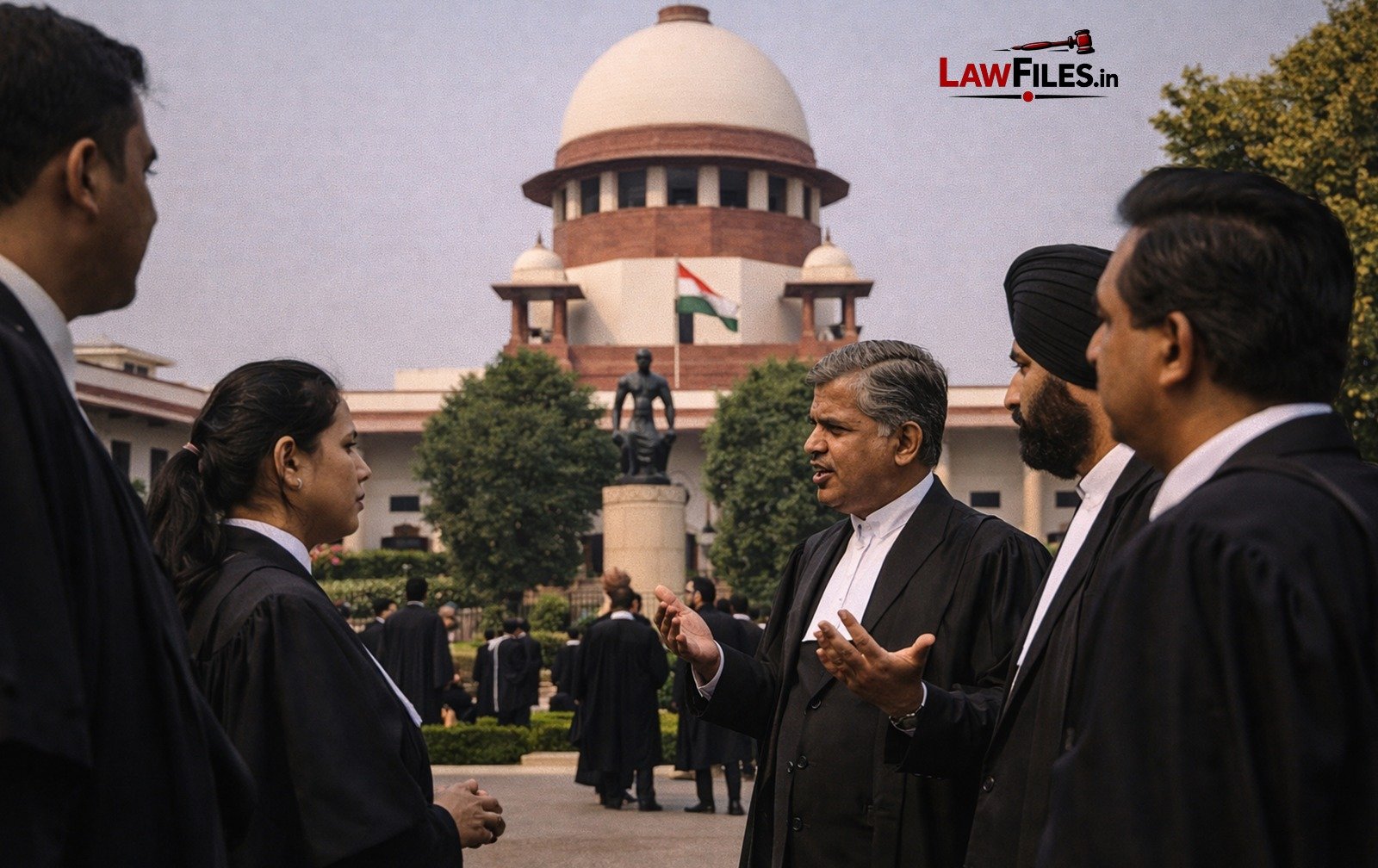
In a judgment that powerfully reasserts the constitutional foundations of India’s criminal justice system, the Supreme Court of India has declared that constitutional safeguards, due process and the right to a fair trial cannot be compromised merely because an offence involves terrorism or shocks the collective conscience of society. Observing that the legitimacy of criminal justice lies not in the severity of punishment but in the fairness of the process through which guilt is determined, the Court emphasised that the greater the public outrage surrounding a crime, the greater becomes the constitutional responsibility of the judiciary to ensure that guilt is established strictly in accordance with law and legally admissible evidence. The ruling was delivered while deciding appeals arising from the 1996 Samleti Bus Bomb Blast case, where the Court ultimately set aside the conviction and death sentence of one of the accused, Dr. Abdul Hameed, and ordered a de novo (fresh) trial after finding that the constitutional guarantee of effective legal representation had been compromised during the original proceedings.
The judgment was delivered by a Bench comprising Justice Vikram Nath, Justice Sanjay Karol and Justice Sandeep Mehta, while examining whether the conviction and capital sentence imposed upon Dr. Abdul Hameed had resulted from a trial that satisfied the constitutional requirements of fairness and due process. The case arose from the Samleti Bus Bomb Blast of 22 May 1996, in which an explosive device detonated inside a passenger bus travelling from Agra to Bikaner, killing 14 civilians and injuring 37 others. The blast, occurring barely a day after the Lajpat Nagar bombing in Delhi, became one of the most significant terrorism prosecutions of the mid-1990s.
While acknowledging the devastating consequences of terrorist violence, the Supreme Court unequivocally rejected the proposition that the gravity of an allegation could justify lowering constitutional standards governing criminal adjudication. The Bench observed that offences involving bomb blasts directed against innocent civilians understandably generate fear, grief and public outrage. Yet, it stressed, it is precisely in such emotionally charged prosecutions that courts must demonstrate the greatest fidelity to constitutional principles rather than succumb to public sentiment. In one of the most significant passages of the judgment, the Court observed that the gravity of the allegation cannot be permitted to dilute the standard of proof, nor can the enormity of the crime justify departure from settled principles of criminal jurisprudence. It added that “the greater the public outcry, the greater becomes the responsibility of the Court to ensure that the determination of guilt is based solely upon law and evidence.”
This observation reflects one of the oldest and most enduring principles of criminal law that constitutional justice is tested most rigorously in the hardest cases. Democracies are rarely challenged when constitutional protections are extended to persons accused of ordinary offences. The true strength of the rule of law lies in ensuring that the same constitutional guarantees remain available even to those accused of offences that evoke widespread public condemnation. Constitutional safeguards derive their legitimacy precisely because they are not dependent upon the popularity or unpopularity of the accused.
The Supreme Court proceeded to reaffirm that the constitutional guarantee of a fair trial occupies a position of paramount importance within the Indian legal system. According to the Bench, the right to effective legal representation, the presumption of innocence, the prosecution’s obligation to establish guilt beyond reasonable doubt and the objective scrutiny of evidence are not procedural technicalities but substantive constitutional guarantees that distinguish governance under the rule of law from adjudication driven by public opinion. Justice, the Court observed, must not only be done but must also be manifestly seen to be done, because public confidence in judicial verdicts depends equally upon the integrity of the process through which those verdicts are reached.
The Court’s reasoning draws directly from Article 21 of the Constitution, which guarantees that no person shall be deprived of life or personal liberty except according to procedure established by law. Since the landmark decision in Maneka Gandhi v. Union of India, the expression “procedure established by law” has consistently been interpreted to mean a procedure that is fair, just and reasonable, rather than one that is merely authorised by statute. Consequently, criminal trials particularly those culminating in capital punishment must satisfy not only statutory requirements but also constitutional standards of fairness.
One of the central reasons for setting aside Dr. Abdul Hameed’s conviction was the Court’s finding that he had been denied effective legal representation during his trial. The Bench concluded that the deficiencies in legal assistance were so substantial that they undermined the constitutional legitimacy of the entire trial. Instead of affirming the conviction or acquitting the accused outright, the Court directed a fresh trial before a designated Fast Track Court, thereby ensuring that guilt or innocence would be determined through a constitutionally valid process.
The distinction is of profound legal significance. The Supreme Court did not hold that Dr. Abdul Hameed was innocent. Nor did it question the seriousness of the allegations. Rather, it recognised that no conviction particularly one resulting in the irreversible punishment of death can survive if the process through which it was obtained violates constitutional guarantees. The judgment therefore reinforces the principle that procedural fairness is not subordinate to substantive justice; it is an indispensable component of justice itself.
The Court also invoked a foundational principle of criminal jurisprudence that has shaped legal systems across common law jurisdictions for centuries it is better that many guilty persons escape than that one innocent person be wrongly convicted. The Bench clarified that this principle is not an expression of institutional weakness or sympathy towards crime. Instead, it reflects the profound constitutional value placed upon individual liberty and human dignity, recognising that the consequences of wrongful conviction are so severe that criminal law deliberately imposes a high burden upon the prosecution before liberty may be taken away.
This observation assumes even greater significance in the context of capital punishment. The death penalty occupies a unique constitutional position because judicial error becomes irreversible once a sentence has been executed. It is for this reason that the Supreme Court has repeatedly insisted upon the strictest procedural safeguards in capital cases. Beginning with Bachan Singh v. State of Punjab, which evolved the “rarest of rare” doctrine, and continuing through subsequent decisions strengthening sentencing procedures, the Court has consistently recognised that the legitimacy of capital punishment depends as much upon the fairness of the trial as upon the gravity of the offence itself.
The judgment also contributes significantly to the evolving jurisprudence concerning effective legal representation. Indian constitutional law has long recognised that appointing counsel is not, by itself, sufficient to satisfy the constitutional guarantee of a fair trial. Legal assistance must be real, meaningful and competent. Earlier decisions such as Mohd. Hussain @ Julfikar Ali v. State (NCT of Delhi) similarly held that denial of effective legal representation strikes at the root of criminal adjudication. The present judgment strengthens this line of authority by applying it in one of the most serious terrorism prosecutions before the Court.
Another noteworthy feature of the decision is its careful distinction between public emotion and judicial reasoning. Terrorist attacks inevitably produce grief, fear and anger within society. Such emotions are entirely understandable. However, constitutional courts exist precisely to ensure that adjudication remains insulated from these sentiments. The Bench recognised that courts cannot permit outrage to substitute for evidence or suspicion to replace proof beyond reasonable doubt. Public confidence in the judiciary ultimately depends not upon harsh punishment alone but upon the assurance that convictions are reached through impartial application of constitutional principles.
From a comparative constitutional perspective, the judgment aligns closely with internationally recognised human rights standards. Instruments such as the International Covenant on Civil and Political Rights (ICCPR) recognise the right to legal representation, the presumption of innocence and the right to a fair and public hearing as indispensable components of criminal justice. The Supreme Court’s reasoning demonstrates that Indian constitutional jurisprudence continues to harmonise domestic criminal procedure with globally accepted due process standards while remaining firmly rooted in Article 21.
The ruling also carries institutional implications for the criminal justice system. Terrorism investigations frequently involve extensive forensic evidence, intelligence inputs, electronic surveillance and complex conspiracies. While these cases undoubtedly require effective investigation, the Court has reminded investigative agencies and trial courts alike that constitutional safeguards are not obstacles to justice but the very conditions upon which legitimate justice depends. Procedural compliance strengthens criminal convictions by ensuring that they withstand appellate scrutiny and command public confidence.
Importantly, the Court also reaffirmed that justice is measured not by the speed of retribution but by the restraint of constitutional adjudication. This philosophy distinguishes constitutional democracies from systems driven solely by punitive objectives. A criminal justice system that abandons constitutional safeguards in response to serious crime ultimately weakens the rule of law it seeks to defend.
The judgment therefore extends beyond the facts of the Samleti Bus Bomb Blast. It reiterates a constitutional philosophy that has consistently guided Indian criminal jurisprudence—that the Constitution protects every individual, not because every accused is innocent, but because every accusation must be tested through a fair, transparent and impartial legal process. Terrorism presents extraordinary challenges to the State, yet constitutional governance demands that extraordinary allegations continue to be evaluated through ordinary principles of justice rather than exceptional departures from law.
Ultimately, the Supreme Court’s observations constitute a profound reaffirmation of constitutional morality. The Court recognised that bomb blasts and terrorist violence represent grave assaults upon public peace and national security. Yet it simultaneously reminded the nation that the Constitution itself is tested most severely in moments of crisis. If constitutional guarantees are permitted to weaken whenever allegations become serious or public pressure intensifies, those guarantees would cease to have meaningful existence.
The ruling thus reinforces an enduring proposition that lies at the heart of Indian constitutional democracy: the rule of law is not measured by how the State treats the innocent, but by how faithfully it adheres to constitutional principles when dealing with those accused of the gravest crimes. By insisting that even terrorism prosecutions must conform to the highest standards of fairness, due process and effective legal representation, the Supreme Court has once again affirmed that constitutional safeguards are not concessions to the accused they are the defining characteristics of a civilised criminal justice system governed by law rather than by emotion.
