


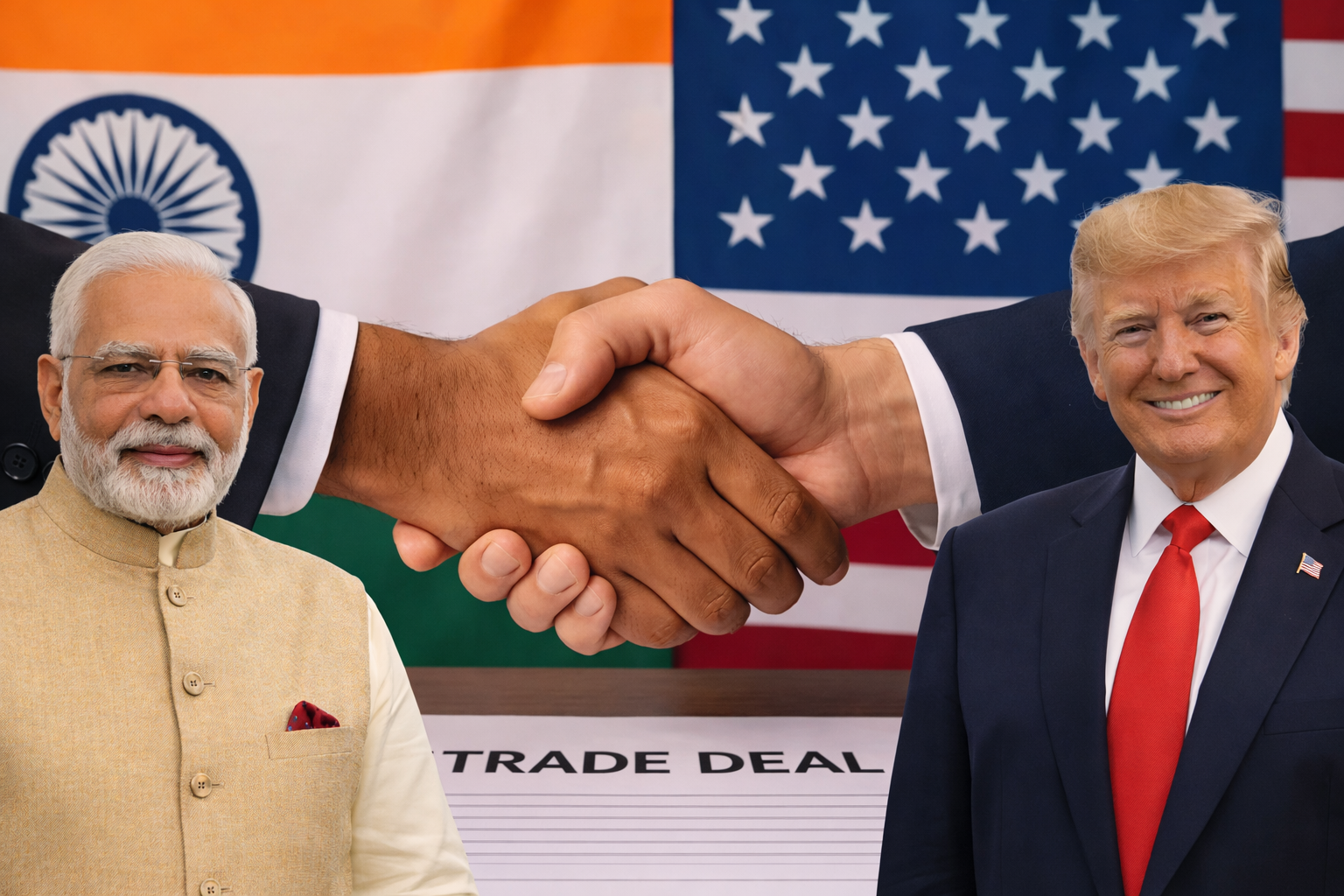
Recent developments in trade relations between India and the United States have highlighted the complex strategic calculations that shape modern economic diplomacy. While both countries continue to describe their partnership as a cornerstone of the Indo-Pacific order, the ongoing tariff disputes and negotiations reveal deeper economic and geopolitical undercurrents influencing bilateral trade policy.
A Trade Relationship Marked by Cooperation and Tension
The United States and India share one of the world’s fastest-growing economic partnerships, with trade in goods and services expanding rapidly over the past decade. Yet the relationship has also been punctuated by periodic trade disputes, particularly over tariffs and market access.
Tensions escalated significantly in 2025, when the United States imposed steep tariffs on Indian exports. Initially framed as “reciprocal tariffs” intended to address perceived trade imbalances, the measures included a 25% duty on Indian goods, later supplemented by an additional 25% penalty linked to India’s continued purchase of Russian oil, pushing the effective tariff burden on some exports to nearly 50%.
These tariffs affected major Indian export sectors including textiles, gems and jewellery, and shrimp raising concerns about the impact on India’s export competitiveness and broader economic growth.
The Strategic Dimension of Tariffs
While tariffs are often framed as purely economic tools, analysts argue that the current dispute reflects deeper strategic considerations.
For the United States, the tariffs have been linked to concerns over trade deficits and a push for greater reciprocity in market access. The measures also align with Washington’s broader “America First” trade approach, which prioritises domestic industries and seeks to pressure trading partners to reduce tariffs on U.S. exports.
For India, the episode highlights the delicate balance between strengthening ties with the United States and maintaining its policy of strategic autonomy, particularly in areas such as energy imports and defence procurement. India has consistently defended its right to pursue independent energy policies, including purchases of Russian oil, even while negotiating trade concessions with Washington.
Negotiations and De-Escalation Efforts
Despite the escalation, both governments have sought to prevent the dispute from evolving into a full-scale trade war. Negotiations in early 2026 produced a framework aimed at reducing tensions, including a reduction in the effective U.S. tariff rate on Indian goods from nearly 50% to about 18%.
Under the emerging framework, India has indicated willingness to lower tariffs on a broad range of American goods and address non-tariff barriers, while the United States has moved toward restoring more competitive tariff levels on Indian imports.
The arrangement also reflects broader strategic commitments. Reports suggest India has signalled an intent to increase purchases of American products and expand energy cooperation, while Washington has emphasised the importance of strengthening economic ties with India as part of its Indo-Pacific strategy.
Economic Stakes for Both Countries
The stakes in the dispute are considerable. The United States remains India’s largest trading partner, and a significant portion of India’s exports estimated to affect nearly 87% of its shipments to the U.S. in some analyses could be influenced by tariff changes.
At the same time, the United States sees India as a key economic and strategic partner in balancing China’s influence in global supply chains and the Indo-Pacific region. Consequently, both sides have strong incentives to maintain cooperation despite disagreements over tariffs and market access.
A Relationship Still in Transition
The evolving tariff negotiations suggest that the current friction may represent a transitional phase rather than a permanent rupture in India–US trade relations. Recent diplomatic signals indicate that both governments are working toward a broader trade arrangement that could stabilise the relationship and expand bilateral trade in the coming years.
However, the episode underscores a broader reality of contemporary global trade: even close strategic partners can find themselves in disputes when domestic economic priorities and geopolitical considerations intersect.
For India and the United States, the challenge lies in converting a relationship shaped by tariffs and tensions into one defined by long-term economic alignment and mutual strategic trust.
