


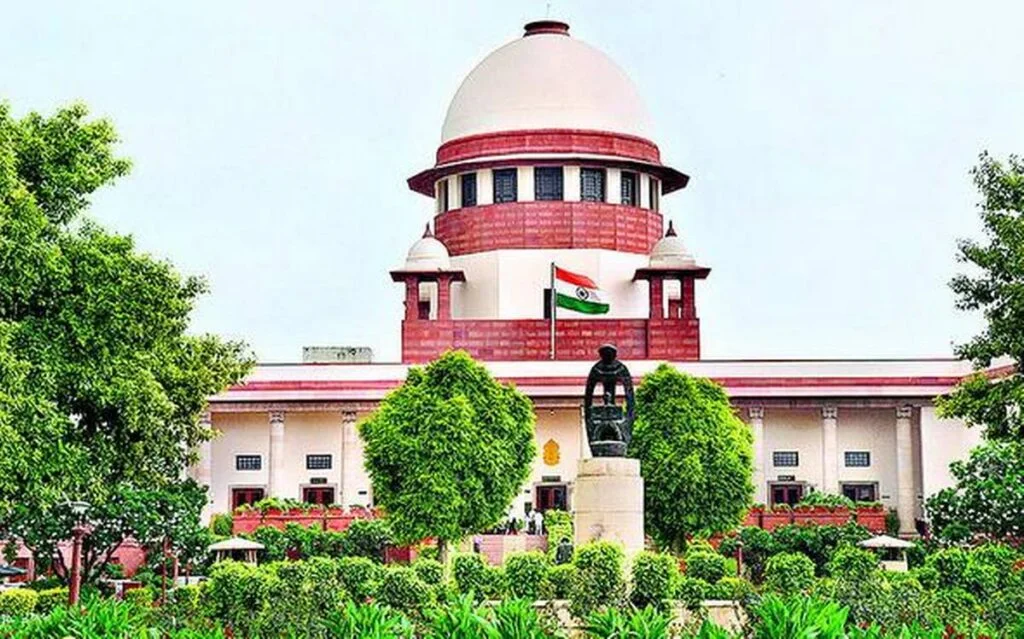
India’s Supreme Court has directed the Archaeological Survey of India (ASI) to clarify its position on a petition urging permission for Urs observances and Namaz at the historic tomb of Hazrat Sheikh Muhammad Ghaus in Gwalior. This move reignites debate on faith’s place amid strict preservation mandates.
Timeless Architectural Marvel
Perched amid Gwalior’s tranquil environs, the tomb of Hazrat Sheikh Muhammad Ghaus exemplifies 16th-century Mughal ingenuity. Constructed post-1562 CE, its ornate carvings and soaring domes echo through India’s architectural annals.
Declared a “monument of national importance” via a 1962 gazette notification, the site falls under ASI’s strict guardianship. This status elevates it to a national treasure while such elevation safeguards its physical essence yet ignites questions on whether stone alone defines a site’s soul but sparks debates on balancing history with heartfelt devotion.
The Conflict
The controversy ignited in March 2024 when ASI rejected a plea from the petitioner ,Sabla Hasan, claiming to be the Sajjada Nashin (Legal heir of Sheikh Muhammad Ghaus) to host Urs. Citing the Ancient Monuments and Archaeological Sites and Remains Act, 1958 (AMASR Act), ASI enforced rules limiting access from sunrise to sunset and prohibiting events that could risk damage.
Violations, per, the Ancient Monuments and Archaeological Sites and Remains Act, 1958 (AMASR Act), Section 30 and Rule 8 of the 1959 Rules, carry up to two years’ imprisonment and a ₹1 lakh fine. ASI argued the tomb is a “non-living monument”—not a continuous worship site since protection—barring religious revivals to safeguard authenticity. Past civil suits by Hasan’s family claiming ownership were dismissed from 1995 to 2016, including Supreme Court rejections, reinforcing ASI’s stance.
A 2014 Madhya Pradesh High Court PIL order further tightened rules, mandating ASI permission for events and directing encroachments’ removal. Yet, petitioner advocates note recent approvals for a music festival at the site, questioning selective enforcement.
Courtroom Drama Unfolds
Undeterred, Hasan challenged the rejection in Madhya Pradesh High Court, emphasizing unbroken customs. The court dismissed it, ruling the tomb isn’t a “place of worship or shrine” under law. It warned of tents, lights, and crowds causing “damage or pollution,” and chided the petitioner for hiding prior losses.
Enter the Supreme Court via Special Leave Petition (SLP(C) No. 25083/2025: Sabla Hasan v. Union of India). On March 10, 2026, Justices BV Nagarathna and Ujjal Bhuyan heard arguments. Advocate Manan Mishra urged future relevance despite the passed 2024 Urs date, offering undertakings against damage and highlighting the music event disparity.
Additional Solicitor General KM Nataraj countered, calling it “academic” and rejecting religious rights at protected sites: “We do not want to create a religious right in a particular protected monument.” The bench granted time for ASI and Centre’s counter-affidavit, hinting at disposing the case while allowing fresh applications for next year—considered “in accordance with law.
Voices from the Ground
Beyond court chambers, Gwalior’s faithful share poignant stories. Elderly pilgrims recount childhood Urs nights alive with qawwalis and flickering lamps, traditions their forebears nurtured through through centuries of cultural evolution. Local caretakers lament restricted access curbing the site’s role as a communal anchor, where people once sought solace
Scholars weigh in too: historians applaud ASI’s role in staving off decay seen elsewhere, like discolored facades from unchecked festivities. Yet anthropologists decry a one-size-fits-all policy, urging nuanced nods to verifiable customs that breathe life into relics without harm
Balancing Acts in National Treasures
This case spotlights ASI’s tightrope walk over India’s 3,697 protected sites, but “non-living” ones forbid new rituals to avert disputes or alterations. Critics fear allowances could erode monuments’ integrity, fueling interfaith tensions. Supporters invoke Section 16 of the AMASR Act, protecting shrines from misuse while permitting “customary observances.”
For Gwalior’s devotees, it’s personal: a sacred haven symbolizing India’s syncretic soul, where music and mysticism intertwine. As ASI files its response, the verdict could redefine how India honors its layered past—preserving stone or souls?
