

Close Menu
LawFilesLawFiles

    Subscribe to Updates

    Get the latest creative news from FooBar about art, design and business.

    What's Hot

    Delhi High Court Upholds Rajpal Yadav’s Conviction in Cheque Bounce Cases; Ruling Reaffirms Sanctity of Commercial Transactions and the Deterrent Purpose of the Negotiable Instruments Act

    July 11, 2026

    Delayed Payment by Auction Purchaser Under the SARFAESI Act: Supreme Court Reinforces Mandatory Compliance With Auction Timelines; A Landmark Shift in India’s Banking Recovery Jurisprudence

    July 11, 2026

    Anil Ambani Withdraws Bombay High Court Plea Against Bank of Baroda’s Fraud Classification; Case Highlights Evolving Judicial Standards Governing RBI Fraud Tagging Framework

    July 11, 2026
    Facebook X (Twitter) Instagram Threads
    Saturday, July 11
    LawFilesLawFiles
    Facebook X (Twitter)
    • Home
      • Who We Are
      • Our Mission
      • Advisory board
      • Contact US
    • Supreme Court
    • High Courts
      • Gujarat High Court
      • Jharkhand High Court
      • Rajasthan High Court
      • Karnataka High Court
      • Andhra Pradesh High Court
      • Allahabad High Court
      • Himachal Pradesh High Court
      • Chhattisgarh High Court
      • Jammu & Kashmir and Ladakh High Court
      • Kerala High Court
      • Punjab and Haryana High Court
      • Patna High Court
      • Madhya Pradesh High Court
      • Madras High Court
      • Bombay High Court
      • Orissa High Court
      • Calcutta High Court
      • Meghalaya High Court
      • Delhi High Court
      • Manipur High Court
      • Gauhati High Court
    • Corporate
    • Taxation Laws
      • Income Tax
      • GST
      • Customs & Excise
    • Global Affairs
    • Articles
      • Sitting Judge’s’ Views
      • Senior Advocate
      • Policy Analysis
      • Tax Expert
    • PILS
      • Free/Affordable Legal Aid
      • PIL Cell
      • Law student Volunteer Cell (research & Drafting)
      • NGO & Legal services Authority Tie-ups
      • Online Legal Formats
      • Online Legal Help Form
    Subscribe Premium
    LawFilesLawFiles
    Home»Supreme Court»Supreme Court Turns to Mediation in ₹30,000-Crore Kapur Estate Battle: A High-Profile Family Dispute Enters the Constitutional Space of Settlement Jurisprudence
    Supreme Court

    Supreme Court Turns to Mediation in ₹30,000-Crore Kapur Estate Battle: A High-Profile Family Dispute Enters the Constitutional Space of Settlement Jurisprudence

    Anvita DwivediBy Anvita DwivediMay 7, 2026No Comments5 Mins Read
    WhatsApp Facebook Twitter Copy Link
    Share
    Facebook Twitter Pinterest Copy Link WhatsApp

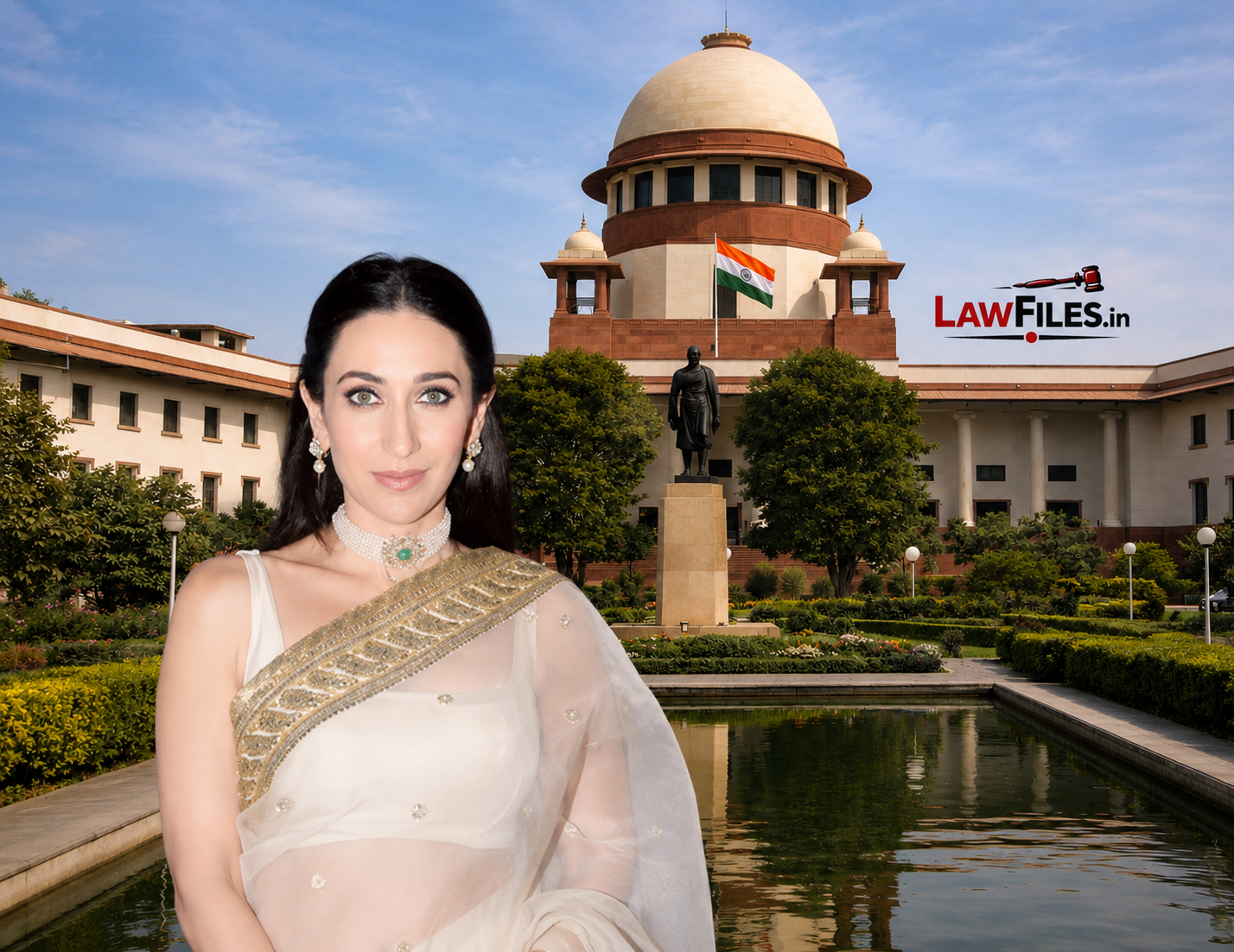
    In a significant development blending corporate succession, family law, and judicial mediation, the Supreme Court of India has referred the escalating dispute surrounding the estate of late industrialist Sunjay Kapur to mediation under the supervision of former Chief Justice of India D. Y. Chandrachud. The dispute, reportedly involving assets and trust interests valued at nearly ₹30,000 crore, has drawn national attention not merely because of the financial stakes involved, but also due to the involvement of competing branches of the Kapur family, including business interests, inheritance claims, and the children of actor Karisma Kapoor.

    The Supreme Court’s decision to prioritise mediation reflects an increasingly visible judicial preference for negotiated settlement in emotionally charged family and inheritance disputes. A Bench led by Justice J.B. Pardiwala reportedly encouraged the parties to approach the process with an “open mind” and specifically cautioned against litigating the dispute through media narratives or social media commentary.

    At the centre of the controversy lies the “Rani Kapur Family Trust,” whose creation and operation have become subjects of intense legal contestation. Rani Kapur has alleged that the trust structure was fraudulently used to divest her of control over family assets and Sona Group-linked entities. According to her pleadings before the Delhi High Court and subsequent proceedings, she claims that after suffering a stroke in 2017, she was manipulated into signing documents, including allegedly blank papers, without informed consent.

    The dispute reportedly intensified after Sanjay Kapoor’s death in 2025, following which allegations emerged that his widow, Priya Sachdev Kapoor, moved swiftly to consolidate control over key financial and corporate interests linked to the family estate. The conflict has since evolved into a multi-dimensional legal battle involving inheritance rights, validity of testamentary documents, control over trusts, and preservation of family-owned corporate assets.

    A particularly sensitive aspect of the litigation concerns the interests of Sanjay Kapoor’s children from his earlier marriage to Karishma Kapoor. The children, Samaira and Kiaan, have reportedly challenged the authenticity of a will said to substantially benefit Priya Kapoor. The Delhi High Court recently granted interim protection by restraining dissipation of certain assets and freezing portions of the estate pending adjudication. The Court observed that the “legitimate suspicions” surrounding the will would need to be addressed during trial before its genuineness could be conclusively accepted.

    The Supreme Court’s recourse to mediation in such a high-stakes matter is legally significant. Indian courts have increasingly recognized that family business disputes differ fundamentally from conventional commercial litigation. Unlike purely adversarial corporate conflicts, inheritance and trust disputes often involve overlapping emotional, relational, and reputational dimensions that prolonged litigation may irreparably damage. By appointing former CJI Chandrachud as mediator, the Court appears to have deliberately chosen a figure associated with constitutional sensitivity, institutional credibility, and consensus-building.

    The case also reflects the growing constitutionalization of mediation in Indian legal practice. Following the enactment of the Mediation Act, 2023 and repeated judicial endorsements of alternative dispute resolution, the Supreme Court has increasingly treated mediation not merely as a procedural formality but as a substantive mechanism for preserving social and familial harmony. In the present dispute, the Court reportedly observed that “family disputes should not become a source of entertainment,” implicitly criticizing the public spectacle that high-profile inheritance battles often generate.

    From a jurisprudential standpoint, the proceedings raise important questions regarding the governance of family trusts in India. Family-controlled corporate structures often operate through complex layers of trusts, holding companies, and succession arrangements, many of which lack transparency and become vulnerable to disputes after the death of patriarchal figures. The Kapoor dispute highlights the fragility of informal succession planning and the increasing tendency of Indian business families to litigate control through trust law and testamentary challenges.

    Another critical dimension of the case concerns the evidentiary standards governing suspicious wills. Indian succession law places a heightened burden on beneficiaries where “suspicious circumstances” surround the execution of a will. Courts have consistently held that where a principal beneficiary plays an active role in preparing or presenting a will, the propounder must dispel all legitimate doubts regarding authenticity and voluntariness. The Delhi High Court’s interim observations indicate that these principles may become central to the eventual adjudication.

    The litigation also reveals the increasingly blurred boundaries between celebrity culture, corporate wealth, and constitutional litigation. The public visibility of Karishma Kapoor and the enormous valuation of the estate have transformed what might otherwise have remained a private succession dispute into a matter of intense national attention. Yet, the Supreme Court’s intervention suggests a conscious judicial attempt to pull the dispute away from spectacle and back into structured legal resolution.

    Critically, the appointment of a mediator does not resolve the substantive legal questions presently before the courts. Issues relating to the validity of the family trust, the authenticity of testamentary documents, rights of legal heirs, and corporate control remain legally contested. However, mediation offers the parties an opportunity to arrive at a negotiated settlement capable of preserving both commercial continuity and familial relationships an outcome conventional litigation rarely achieves.

    In conclusion, the Supreme Court’s decision to refer the Kapoor family estate dispute to mediation marks an important moment in the evolution of India’s settlement jurisprudence. By entrusting the process to former CJI D.Y. Chandrachud, the Court has signaled that disputes involving inheritance, trust governance, and family-controlled corporate empires require sensitivity beyond adversarial adjudication. The proceedings now stand at the intersection of succession law, corporate governance, and judicial mediation, with the eventual outcome likely to influence how Indian courts approach complex dynastic and trust-related conflicts in the future.


    000-Crore Kapur Estate Battle A High-Profile Family Dispute Enters the Constitutional Space of Settlement Jurisprudence Supreme Court Turns to Mediation in ₹30
    Share. WhatsApp Facebook Twitter Pinterest Email
    Anvita Dwivedi

    Related Posts

    Delhi High Court Upholds Rajpal Yadav’s Conviction in Cheque Bounce Cases; Ruling Reaffirms Sanctity of Commercial Transactions and the Deterrent Purpose of the Negotiable Instruments Act

    July 11, 2026

    Delayed Payment by Auction Purchaser Under the SARFAESI Act: Supreme Court Reinforces Mandatory Compliance With Auction Timelines; A Landmark Shift in India’s Banking Recovery Jurisprudence

    July 11, 2026

    Anil Ambani Withdraws Bombay High Court Plea Against Bank of Baroda’s Fraud Classification; Case Highlights Evolving Judicial Standards Governing RBI Fraud Tagging Framework

    July 11, 2026
    Add A Comment
    Leave A Reply Cancel Reply

    Demo
    Top Posts

    Digital Forensics Fail to convince Supreme Court: Bail Denied to Gagan Khanna in BNS Assault Case

    June 15, 2026241 Views

    Wrongful Claim Rejection Amounts to Deficiency in Service: Delhi Consumer Commission Holds Star Health Liable

    March 16, 202672 Views

    Bombay High Court Quashes POCSO Case, Directs Accused to Fund MacBook for Victim’s Education

    February 28, 202658 Views

    Supreme Court Quashes FIR Over ‘Improved’ Second Complaint: A Reminder That Criminal Law Cannot Be Built on Shifting Narratives

    June 4, 202654 Views
    Don't Miss

    Delhi High Court Upholds Rajpal Yadav’s Conviction in Cheque Bounce Cases; Ruling Reaffirms Sanctity of Commercial Transactions and the Deterrent Purpose of the Negotiable Instruments Act

    By Anvita DwivediJuly 11, 2026

    In a significant reaffirmation of India’s cheque dishonour jurisprudence, the Delhi High Court has upheld…

    Delayed Payment by Auction Purchaser Under the SARFAESI Act: Supreme Court Reinforces Mandatory Compliance With Auction Timelines; A Landmark Shift in India’s Banking Recovery Jurisprudence

    July 11, 2026

    Anil Ambani Withdraws Bombay High Court Plea Against Bank of Baroda’s Fraud Classification; Case Highlights Evolving Judicial Standards Governing RBI Fraud Tagging Framework

    July 11, 2026

    Supreme Court Examines Challenge to Navy Recruitment Rules for Group ‘B’ Non-Gazetted Officers; Notice to Centre Puts Promotional Equality and Service Jurisprudence Under Judicial Scrutiny

    July 11, 2026
    Stay In Touch
    • Facebook
    • Twitter

    Subscribe to Updates

    Get the latest creative news from SmartMag about art & design.

    Top Posts

    Digital Forensics Fail to convince Supreme Court: Bail Denied to Gagan Khanna in BNS Assault Case

    June 15, 2026241 Views

    Wrongful Claim Rejection Amounts to Deficiency in Service: Delhi Consumer Commission Holds Star Health Liable

    March 16, 202672 Views

    Bombay High Court Quashes POCSO Case, Directs Accused to Fund MacBook for Victim’s Education

    February 28, 202658 Views
    Don't Miss

    Delhi High Court Upholds Rajpal Yadav’s Conviction in Cheque Bounce Cases; Ruling Reaffirms Sanctity of Commercial Transactions and the Deterrent Purpose of the Negotiable Instruments Act

    By Anvita DwivediJuly 11, 2026

    In a significant reaffirmation of India’s cheque dishonour jurisprudence, the Delhi High Court has upheld…

    Delayed Payment by Auction Purchaser Under the SARFAESI Act: Supreme Court Reinforces Mandatory Compliance With Auction Timelines; A Landmark Shift in India’s Banking Recovery Jurisprudence

    July 11, 2026

    Anil Ambani Withdraws Bombay High Court Plea Against Bank of Baroda’s Fraud Classification; Case Highlights Evolving Judicial Standards Governing RBI Fraud Tagging Framework

    July 11, 2026

    Supreme Court Examines Challenge to Navy Recruitment Rules for Group ‘B’ Non-Gazetted Officers; Notice to Centre Puts Promotional Equality and Service Jurisprudence Under Judicial Scrutiny

    July 11, 2026
    Stay In Touch
    • Facebook
    • YouTube
    • TikTok
    • Instagram
    Top Trending
    About Us
    About Us

    LawFiles.in is a comprehensive legal news platform delivering real-time updates from the Supreme Court, High Courts, Tribunals, Corporate and Tax law, Regulators, Politics, Crime, Consumer cases, and Global Affairs.

    Email Us: lawfilesoffical@gmail.com
    Contact: +91 8800026066

    Contact Us:
    India International Centre
    40, Max Mueller Marg
    Lodhi Estate, New Delhi-110003

    Facebook X (Twitter)
    Our Picks

    Delhi High Court Upholds Rajpal Yadav’s Conviction in Cheque Bounce Cases; Ruling Reaffirms Sanctity of Commercial Transactions and the Deterrent Purpose of the Negotiable Instruments Act

    July 11, 2026

    Delayed Payment by Auction Purchaser Under the SARFAESI Act: Supreme Court Reinforces Mandatory Compliance With Auction Timelines; A Landmark Shift in India’s Banking Recovery Jurisprudence

    July 11, 2026

    Anil Ambani Withdraws Bombay High Court Plea Against Bank of Baroda’s Fraud Classification; Case Highlights Evolving Judicial Standards Governing RBI Fraud Tagging Framework

    July 11, 2026

    Supreme Court Examines Challenge to Navy Recruitment Rules for Group ‘B’ Non-Gazetted Officers; Notice to Centre Puts Promotional Equality and Service Jurisprudence Under Judicial Scrutiny

    July 11, 2026

    SCBA Condemns Abusive Conduct by Litigant in Supreme Court; Seeks Regulatory Framework for Circulation of Courtroom Videos Amid Growing Debate on Open Justice and Digital Accountability

    July 11, 2026
    Most Popular

    Madhya Pradesh High Court Examines Plea to Extend NRI Quota to Stray Vacancy Round in Medical Admissions

    February 26, 20260 Views

    Supreme Court Rules Limitation Period Under CrPC Starts When Offender’s Identity Is Known, Not From First Complaint

    February 27, 20260 Views

    Maharashtra State Consumer Commission Slams HP Employees’ Co-operative Credit Society for Enforcing Undisclosed Restriction, Orders Refund with Interest and Compensation

    March 2, 20260 Views

    NCDRC Dismisses Consumer Complaint Filed Nearly a Decade After Possession, Holds Claim Barred by Limitation

    March 2, 20260 Views

    Supreme Court CJI Uses T20 Cricket Analogy to Stress Importance of Specialization in Legal Practice

    March 2, 20260 Views
    © 2026 LawFiles. Owned by Varta24 Media.
    • Articles
    • Careers
    • Corporate
    • Global Affairs
    • Law Firms & Lawyers
    • PILS
    • Regulatory

    Type above and press Enter to search. Press Esc to cancel.