


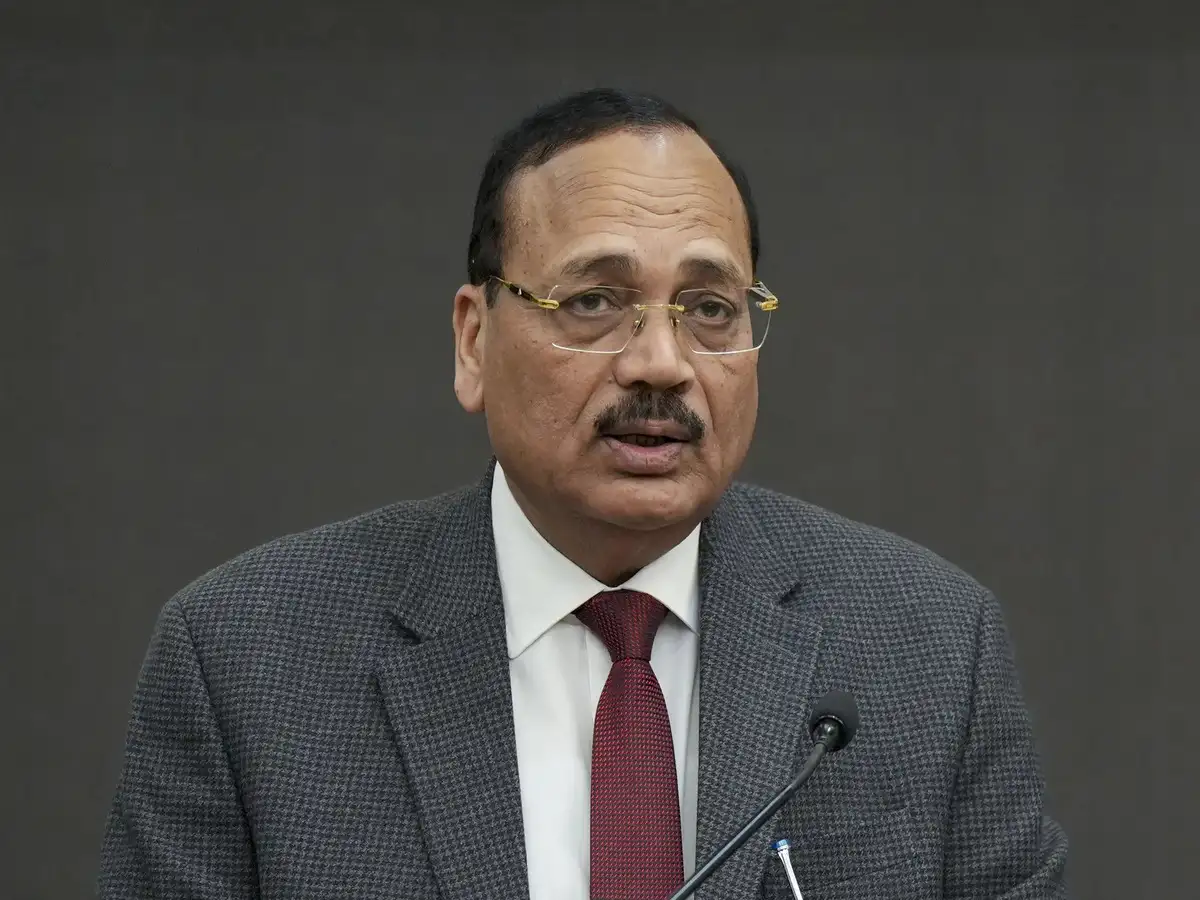
New Delhi, 26 February 2026: The Supreme Court of India on Thursday took suo motu cognisance of contentious content in a newly released NCERT Class 8 Social Science textbook, leading to an ongoing hearing before a Constitutional bench and swift responses from educational authorities.
A bench headed by Chief Justice of India Surya Kant, along with Justices Joymalya Bagchi and Vipul M. Pancholi, is hearing the matter titled In Re: Social Science Textbook for Grade-8 (Part-2) Published by NCERT and Ancillary Issues. The Court’s intervention follows widespread concern over a chapter that discusses “corruption in the judiciary” a reference that has drawn strong objections from members of the Bar and Bench.
The controversy began after senior advocates including Kapil Sibal and Abhishek Manu Singhvi brought the issue to the Supreme Court’s attention during court proceedings, arguing that the chapter’s inclusion of “corruption in the judiciary” in an educational text for Class 8 students was “deeply concerning” and potentially scandalised the institution of the judiciary.
In response, Chief Justice Surya Kant stated in open court that he would not permit anyone to “defame or taint the integrity” of the judiciary and asserted that his office had already taken suo motu action to register the matter. The bench indicated that the issue appeared to be a “calculated move” requiring detailed examination, underscoring the sensitivity of how constitutional institutions are portrayed in educational curricula.
The Class 8 textbook in question, part of the NCERT’s social science curriculum, includes a chapter titled “The Role of the Judiciary in Our Society.” In this chapter, systemic challenges such as judicial corruption, massive case backlogs, and shortages of judges are described as part of contemporary issues faced by the Indian judicial system. The textbook also references judicial accountability mechanisms and data on case pendency.
While NCERT maintains that the objective was to discuss challenges to judicial efficiency including procedural complexities and infrastructure gaps critics argue that explicitly framing “corruption in judiciary” as a challenge can harm the public perception of the institution, especially among young learners.
Following the Supreme Court’s objection, the National Council of Educational Research and Training (NCERT) acknowledged that the inclusion of the content was due to an “inappropriate judgment” and agreed to hold distribution of the textbook on a strict hold and withdraw the controversial portion pending revision. NCERT stated that it will rewrite the chapter after consulting experts, affirming that there was no intent to undermine any constitutional institution.
In parallel, NCERT has initiated efforts to retrieve copies of the withdrawn textbook, including those that have already been sold, to prevent further circulation of the problematic material.
During Thursday’s hearing, the Supreme Court also directed the Government of India to take down online PDF versions of the textbook to limit access to the contentious chapter while the suo motu case is ongoing. Solicitor General Tushar Mehta, appearing for the Centre, stated that the Government stands with the judiciary and will take appropriate action consistent with the Court’s directions.
Legal commentators say the dispute highlights a difficult balance between academic freedom and institutional respect. On the one hand, educators argue for candid discussion of societal challenges; on the other, the judiciary maintains that any reference to its integrity must be carefully framed to uphold public confidence, particularly in foundational education material.
At this stage, the Supreme Court’s suo motu case remains under active hearing, and further judicial pronouncements are expected as the bench deliberates on whether the published textbook content exceeded acceptable limits in portraying a constitutional body. The case has drawn attention from legal scholars, educators, and policymakers alike, reflecting broader tensions over curriculum design and constitutional institutions’ representations in school textbooks.
