


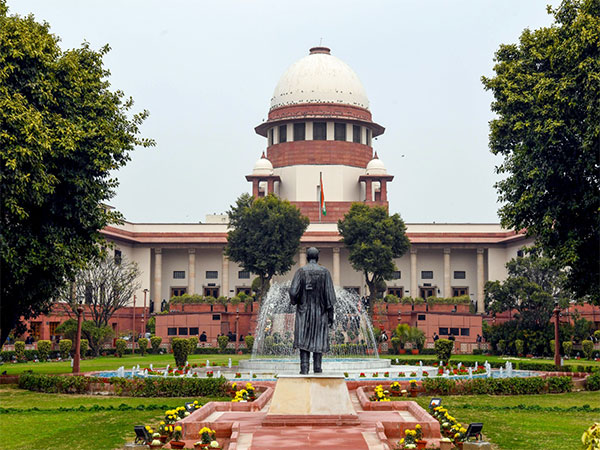
New Delhi, February 27, 2026: The Supreme Court of India has raised serious procedural questions about the nationwide enforcement of the Muslim Personal Law (Shariat) Application Act, 1937 (“Shariat Act”), directing all States and Union Territories (UTs) to file a consolidated report outlining the status of rules framed under the statute.
A Bench comprising Justice Sanjay Karol and Justice Augustine George Masih expressed concern that several States/UTs have not framed the requisite rules under Section 4 of the 1937 Act, effectively leaving the law inoperative in crucial aspects for Muslim citizens seeking its protections.
Under the Shariat Act, a Muslim individual has the statutory option to elect to be governed by Muslim personal law in matters such as marriage, maintenance, inheritance, guardianship and succession. Section 3 empowers a Muslim to make such a declaration before a prescribed authority. However, Section 4 places a specific duty on State Governments to promulgate rules that designate the authority and procedural mechanism for accepting these declarations. Without these rules, the statutory pathway remains practically inaccessible.
This legal design means that, on paper, the right exists but in practice, its exercise depends entirely on procedural infrastructure that many States have failed to provide.
The Supreme Court took note of submissions in a pending civil appeal that the absence of Section 4 rules has created a statutory vacuum, raising constitutional and procedural questions. One of the primary contentions in the case Smt. Gohar Sultan v. Sheikh Anis Ahmad & Anr. is that a deceased Muslim woman could not file a Section 3 declaration simply because the State Government (here, Uttar Pradesh) never framed the rules enabling such a filing. As a result, her estate was subjected to the secular Indian Succession Act, 1925, rather than Muslim personal law.
The Bench noted that until States and UTs frame rules under Section 4, the mechanism for citizens to avail themselves of the Shariat Act will remain theoretical rather than operational.
The Supreme Court issued directions to the standing counsel for all States and UTs to collect and confirm the factual position on rule-making under the Shariat Act. The information is to be submitted to Additional Solicitor General Archana Pathak Dave, who will compile a comprehensive status report for the Court ahead of the next hearing, scheduled for March 18, 2026.
This judicial demand places the responsibility on both the States and the central legal machinery to clarify whether they have complied with a nearly 90-year old law and if not, to explain why procedural rules have not been promulgated despite clear statutory obligations.
The Supreme Court’s intervention underscores a recurring theme in Indian jurisprudence: the gap between law on the books and law in action. A statute that remains dormant due to lack of executive action effectively denies citizens their legal rights especially where personal laws intersect with statutory law.
For Muslim citizens who wish to opt into the Shariat Act regime, the absence of rules means that their personal law rights are instead governed by general secular statutes like the Indian Succession Act, which may impose more stringent requirements. This incongruity raises questions about equal access to personal law regimes and uniformity in legal frameworks across jurisdictions.
By seeking empirical data and rule-making timelines, the Supreme Court appears poised to consider whether the absence of rules itself amounts to a denial of statutory rights, potentially attracting constitutional scrutiny under Articles 14 and 21 of the Constitution.
