


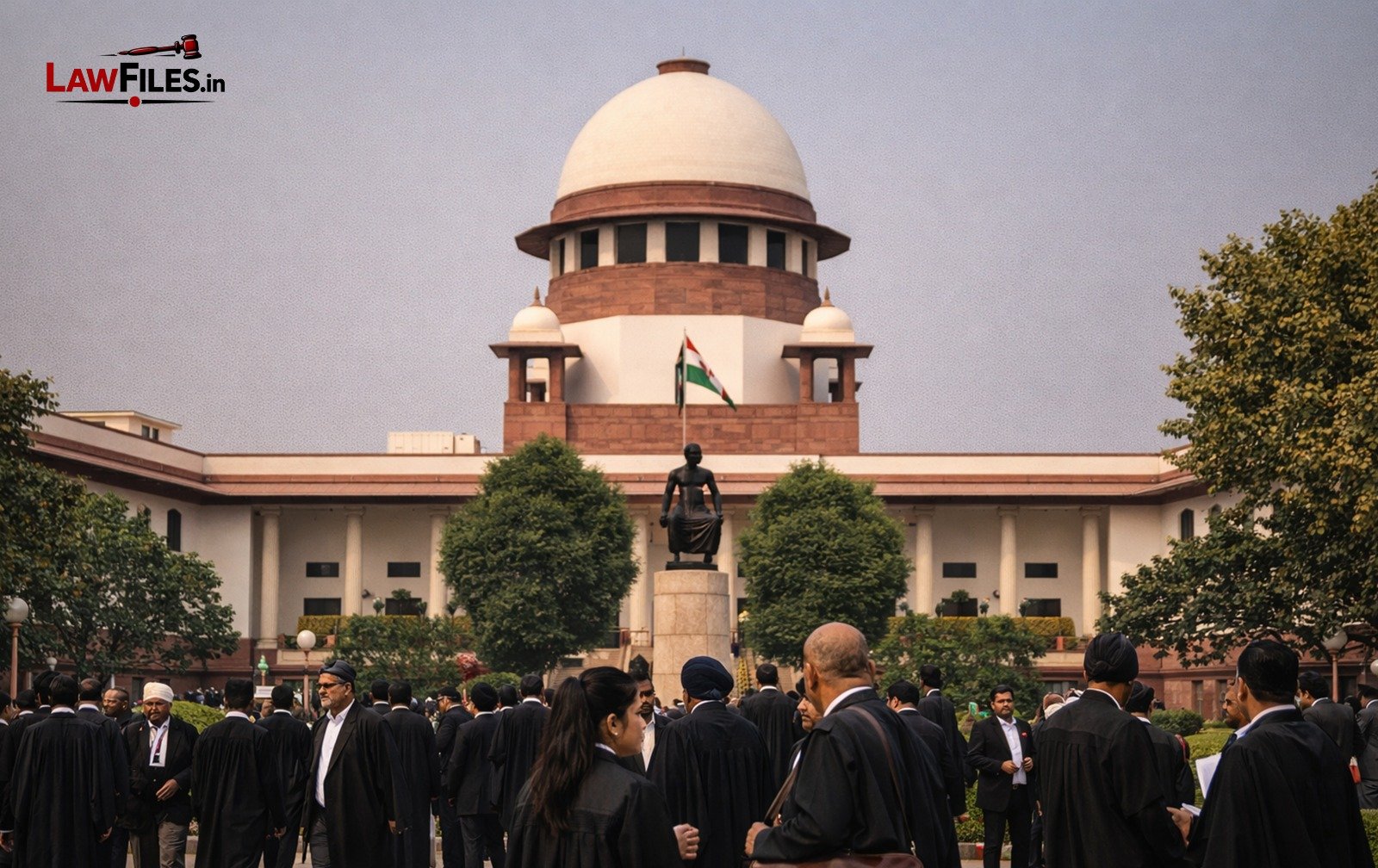
The Supreme Court on October 9 dismissed the Andhra Pradesh government’s challenge to the Andhra Pradesh High Court judgment that struck down the State’s decision to provide enhanced reservation for Backward Classes in rural and urban local body elections. A Bench comprising Justice Dipankar Datta and Justice Sheel Nagu declined to interfere with the High Court’s decision, observing that it had adopted a reasonable approach in scrutinising the material relied upon by the State to justify the enhanced quota. The proceedings turned on a fundamental question of constitutional governance: whether the objective of securing adequate political representation for Backward Classes can, by itself, justify reservation beyond the judicially recognised aggregate ceiling, or whether the State must first establish the necessity and permissible extent of such reservation through a legally adequate empirical exercise. By dismissing the State’s special leave petition, the Supreme Court left the High Court’s decision undisturbed, reinforcing the principle that affirmative action in local self-government must rest on constitutionally sustainable data rather than demographic assertions alone.
The controversy arose after the Andhra Pradesh government issued Government Order No. 105 dated August 20, 2026, restoring 34 per cent reservation for Backward Classes in Panchayat Raj institutions, and Government Order No. 1065 dated August 19, 2026, providing approximately 33.33 per cent reservation for Backward Classes in urban local bodies. These orders sought to restore a higher level of political reservation for BC communities in elections to gram panchayats, mandal and zilla parishads, municipalities and other urban local bodies. The State’s position was that the enhanced quota was necessary to ensure meaningful representation of Backward Classes in local democratic institutions. However, the orders were challenged on the ground that, when combined with reservations for Scheduled Castes and Scheduled Tribes, the proposed allocation exceeded the overall 50 per cent ceiling recognised in the Supreme Court’s reservation jurisprudence. The dispute consequently involved not merely the quantum of reservation but also the constitutional conditions under which a State may depart from the ordinary limit.
During the hearing before the Supreme Court, Senior Advocate Mukul Rohatgi, appearing for the Andhra Pradesh government, questioned why the High Court had rejected the State’s data as unreliable. He argued that there was no sufficient reason to disregard the material relied upon by the government while determining the reservation for Backward Classes. Justice Datta, however, asked the State to demonstrate where the High Court had erred in concluding that the Unified Family Survey could not provide the requisite legal foundation for the enhanced quota. The Bench questioned the statutory basis of the survey and asked under what law it had been conducted. The Court was not persuaded that the existence of a survey or demographic material automatically satisfied the evidentiary requirements governing reservation beyond the established ceiling. It ultimately dismissed the State’s plea, describing the High Court’s approach as reasonable. The exchange was significant because it shifted the emphasis from the government’s objective of increasing representation to the more exacting question of whether the material relied upon was legally capable of justifying the measure adopted.
The Andhra Pradesh High Court had delivered its judgment on October 1, 2026, setting aside both government orders insofar as they prescribed the enhanced reservation. The Division Bench of Chief Justice Lisa Gill and Justice Challa Gunaranjan held that the State had not demonstrated the empirical foundation necessary to justify the proposed allocation beyond the aggregate 50 per cent ceiling. The High Court also directed the government and the State Election Commission to commence the process of conducting elections to rural and urban local bodies at the earliest, preferably within six weeks. The direction was important because the terms of several local bodies had already expired in March and April 2026. The Court therefore had to address two connected but distinct concerns: the legality of the reservation formula and the constitutional obligation to ensure that local democratic institutions did not remain without elected representatives indefinitely.
The High Court’s reasoning was influenced by the earlier decision of the Andhra Pradesh High Court in Birru Prathap Reddy v. State of Andhra Pradesh, delivered on March 2, 2020. In that case, the Court had struck down provisions prescribing a minimum 34 per cent reservation for Backward Classes in local bodies because the aggregate reservation for Scheduled Castes, Scheduled Tribes and Backward Classes reached approximately 59.85 per cent. The Court held that the statutory provisions and the consequential government order could not be sustained in the absence of circumstances satisfying the constitutional principles laid down by the Supreme Court. That ruling had already established a substantial legal obstacle to restoring the same percentage through executive orders without addressing the evidentiary and constitutional deficiencies identified in the earlier litigation. The government’s 2026 orders therefore revived a controversy that had previously been adjudicated rather than entering an entirely unoccupied legal field.
The constitutional framework governing reservations in local body elections differs in important respects from the framework governing reservations in public employment and educational institutions. Articles 243D and 243T specifically address reservation in Panchayats and Municipalities. Article 243D provides for reservation of seats for Scheduled Castes and Scheduled Tribes in proportion to their population in the relevant area and permits State legislatures to provide for reservation of seats or offices of chairpersons in favour of Backward Classes. Article 243T contains a corresponding provision for municipalities. These provisions recognise the constitutional importance of political representation for disadvantaged communities, but they do not confer an unrestricted power to prescribe any percentage of reservation without reference to the governing constitutional principles. The power to promote representation must be exercised within the limits of the constitutional scheme and in accordance with the standards developed by the Supreme Court.
The leading authority in this area is the Constitution Bench judgment in K. Krishna Murthy v. Union of India (2010). The Supreme Court upheld the constitutional validity of enabling provisions permitting reservation for Backward Classes in local bodies but distinguished political reservation in local self-government from reservation in employment and education. It recognised that social and political backwardness can operate differently at the grassroots level, where entrenched local hierarchies may prevent disadvantaged communities from participating effectively in democratic institutions. At the same time, the Court made clear that reservation for Backward Classes in local bodies could not be treated as an unlimited entitlement. The judgment established that the reservation exercise must be supported by a constitutionally adequate assessment of backwardness and representation, and that the aggregate reservation framework must ordinarily remain within the permissible ceiling. The judgment thus attempted to reconcile the need for meaningful representation with the constitutional requirement that reservation remain evidence-based and proportionate.
The Supreme Court subsequently elaborated the requirements governing reservation for Backward Classes in local body elections in Vikas Kishanrao Gawali v. State of Maharashtra (2021). The Court prescribed what has come to be known as the triple test. First, the State must establish a dedicated commission to conduct a rigorous empirical inquiry into the nature and implications of backwardness in the context of local body representation. Second, the quantum of reservation must be specified on the basis of the commission’s recommendations, local body-wise and in accordance with the relevant requirements. Third, the aggregate reservation for Scheduled Castes, Scheduled Tribes and Backward Classes must not ordinarily exceed 50 per cent of the total seats, subject to the recognised exception concerning certain Scheduled Areas. These requirements were intended to prevent reservation percentages from being fixed through general political assessments or population estimates that do not adequately examine the need for representation at the local level.
The triple test is central to understanding why the Andhra Pradesh government’s reliance on the Unified Family Survey did not persuade the Supreme Court. The existence of a survey is not necessarily equivalent to the completion of the empirical inquiry contemplated by Vikas Kishanrao Gawali. A survey may collect information about household composition, caste identity, socioeconomic circumstances or population distribution, but the legal question is whether the material establishes the nature and extent of backwardness in the specific context of political representation in local bodies. A general demographic exercise cannot automatically answer how many seats should be reserved, whether existing representation is inadequate, or what allocation would be proportionate to the conditions prevailing in individual local bodies. The relevant inquiry must be designed to answer the constitutional question for which the data is being invoked.
This distinction is important because the State’s obligation is not satisfied merely by producing figures that indicate a substantial Backward Class population. Population share and political under-representation are related but distinct considerations. A community may constitute a significant proportion of the population, yet the legally appropriate reservation percentage must still be determined through the framework prescribed by the Constitution and judicial precedent. The State must establish why reservation at the proposed level is necessary, how the assessment has been undertaken, and whether the resulting allocation complies with the aggregate ceiling. Without such a reasoned connection between the evidence collected and the percentage prescribed, the exercise risks becoming a numerical justification for a policy decision already made.
The 50 per cent ceiling itself requires careful understanding. It is not a rule that every category of reservation in every constitutional context must invariably be capped at 50 per cent without exception. Indian reservation jurisprudence recognises that the applicable framework depends upon the nature of the reservation, the governing constitutional provision and the relevant precedents. However, in the context of reservations for Scheduled Castes, Scheduled Tribes and Backward Classes in local body elections, the Supreme Court has expressly developed a framework under which the aggregate reservation ordinarily cannot exceed 50 per cent, subject to the limited exception recognised for certain Scheduled Areas. A State seeking to prescribe a higher percentage cannot simply rely on the general objective of social justice. It must satisfy the requirements laid down by the Supreme Court, and a departure unsupported by the requisite empirical exercise cannot be sustained merely because the State considers the enhanced quota desirable.
The distinction between a statutory reservation and an executive government order is also significant. Andhra Pradesh had previously amended its Panchayat Raj legislation to provide for a minimum 34 per cent reservation for Backward Classes in specified seats and offices. The earlier litigation resulted in the relevant provisions being struck down because their operation caused the aggregate reservation to exceed the permissible ceiling. In 2026, the State attempted to restore the enhanced percentage through fresh government orders. But an executive order cannot, by itself, overcome a judicially identified constitutional deficiency. Where a previous decision has held that a particular reservation formula is impermissible in the absence of the required factual foundation, the State must address that deficiency through a legally compliant process. Reissuing the same percentage under a new administrative order does not resolve the underlying constitutional problem.
At the same time, the ruling should not be interpreted as a rejection of the principle that Backward Classes require adequate representation in local self-government. The Constitution expressly recognises that objective. The legal objection concerns the method through which the percentage was determined and the absence of material sufficient to justify crossing the established ceiling. The distinction is essential because a finding that a particular reservation order is unconstitutional does not mean that the State is permanently prohibited from undertaking a fresh exercise to determine appropriate representation. The High Court left room for the State to revisit the question after undertaking the empirical exercise required by the Supreme Court’s judgments. What the State cannot do is treat the social desirability of reservation as a substitute for compliance with the constitutional method.
There is also a democratic consequence to the litigation. The High Court’s direction to begin elections within six weeks reflects the principle that local self-government cannot remain indefinitely under unelected administration because the State has failed to finalise a lawful reservation formula. Part IX and Part IX-A of the Constitution establish a framework for regular elections to Panchayats and Municipalities. Article 243E provides for the duration of Panchayats and requires elections to be completed before the expiry of their term, subject to the constitutional provisions governing dissolution. Article 243U establishes a corresponding framework for municipalities. The continuity of elected local institutions is therefore not a matter of administrative convenience but part of the constitutional design. The State must pursue reservation policies in a manner that does not unnecessarily obstruct the periodic renewal of democratic representation.
The High Court also rejected the argument that the ongoing Special Intensive Revision of electoral rolls should prevent the conduct of local body elections. It held that the revision exercise did not, by itself, constitute an impediment to proceeding with the elections on the basis of the applicable electoral rolls. That aspect of the judgment reinforces the distinction between separate administrative exercises that may overlap in time but do not automatically suspend one another. The legality of the reservation formula had to be addressed on its own merits, while the electoral process remained subject to the applicable statutory and constitutional requirements. The government could not rely upon the existence of a separate electoral-roll exercise as a general reason to postpone elections indefinitely.
The Supreme Court’s dismissal of the State’s special leave petition therefore has consequences beyond the immediate dispute over the percentage of Backward Class reservation. It reinforces the principle that affirmative action must be supported by evidence that is relevant to the constitutional purpose for which the policy is adopted. It also underlines the limits of executive discretion when a reservation formula has already encountered judicial scrutiny. The State retains substantial authority to design policies promoting representation, but that authority must be exercised through a process capable of withstanding constitutional review. Data collection, expert assessment, the determination of local representation and compliance with the aggregate ceiling must form part of a coherent exercise rather than being treated as separate formalities.
The ruling also raises a constructive question for future reservation policy: what kind of empirical inquiry should governments undertake before fixing the quantum of political reservation? A legally robust exercise would need to identify the relevant population and representation patterns, examine the conditions of backwardness in the context of local governance, assess the extent to which Backward Classes are inadequately represented, and explain how the proposed allocation follows from the findings. The methodology must be transparent enough to demonstrate that the percentage was derived from the evidence rather than selected first and justified later. Where the data is collected through a general survey, the State must explain how it meets the specific requirements of the triple test and why it is suitable for determining reservation in individual local bodies.
Ultimately, the Supreme Court’s refusal to interfere with the Andhra Pradesh High Court’s judgment establishes that the pursuit of social justice must remain anchored in constitutional discipline. Reservation for Backward Classes in local body elections is a legitimate and constitutionally recognised objective, but the percentage cannot be determined solely through executive preference or demographic assertion. The State must demonstrate, through the prescribed empirical process, why the proposed reservation is necessary and how it complies with the governing legal framework. At the same time, the constitutional commitment to regular local elections requires the government to move forward with the electoral process rather than allow a dispute over reservation to leave local institutions without elected representatives. The central message of the decision is therefore twofold: meaningful representation must be pursued through evidence-based and legally sustainable measures, and constitutional governments must ensure that the pursuit of one democratic objective does not indefinitely obstruct another.
