


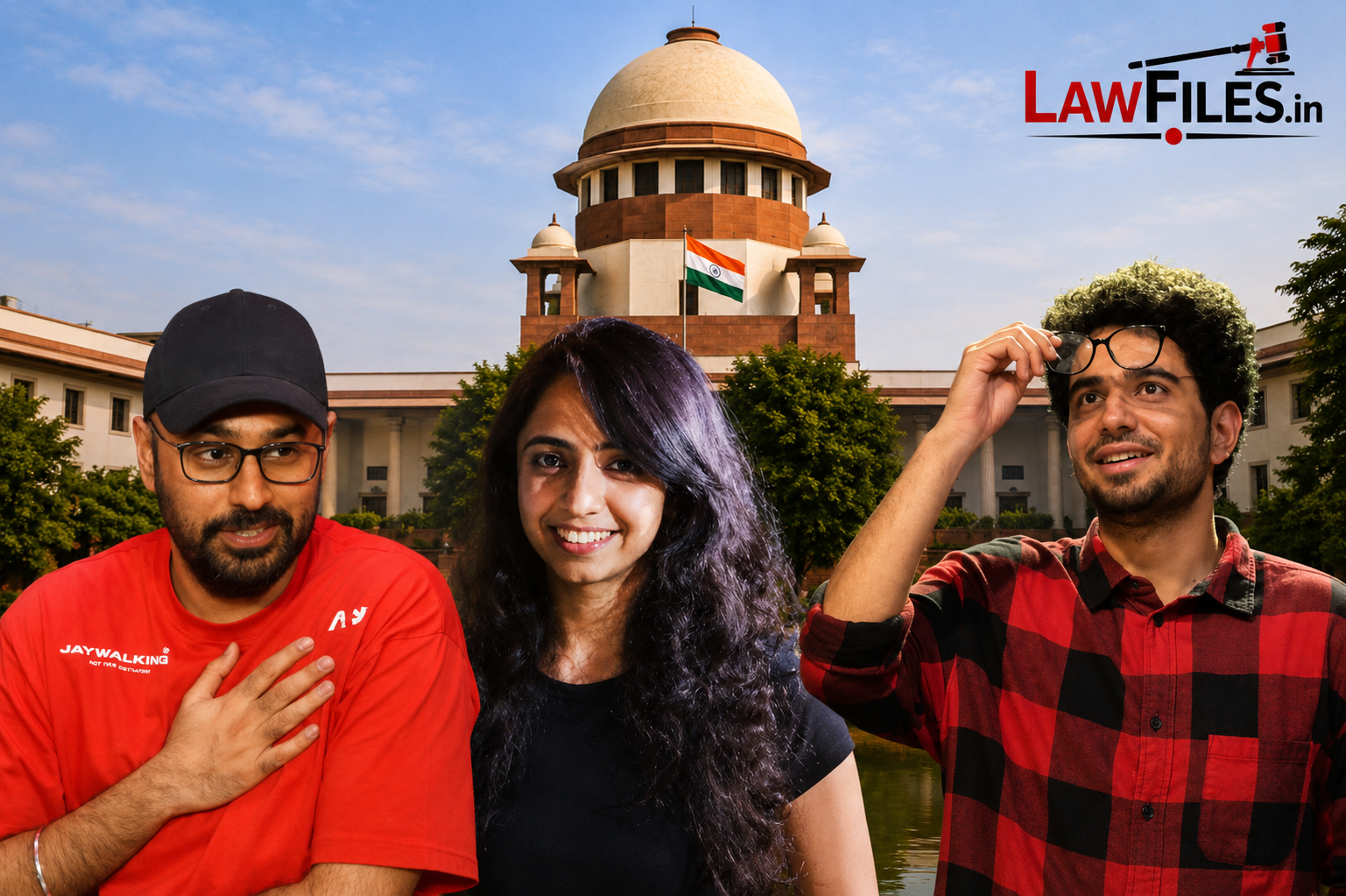
The Supreme Court has brought to an end the criminal proceedings arising from the controversial remarks concerning persons with disabilities made by comedian Samay Raina and other content creators in connection with the show India’s Got Latent. The Court quashed the FIRs against Raina and the other accused after taking note of the subsequent steps undertaken by them to acknowledge the harm caused, engage with the disability community and contribute towards awareness and support initiatives. The decision marks an important development in the long-running proceedings because the Court has attempted to reconcile two competing constitutional concerns—the protection of dignity and equality of persons with disabilities on the one hand, and the legitimate space available to humour, satire and freedom of expression on the other.
The proceedings originated in the controversy surrounding content circulated from India’s Got Latent, which attracted widespread criticism after jokes and remarks were alleged to have ridiculed persons with disabilities and rare genetic disorders. A petition was subsequently brought before the Supreme Court by the SMA Cure Foundation, an organisation working in the field of Spinal Muscular Atrophy, drawing attention to what it described as insensitive and degrading content concerning persons living with disabilities.
The controversy quickly moved beyond the question of whether particular jokes were offensive. It raised a much larger legal question: when does speech presented as comedy cease to be merely distasteful and become legally actionable conduct? The answer is not straightforward because Indian constitutional law protects freedom of speech and expression, including forms of satire and humour, while simultaneously recognising dignity, equality and protection against discrimination as core constitutional values.
The Supreme Court’s handling of the proceedings over the past year reflected this complexity. Rather than immediately deciding that the disputed remarks necessarily constituted criminal offences, the Court explored the broader consequences of disability-related humour, the obligations of content creators and the inadequacy of existing legal safeguards in dealing with online material that humiliates or stereotypes persons belonging to vulnerable communities.
At an earlier stage, the Court had directed the concerned comedians and content creators to publish unconditional apologies on their respective digital platforms. The Bench had made clear that humour itself was not the problem; the difficulty arose when humour became a means of ridiculing a community or exploiting the vulnerabilities of persons suffering from rare diseases. The Court had also emphasised that the degree of repentance should correspond to the seriousness of the offending conduct. These directions demonstrated that the Court was looking beyond a purely punitive model and examining whether corrective and restorative measures could also address the harm caused.
The latest order is significant because the Court ultimately chose to terminate the criminal proceedings after considering the subsequent conduct of the accused. Reports indicate that the Court took note of their efforts to make amends, including initiatives intended to generate awareness regarding Spinal Muscular Atrophy and raise funds for persons affected by disabilities. Earlier, the Court had directed the comedians to organise programmes aimed at generating awareness and supporting persons with disabilities, and they subsequently informed the Court that such events had been organised.
This evolution in the proceedings deserves attention from a criminal-law perspective. Criminal justice traditionally focuses upon determining whether an offence was committed and, if so, imposing the consequences prescribed by law. The Supreme Court’s approach here demonstrates a more nuanced understanding where the alleged conduct concerns speech and the harm is partly social and dignitary in nature. The Court appears to have considered whether the objective of justice could be achieved through acknowledgment, corrective action and public engagement rather than through the continuation of multiple criminal prosecutions.
Such an approach should not, however, be misunderstood as establishing a general rule that an apology automatically extinguishes criminal liability. Criminal offences are created by statute, and where the ingredients of an offence are established, subsequent conduct cannot ordinarily erase the offence merely because the accused expresses regret. The present case has to be understood in the context of the Court’s extraordinary jurisdiction, the nature of the proceedings, the subsequent undertakings and the particular circumstances placed before it.
The Court’s reasoning is particularly important in distinguishing between offence, offensiveness and social harm. Not every offensive statement is a criminal offence. Constitutional democracy necessarily protects a substantial area of expression that may be unpleasant, provocative or unpopular. If criminal law were triggered every time a person was offended, freedom of speech would become practically meaningless.
At the same time, the constitutional protection of speech does not operate in a vacuum. Article 19(1)(a) guarantees freedom of speech and expression, but Article 19(2) permits reasonable restrictions on specified grounds. More importantly, Article 21’s protection of life and personal liberty has developed through decades of constitutional jurisprudence into a guarantee of dignity. Article 14 and the equality framework further reinforce the principle that persons with disabilities cannot be treated as objects of humiliation or exclusion.
The Rights of Persons with Disabilities Act, 2016 also represents a legislative commitment towards equality, dignity, non-discrimination and participation of persons with disabilities in society. The Act reflects a significant shift from a charity-based understanding of disability towards a rights-based model. That transformation has implications not only for physical accessibility and employment but also for the manner in which society represents and speaks about persons with disabilities.
The case therefore sits at an important intersection between the constitutional right to speak and the constitutional obligation to respect dignity.
The Supreme Court’s earlier observations demonstrated that it was conscious of the difference between humour that is self-directed or socially innocuous and humour that derives its entertainment value from humiliating a vulnerable community. Justice Joymalya Bagchi had observed during the proceedings that humour can be part of life, but when it becomes a vehicle for creating a breach of sensibility at the community level, different considerations arise. The Court had also noted that influencers increasingly commercialise their speech, making the impact of their content substantially different from a private conversation.
That observation introduces the concept of commercial speech into the debate. A professional comedian or digital content creator may have greater freedom to use satire because humour is their chosen medium of expression. But where content is monetised, sponsored, distributed to millions and designed to generate commercial returns, the speaker’s social responsibility arguably becomes greater as well.
This does not mean that commercial speech receives no constitutional protection. It means that the legal assessment cannot ignore the scale, reach and context of the communication. A joke made before a small audience and content deliberately distributed through digital platforms to millions of viewers may have radically different consequences, even if the words are identical.
The digital environment has transformed the traditional relationship between speaker and audience. A television broadcast or live comedy performance operates within identifiable editorial and regulatory structures. Online content can be clipped, reproduced, algorithmically promoted and redistributed indefinitely. Material that was originally intended for a particular audience can rapidly reach communities and individuals who were never part of the original context. The Samay Raina proceedings therefore also expose the difficulty of applying traditional speech regulations to algorithmically amplified content.
The Court had earlier expressed concern about the absence of sufficiently precise safeguards governing harmful online content and had asked the Union Government to consider an appropriate regulatory framework. It also questioned whether the existing legal framework adequately addressed content that ridicules persons with disabilities and rare genetic disorders. The Court had even asked the Centre to consider whether a more stringent law, comparable in certain respects to legislation protecting other vulnerable communities, was required.
That aspect of the proceedings could have long-term significance even though the FIRs have now been quashed. The immediate criminal cases may be over, but the regulatory question remains: should Indian law create a specific statutory framework for degrading or humiliating persons with disabilities through digital content?
The answer requires considerable caution. Criminal law should ordinarily be used sparingly, particularly in the area of speech. Creating overly broad offences against “offensive” or “insensitive” speech could produce a chilling effect and encourage politically or socially motivated complaints. A provision that criminalises ridicule without clearly defining the prohibited conduct could be susceptible to arbitrary enforcement.
At the same time, existing laws may not always adequately capture forms of digital humiliation that are discriminatory but do not neatly fall within conventional categories such as obscenity, defamation or incitement. The law therefore faces a difficult drafting challenge: how to protect dignity without criminalising disagreement, satire or legitimate criticism.
The Court’s latest decision does not resolve that legislative question. Instead, it demonstrates a possible judicial preference for corrective measures in an individual case while leaving the broader regulatory debate to the legislature and appropriate authorities.
The restorative dimension of the proceedings is particularly noteworthy. Following the Court’s directions, the comedians reportedly organised programmes aimed at generating awareness and raising funds for people affected by Spinal Muscular Atrophy. The Court had also encouraged the participation of persons with disabilities in those programmes so that the affected community could have a direct voice rather than merely being the subject of discussion.
From a legal-policy perspective, that is a meaningful development. Traditional criminal punishment operates after harm has occurred. Restorative measures attempt to repair some portion of that harm by requiring the person responsible to engage with the affected community and understand the consequences of the conduct. Such measures are not substitutes for criminal law in every case, but in appropriate circumstances they can supplement the justice process.
The Court’s approach also reflects the idea that public influence carries corresponding responsibility. Social-media personalities are no longer merely entertainers speaking to a limited audience. Some have audiences comparable to, or larger than, traditional media organisations. Their content can influence social attitudes, particularly among younger viewers.
When a large digital audience is exposed repeatedly to jokes portraying disability as something inherently laughable, the problem is not confined to the feelings of the individual who becomes the target of the joke. Such representations can reinforce stereotypes, normalise exclusion and make discrimination appear socially acceptable.
This is where the constitutional concept of dignity becomes especially relevant. Dignity is not simply protection from physical harm. It encompasses recognition of an individual’s equal worth and status within society. A rights-based disability framework requires society to move away from representations that reduce persons to their impairment or use disability as a shorthand for weakness, incompetence or ridicule.
However, the constitutional response must remain proportionate. Comedy has historically functioned as a mechanism for challenging social conventions, including conventions that appear respectable or powerful. Satire can be uncomfortable precisely because it challenges accepted assumptions. A legal framework that protects dignity must therefore be capable of distinguishing between punching at power, challenging prejudice and humiliating vulnerable individuals because of an inherent characteristic.
That distinction cannot always be determined by looking at isolated words. Context, intention, target, audience, repetition, commercial setting and the broader message may all be relevant. A joke involving disability could conceivably be used to challenge ableist attitudes, whereas another joke could reinforce the very prejudice that disability-rights law seeks to dismantle.
The Supreme Court’s proceedings are therefore valuable because they resist an overly simplistic binary between “free speech” and “censorship”. The actual legal question is more sophisticated: what level of restriction is justified when speech causes dignitary harm, and what remedy is proportionate to that harm?
The quashing of the FIRs also illustrates the importance of the Court’s extraordinary jurisdiction under Article 142 of the Constitution and its inherent ability to bring litigation to an end where continuing the proceedings would not serve the ends of justice. The Court’s power to mould relief is particularly significant in cases involving multiple FIRs arising from substantially the same underlying material.
Multiple criminal proceedings in different jurisdictions can themselves become punitive. Even where individual FIRs may technically be maintainable, forcing an accused to defend substantially identical allegations across several States can create enormous financial and procedural burdens. The Supreme Court has repeatedly intervened in appropriate cases to prevent criminal law from becoming a tool of harassment through repetitive proceedings.
The present decision must therefore also be understood against the background of the procedural history of the case. What began as complaints concerning online content developed into multiple criminal proceedings and eventually required intervention by the country’s highest court. The decision to bring the proceedings to an end prevents the controversy from continuing indefinitely through fragmented prosecutions.
There is also a lesson concerning proportionality in criminal justice. If the accused have publicly apologised, undertaken corrective initiatives, engaged with the affected community and taken steps directed towards repairing the harm, the Court may legitimately ask whether the continuation of criminal proceedings remains necessary to achieve the objectives of justice. That does not negate the seriousness of the original allegations. Rather, it recognises that justice can sometimes involve correction and rehabilitation in addition to punishment.
This approach is particularly relevant where the conduct does not involve physical violence or direct deprivation of rights but nevertheless causes social harm. The legal system must be able to respond to dignitary injury without automatically defaulting to incarceration or prolonged prosecution.
At the same time, the Court’s decision should not be read as conferring a “celebrity exception” to criminal law. The fact that the accused are popular content creators cannot itself justify quashing criminal proceedings. The relevant considerations must arise from the legal and factual circumstances of the case, including the nature of the allegations, the procedural history and the subsequent conduct of the accused.
Indeed, the Court’s earlier proceedings demonstrate that it did not treat the matter casually. The accused were directed to appear personally, were required to apologise publicly and were subsequently subjected to financial consequences when the Court found that some directions had not been complied with. In July 2026, the Supreme Court imposed a ₹3 lakh fine each on Samay Raina and other content creators after finding that undertakings and directions given to the Court had not been honoured.
This history is important. The eventual quashing of the FIRs did not follow immediately from the controversy. The Court had previously insisted upon compliance and had demonstrated that undertakings given to the Court were binding. The later decision to close the proceedings therefore appears to have followed a longer process in which the Court assessed the conduct of the accused after the original incident.
The distinction between the July proceedings and the latest order is particularly instructive. The Court’s imposition of costs for non-compliance shows that judicial indulgence is not unconditional. The accused could not treat the Court’s directions as optional. The eventual relief came in the context of subsequent compliance and corrective steps, rather than as an automatic consequence of celebrity status or an apology.
The proceedings consequently demonstrate a nuanced model of judicial intervention: firmness where court orders are breached, but flexibility where meaningful corrective action has been undertaken and continuation of criminal proceedings is no longer considered necessary in the interests of justice.
For disability-rights jurisprudence, the case has another important implication. The Court has repeatedly treated the dignity of persons with disabilities as a constitutional concern rather than merely a matter of social etiquette. The proceedings have brought public attention to the fact that disability-based humiliation is not harmless simply because it is packaged as comedy.
Yet the Court has simultaneously avoided, at least in the final disposition, creating an expansive judicially crafted offence for “insensitive humour”. That restraint is institutionally appropriate. The creation of new criminal offences is principally a legislative function. If Parliament considers existing laws inadequate, it can formulate a narrowly tailored offence with clearly defined elements, safeguards and procedural protections.
A future statutory framework, if considered, would need to address several questions. Would it cover only intentional ridicule? Would recklessness suffice? Would satire or artistic expression be protected? Would a complaint require proof of harm? Would commercial amplification matter? Would a public apology or corrective action have statutory relevance? These are legislative policy questions that cannot safely be answered through an overly broad judicial prohibition.
The present judgment therefore leaves an important constitutional space open. The Court has recognised the harm, but it has not converted every instance of harmful speech into a criminal offence. That balance is essential for maintaining both disability rights and free-expression principles.
The decision also reinforces the idea that persons with disabilities should not be treated merely as passive recipients of protection. Their participation in the corrective programmes directed by the Court is significant because it shifts the conversation from “speaking about disability” to listening to persons living with disability. Legal protection becomes more meaningful when affected communities have a role in shaping the social response to harm.
From a broader perspective, the case shows how courts are increasingly confronted with disputes generated by the creator economy. Traditional legal categories were developed for newspapers, broadcasters, theatres and publishers. Digital creators operate differently: they can produce, distribute and monetise content independently, often without conventional editorial gatekeepers.
This creates a regulatory challenge without an easy solution. Imposing traditional media restrictions wholesale on individual creators could unnecessarily restrict expression. Leaving the digital environment entirely unregulated, however, may expose vulnerable communities to systematic harassment and degrading content. The answer is likely to require a combination of existing criminal law, disability-rights protections, platform accountability, civil remedies and carefully drafted future regulation.
The Supreme Court’s handling of the Samay Raina proceedings provides a useful example of why context-specific judicial remedies can sometimes be preferable to broad restrictions on speech. Instead of declaring a sweeping rule about comedy, the Court responded to the particular conduct before it, required corrective steps and ultimately assessed whether the proceedings should continue.
The final outcome should therefore be viewed neither as a victory for unrestricted offensive humour nor as a rejection of disability rights. It is better understood as an attempt to maintain constitutional equilibrium. The Court has recognised that persons with disabilities deserve dignity and protection from degrading stereotypes, while also recognising that criminal prosecution must be grounded in law and that speech restrictions cannot be imposed merely because expression is controversial or offensive.
The lasting significance of the case may ultimately lie outside the FIRs themselves. The proceedings have forced public attention onto the relationship between humour, disability, digital influence and constitutional dignity. They have also demonstrated that accountability need not always take the form of imprisonment or prolonged criminal litigation. Public apology, awareness-building, engagement with affected communities and financial support can, in appropriate cases, become part of a restorative response.
At the same time, the episode is a reminder to content creators that the freedom associated with digital platforms comes with responsibilities. The larger the audience and the greater the commercial reach, the more consequential the content becomes. A joke that depends upon the humiliation of a vulnerable community may generate views and revenue, but its social cost cannot simply be dismissed as the unavoidable price of comedy.
The Supreme Court’s decision to quash the FIRs against Samay Raina and the other accused therefore closes the criminal chapter without closing the constitutional debate. The immediate proceedings are over, but the questions they raised remain relevant: how should Indian law distinguish satire from discriminatory humiliation; how should disability dignity be protected online; how should commercial digital speech be regulated; and what remedies are appropriate when harmful speech falls into a grey area between moral wrong and criminal offence?
The most constructive lesson from the proceedings is that constitutional freedom and constitutional dignity need not be treated as mutually destructive values. Freedom of expression protects the right to make jokes, challenge conventions and engage in satire. Dignity protects individuals and communities from being reduced to objects of humiliation. The task of law is not to eliminate uncomfortable humour, but to ensure that the response to harmful expression remains proportionate, principled and grounded in clearly defined legal standards.
In ultimately closing the criminal proceedings after taking note of the accused’s efforts to make amends, the Supreme Court has adopted a remedial approach that places responsibility alongside liberty. The decision does not erase the controversy or declare the disputed remarks acceptable. Nor does it establish that apologies can routinely substitute for criminal accountability. What it does demonstrate is that the ends of justice can sometimes be better served by genuine corrective action than by the indefinite continuation of criminal prosecution.
For a constitutional democracy, that may be the most important takeaway from the case: the law must be capable of condemning degrading conduct without becoming insensitive to freedom of expression, and it must protect vulnerable communities without allowing criminal law to become an instrument for suppressing every offensive idea. The Supreme Court’s handling of the Samay Raina proceedings reflects that difficult but necessary search for equilibrium.
