


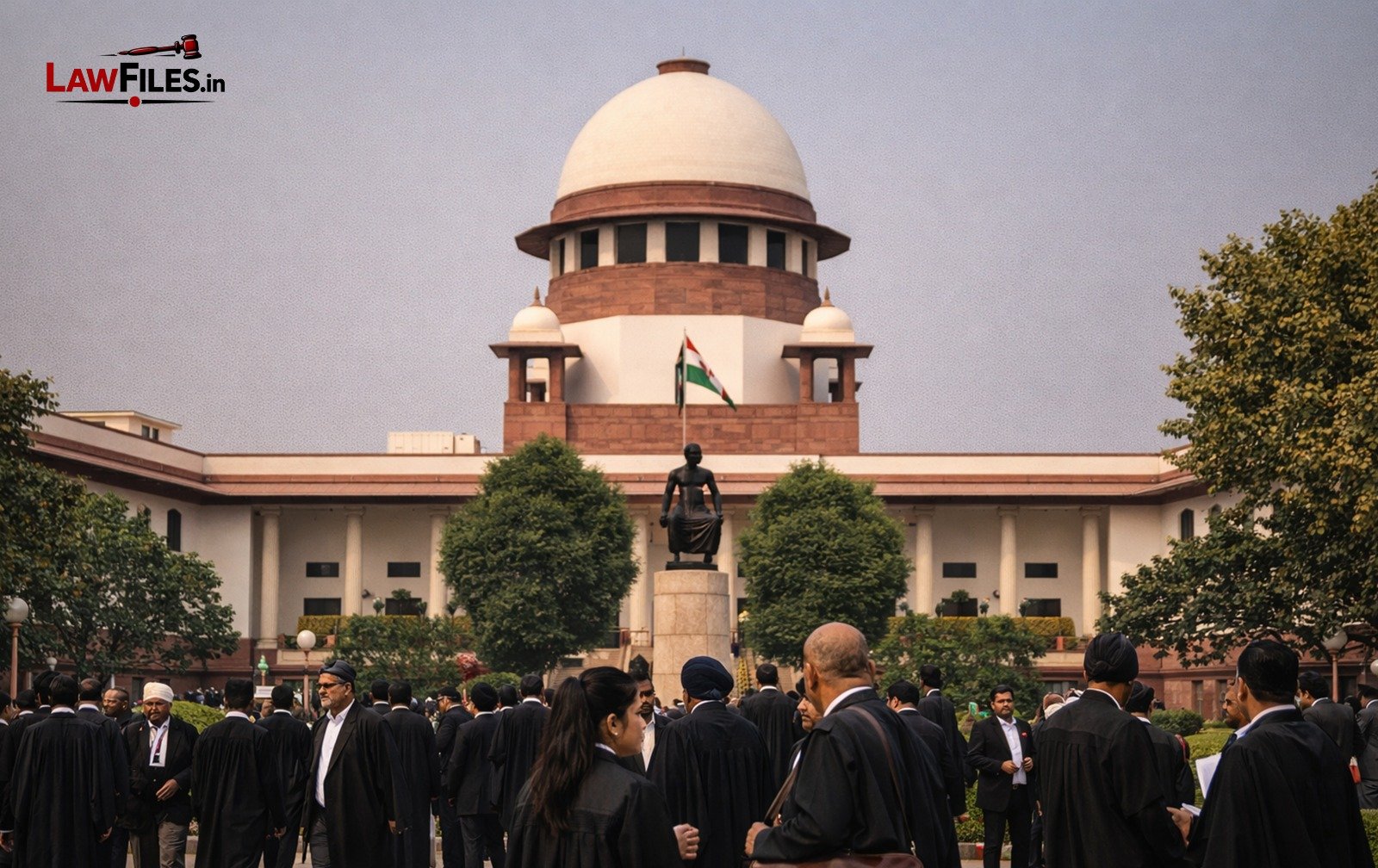
The Supreme Court has reaffirmed a fundamental principle governing tax settlements: once the Income Tax Settlement Commission has passed a final order determining the taxable income of an assessee, the Assessing Officer cannot subsequently reopen matters covered by that settlement through the ordinary reassessment machinery. A Bench comprising Justice S.V.N. Bhatti and Justice N.V. Anjaria dismissed the Revenue’s appeal against the Delhi High Court and held that permitting the Assessing Officer to independently invoke Sections 147 and 148 of the Income Tax Act, 1961, after the Settlement Commission has conclusively determined the matter would effectively destroy the statutory finality attached to settlement proceedings.
The ruling in Assistant Commissioner of Income Tax & Anr. v. M/s Omaxe Limited is significant not merely because it protects an assessee from a second round of tax proceedings. Its larger importance lies in the Court’s interpretation of Chapter XIX-A of the Income Tax Act as a self-contained statutory mechanism designed to bring an end to tax disputes through settlement. Once the Revenue participates in that specialised process and the Settlement Commission passes its final order, the Department cannot subsequently return to the ordinary assessment machinery and seek to reopen the very matters that have already formed part of the settlement.
The dispute arose in relation to Assessment Year 2006-07. Omaxe Limited, a real estate company, had claimed a substantial deduction under Section 80IB(10) in respect of its housing projects. The provision, as applicable to the relevant period, granted a tax deduction to eligible undertakings developing and constructing qualifying housing projects, subject to statutory conditions concerning the nature and characteristics of the projects. Omaxe’s return reflected the deduction as part of its computation of taxable income.
During the pendency of the assessment proceedings, Omaxe approached the Income Tax Settlement Commission under Section 245C. Its settlement application covered several assessment years, including 2006-07. The Settlement Commission subsequently passed its final order under Section 245D(4) on March 17, 2008. For the relevant assessment year, the Commission determined the assessee’s taxable income after taking into account the deduction claimed under Section 80IB(10), along with the additional income disclosed during the settlement process.
At that stage, the Revenue participated in the settlement proceedings. The significance of that participation became central to the Supreme Court’s reasoning. The statutory scheme does not envisage a situation in which the Revenue first participates in a comprehensive settlement, permits the Settlement Commission to determine the assessee’s taxable income and then, years later, seeks to reopen the same assessment through an Assessing Officer acting under the ordinary reassessment provisions.
The controversy resurfaced after a survey conducted by the Revenue on December 17 and 18, 2009. According to the Department, documents and material discovered during the survey indicated that certain housing projects of Omaxe contained commercial portions exceeding the statutory limits prescribed under Section 80IB(10). The Revenue consequently took the position that the deduction claimed by the company had been wrongly allowed.
The Department thereafter issued a notice under Section 148 proposing to reopen the assessment. The proposed reassessment sought to disallow approximately ₹55.58 crore claimed as deduction under Section 80IB(10) in relation to four projects—Omaxe City Lucknow, Omaxe City Sonepat, Omaxe Heights Sonepat and Omaxe Heights Faridabad. The reassessment ultimately resulted in an addition of approximately ₹65.65 crore to the company’s taxable income.
Omaxe challenged the reopening before the Delhi High Court. Its fundamental contention was that the Settlement Commission had already dealt with the relevant assessment year and that its final order had acquired conclusiveness under Section 245-I. Consequently, the Assessing Officer could not use Section 148 as an indirect mechanism for reopening matters that had already been settled under Chapter XIX-A.
The Revenue, on the other hand, sought to distinguish the deduction issue from the settlement proceedings. Its position, in substance, was that the Settlement Commission had not separately adjudicated upon the correctness of the Section 80IB(10) deduction and that the subsequent survey had brought to light material which justified reopening the assessment. The Department therefore sought to preserve the ordinary reassessment power despite the earlier settlement.
The Delhi High Court rejected that approach and quashed the reassessment proceedings. The matter consequently reached the Supreme Court, requiring the Court to examine the relationship between the Settlement Commission’s jurisdiction under Chapter XIX-A and the Assessing Officer’s ordinary reassessment jurisdiction under Sections 147 and 148.
The Supreme Court approached the dispute through the structure of Chapter XIX-A itself. The Court examined Sections 245C, 245D, 245D(6), 245F, 245H and 245-I and concluded that the statutory scheme was designed to create a comprehensive mechanism for settling tax disputes once the Settlement Commission assumed jurisdiction. Section 245F(2), in particular, gives the Commission exclusive jurisdiction over the matters forming part of the settlement proceedings once the application is admitted.
This exclusivity is not a procedural technicality. It is central to the very rationale of tax settlement. A settlement mechanism exists because both the taxpayer and the Revenue require a point at which uncertainty comes to an end. If the Department could reopen the settled assessment through a subsequent reassessment notice, the taxpayer would never receive the certainty that settlement proceedings are intended to provide.
The Court therefore rejected an interpretation under which Sections 147 and 148 could operate independently after a final settlement order in relation to the same subject matter. Such an interpretation, the Court observed, would allow the regular assessment machinery to re-enter a field from which the Settlement Commission had already assumed exclusive jurisdiction.
The Court’s reasoning can be reduced to a fundamental proposition: a statutory settlement cannot be both final and perpetually provisional at the same time.
Section 245-I gives a settlement order finality in respect of the matters stated therein. That finality is subject to the limited statutory exceptions contemplated by Chapter XIX-A and does not eliminate the constitutional power of judicial review. But it does prevent an Assessing Officer from treating the settlement order as though it were merely an ordinary assessment capable of being reopened whenever subsequent material becomes available.
The Court relied upon its earlier jurisprudence concerning the Settlement Commission, including CIT v. Express Newspapers Ltd., Brij Lal v. CIT, Jyotendrasinhji v. S.I. Tripathi and Kotak Mahindra Bank Ltd. v. CIT. These authorities establish the specialised character of the Settlement Commission’s jurisdiction and the limited scope of judicial intervention in settlement orders. The Supreme Court’s reliance on this line of precedent reinforces the proposition that Chapter XIX-A is not simply an alternative route to an ordinary assessment; it creates a distinct statutory mechanism with its own consequences for finality.
The reference to Brij Lal is particularly instructive. The Supreme Court had earlier characterised Chapter XIX-A as a self-contained code and emphasised that the Settlement Commission’s jurisdiction and the ordinary assessment machinery cannot simultaneously operate over the same subject matter in a manner that defeats the statutory scheme. The present judgment applies that principle to the reassessment power under Section 148.
The Court also rejected the Revenue’s attempt to treat the Section 80IB(10) deduction as something that remained outside the settlement merely because the Settlement Commission’s order did not separately adjudicate the deduction as an isolated issue. The relevant question was not whether the Commission had written a separate finding on every component of the assessee’s computation. The question was whether the deduction formed part of the computation of income that was before the Commission and was reflected in the final determination of taxable income.
The Court found that it did. Omaxe had disclosed its gross income and claimed the deduction in its return. The settlement proceedings covered the relevant assessment year, and the Commission ultimately determined the assessee’s taxable income after taking the computation into account. The Revenue therefore could not later characterise the same deduction as though it had never formed part of the settlement proceedings.
This aspect of the judgment is particularly important for tax litigation. A settlement order must necessarily be read in the context of the computation and proceedings that preceded it. If finality were limited only to issues expressly discussed in individual paragraphs of the Commission’s order, the Revenue could potentially reopen numerous components of the assessment by arguing that a particular deduction or adjustment had not been separately adjudicated.
Such an approach would defeat the purpose of determining “net taxable income” through the settlement process. The Supreme Court instead adopted a functional interpretation: where an item forms part of the income computation placed before the Commission and the final order determines the taxable income after taking that computation into account, the Revenue cannot later reopen that matter through Section 148 merely by giving it a different description.
The judgment also deals with an important statutory safeguard available to the Revenue. The Court did not hold that every Settlement Commission order is immune from challenge under every circumstance. The Income Tax Act itself contemplates a specific remedy where the Revenue alleges that a settlement was obtained through fraud or misrepresentation.
Section 245D(6) provides the statutory route in such a situation. If the Revenue genuinely believes that the settlement was procured through fraud or misrepresentation, it can approach the Settlement Commission under the mechanism provided by the Act. The existence of this specific route is critical because it demonstrates that Parliament did not leave the Revenue remediless; it simply prescribed the manner in which a concluded settlement may be questioned.
In the Omaxe case, the Revenue had in fact invoked that mechanism. It approached the Settlement Commission alleging that the settlement had been obtained through misrepresentation. The Commission, however, rejected the application. It concluded that the material relied upon by the Department did not establish misrepresentation and that the dispute concerning the permissible commercial area under Section 80IB(10) essentially involved a question of statutory interpretation rather than fraud on the Commission.
This fact made the Revenue’s subsequent invocation of Section 148 considerably more problematic. Having already pursued the statutory mechanism designed to challenge the settlement on grounds of misrepresentation and having failed before the Commission, the Department could not simply bypass the consequences of that decision by returning to the ordinary reassessment machinery.
The Court’s reasoning therefore protects the integrity of statutory hierarchy. A litigant cannot ordinarily circumvent an adverse determination under a special statutory mechanism by invoking a general provision for a second attempt at the same dispute. The principle has relevance beyond tax law: where Parliament creates a specific procedure for reopening or challenging a concluded determination, the general procedural route cannot ordinarily be used to nullify that special mechanism.
The Supreme Court’s observation that constitutional judicial review remains available is equally significant. The finality under Section 245-I does not oust the jurisdiction of constitutional courts. The High Courts under Article 226 and the Supreme Court under the constitutional framework retain judicial review over jurisdictional errors, violations of statutory provisions and other recognised grounds. What is unavailable, however, is an independent reassessment by the Assessing Officer of a matter already settled by the Commission.
This distinction preserves an appropriate balance between finality and legality. Finality does not mean that an administrative or quasi-judicial authority becomes infallible. It means that the statutory system determines the channels through which its decision may be challenged. The Revenue cannot bypass the appellate or constitutional structure merely because it has subsequently formed a different view of the merits.
The judgment also reinforces an important concept in tax administration: certainty is itself a component of a functioning tax system. Taxpayers require the ability to determine their liabilities with some degree of finality. If a settlement concluded after extensive disclosure and participation by the Revenue can be reopened years later through an Assessing Officer’s notice, settlement proceedings cease to provide the commercial and legal certainty for which they were created.
This has particular relevance in complex tax disputes, where assessments may involve multiple years, numerous transactions and substantial financial exposure. Settlement mechanisms exist partly because conventional litigation can be prolonged and uncertain. The value of settlement lies precisely in bringing the dispute to a legally recognised conclusion. The Supreme Court’s ruling protects that bargain.
At the same time, the judgment should not be interpreted as granting taxpayers a mechanism to conceal information and then obtain permanent immunity through settlement. Section 245C itself requires a full and true disclosure of undisclosed income and the manner in which such income was derived. Fraud or material misrepresentation can trigger the statutory consequences contemplated by Section 245D(6). The protection granted by the present judgment is therefore protection for a genuine and legally concluded settlement—not a shield for fraudulent concealment.
The distinction is critical. The judgment protects finality because the Revenue participated in the settlement process and had the opportunity to raise its objections. It does not prevent the State from acting where the statutory requirements for settlement were fundamentally undermined by fraud or misrepresentation. The Court has therefore preserved the integrity of the settlement mechanism without converting it into an unconditional amnesty.
From the Revenue’s perspective, the judgment also carries an administrative lesson. Investigation and verification must be undertaken with appropriate diligence before a matter reaches final settlement. Once the Revenue participates in settlement proceedings, the opportunity to contest the assessee’s disclosures and computations must be meaningfully utilised. The Department cannot treat the settlement as an interim arrangement and reserve an independent reassessment power for later use.
This does not mean that the Revenue must anticipate every future piece of evidence. Tax administration inevitably involves investigations that may continue beyond the initial stages. But where the law provides a specific statutory mechanism for addressing new evidence suggesting fraud or misrepresentation, the Department must use that mechanism rather than attempting to recreate ordinary reassessment jurisdiction after final settlement.
The ruling also offers a useful distinction between an error of law and fraud. The Settlement Commission’s rejection of the Revenue’s Section 245D(6) application was significant because the dispute over the interpretation of Section 80IB(10) did not, by itself, establish that Omaxe had deceived the Commission. A taxpayer advancing a legal interpretation that the Revenue subsequently considers incorrect is not necessarily guilty of misrepresentation.
This is a vital distinction in tax administration. If every subsequent disagreement over statutory interpretation could be labelled as misrepresentation, the finality of settlement orders would become illusory. The allegation of fraud or misrepresentation must therefore have a factual foundation; it cannot simply be a different interpretation of the law repackaged as misconduct.
The judgment also reinforces the principle that statutory powers must be exercised within their proper jurisdictional boundaries. The Assessing Officer possesses broad powers under the Income Tax Act, including reassessment powers subject to statutory conditions. But broad jurisdiction is not unlimited jurisdiction. Where another statutory authority has already exercised exclusive jurisdiction and passed a final order, the AO cannot invoke Section 148 as though the earlier order did not exist.
This is where the judgment assumes importance beyond Chapter XIX-A. It illustrates a general administrative-law principle: the existence of a power does not answer the question of whether that power remains available in the particular statutory context. Section 148 may ordinarily permit reassessment, but its operation cannot be isolated from the rest of the Income Tax Act.
The Supreme Court’s conclusion that allowing independent AO jurisdiction under Sections 143(2), 148 or 154 after settlement would defeat the statutory finality is therefore rooted in harmonious interpretation. The provisions must operate together rather than one provision being used to nullify the carefully constructed consequences of another.
The ruling is also relevant to the principle of legitimate expectation. When an assessee enters a statutory settlement process, makes disclosures and submits to the specialised jurisdiction of the Settlement Commission, there is an institutional expectation that the settlement will bring the relevant controversy to an end, subject to the exceptions expressly recognised by Parliament. Allowing a later reassessment would undermine that expectation and potentially discourage taxpayers from using settlement mechanisms in the first place.
From the standpoint of tax policy, that would be counterproductive. Settlement provisions are designed to facilitate voluntary disclosure, resolution and collection of revenue without prolonged litigation. Their effectiveness depends upon taxpayers believing that a final settlement actually means finality. If taxpayers perceive that the Revenue can reopen settled matters years later through ordinary assessment powers, the incentive to make full disclosures and resolve disputes through settlement could diminish.
The decision therefore protects not only Omaxe but the credibility of the settlement architecture itself.
It is equally important to note what the Supreme Court did not decide. The Court did not determine the substantive correctness of Omaxe’s claim for deduction under Section 80IB(10) as an abstract matter. Nor did it hold that the deduction would necessarily have survived had the issue been considered in ordinary assessment proceedings. The Court’s decision rests upon jurisdiction and finality: once the issue formed part of the settlement concluded by the ITSC, the Assessing Officer could not reopen it through Section 148.
That distinction is important because finality and substantive correctness are separate legal concepts. A decision may become final because the law assigns finality to the process through which it was made. The finality prevents endless reopening even where a later authority might prefer a different view. The legal system accepts such finality because endless litigation is itself contrary to the rule of law.
The Supreme Court’s ruling accordingly sends a clear message to both sides of the tax administration. For taxpayers, a properly concluded Settlement Commission order provides meaningful protection against subsequent reassessment of matters covered by the settlement. For the Revenue, the judgment emphasises the need to raise objections at the correct stage and to use the specific statutory mechanism if fraud or misrepresentation is genuinely alleged.
The decision can therefore be understood as a judgment on the architecture of tax certainty. The Income Tax Act does not merely provide the State with powers to assess and collect revenue; it also creates procedures through which disputes are brought to an end. The legitimacy of taxation depends not only upon the State’s authority to collect tax but also upon predictable procedures governing how liability is determined and when that determination becomes final.
Ultimately, the Supreme Court has drawn a firm jurisdictional boundary: once the Income Tax Settlement Commission has finally determined the matters covered by its settlement order, the Assessing Officer cannot reopen those matters through the ordinary reassessment route. If the Revenue believes that the settlement was procured through fraud or misrepresentation, it must pursue the statutory mechanism provided for that purpose. If the Revenue disagrees with the Commission’s legal conclusion, it cannot convert that disagreement into a fresh Section 148 proceeding.
The judgment thus preserves the delicate balance between revenue collection and legal certainty. Tax authorities retain substantial investigative and reassessment powers, but those powers operate within the statutory framework Parliament has created. Settlement proceedings, once validly concluded, cannot be treated as provisional merely because the Revenue later discovers material it wishes to use in a different proceeding.
The deeper lesson of Omaxe Limited is therefore one of finality in public law. A State that creates a specialised mechanism for settling disputes must also respect the consequences of that mechanism. Otherwise, settlement becomes nothing more than a temporary pause before another round of litigation. By preventing the Assessing Officer from reopening a concluded settlement through Sections 147 and 148, the Supreme Court has reaffirmed that finality is not an administrative convenience it is an essential component of the rule of law and the credibility of statutory dispute-resolution mechanisms.
