


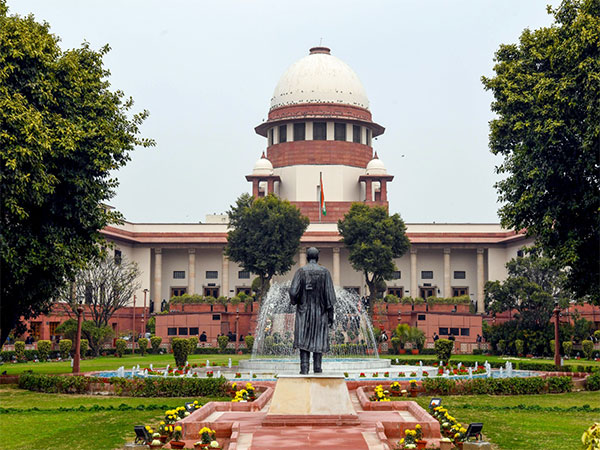
The Supreme Court of India has raised significant concerns over the interpretation and implementation of its landmark Lalita Kumari v. Government of Uttar Pradesh judgment, observing that the ruling which traditionally requires police to register a First Information Report (FIR) upon receipt of information disclosing a cognizable offence has been abused extensively, and that its application must be re-examined in the context of the Bharatiya Nagarik Suraksha Sanhita (BNSS), one of India’s new criminal statutes.
A bench led by Chief Justice of India Surya Kant and comprising Justice Joymalya Bagchi was hearing a petition challenging several provisions of the BNSS, including Section 173(3), which permits the police to conduct a preliminary enquiry before registering an FIR in certain cases.
The 2013 Lalita Kumari ruling held that if information provided to police discloses a cognizable offence, the police must ordinarily register an FIR without delay, thereby preventing police arbitrariness and safeguarding the investigative process. However, the Supreme Court’s bench noted that the judgment has also resulted in a flood of frivolous FIRs and subsequent legal disputes as complainants seek immediate FIR registration even where detailed facts are not yet verified.
Senior Advocate Menaka Guruswamy, appearing for the petitioners, argued that BNSS’s Section 173(3) which allows a preliminary inquiry with the permission of a Deputy Superintendent of Police before FIR registration in certain cases punishable with imprisonment between three and seven years contradicts the Lalita Kumari principle by empowering the police to decide on prima facie validity before filing an FIR.
In response, the bench did not immediately strike down the BNSS provision but questioned whether the rigid mandate of Lalita Kumari has worked as intended on the ground. **Chief Justice Kant **observed that judicial pronouncements such as Lalita Kumari sometimes operate from “ivory towers” without fully appreciating societal realities or ground situations in rural and marginalised communities. The Chief Justice remarked that the judgment’s insistence on automatic FIR registration may have led to an excessive number of FIRs being lodged, clogging courts and investigative machinery.
Justice Bagchi added that Lalita Kumari itself recognised limited categories where preliminary enquiries could be conducted such as matrimonial disputes, medical negligence and certain other sensitive cases and that BNSS’s broader provision may reflect an extension of that principle rather than an outright contradiction. The Court noted that whether the classification in Section 173(3) is rational and constitutional is a matter for full hearing and evaluation after the law has operated for some time.
This exchange reflects a broader judicial conversation about balancing mandatory FIR registration with the need to prevent frivolous or vexatious FIRs that arise out of impulsive complaints or personal disputes. Critics of the traditional rule have argued that immediate FIR registration without any pre-filing discretion can burden police and courts and sometimes aggravate social tensions. Supporters of the Lalita Kumari approach underline its role in protecting lawful reporting of cognizable offences and preventing police stone-walling of legitimate complaints.
The bench emphasised that an additional preliminary enquiry threshold before FIR registration may be appropriate in certain classes of cases, but that the constitutional validity of such a mechanism particularly its consistency with Article 14 (equality before law) requires detailed judicial scrutiny in later hearings. Consequently, the matter has been adjourned for detailed hearing after the Holi vacations.
Legal experts note that the Supreme Court’s comments signal an emerging nuanced approach to criminal procedure policy, one that seeks to recognise the practical challenges faced by police and litigants without unduly diluting procedural safeguards for complainants. Whether Parliament’s reform effort in the BNSS will withstand constitutional scrutiny and how courts will ultimately interpret Section 173(3) remains to be seen.
