


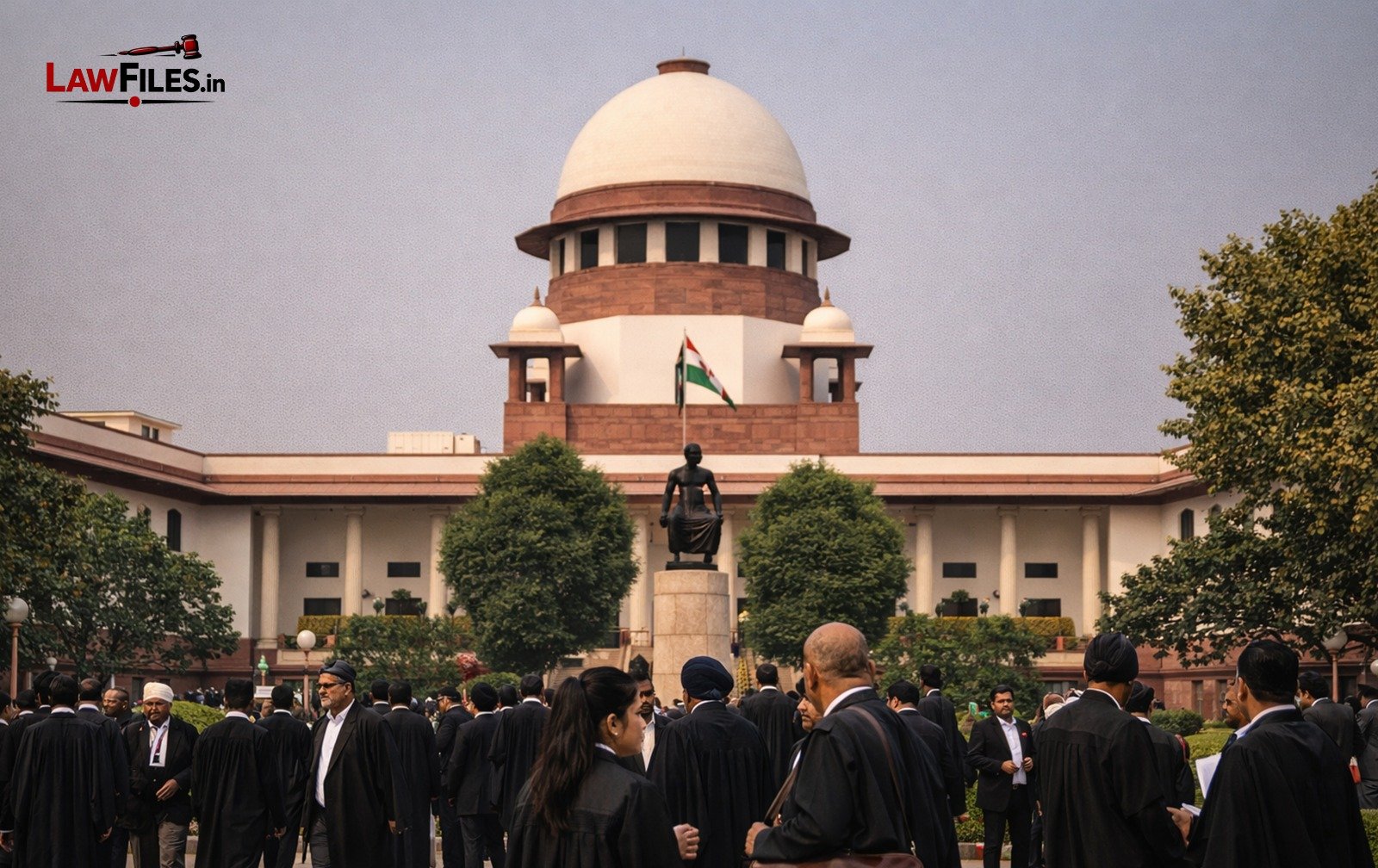
The Supreme Court has issued a comprehensive set of directions aimed at strengthening the implementation of laws dealing with dowry-related offences, bringing renewed judicial attention to a social practice that has remained criminalised for decades but continues to survive through social acceptance, economic pressure and inadequate enforcement. A Bench of Justice Sanjay Karol and Justice Augustine George Masih, while examining compliance with its earlier directions in State of Uttar Pradesh v. Ajmal Beg, has directed States, Union Territories and High Courts to improve the functioning of Dowry Prohibition Officers, strengthen support mechanisms for women, prioritise prosecutions involving dowry death and matrimonial cruelty, reduce unnecessary adjournments and undertake periodic monitoring of long-pending cases. The Court has also called for sustained public-awareness programmes addressing dowry, gender equality, constitutional values and women’s rights, making it clear that the problem cannot be addressed merely through criminal prosecution after violence has occurred.
The proceedings are significant because the Supreme Court has approached dowry not simply as an issue of individual criminal liability but as a systemic problem requiring coordinated intervention by the legislature, executive, judiciary, police, prosecution machinery and civil society. The Court observed that despite the Dowry Prohibition Act, 1961 having remained on the statute book for decades, its implementation has repeatedly encountered difficulties. The persistence of dowry demands, including in circumstances where the practice is openly known within families and communities, demonstrates the gap between legislative prohibition and social reality. The Court’s intervention therefore seeks to address both sides of that gap: ensuring that existing criminal laws are enforced effectively while simultaneously attempting to reduce the social legitimacy that allows the practice to continue.
The present directions arise from the Court’s earlier judgment of December 15, 2025, in State of Uttar Pradesh v. Ajmal Beg. The Supreme Court had previously examined the continuing difficulties surrounding prosecutions relating to dowry death and cruelty and had sought greater institutional commitment towards enforcement of the Dowry Prohibition Act. The latest order represents a compliance-oriented continuation of that judicial exercise. Instead of treating the earlier directions as having exhausted their purpose, the Court has required States and High Courts to demonstrate what has actually been done, how many cases remain pending, at what stage those cases are stalled and whether the institutional mechanisms created by law are functioning in practice.
The Court’s approach is important because the existence of legislation does not by itself establish effective legal protection. The Dowry Prohibition Act, 1961 criminalises the giving, taking and demanding of dowry, while the criminal law separately addresses conduct that may culminate in cruelty or dowry-related death. Under the earlier Indian Penal Code, Section 498A dealt with cruelty by a husband or his relatives, while Section 304B dealt specifically with dowry death. Under the Bharatiya Nyaya Sanhita, 2023, which replaced the IPC, corresponding provisions are found in Sections 85 and 80 respectively. The statutory transition does not diminish the underlying legal policy: the State has expressly recognised dowry-related harassment and death as serious offences requiring criminal intervention.
Section 304B IPC, now corresponding to Section 80 of the BNS, has a particularly distinctive evidentiary structure. It applies where the death of a woman occurs otherwise than under normal circumstances within seven years of marriage and evidence establishes that soon before her death she was subjected to cruelty or harassment in connection with a demand for dowry. The statutory presumption contained in the law of evidence further strengthens the prosecution’s position where the foundational facts constituting dowry death are established. These provisions reflect the legislative recognition that dowry-related deaths frequently occur within the privacy of matrimonial homes, where conventional forms of direct evidence may be difficult to obtain.
Section 498A IPC, corresponding to Section 85 of the BNS, similarly recognises that cruelty within a marriage can take forms extending beyond physical violence. Mental cruelty and harassment connected with unlawful demands can fall within the statutory framework. The significance of these provisions lies in the recognition that domestic abuse often operates as a continuing process rather than a single isolated incident. Repeated demands, humiliation, threats and coercive conduct may cumulatively create an environment in which the victim is subjected to sustained pressure. The criminal law consequently seeks to intervene before such conduct escalates into more serious violence, while retaining separate and aggravated provisions for cases resulting in death.
Against this statutory background, the Supreme Court’s insistence upon speedy trials becomes particularly important. A criminal prosecution that remains pending for years can undermine the objectives of both victim protection and fair adjudication. For a complainant or the family of a woman who has died in suspicious circumstances, prolonged proceedings can mean years of uncertainty, repeated appearances and continuing emotional and financial strain. At the same time, an accused person is constitutionally entitled to a fair and reasonably expeditious trial. Delay therefore harms both sides of the criminal process and weakens public confidence in the administration of justice.
The Court has accordingly directed that cases involving Section 304B and Section 498A of the IPC, their corresponding provisions under the BNS, and offences under the Dowry Prohibition Act should, as far as practicable, receive priority treatment. District judiciaries have been asked to identify cases pending for more than three years, particularly those that remain stuck at the stages of framing of charge or recording of evidence. The direction is not intended to create an artificial hierarchy in which all other criminal cases are ignored. Rather, it requires courts to recognise the particular urgency of cases involving dowry death and serious matrimonial cruelty while continuing to administer the broader criminal docket fairly.
The Court has also prescribed directory benchmarks for the progression of trials. Trial courts have been asked to endeavour to secure the prompt appearance of accused persons after filing of the charge-sheet and to consider framing charges preferably within 60 to 90 days from the filing of the charge-sheet. Once charges are framed, evidence should begin within a reasonable period, with courts encouraged to proceed with evidence continuously or on a day-to-day basis where practicable. These directions are expressly subject to statutory safeguards and genuine exceptional circumstances, including cases involving numerous accused, supplementary charge-sheets, forensic delays or the non-availability of accused persons.
The qualification that these timelines are directory rather than mechanically mandatory is legally significant. Criminal trials cannot always be compressed into predetermined periods without compromising fairness. An accused is entitled to adequate opportunity to defend himself, prosecution witnesses may not always be immediately available, forensic reports may take time and complicated cases can involve multiple accused and extensive documentary evidence. The Court has therefore avoided converting the judicial direction into an inflexible formula. Instead, it has established benchmarks intended to combat avoidable delay while allowing courts to depart from them where circumstances genuinely require it.
The Court has also addressed one of the most persistent causes of trial delay: repeated adjournments. Trial courts and High Courts have been directed to discourage unnecessary adjournments and to record reasons whenever adjournments are granted. This direction reflects a larger concern repeatedly expressed by constitutional courts that procedural indulgence can gradually transform into systemic delay. An adjournment that appears harmless in isolation may become highly consequential when repeated over several years, particularly in criminal trials where witnesses may relocate, memories may fade and documentary or forensic evidence may become increasingly difficult to secure.
Witness management has consequently become a specific component of the Court’s directions. Trial courts have been asked to prepare a witness calendar immediately after charges are framed, identifying dates for examination of material witnesses, service of summons and the sequence in which evidence will be recorded. Investigating officers have also been directed to ensure timely service of summons and production of witnesses. The purpose is not simply administrative efficiency. Structured witness management can reduce the possibility that a prosecution repeatedly fails to produce witnesses and then seeks fresh dates, thereby allowing a trial to remain pending indefinitely.
The Court has further addressed the problem created when investigating officers are transferred or retire during a prolonged prosecution. In such situations, the absence of the original investigating officer can become a ground for repeated adjournment. The Supreme Court has directed that substitute or holding officers be nominated sufficiently in advance so that the progress of the trial does not depend upon the continued availability of one particular officer. This is a seemingly administrative detail but reflects a larger judicial recognition that criminal justice systems fail not only because of major legal errors but also because of small institutional gaps that accumulate over time.
The directions concerning absent defence counsel also attempt to preserve the accused’s right to representation without permitting repeated absence to become a mechanism for indefinite delay. Where counsel for an accused repeatedly remains absent without sufficient justification, courts may consider appointing legal aid counsel or an amicus to ensure that proceedings can continue. The safeguard is important because expediting trials cannot mean proceeding unfairly against an accused who has no effective legal representation. The Court has therefore attempted to reconcile speedy adjudication with the constitutional guarantee of a fair trial.
Another important feature of the order is the emphasis on technology. High Courts have been asked to endeavour to integrate stage-wise pendency tracking, digital dashboards and automated alerts into existing court information systems. Old cases should be identifiable without requiring every individual matter to depend upon manual monitoring. A case pending for several years should trigger institutional attention before delay becomes irreversible. Technology, in this context, is not being treated as a substitute for judicial discretion but as an administrative tool for identifying cases requiring intervention.
The direction concerning High Court supervision is equally significant. High Courts have been asked to periodically review old criminal appeals, revisions, petitions under the provisions corresponding to Section 482 CrPC and bail matters arising from dowry-related prosecutions. Particular attention is to be given to cases where interim orders have stayed trial proceedings for prolonged periods. A stay order may be entirely justified when granted, but circumstances can change with time. If a criminal trial remains suspended for several years without periodic reconsideration, the temporary protection can effectively become a permanent interruption of the prosecution. The Court’s emphasis on review seeks to prevent that transformation.
The question of stays has long been recognised as an important component of criminal docket management. The Supreme Court has repeatedly held that criminal proceedings should not ordinarily remain indefinitely frozen because of interim orders, particularly when no continuing justification exists. The latest directions apply this general principle specifically to dowry-related prosecutions. The objective is not to eliminate judicial protection against unlawful proceedings but to ensure that interim relief does not become an invisible source of permanent delay.
The Court’s directions extend beyond prosecution because it recognises that criminal law alone cannot eradicate dowry. The Bench emphasised that the practice of giving and taking dowry remains deeply rooted in society. This observation is important because the legal response to dowry has existed for more than six decades, yet the social practice continues in different forms. The persistence of dowry demonstrates that criminalisation, while necessary, cannot by itself transform social behaviour. Laws can prohibit conduct and punish offenders, but they cannot immediately eliminate cultural expectations concerning marriage, status, wealth and family prestige.
The Court has therefore directed States and Union Territories to undertake sustained awareness and sensitisation programmes concerning dowry, gender equality, constitutional values and women’s rights. These programmes are expected to involve education departments, women and child development authorities, State Legal Services Authorities and other appropriate institutions. The direction places legal literacy within the preventive framework rather than treating it merely as a remedial tool after an offence has already occurred.
The emphasis upon schools and educational institutions is particularly significant. Social attitudes toward marriage and dowry are often formed long before an individual enters adulthood. Teaching constitutional equality, dignity and gender justice at an early stage may therefore have greater long-term value than campaigns undertaken only after matrimonial conflict has arisen. The Supreme Court’s approach recognises that social reform requires engagement with the values that precede the conduct sought to be criminalised.
The Court has also stressed the need to make existing institutional support mechanisms functional rather than merely nominal. States have been directed to strengthen One Stop Centres, Family Counselling Centres, Women Help Desks, victim-assistance mechanisms, helplines and online grievance systems. The underlying problem is familiar: legal rights are of limited practical value when the person who needs protection does not know where to approach, receives fragmented assistance or encounters multiple administrative barriers before reaching an effective remedy.
The role of Dowry Prohibition Officers has received particular emphasis. The Dowry Prohibition Act provides for such officers as part of the enforcement framework. Yet the effectiveness of any statutory officer depends upon actual appointment, adequate authority, training, resources and public awareness of the officer’s role. The Supreme Court has therefore directed States and Union Territories to ensure effective functioning of these officers and to disseminate information about their availability. A statutory institution that exists only on paper cannot fulfil the preventive and enforcement objectives for which it was created.
This aspect of the judgment reflects an important administrative-law principle: institutional existence and institutional effectiveness are not the same thing. Government notifications appointing officers or creating mechanisms may satisfy the formal requirement of the law, but constitutional governance demands that those institutions be accessible and functional. The Court’s insistence upon reporting details regarding Dowry Prohibition Officers indicates that it expects measurable implementation rather than assurances of compliance.
The Court’s earlier directions in the Dowry Prohibition Act litigation had already recognised the need for effective enforcement machinery and public awareness. The latest proceedings therefore represent a continuation of a judicial concern that has existed for years. What distinguishes the present order is the degree of monitoring contemplated. States and High Courts must now provide periodic compliance reports on January 15, May 15 and September 15 each year until there is a substantial reduction in pendency. These reports must contain data on disposal and pendency, the stage at which cases remain pending, awareness initiatives, functioning of Dowry Prohibition Officers and training programmes.
The reporting mechanism converts a broad judicial aspiration into an administrative accountability structure. Instead of asking the State merely whether it has complied, the Court has specified the information that must be supplied. This permits the Court to compare performance across reporting periods and identify whether pendency is actually falling. It also enables the judiciary to identify whether the principal difficulty lies in investigation, charge-sheeting, framing of charges, witness attendance, trial, appeals or prolonged stays.
However, judicial monitoring of social legislation raises an important institutional question. Courts can issue directions to enforce existing statutory obligations, particularly where the executive has failed to implement them effectively. But courts cannot substitute themselves for legislatures or permanently administer government programmes. The constitutional legitimacy of the present directions therefore rests upon their connection with duties already contemplated by the Dowry Prohibition Act, criminal law and the broader constitutional obligation to protect life, dignity and equality. The Court is not creating a new criminal offence; it is seeking to ensure that existing legal mechanisms function effectively.
The directions concerning mediation and counselling are carefully qualified for the same reason. The Court has indicated that in matrimonial disputes arising primarily from discord, and where allegations do not involve death, grievous physical violence or other serious offences, courts may explore mediation or counselling where legally permissible and appropriate. This qualification is crucial because matrimonial disputes can involve both genuine breakdown of relationships and serious criminal conduct. Treating every allegation as a matter for settlement could undermine the protection intended by criminal law, while refusing every possibility of consensual resolution could unnecessarily prolong disputes that are essentially civil or relational in nature.
The Court has therefore drawn a clear boundary around the mediation direction. Cases involving dowry death, grievous violence and other serious offences cannot be casually converted into counselling exercises. Mediation may be appropriate in some matrimonial disputes, but it cannot become a mechanism for pressuring victims into abandoning serious criminal allegations. The distinction reinforces the principle that alternative dispute resolution must operate within the limits of criminal law and cannot override the public character of serious offences.
The emphasis on specialised and sensitised prosecutors also reflects an important institutional insight. Dowry-related offences often involve complex family relationships, allegations of continuing harassment and evidentiary questions concerning events occurring inside a matrimonial household. Prosecutors dealing with such cases need not merely know the statutory provisions; they must understand the social context without allowing that context to compromise evidentiary standards. The Court has therefore encouraged States to designate prosecutors experienced in and sensitised to offences against women.
The same applies to judicial officers, police officials, protection officers and counsellors. A legal system can produce poor outcomes even where the statutory provisions are strong if those implementing them lack adequate training. The Court’s direction for periodic sensitisation programmes therefore seeks to address the human element of enforcement. Training should ideally enable officials to distinguish genuine allegations from unsupported claims, recognise patterns of coercive conduct and preserve the rights of both victims and accused persons.
The Court’s emphasis on speedy trials must also be understood in the context of the rights of accused persons. Criminal justice cannot become victim-centric at the cost of the presumption of innocence and the right to a fair hearing. An accused facing allegations under Section 498A or Section 304B remains entitled to due process, effective legal representation, disclosure of evidence and the opportunity to cross-examine witnesses. The Supreme Court’s directions acknowledge this by making the prescribed timelines subject to statutory safeguards and exceptional circumstances.
This balance is especially important because prosecutions under Section 498A have historically generated debate concerning both genuine domestic violence and allegations of misuse. The existence of concerns regarding misuse, however, cannot justify weakening the protection available to women facing genuine cruelty. The appropriate legal response is careful investigation, reasoned prosecution and fair adjudication. The Supreme Court’s present directions appear to follow that middle path: strengthen enforcement while preserving procedural safeguards.
The Court’s focus on data and monitoring could also contribute to a more evidence-based approach to the debate surrounding dowry offences. Public discussion often proceeds through isolated cases or competing narratives about misuse and under-enforcement. Reliable stage-wise data can reveal where cases actually fail. If large numbers of cases remain pending at the investigation stage, the solution may require police reforms. If they remain pending after charges are framed, witness management and judicial capacity may be the primary concern. If appeals remain unresolved, the focus may need to shift towards High Court case management.
The periodic reporting mechanism therefore has the potential to transform the conversation from general criticism to measurable institutional diagnosis. A criminal justice system cannot be improved effectively without knowing where delay occurs. By requiring detailed compliance reports, the Supreme Court has created the possibility of identifying recurring bottlenecks and tailoring reforms accordingly.
There is also a deeper constitutional dimension to the Court’s intervention. Article 14 guarantees equality before law; Article 15 prohibits discrimination on specified grounds, including sex, while permitting special provisions for women and children; Article 21 protects life and personal liberty and has been interpreted to encompass dignity and security. The statutory prohibition against dowry must be understood against this constitutional background. Dowry is not merely a private family practice when it results in coercion, violence or death. It can implicate the State’s positive obligation to protect individuals from serious violations of bodily integrity, dignity and equality.
The persistence of dowry also exposes the limitations of purely punitive approaches to social reform. Families may avoid openly describing payments as dowry and instead characterise them as gifts, customary expenses or voluntary contributions. The distinction between legitimate presents and prohibited dowry can become blurred in practice. The statutory framework attempts to address this problem, but enforcement depends heavily upon evidence and social cooperation. Awareness programmes and legal literacy can therefore complement criminal prosecution by helping families understand where customary exchange ends and unlawful demand begins.
The Court’s directions also recognise that women require accessible support before a dispute reaches the criminal courtroom. One Stop Centres, helplines, Women Help Desks and legal-aid mechanisms can play a critical role in providing information, counselling and assistance at an early stage. If a woman must navigate multiple departments without guidance, she may abandon a legitimate complaint before reaching effective legal protection. Conversely, early access to counselling and legal assistance can sometimes prevent escalation and help parties understand their rights and available remedies.
The Supreme Court’s approach consequently attempts to build a continuum of protection: awareness before marriage, accessible support during matrimonial difficulty, effective investigation when an offence is alleged, prompt prosecution where charges are established, fair trial and timely appellate review. This is more sophisticated than treating the Dowry Prohibition Act as an isolated criminal statute. It recognises that social problems require interconnected institutional responses.
The direction for periodic reporting until pendency is substantially reduced is also significant because it prevents the issue from disappearing after the initial judicial order. The matter has been scheduled for further consideration of compliance reports, meaning that the States and High Courts will have to demonstrate progress rather than simply acknowledge the directions. Continuing judicial oversight can be particularly useful where previous directions have not produced meaningful change, although the Court will ultimately need to ensure that such monitoring remains proportionate and does not become an indefinite judicial administration of criminal justice.
The present order should therefore be viewed as both an enforcement judgment and a governance intervention. The Supreme Court has recognised that laws dealing with dowry are already sufficiently established in principle; the greater problem is ensuring that those laws operate effectively in practice. The directions concerning officers, courts, prosecutors, technology, awareness and reporting attempt to address different points of failure within the system rather than relying upon one institution to solve the problem.
The larger legal significance of the judgment lies in the Court’s recognition that criminalisation without implementation can become a form of symbolic legislation. The Dowry Prohibition Act has existed since 1961, and provisions dealing with cruelty and dowry death have been part of the criminal-law framework for decades. Yet the continued prevalence of dowry demonstrates that statutory prohibition alone cannot dismantle a practice embedded in social expectations. Enforcement must therefore be accompanied by education, institutional accessibility, timely adjudication and a broader cultural rejection of the idea that marriage creates an entitlement to wealth from the bride’s family.
Ultimately, the Supreme Court’s latest directions seek to move the legal response to dowry from reaction to prevention and from isolated prosecution to institutional accountability. A woman should not have to wait until harassment becomes violence, or until violence becomes death, before the legal system becomes visible in her life. Equally, once a criminal case is instituted, neither the victim nor the accused should be subjected to years of uncertainty because of avoidable procedural delay. By insisting upon functional Dowry Prohibition Officers, stronger support systems, sustained public education, specialised training, better witness management, technological monitoring and periodic judicial review, the Supreme Court has placed responsibility across the entire justice and governance structure. The ultimate test, however, will not be the number of directions issued or compliance reports filed, but whether those directions alter the ground reality. The eradication of dowry will require the law to do what law alone cannot: combine credible punishment with social transformation, institutional efficiency with procedural fairness, and constitutional promises of dignity and equality with mechanisms capable of making those promises real within the private sphere of marriage and family life.
