


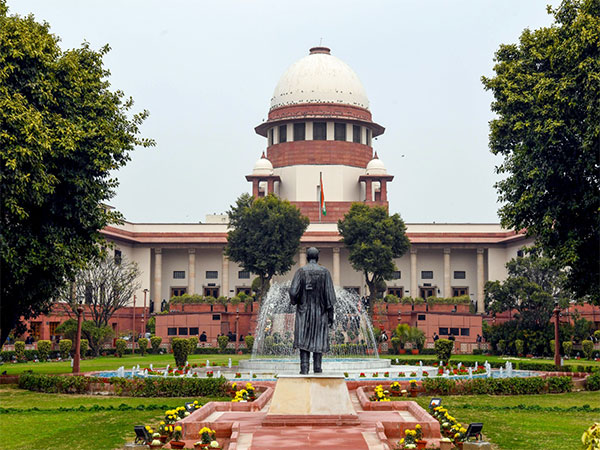
New Delhi, February 25, 2026: The Supreme Court of India on Wednesday issued a significant clarification regarding the use of Class 10 (Madhyamik) admit cards in the Special Intensive Revision (SIR) process of electoral rolls being conducted in West Bengal ahead of the state elections.
A bench led by Chief Justice of India Surya Kant, accompanied by Justices Joymalya Bagchi and Vipul M. Pancholi, made it clear that Madhyamik admit cards issued by the West Bengal State Board can be utilised for identity verification during the SIR exercise only if they are accompanied by the corresponding pass certificates. The clarification was prompted by concerns raised by senior counsel regarding whether admit cards alone could serve as standalone identity documents.
The Bench emphasised that while these admit cards can be helpful in corroborating age and parental details, they do not by themselves contain sufficient identifying information. Justice Bagchi noted that the admit card might assist the Election Commission and verification officers, but without the pass certificate (which records essential details like date of birth and parentage), it cannot function as a sole proof of identity.
This clarification builds on the court’s earlier orders which allowed various documents including Aadhaar cards and educational certificates to be used in the Special Intensive Revision exercise as supplementary proofs of identity. However, the apex court reiterated that such documents were always meant to supplement, and not supplant, the core identity documents already specified under electoral law.
In addition to this direction, the Court underscored procedural requirements: all documents mentioned in its order dated February 24, 2026, that were submitted physically or electronically before the cut-off date must be forwarded by the Electoral Registration Officers (EROs) and Assistant EROs to the judicial officers presiding over the SIR verification proceedings by the stipulated deadline.
The SIR process is a high-stakes effort to update and verify voter lists in West Bengal, where discrepancies between recorded details and submitted documents have left millions of residents flagged in categories such as logical discrepancies or unmapped entries. Given the scale of verification required involving tens of millions of claims and objections the Supreme Court had earlier empowered the Calcutta High Court to deploy additional judicial officers, including those from Jharkhand and Odisha, to expedite the review process.
This backdrop adds urgency to the Court’s clarification on admissible documents: ensuring that eligible voters are not disenfranchised due to narrow interpretations of the documentary requirements. The principal objective, according to the top court’s orders, remains to strike a balance between procedural rigor and inclusive participation in the democratic process.
Takeaways for Voters and Authorities:
- Class 10 admit cards may be used in conjunction with pass certificates as supplementary identity proof in the West Bengal SIR.
- These documents cannot be relied upon independently to establish identity without accompanying certificates.
- Election officials must ensure timely and proper forwarding of relevant documents to adjudicating judicial officers.
- The apex court’s order seeks to uphold both electoral integrity and voter inclusivity by clarifying acceptable documentary proofs and avoiding undue technical exclusions.
