


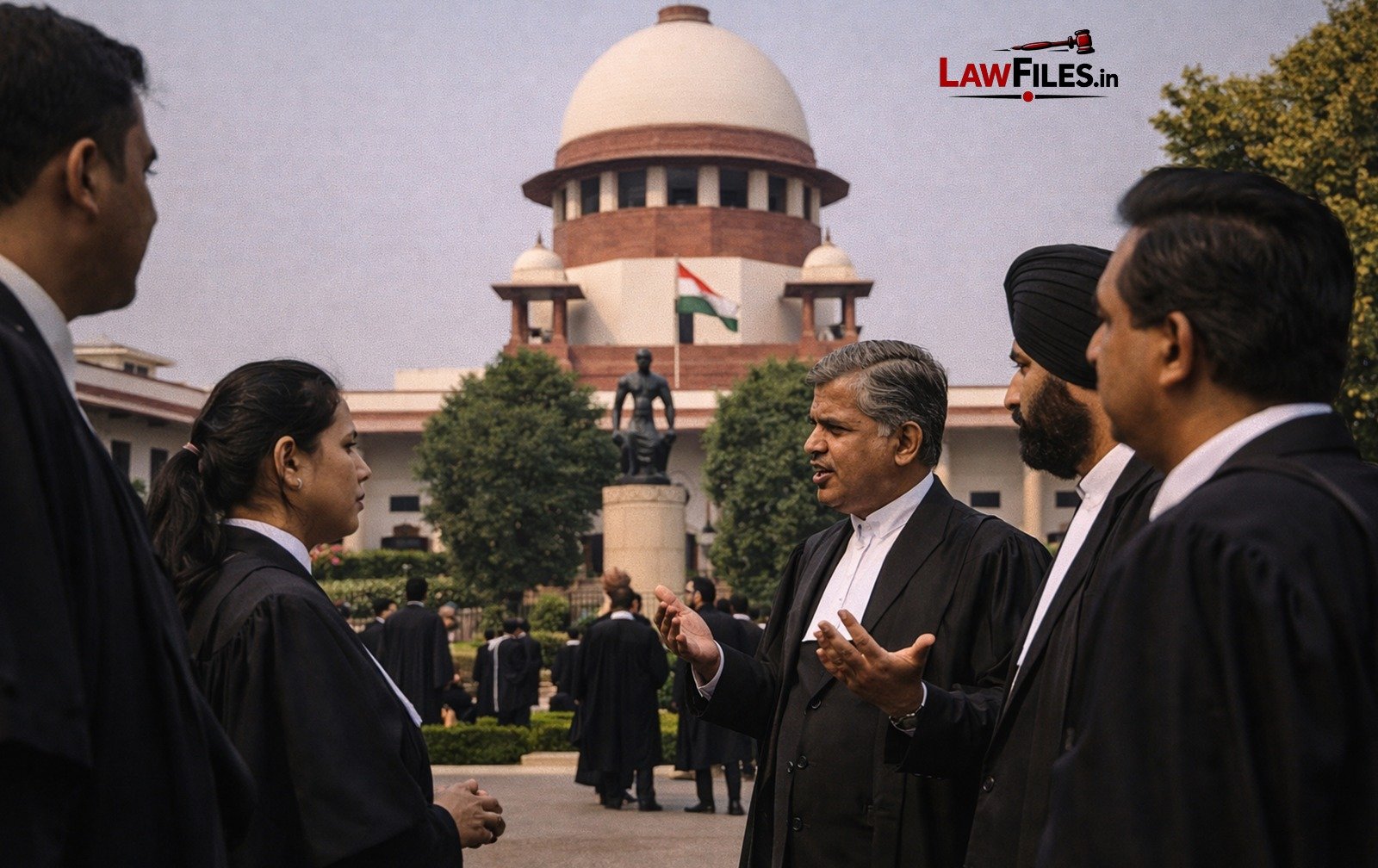
The confrontation between student protesters and the Delhi Police during the July 20 march towards Parliament has now brought before the Supreme Court a difficult constitutional question that lies at the intersection of the right to dissent, public order and the limits of coercive State power. Appearing before the Supreme Court in proceedings concerning allegations of excessive force, the Delhi Police has denied that its personnel acted disproportionately and has maintained that the proposed march towards Parliament was not authorised. According to the police, the gathering ceased to remain peaceful when portions of the crowd breached several layers of barricading and attempted to advance towards the Parliament complex, compelling the police to employ what it describes as a graded and restrained use of force. The police version assumes significance because the Court is not merely being asked to decide whether a particular protest was lawful; it is being called upon to examine the constitutional boundaries within which the State may respond when a demonstration moves from peaceful expression towards an allegedly unlawful assembly.
The incident occurred against the backdrop of a large student-led mobilisation at Jantar Mantar concerning grievances over examination irregularities and wider concerns relating to the education system. Thousands of protesters had gathered in central Delhi, with the proposed Parliament march becoming the immediate flashpoint. The police had maintained that permission had not been granted for the march and that restrictions were in force around the Parliament area because of security and public-order considerations during the Monsoon Session. When sections of the gathering attempted to move beyond the permitted protest area, the authorities resorted to barricading, tear gas and physical force to prevent the crowd from advancing. Reports from the day described a substantial police deployment and repeated confrontations between protesters and security personnel, while the police subsequently claimed that its personnel were themselves attacked and injured during the disturbances.
Before the Supreme Court, the Delhi Police has attempted to place the events within this broader factual context rather than treating the use of force as an isolated episode. Its counter-affidavit, filed by Deputy Commissioner of Police Sachin Sharma, states that more than 30,000 protesters were present around Jantar Mantar while nearly 5,000 police personnel were deployed across an area extending for approximately three kilometres. The police has claimed that more than 240 police personnel and uniformed officers and around 200 members of the public and protesters suffered injuries. The affidavit further alleges that persons described by the police as anti-social elements and history-sheeters had entered the gathering. On this account, the police maintains that the situation had become unmanageable and that the use of force was necessitated by the conduct of portions of the crowd rather than by any intention to suppress peaceful expression.
The Court’s eventual assessment, however, is unlikely to depend merely upon the number of persons present or the number of police officers deployed. The fact that a protest involves tens of thousands of people may explain why a large police presence was necessary, but it cannot by itself establish that every subsequent use of force was proportionate. Equally, the existence of injuries to protesters does not automatically establish police brutality, just as injuries suffered by police personnel do not automatically establish that every action taken by protesters was unlawful. Constitutional adjudication requires a more precise inquiry into chronology and individual conduct: what happened before the barricades were breached, what warnings were issued, what degree of resistance was encountered, what force was used at each stage and whether that force continued after the immediate threat had ceased. The legal question is therefore not simply whether force was used, but whether the force used in the particular circumstances was reasonably necessary and proportionate to the threat confronted by the police.
At the heart of the dispute is Article 19(1)(a) and Article 19(1)(b) of the Constitution, which protect freedom of speech and the right to assemble peacefully and without arms. These rights are fundamental to democratic participation, but neither is absolute. Article 19(3) expressly permits reasonable restrictions upon the right to assemble in the interests of sovereignty and integrity of India and public order. The State is consequently entitled to regulate demonstrations, impose reasonable restrictions on their location and movement and prevent a gathering from entering a highly secured area where its presence may create a genuine threat to public order or public safety. What the Constitution does not permit, however, is the conversion of the power to regulate a demonstration into an unrestricted executive power to determine whether citizens may express dissent at all.
The Supreme Court’s jurisprudence on public demonstrations provides an important framework for approaching this distinction. In Mazdoor Kisan Shakti Sangathan v. Union of India, the Court recognised the constitutional importance of peaceful demonstrations while simultaneously acknowledging that the rights of protesters must be balanced against the rights of residents, commuters and the wider public. The Court rejected the idea that one constitutional right should simply extinguish another and emphasised the necessity of balancing competing interests. The same principle becomes particularly relevant where a protest takes place in the vicinity of Parliament: the demonstrators have a legitimate interest in being heard, while the State has an equally legitimate responsibility to secure a constitutionally sensitive area and maintain public order.
That principle also makes it difficult to accept a simplistic proposition that the absence of police permission automatically ends the constitutional protection available to protesters. In Himat Lal K. Shah v. Commissioner of Police, the Supreme Court cautioned against administrative rules that confer unguided discretion upon authorities to prohibit public meetings. The constitutional right to assemble cannot be reduced to a privilege available only when an executive authority chooses to grant permission. At the same time, Mazdoor Kisan Shakti Sangathan makes clear that the right to protest must coexist with legitimate public-order considerations. The constitutional model is therefore one of regulation rather than absolute prohibition: authorities may determine reasonable time, place and manner restrictions, but those restrictions must themselves remain within the discipline of Article 19.
This distinction assumes particular importance in the present case because the police’s principal defence is that the Parliament march was illegal. Even if that proposition is ultimately accepted, the legal consequence cannot be that the police acquired an unrestricted licence to employ physical force. The unlawfulness of an assembly and the proportionality of the State’s response are separate questions. A person participating in an unlawful assembly may be liable to lawful dispersal or criminal action, but the manner in which the State effects that dispersal remains subject to constitutional standards. Article 21, in particular, prevents the State from treating bodily integrity as an incidental concern whenever public order is invoked. The police may use necessary force to restore order, but necessity must correspond to the actual threat and cannot become a retrospective justification for every act committed during a chaotic confrontation.
The Delhi Police’s description of its response as “graded” therefore becomes legally significant, but the assertion must ultimately be capable of verification. A graded response ordinarily suggests an escalation proportionate to the level of resistance encountered, beginning with measures such as warnings, barricading and attempts at crowd management before moving towards more coercive methods where necessary. If the police can demonstrate that warnings were issued, that the crowd nevertheless attempted to break through security barriers, that officers were attacked and that stronger measures were introduced only as the situation escalated, its proportionality defence becomes considerably stronger. Conversely, if evidence establishes that serious force was used against persons who were already retreating, restrained or incapable of posing a threat, the mere description of the operation as “graded” would carry little legal weight. Proportionality must be demonstrated through evidence rather than asserted through terminology.
The preservation of evidence has consequently become one of the most important aspects of the litigation. Shortly after the incident, the Delhi High Court directed the authorities to preserve CCTV footage, videography and other material relating to the police response while considering petitions alleging excessive force. The proceedings before the High Court therefore provide an important parallel evidentiary process through which the events can potentially be reconstructed from contemporaneous records rather than competing recollections.
Such evidence may prove decisive because mass demonstrations are inherently difficult to adjudicate through isolated photographs or short social-media videos. A single frame may show a police officer striking a protester without showing what occurred seconds earlier; equally, a video showing protesters pushing against barricades may not establish what happened after the particular confrontation ended. A judicial assessment therefore requires the widest possible evidentiary picture, including CCTV recordings, official videography, police communications and records relating to the deployment and use of tear gas or batons. The Delhi High Court’s direction to preserve such material is thus not merely procedural. It reflects a fundamental principle of public law: when coercive State power is challenged, accountability must be based on evidence capable of establishing the sequence and necessity of official action.
The controversy concerning the alleged use of a nail-studded lathi illustrates why such objective evidence matters. The allegation has attracted considerable attention, but the Delhi Police has disputed the suggestion that its personnel used such an object and has sought to explain the visual material relied upon by the petitioners. In a matter involving allegations of serious physical assault, neither a police denial nor a viral image should be treated as conclusive. The proper question is whether authenticated footage, forensic material and witness accounts can establish who possessed the object, how it was used and in what circumstances. Judicial proceedings should replace the competing certainty of social media with the more demanding discipline of evidence.
A similar issue arises from the presence of plainclothes personnel during the operation. The police has defended their deployment by explaining that personnel from specialised and local units were positioned within the crowd to identify persons suspected of serious offences and to respond to developments within the gathering. Operationally, there may be legitimate reasons for deploying plainclothes officers at a large protest. The constitutional difficulty arises at the stage of accountability. If a protester alleges that an unidentified person assaulted him, the absence of visible identification can make it substantially harder to determine who exercised coercive power and whether that individual acted within the law. The solution need not necessarily be to prohibit plainclothes deployment altogether, but to ensure that operational anonymity does not become permanent legal anonymity.
The litigation also raises a wider question concerning the use of surveillance technologies during demonstrations. Concerns have been raised over mass photography, videography and identification of protesters at Jantar Mantar, while the police has defended the use of facial-recognition technology as a tool directed towards identifying persons suspected of serious criminal activity rather than indiscriminately profiling peaceful participants. The constitutional concern here extends beyond the immediate protest. When citizens know that participation in a demonstration may result in their systematic identification and retention within law-enforcement databases, surveillance can have a chilling effect upon the exercise of Article 19 rights. Any legitimate deployment of such technology must therefore be accompanied by safeguards concerning purpose, verification, retention, access and misuse. The distinction between identifying a person reasonably suspected of a serious offence and digitally cataloguing everyone who attends a political demonstration is constitutionally significant.
The controversy also brings into focus the preventive powers now exercised under Section 163 of the Bharatiya Nagarik Suraksha Sanhita, 2023, which replaced the earlier Section 144 of the Code of Criminal Procedure. Preventive orders are indispensable where there is a genuine and imminent threat to public tranquillity, but their constitutional validity depends upon the existence of an identifiable public-order justification. The Supreme Court has previously cautioned against the use of preventive powers in a manner that becomes excessively broad or indefinite. In the context of demonstrations around Parliament, the authority may legitimately impose restrictions because of the extraordinary security requirements of the area, but such restrictions must remain connected to the anticipated threat rather than functioning as a blanket prohibition on dissent.
The question is particularly sensitive because Parliament is not merely another public location. It is the seat of the country’s legislative institution, and security concerns around its functioning are undeniably legitimate. Yet the symbolic significance of Parliament also makes it a powerful site for political expression. A protester seeking to communicate a grievance to legislators cannot be told that the right to protest disappears merely because the protest concerns Parliament. At the same time, the constitutional right to demonstrate does not create an entitlement to physically enter a protected legislative complex or to disregard reasonable security restrictions. The constitutional balance lies in providing meaningful avenues for dissent while preventing the demonstration from creating an unacceptable threat to public safety.
The events of July 20 must also be assessed against the competing claim that police personnel themselves faced violence. The police has alleged that officers were attacked and injured during the confrontation, and contemporaneous reporting recorded injuries to police personnel as well as protesters. A constitutional analysis that treats every protester as a victim and every police officer as an aggressor would therefore be as legally unsound as the reverse assumption. The right to peaceful assembly does not protect assault, destruction of property or deliberate attacks upon public servants. The State is entitled, and indeed obliged, to intervene when a peaceful gathering crosses that threshold. The difficult question is identifying the precise moment at which such conduct occurred and ensuring that force is directed against those actually engaging in it rather than indiscriminately against an entire gathering.
That distinction between peaceful protesters and individuals engaging in violence may ultimately become central to the Supreme Court’s reasoning. The constitutional validity of a police response cannot be determined merely by assigning a single character to an entire crowd. Large demonstrations are heterogeneous. Within the same gathering there may be peaceful participants, organisers attempting to control the crowd, persons refusing to comply with dispersal directions and individuals who deliberately engage in violence. A legally sustainable policing model must be capable of distinguishing between those categories as far as circumstances permit. Indiscriminate force against an entire assembly because some members have become violent raises a substantially different constitutional question from targeted intervention against persons actively threatening life or property.
The broader Supreme Court proceedings assume significance in this context because the controversy has generated demands for an independent and evidence-based examination of police conduct during student protests. The Court has already shown concern about preservation of relevant material and the legal treatment of protesters, indicating that the proceedings are not confined to determining the immediate factual dispute but may also address the larger standards governing State response to demonstrations. The possibility of judicially evolved guidelines is therefore important because India lacks the benefit of a single, comprehensive statutory framework setting out every operational circumstance in which police may employ particular forms of force during mass demonstrations.
A national constitutional standard could provide greater certainty to both sides. Protesters should know that peaceful dissent will receive protection even when it is politically inconvenient or directed against the government. Police personnel should similarly know precisely when they may lawfully disperse an assembly, what degree of force may be employed and what accountability mechanisms will follow. Clear standards would reduce the danger of both extremes: protesters assuming that constitutional protection is equivalent to immunity from law and police authorities treating an unlawful assembly as justification for unrestricted coercion.
The Supreme Court’s eventual consideration should therefore avoid reducing the controversy to the emotionally attractive but legally inadequate question of whether the protesters or the police were “at fault”. The constitutional inquiry is more demanding. It requires the Court to determine whether the restrictions imposed upon the march were lawful, whether the assembly had crossed the threshold at which dispersal became necessary, whether adequate warnings and alternatives were employed, whether the force used was proportionate to the actual threat and whether individual instances of alleged misconduct can be attributed to identifiable officers. Equally, the Court may have to determine whether individual protesters engaged in conduct that independently justified arrest or force and whether the police response remained confined to those circumstances.
The importance of the proceedings lies precisely in this insistence upon constitutional discipline on both sides. A democracy cannot protect public order by making dissent impossible, nor can it protect dissent by permitting violence to overwhelm public order. The Supreme Court’s earlier decisions have consistently recognised that peaceful protest is an essential component of constitutional democracy while simultaneously accepting that fundamental rights operate within a framework of reasonable restrictions and competing public interests. The July 20 confrontation therefore presents an opportunity to apply those principles to the contemporary realities of mass student mobilisation, sophisticated surveillance, preventive restrictions and modern crowd-control methods.
Ultimately, the Delhi Police’s defence that the Parliament march was unauthorised may establish an important part of its case, but it cannot by itself conclude the constitutional inquiry into the manner in which the protest was dispersed. The legality of the assembly and the legality of the State’s response are interconnected but distinct questions. If the evidence establishes that police personnel acted within a carefully graduated and proportionate framework in response to genuine violence or a serious threat to public order, the State would have a strong constitutional justification for its intervention. If, on the other hand, the evidence establishes indiscriminate or unnecessary force against peaceful participants, the existence of an unlawful or unauthorised march would not immunise such conduct from judicial review.
The larger significance of the case is therefore likely to extend far beyond the events of one day at Jantar Mantar. It presents the Supreme Court with an opportunity to articulate a modern constitutional standard for policing democratic dissent—one that recognises the State’s duty to protect Parliament and public order but simultaneously insists that coercive power remain necessary, proportionate, identifiable and reviewable. In a constitutional democracy, the real measure of lawful policing is not whether the State succeeded in dispersing a crowd, but whether it did so without treating the fundamental right to dissent as an inconvenience to be eliminated. Equally, the legitimacy of a protest cannot be measured solely by the righteousness of its cause; it depends upon adherence to the peaceful constitutional methods through which that cause is pursued. The enduring principle should therefore be clear: the State may regulate and, where lawfully necessary, disperse a protest, but neither public order nor police authority can become a constitutional licence for disproportionate force.
