

Close Menu
LawFilesLawFiles

    Subscribe to Updates

    Get the latest creative news from FooBar about art, design and business.

    What's Hot

    Delhi High Court Upholds Rajpal Yadav’s Conviction in Cheque Bounce Cases; Ruling Reaffirms Sanctity of Commercial Transactions and the Deterrent Purpose of the Negotiable Instruments Act

    July 11, 2026

    Delayed Payment by Auction Purchaser Under the SARFAESI Act: Supreme Court Reinforces Mandatory Compliance With Auction Timelines; A Landmark Shift in India’s Banking Recovery Jurisprudence

    July 11, 2026

    Anil Ambani Withdraws Bombay High Court Plea Against Bank of Baroda’s Fraud Classification; Case Highlights Evolving Judicial Standards Governing RBI Fraud Tagging Framework

    July 11, 2026
    Facebook X (Twitter) Instagram Threads
    Saturday, July 11
    LawFilesLawFiles
    Facebook X (Twitter)
    • Home
      • Who We Are
      • Our Mission
      • Advisory board
      • Contact US
    • Supreme Court
    • High Courts
      • Gujarat High Court
      • Jharkhand High Court
      • Rajasthan High Court
      • Karnataka High Court
      • Andhra Pradesh High Court
      • Allahabad High Court
      • Himachal Pradesh High Court
      • Chhattisgarh High Court
      • Jammu & Kashmir and Ladakh High Court
      • Kerala High Court
      • Punjab and Haryana High Court
      • Patna High Court
      • Madhya Pradesh High Court
      • Madras High Court
      • Bombay High Court
      • Orissa High Court
      • Calcutta High Court
      • Meghalaya High Court
      • Delhi High Court
      • Manipur High Court
      • Gauhati High Court
    • Corporate
    • Taxation Laws
      • Income Tax
      • GST
      • Customs & Excise
    • Global Affairs
    • Articles
      • Sitting Judge’s’ Views
      • Senior Advocate
      • Policy Analysis
      • Tax Expert
    • PILS
      • Free/Affordable Legal Aid
      • PIL Cell
      • Law student Volunteer Cell (research & Drafting)
      • NGO & Legal services Authority Tie-ups
      • Online Legal Formats
      • Online Legal Help Form
    Subscribe Premium
    LawFilesLawFiles
    Home»Corporate»“Selling Loans for Peanuts?”: Supreme Court’s Sharp Remarks on Bank-ARC Transactions Raise Questions of Public Accountability
    Corporate

    “Selling Loans for Peanuts?”: Supreme Court’s Sharp Remarks on Bank-ARC Transactions Raise Questions of Public Accountability

    Anvita DwivediBy Anvita DwivediJune 20, 2026No Comments7 Mins Read
    WhatsApp Facebook Twitter Copy Link
    Share
    Facebook Twitter Pinterest Copy Link WhatsApp

    In a significant development with far-reaching implications for India’s banking and financial recovery ecosystem, the Supreme Court has expressed serious concern over what it described as a possible “deep-rooted nexus” between banks, Asset Reconstruction Companies (ARCs), and defaulting borrowers. The Court’s observations, made while hearing a matter involving the assignment of distressed loans, have reignited a long-standing debate concerning the manner in which non-performing assets (NPAs) are sold by banks and whether such transactions adequately safeguard public money. The remarks are particularly significant because they touch upon an area that lies at the intersection of banking regulation, insolvency law, financial accountability, and public interest.

    The controversy emerged in proceedings relating to JKM Infra Projects Ltd., a Noida-based infrastructure company that had availed substantial credit facilities from a consortium of banks led by the State Bank of India. According to submissions recorded before the Court, loans aggregating to more than ₹1,537 crore were allegedly transferred and ultimately settled through transactions involving Asset Reconstruction Companies for approximately ₹73.50 crore. The petitioners contended that the transactions resulted in a recovery of only a small fraction of the outstanding dues, raising questions regarding valuation, transparency, and the overall fairness of the assignment process.

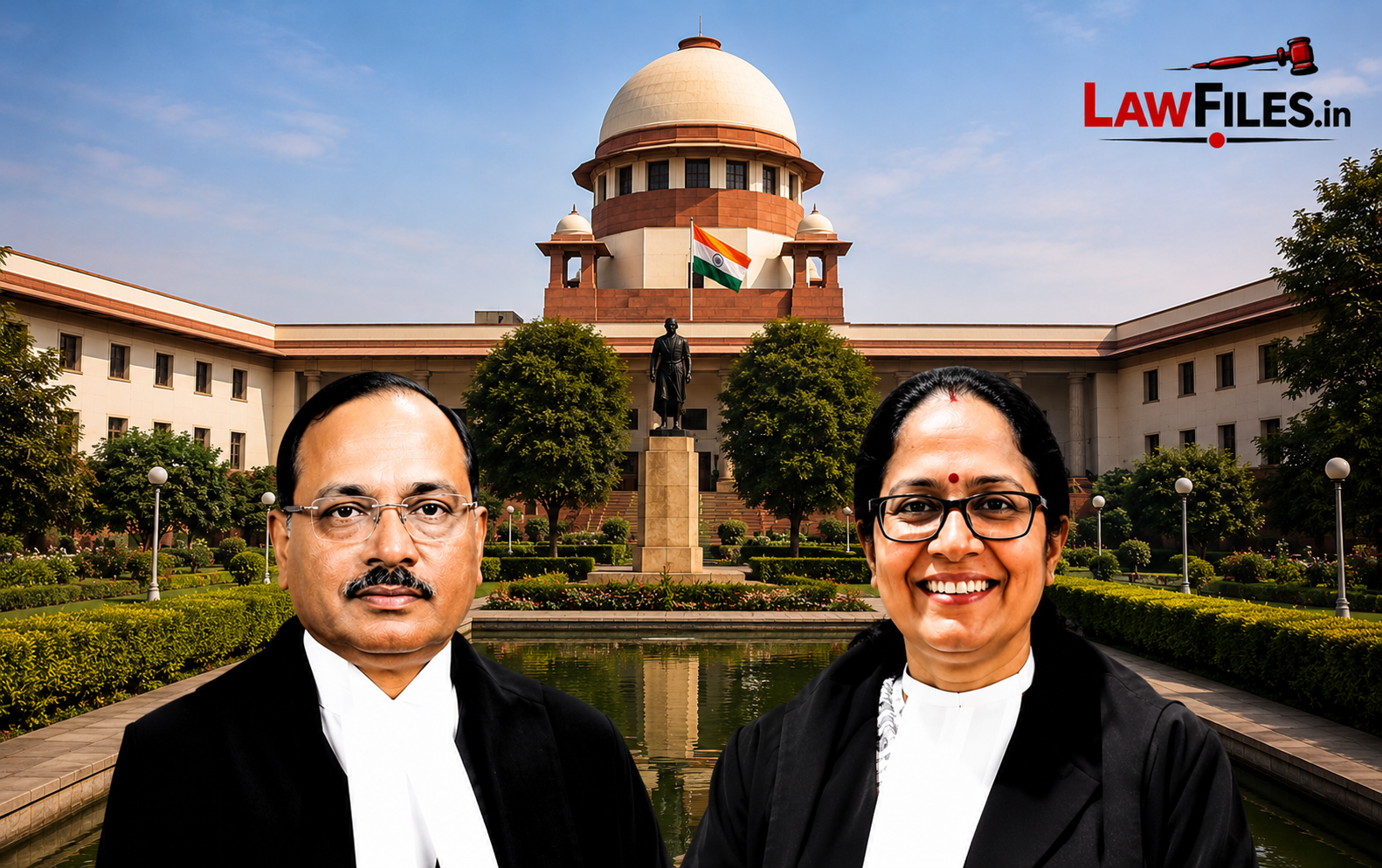
    A Bench comprising Chief Justice Surya Kant and Justice V. Mohana did not confine itself merely to the facts of the individual dispute. Instead, the Court voiced broader concerns regarding the systemic implications of such transactions. The Bench observed that public money cannot be lent through banking institutions and subsequently written off or assigned at heavily discounted values without effective efforts at recovery. It warned that where distressed assets worth hundreds or thousands of crores are routinely transferred for a fraction of their value, the consequences are ultimately borne by taxpayers and the financial system as a whole.

    The Court’s observations strike at the heart of a larger policy debate that has persisted since the emergence of the ARC industry under the Securitisation and Reconstruction of Financial Assets and Enforcement of Security Interest Act, 2002 (SARFAESI Act). Asset Reconstruction Companies were introduced as specialized entities capable of acquiring distressed assets from banks and maximizing recoveries through professional management and restructuring. The underlying rationale was that banks burdened with bad loans would be able to clean their balance sheets while ARCs, with specialized expertise, would focus on recovery and value realization. In theory, the model serves an important economic function by preventing financial institutions from being paralyzed by stressed assets.

    However, the Supreme Court’s remarks suggest concern that the practical operation of this mechanism may, in certain circumstances, diverge from its intended purpose. The Court appeared troubled by allegations that valuable assets are being transferred at substantial discounts while the eventual beneficiaries may not necessarily be the public financial institutions that originally bore the lending risk. Such concerns gain significance because public sector banks manage funds that ultimately belong to depositors and, in a broader sense, the public exchequer.

    One of the most striking aspects of the hearing was the Court’s reference to a possible nexus among borrowers, banks, and ARCs. Although the Bench did not arrive at any final finding of wrongdoing, it indicated that the allegations disclosed circumstances warranting deeper scrutiny. Consequently, notices were issued to the Union Ministries of Finance and Home Affairs, the Reserve Bank of India (RBI), and the Serious Fraud Investigation Office (SFIO), signaling that the Court views the matter as involving issues of broader public importance rather than a mere private commercial dispute.

    From a legal perspective, the case raises fundamental questions regarding the scope of judicial review in banking and financial decisions. Traditionally, courts have exercised restraint in reviewing commercial decisions taken by banks, particularly where specialized regulatory frameworks exist. Matters involving asset valuation, restructuring, and loan assignment are generally regarded as falling within the domain of financial expertise. However, where allegations of fraud, collusion, arbitrariness, or public loss emerge, courts have repeatedly held that such transactions cannot be immunized from scrutiny merely because they are commercial in nature.

    The Supreme Court’s intervention is also noteworthy because it arrives at a time when India’s financial sector has increasingly relied upon market-based mechanisms for resolving stressed assets. Over the past decade, policymakers have encouraged the use of ARCs, insolvency proceedings under the Insolvency and Bankruptcy Code (IBC), and various restructuring frameworks to address the NPA problem. While these reforms have undoubtedly contributed to improving recovery mechanisms, the present case highlights the continuing tension between commercial expediency and public accountability.

    A particularly important issue raised by the proceedings concerns valuation. Distressed assets are inherently difficult to value because their worth depends upon factors such as litigation risks, market conditions, underlying security interests, and the probability of successful recovery. Nevertheless, when loans worth more than a thousand crores are settled for a small percentage of their face value, questions inevitably arise regarding whether the assets were accurately valued and whether the sale process was sufficiently competitive and transparent. The Court’s observations suggest that it may seek greater clarity on these aspects before arriving at any final conclusion.

    The implications of the case extend beyond banking law and touch upon broader principles of governance. Public sector banks occupy a unique position in the Indian economy. Unlike private commercial entities, they are custodians of public funds and operate within a framework of constitutional accountability. Decisions involving substantial financial losses therefore acquire a public law dimension that may justify greater judicial scrutiny than would ordinarily apply to purely private transactions.

    The proceedings also resonate with broader concerns regarding moral hazard in financial markets. If borrowers perceive that large loans can eventually be settled at substantial discounts through complex financial arrangements, the incentive structure underlying credit discipline may be weakened. Similarly, if banks prioritize rapid balance-sheet clean-up over maximizing recoveries, questions may arise regarding the alignment of institutional incentives with public interest. The Court’s observations appear to reflect anxiety about these systemic consequences rather than merely the facts of a single case.

    For legal practitioners, the matter represents an important intersection of banking law, insolvency law, regulatory governance, and constitutional accountability. It underscores the increasing willingness of courts to examine the public interest implications of financial transactions where allegations of collusion or substantial public loss are raised. The eventual outcome may influence how future asset assignments are structured and scrutinized.

    For law students and scholars, the case provides a valuable study in the evolving relationship between financial regulation and judicial oversight. It illustrates how issues that initially appear technical and commercial can ultimately engage broader constitutional concerns relating to transparency, accountability, and protection of public resources.

    Ultimately, the Supreme Court’s remarks should not be viewed merely as criticism of individual transactions. Rather, they represent a broader inquiry into whether existing mechanisms for dealing with distressed assets adequately protect public money. As the Court proceeds to examine the responses of the Centre, RBI, and investigative authorities, the case may well become a defining moment in the ongoing effort to balance financial efficiency with public accountability. If the allegations ultimately reveal systemic weaknesses, the proceedings could prompt significant reforms in the manner in which banks dispose of distressed assets and interact with Asset Reconstruction Companies. In that sense, the case is not merely about recovery of bad loans—it is about the integrity of the financial system itself.

    “Selling Loans for Peanuts?”: Supreme Court's Sharp Remarks on Bank-ARC Transactions Raise Questions of Public Accountability
    Share. WhatsApp Facebook Twitter Pinterest Email
    Anvita Dwivedi

    Related Posts

    Delhi High Court Upholds Rajpal Yadav’s Conviction in Cheque Bounce Cases; Ruling Reaffirms Sanctity of Commercial Transactions and the Deterrent Purpose of the Negotiable Instruments Act

    July 11, 2026

    Delayed Payment by Auction Purchaser Under the SARFAESI Act: Supreme Court Reinforces Mandatory Compliance With Auction Timelines; A Landmark Shift in India’s Banking Recovery Jurisprudence

    July 11, 2026

    Anil Ambani Withdraws Bombay High Court Plea Against Bank of Baroda’s Fraud Classification; Case Highlights Evolving Judicial Standards Governing RBI Fraud Tagging Framework

    July 11, 2026
    Add A Comment
    Leave A Reply Cancel Reply

    Demo
    Top Posts

    Digital Forensics Fail to convince Supreme Court: Bail Denied to Gagan Khanna in BNS Assault Case

    June 15, 2026241 Views

    Wrongful Claim Rejection Amounts to Deficiency in Service: Delhi Consumer Commission Holds Star Health Liable

    March 16, 202672 Views

    Bombay High Court Quashes POCSO Case, Directs Accused to Fund MacBook for Victim’s Education

    February 28, 202658 Views

    Supreme Court Quashes FIR Over ‘Improved’ Second Complaint: A Reminder That Criminal Law Cannot Be Built on Shifting Narratives

    June 4, 202654 Views
    Don't Miss

    Delhi High Court Upholds Rajpal Yadav’s Conviction in Cheque Bounce Cases; Ruling Reaffirms Sanctity of Commercial Transactions and the Deterrent Purpose of the Negotiable Instruments Act

    By Anvita DwivediJuly 11, 2026

    In a significant reaffirmation of India’s cheque dishonour jurisprudence, the Delhi High Court has upheld…

    Delayed Payment by Auction Purchaser Under the SARFAESI Act: Supreme Court Reinforces Mandatory Compliance With Auction Timelines; A Landmark Shift in India’s Banking Recovery Jurisprudence

    July 11, 2026

    Anil Ambani Withdraws Bombay High Court Plea Against Bank of Baroda’s Fraud Classification; Case Highlights Evolving Judicial Standards Governing RBI Fraud Tagging Framework

    July 11, 2026

    Supreme Court Examines Challenge to Navy Recruitment Rules for Group ‘B’ Non-Gazetted Officers; Notice to Centre Puts Promotional Equality and Service Jurisprudence Under Judicial Scrutiny

    July 11, 2026
    Stay In Touch
    • Facebook
    • Twitter

    Subscribe to Updates

    Get the latest creative news from SmartMag about art & design.

    Top Posts

    Digital Forensics Fail to convince Supreme Court: Bail Denied to Gagan Khanna in BNS Assault Case

    June 15, 2026241 Views

    Wrongful Claim Rejection Amounts to Deficiency in Service: Delhi Consumer Commission Holds Star Health Liable

    March 16, 202672 Views

    Bombay High Court Quashes POCSO Case, Directs Accused to Fund MacBook for Victim’s Education

    February 28, 202658 Views
    Don't Miss

    Delhi High Court Upholds Rajpal Yadav’s Conviction in Cheque Bounce Cases; Ruling Reaffirms Sanctity of Commercial Transactions and the Deterrent Purpose of the Negotiable Instruments Act

    By Anvita DwivediJuly 11, 2026

    In a significant reaffirmation of India’s cheque dishonour jurisprudence, the Delhi High Court has upheld…

    Delayed Payment by Auction Purchaser Under the SARFAESI Act: Supreme Court Reinforces Mandatory Compliance With Auction Timelines; A Landmark Shift in India’s Banking Recovery Jurisprudence

    July 11, 2026

    Anil Ambani Withdraws Bombay High Court Plea Against Bank of Baroda’s Fraud Classification; Case Highlights Evolving Judicial Standards Governing RBI Fraud Tagging Framework

    July 11, 2026

    Supreme Court Examines Challenge to Navy Recruitment Rules for Group ‘B’ Non-Gazetted Officers; Notice to Centre Puts Promotional Equality and Service Jurisprudence Under Judicial Scrutiny

    July 11, 2026
    Stay In Touch
    • Facebook
    • YouTube
    • TikTok
    • Instagram
    Top Trending
    About Us
    About Us

    LawFiles.in is a comprehensive legal news platform delivering real-time updates from the Supreme Court, High Courts, Tribunals, Corporate and Tax law, Regulators, Politics, Crime, Consumer cases, and Global Affairs.

    Email Us: lawfilesoffical@gmail.com
    Contact: +91 8800026066

    Contact Us:
    India International Centre
    40, Max Mueller Marg
    Lodhi Estate, New Delhi-110003

    Facebook X (Twitter)
    Our Picks

    Delhi High Court Upholds Rajpal Yadav’s Conviction in Cheque Bounce Cases; Ruling Reaffirms Sanctity of Commercial Transactions and the Deterrent Purpose of the Negotiable Instruments Act

    July 11, 2026

    Delayed Payment by Auction Purchaser Under the SARFAESI Act: Supreme Court Reinforces Mandatory Compliance With Auction Timelines; A Landmark Shift in India’s Banking Recovery Jurisprudence

    July 11, 2026

    Anil Ambani Withdraws Bombay High Court Plea Against Bank of Baroda’s Fraud Classification; Case Highlights Evolving Judicial Standards Governing RBI Fraud Tagging Framework

    July 11, 2026

    Supreme Court Examines Challenge to Navy Recruitment Rules for Group ‘B’ Non-Gazetted Officers; Notice to Centre Puts Promotional Equality and Service Jurisprudence Under Judicial Scrutiny

    July 11, 2026

    SCBA Condemns Abusive Conduct by Litigant in Supreme Court; Seeks Regulatory Framework for Circulation of Courtroom Videos Amid Growing Debate on Open Justice and Digital Accountability

    July 11, 2026
    Most Popular

    Madhya Pradesh High Court Examines Plea to Extend NRI Quota to Stray Vacancy Round in Medical Admissions

    February 26, 20260 Views

    Supreme Court Rules Limitation Period Under CrPC Starts When Offender’s Identity Is Known, Not From First Complaint

    February 27, 20260 Views

    Maharashtra State Consumer Commission Slams HP Employees’ Co-operative Credit Society for Enforcing Undisclosed Restriction, Orders Refund with Interest and Compensation

    March 2, 20260 Views

    NCDRC Dismisses Consumer Complaint Filed Nearly a Decade After Possession, Holds Claim Barred by Limitation

    March 2, 20260 Views

    Supreme Court CJI Uses T20 Cricket Analogy to Stress Importance of Specialization in Legal Practice

    March 2, 20260 Views
    © 2026 LawFiles. Owned by Varta24 Media.
    • Articles
    • Careers
    • Corporate
    • Global Affairs
    • Law Firms & Lawyers
    • PILS
    • Regulatory

    Type above and press Enter to search. Press Esc to cancel.