


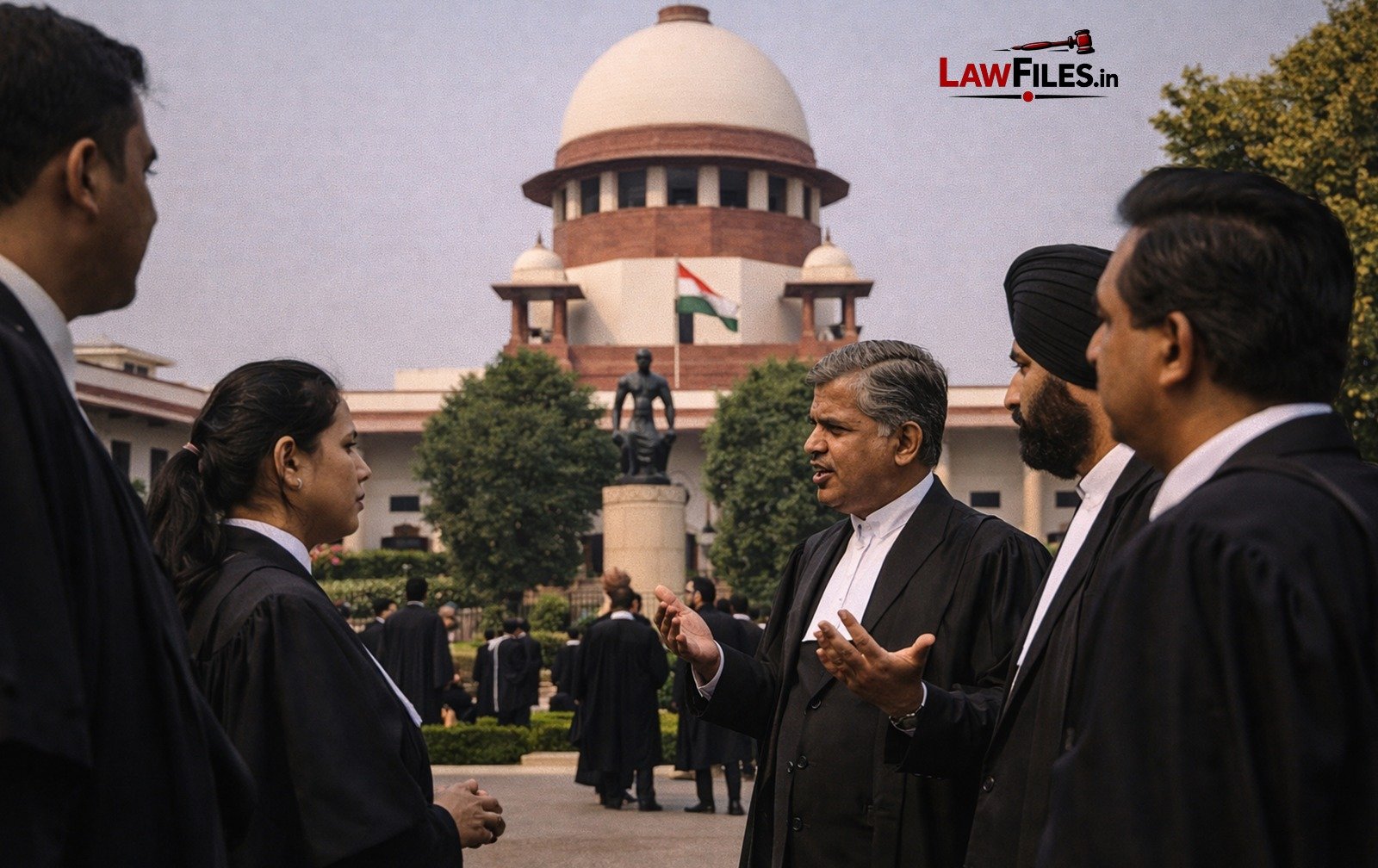
The legal battle surrounding the investigation into the tragic Air India Flight AI-171 crash has now moved beyond questions of technical causation into a larger constitutional debate concerning judicial oversight, executive accountability and India’s obligations under international aviation law. In a detailed affidavit placed before the Supreme Court, the Aircraft Accident Investigation Bureau (AAIB) has opposed the demand for a court-monitored or parallel investigation into the crash, asserting that the inquiry is being conducted strictly in accordance with the Convention on International Civil Aviation (Chicago Convention) and the globally accepted standards contained in Annex 13 governing aircraft accident investigations. The Bureau has maintained that introducing an external or judicially supervised investigative mechanism at this stage would not only undermine the internationally prescribed investigative framework but could also jeopardise the independence, technical integrity and confidentiality essential to aviation safety investigations. The case, therefore, raises an important constitutional question: Can judicial intervention enhance transparency in aviation accident investigations, or would such intervention dilute the internationally recognised principle that safety investigations must remain technically independent and insulated from external influence?
The proceedings arise out of petitions before the Supreme Court seeking an independent inquiry into the catastrophic crash of Air India Flight AI-171, which crashed shortly after take-off from Ahmedabad in June 2025, claiming the lives of 260 people, including passengers, crew members and persons on the ground. The petitions sought greater judicial oversight over the investigation, expressing concerns regarding transparency, institutional independence and public confidence in the investigative process. Petitioners urged the Court to constitute either a Special Investigation Team or a committee functioning under judicial supervision to independently examine the circumstances leading to one of India’s worst aviation disasters in recent decades. The petitions reflected growing public anxiety over the need for a comprehensive and credible investigation capable of determining not merely the immediate cause of the accident but also any systemic regulatory failures that may have contributed to the tragedy.
Responding to these concerns, the AAIB firmly opposed the request for a Supreme Court-monitored investigation. In its affidavit, the Bureau submitted that the investigation is already being conducted under the statutory framework of the Aircraft (Investigation of Accidents and Incidents) Rules, 2017, which incorporate India’s obligations under Annex 13 to the Chicago Convention. According to the Bureau, aviation accident investigations differ fundamentally from conventional criminal or administrative inquiries. Their principal objective is not to determine civil or criminal liability, but to identify safety deficiencies and recommend corrective measures capable of preventing similar accidents in the future. Consequently, introducing parallel investigative structures or judicial supervision during the ongoing technical inquiry could compromise internationally recognised investigative protocols and adversely affect cooperation among participating international agencies.
The affidavit further informed the Supreme Court that the investigation has entered its advanced analytical stage. According to the AAIB, investigators have completed substantial evidence collection, including recovery and analysis of cockpit recordings, technical examination of aircraft systems, interviews with flight crew colleagues, maintenance personnel, air traffic controllers, meteorological officials and human-factors specialists. The Bureau stated that scientific evaluation of the available evidence continues across operational, technical, organisational and human-factor domains. It also informed the Court that the draft final investigation report is expected to be ready around October 2026, following completion of the remaining technical analyses and after circulation of the draft among participating States for comments, as required under Annex 13.
One of the Bureau’s most significant legal submissions concerns the confidentiality obligations imposed by international aviation law. Annex 13 to the Chicago Convention recognises that certain categories of evidence including cockpit voice recordings, witness statements, internal investigative communications and safety analysis must ordinarily remain confidential during the investigation. This confidentiality is not intended to shield wrongdoing but to encourage complete cooperation from witnesses, flight crew, maintenance personnel and aviation organisations without fear that preliminary material will immediately enter adversarial legal proceedings. The AAIB argued that premature public disclosure of technical material or judicial management of investigative processes could discourage candid cooperation, ultimately weakening rather than strengthening aviation safety investigations.
The Bureau also highlighted a concern increasingly encountered in modern aviation investigations—the influence of speculative public narratives. According to its affidavit, widespread media speculation assigning blame before completion of scientific investigation has already affected witness cooperation, with some witnesses becoming reluctant or cautious during interviews. The Bureau emphasised that accident investigations are evidence-driven exercises requiring meticulous reconstruction of events rather than conclusions based upon preliminary assumptions. This concern acquires particular importance in high-profile aviation disasters where public attention often generates intense pressure for immediate attribution of responsibility before technical examination is complete.
The legal significance of the proceedings extends far beyond the immediate facts of the Air India tragedy. They raise a fundamental distinction that lies at the heart of international aviation law the difference between a safety investigation and a liability investigation. Annex 13 expressly provides that accident investigations exist primarily to improve aviation safety by identifying causal and contributing factors. They are not designed to determine negligence, criminal culpability or civil liability. Those questions are ordinarily examined through separate criminal investigations, regulatory proceedings, civil litigation or compensation claims. The institutional separation between these functions ensures that investigators remain focused upon objective safety lessons rather than adversarial fault-finding.
This distinction reflects decades of international aviation experience. Aircraft accidents rarely result from a single isolated cause. Modern accident investigations often examine a complex interaction of technical malfunction, operational procedures, maintenance practices, human factors, organisational culture, regulatory oversight, weather conditions and aircraft design. Because the objective is prevention rather than punishment, investigators are encouraged to conduct an independent scientific inquiry insulated from external pressures that may unconsciously influence factual assessment. It is this philosophy that underpins Annex 13 and explains why international aviation law consistently emphasises investigative independence.
From a constitutional perspective, however, the petitions raise equally compelling concerns regarding public accountability and judicial review. The Supreme Court has repeatedly held that judicial review remains available wherever allegations arise concerning arbitrariness, institutional failure or violation of fundamental rights. Public confidence in investigative institutions is itself an important constitutional value, particularly where disasters involve significant loss of human life. The petitioners therefore contend that judicial supervision would enhance transparency rather than interfere with technical investigation. The challenge before the Court lies in balancing these competing constitutional considerations without undermining either international treaty obligations or domestic expectations of accountability.
The proceedings also illustrate India’s dual legal responsibilities arising from participation in international civil aviation. As a contracting State to the Chicago Convention, India has undertaken to investigate aircraft accidents in accordance with internationally accepted standards so that safety recommendations remain credible across jurisdictions. International participation in the present investigation including technical cooperation with agencies such as the United States National Transportation Safety Board (NTSB), the United Kingdom Air Accidents Investigation Branch (AAIB-UK), aircraft manufacturer Boeing, engine manufacturer GE Aerospace, and other accredited representatives demonstrates the inherently multinational character of modern aviation accident investigations. Any departure from internationally recognised procedures may have implications extending beyond the domestic legal system.
The case also highlights an important aspect of constitutional governance: the limits of judicial intervention in specialised technical domains. Indian courts have consistently exercised restraint where disputes involve highly specialised scientific assessments unless the decision-making process itself suffers from illegality, arbitrariness or procedural unfairness. Aviation accident reconstruction involves sophisticated analysis of flight data, cockpit recordings, engineering evidence, human performance and operational systems areas requiring specialised expertise rather than conventional judicial fact-finding. At the same time, constitutional courts retain authority to ensure that statutory bodies discharge their functions fairly, independently and within the bounds of law. The present proceedings therefore concern not whether courts should investigate accidents, but the extent to which courts may supervise the institutional framework governing such investigations.
Equally noteworthy is the Bureau’s emphasis that the ongoing inquiry should not be viewed as determining criminal responsibility. If evidence ultimately discloses negligence, regulatory violations or criminal conduct, those issues remain capable of examination through independent legal proceedings. The safety investigation neither grants immunity nor precludes subsequent prosecution where warranted. Rather, it seeks first to establish an accurate factual reconstruction from which legal consequences, if any, may subsequently flow through appropriate statutory mechanisms.
The Supreme Court’s consideration of the matter is likely to influence not only the future of the AI-171 investigation but also the broader jurisprudence governing judicial oversight of specialised regulatory investigations. Increasingly, constitutional courts are called upon to reconcile two equally important democratic values institutional accountability and institutional independence. Excessive judicial intervention may risk displacing expert decision-making, while excessive deference may weaken public confidence in regulatory institutions. The constitutional challenge therefore lies in identifying the point at which legitimate judicial review ends and impermissible managerial supervision begins.
Ultimately, the AAIB’s affidavit serves as a reminder that aviation accident investigations are fundamentally exercises in public safety rather than instruments of immediate blame allocation. Every major air crash produces understandable public demand for swift answers and accountability. Yet international aviation law deliberately prioritises scientific certainty over procedural haste because inaccurate conclusions can themselves compromise future passenger safety. Whether the Supreme Court ultimately accepts the Bureau’s objections or fashions a limited mechanism to enhance transparency, the proceedings underscore a broader legal principle: in aviation law, the search for accountability must remain consistent with the equally vital search for truth. The legitimacy of any final conclusion will depend not only upon its transparency but also upon its adherence to the technical independence, procedural fairness and international standards that constitute the foundation of modern aircraft accident investigation.
