

Close Menu
LawFilesLawFiles

    Subscribe to Updates

    Get the latest creative news from FooBar about art, design and business.

    What's Hot

    Dowry Law and Victim Protection: Supreme Court Clarifies Immunity for Wife and Her Family

    April 17, 2026

    Women’s Reservation Law Notified: Reform Realised or Deferred Constitutional Promise?

    April 17, 2026

    Supreme Court Notice on Muslim Personal Law: Reopening the Constitutional Debate on Gender Equality and Faith

    April 16, 2026
    Facebook X (Twitter) Instagram Threads
    Friday, April 17
    LawFilesLawFiles
    Facebook X (Twitter)
    • Home
      • Who We Are
      • Our Mission
      • Advisory board
      • Contact US
    • Supreme Court
    • High Courts
      • Gujarat High Court
      • Jharkhand High Court
      • Rajasthan High Court
      • Karnataka High Court
      • Andhra Pradesh High Court
      • Allahabad High Court
      • Himachal Pradesh High Court
      • Chhattisgarh High Court
      • Jammu & Kashmir and Ladakh High Court
      • Kerala High Court
      • Punjab and Haryana High Court
      • Patna High Court
      • Madhya Pradesh High Court
      • Madras High Court
      • Bombay High Court
      • Orissa High Court
      • Calcutta High Court
      • Meghalaya High Court
      • Delhi High Court
      • Manipur High Court
      • Gauhati High Court
    • Corporate
    • Taxation Laws
      • Income Tax
      • GST
      • Customs & Excise
    • Global Affairs
    • Articles
      • Former Judge’s’ Views
      • Senior Advocate
      • Policy Analysis
      • Tax Expert
    • PILS
      • Free/Affordable Legal Aid
      • PIL Cell
      • Law student Volunteer Cell (research & Drafting)
      • NGO & Legal services Authority Tie-ups
      • Online Legal Formats
      • Online Legal Help Form
    Subscribe Premium
    LawFilesLawFiles
    Home»PILS»Sabarimala Reference Reopens Constitutional Faultlines: Supreme Court’s 9-Judge Bench Begins Hearing on Religion, Equality and Judicial Limits
    PILS

    Sabarimala Reference Reopens Constitutional Faultlines: Supreme Court’s 9-Judge Bench Begins Hearing on Religion, Equality and Judicial Limits

    Anvita DwivediBy Anvita DwivediApril 7, 2026Updated:April 7, 2026No Comments4 Mins Read
    WhatsApp Facebook Twitter Copy Link
    Share
    Facebook Twitter Pinterest Copy Link WhatsApp

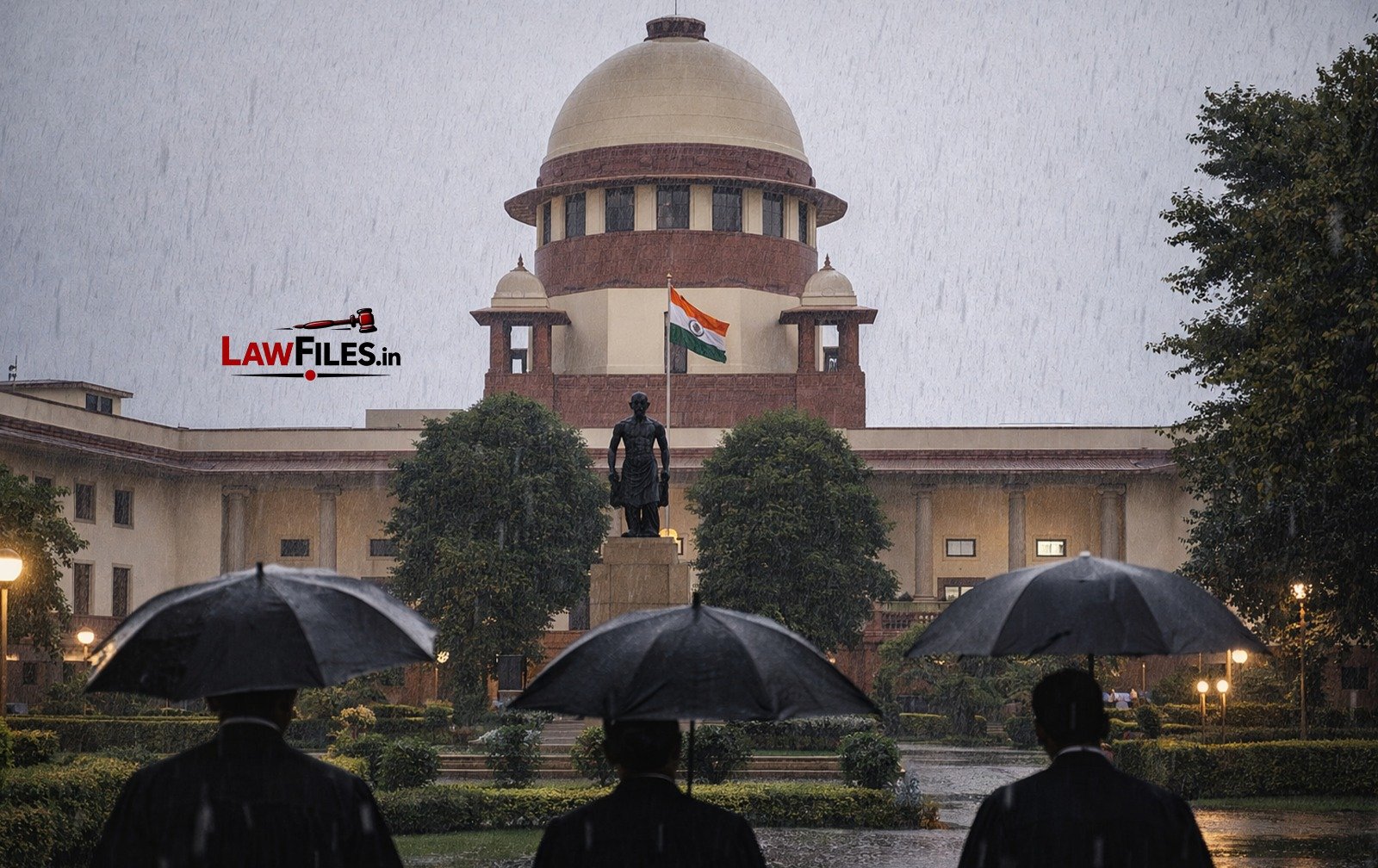
    In a moment of profound constitutional significance, a nine-judge Constitution Bench of the Supreme Court of India has commenced hearings in the long-pending Sabarimala reference, marking a decisive shift from a temple-entry dispute to a foundational examination of religious freedom, equality, and judicial review.

    The proceedings, which resumed after years of dormancy, are poised to redefine the contours of Articles 25 and 26 of the Constitution, potentially reshaping the jurisprudence governing the intersection of faith and fundamental rights. The Sabarimala controversy traces its origins to the 2018 judgment that permitted entry of women of all age groups into the Sabarimala temple, striking down the traditional exclusion of women aged 10–50. However, subsequent review petitions led to a 2019 reference of broader constitutional questions to a larger bench.

    Now, a nine-judge bench led by Chief Justice Justice Surya Kant, along with Justices including Justice B.V. Nagarathna and others, has taken up the matter not to revisit the correctness of the 2018 ruling directly, but to answer larger constitutional questions that transcend Sabarimala itself.

    At the heart of the proceedings lie seven far-reaching constitutional issues, including the scope of religious freedom under Article 25. The interplay between individual rights and denominational autonomy under Article 26 is necessary to decide whether religious practices are subject to constitutional morality. The extent of judicial review over “essential religious practices” includes the question whether outsiders can challenge religious customs through PILs

    These questions collectively transform the case into a constitutional adjudication of unprecedented breadth, extending beyond Hindu religious practices to potentially impact multiple faiths and traditions. A central issue emerging during the hearing is the continued validity of the “essential religious practices” (ERP) test, a judicially evolved doctrine used to determine which religious practices merit constitutional protection.

    The Solicitor General, appearing for the Union, has argued that courts should not determine what constitutes an essential religious practice, contending that such inquiries fall outside judicial competence and are better left to the legislature.

    This challenge, if accepted, could significantly curtail judicial intervention in religious matters, altering decades of constitutional jurisprudence.

    The hearing has also witnessed pointed observations from the Bench on gender-based exclusion. Justice Justice B.V. Nagarathna raised critical concerns regarding the logic of exclusion tied to menstrual status, remarking that the notion of treating women as “untouchable” for certain days cannot be constitutionally sustained.

    This observation revives the equality debate under Article 14 (Equality before law), Article 15 (Non-discrimination) and Article 17 (Abolition of untouchability). The Court’s engagement indicates that gender justice remains central to the constitutional inquiry, even as the bench frames broader doctrinal principles.

    The Sabarimala reference is no longer confined to a single temple dispute. It now encompasses a wider set of cases involving entry rights of women in mosques, religious identity issues in inter-faith marriages. Practices such as excommunication in religious communities. This consolidation underscores that the Court is attempting to evolve a uniform constitutional standard governing religion and individual rights across faiths.

    The proceedings reflect a deeper constitutional tension how far can courts intervene in matters of faith without infringing religious autonomy? On one hand, the Constitution guarantees freedom of religion; on the other, it subjects such freedom to public order, morality, health, and other fundamental rights. The present hearing seeks to clarify whether “morality” refers to societal morality or constitutional morality, a distinction that could decisively influence outcomes in future cases.

    The implications of the case are far-reaching. It may redefine the scope of judicial review in religious matters. It could recalibrate the balance between individual rights and collective religious freedoms. It may also determine whether constitutional morality overrides religious traditions. Given its potential to impact multiple religious practices across India, the case is being viewed as one of the most consequential constitutional hearings in recent years.

    The revival of the Sabarimala reference before a nine-judge bench marks a critical moment in India’s constitutional evolution. What began as a dispute over temple entry has now matured into a comprehensive judicial inquiry into the nature of religious freedom, equality, and constitutional governance.

    As the Supreme Court of India navigates these complex questions, its eventual ruling will likely shape the trajectory of faith-based rights and constitutional interpretation for decades to come determining not only what the Constitution permits, but how it reconciles tradition with transformative justice.


    Equality and Judicial Limits Sabarimala Reference Reopens Constitutional Faultlines Supreme Court’s 9-Judge Bench Begins Hearing on Religion
    Share. WhatsApp Facebook Twitter Pinterest Email
    Anvita Dwivedi

    Related Posts

    Dowry Law and Victim Protection: Supreme Court Clarifies Immunity for Wife and Her Family

    April 17, 2026

    Women’s Reservation Law Notified: Reform Realised or Deferred Constitutional Promise?

    April 17, 2026

    Supreme Court Notice on Muslim Personal Law: Reopening the Constitutional Debate on Gender Equality and Faith

    April 16, 2026
    Add A Comment
    Leave A Reply Cancel Reply

    Demo
    Top Posts

    Wrongful Claim Rejection Amounts to Deficiency in Service: Delhi Consumer Commission Holds Star Health Liable

    March 16, 202655 Views

    Bombay High Court Quashes POCSO Case, Directs Accused to Fund MacBook for Victim’s Education

    February 28, 202648 Views

    Siyahat Meri Syahi Se: A Journey That Transforms Travel into Thought and Entrepreneurship

    March 18, 202636 Views

    Welfare or Electoral Strategy? Supreme Court’s Sharp Take on Pre-Poll Cash Schemes

    February 20, 202624 Views
    Don't Miss

    Dowry Law and Victim Protection: Supreme Court Clarifies Immunity for Wife and Her Family

    By Anvita DwivediApril 17, 2026

    In a significant clarification of dowry law jurisprudence, the Supreme Court has held that a…

    Women’s Reservation Law Notified: Reform Realised or Deferred Constitutional Promise?

    April 17, 2026

    Supreme Court Notice on Muslim Personal Law: Reopening the Constitutional Debate on Gender Equality and Faith

    April 16, 2026

    Free Speech or Incitement? Calcutta High Court Plea Against Suvendu Adhikari Rekindles Debate on Political Speech Limits

    April 16, 2026
    Stay In Touch
    • Facebook
    • Twitter

    Subscribe to Updates

    Get the latest creative news from SmartMag about art & design.

    Top Posts

    Wrongful Claim Rejection Amounts to Deficiency in Service: Delhi Consumer Commission Holds Star Health Liable

    March 16, 202655 Views

    Bombay High Court Quashes POCSO Case, Directs Accused to Fund MacBook for Victim’s Education

    February 28, 202648 Views

    Siyahat Meri Syahi Se: A Journey That Transforms Travel into Thought and Entrepreneurship

    March 18, 202636 Views
    Don't Miss

    Dowry Law and Victim Protection: Supreme Court Clarifies Immunity for Wife and Her Family

    By Anvita DwivediApril 17, 2026

    In a significant clarification of dowry law jurisprudence, the Supreme Court has held that a…

    Women’s Reservation Law Notified: Reform Realised or Deferred Constitutional Promise?

    April 17, 2026

    Supreme Court Notice on Muslim Personal Law: Reopening the Constitutional Debate on Gender Equality and Faith

    April 16, 2026

    Free Speech or Incitement? Calcutta High Court Plea Against Suvendu Adhikari Rekindles Debate on Political Speech Limits

    April 16, 2026
    Stay In Touch
    • Facebook
    • YouTube
    • TikTok
    • Instagram
    Top Trending
    About Us
    About Us

    LawFiles.in is a comprehensive legal news platform delivering real-time updates from the Supreme Court, High Courts, Tribunals, Corporate and Tax law, Regulators, Politics, Crime, Consumer cases, and Global Affairs.

    Email Us: lawfilesoffical@gmail.com
    Contact: +91 8800026066

    Contact Us:
    India International Centre
    40, Max Mueller Marg
    Lodhi Estate, New Delhi-110003

    Facebook X (Twitter)
    Our Picks

    Dowry Law and Victim Protection: Supreme Court Clarifies Immunity for Wife and Her Family

    April 17, 2026

    Women’s Reservation Law Notified: Reform Realised or Deferred Constitutional Promise?

    April 17, 2026

    Supreme Court Notice on Muslim Personal Law: Reopening the Constitutional Debate on Gender Equality and Faith

    April 16, 2026

    Free Speech or Incitement? Calcutta High Court Plea Against Suvendu Adhikari Rekindles Debate on Political Speech Limits

    April 16, 2026

    Seat vs Venue in Arbitration: Supreme Court Reaffirms Jurisdictional Clarity in a Fragmented Jurisprudence

    April 16, 2026
    Most Popular

    ED Can Arrest Even If FIRs Are Added to ECIR Later: Punjab & Haryana High Court

    January 30, 20260 Views

    Non-Disclosure Of QCBS Criteria In Tender Alone Not Enough To Allege Malafides: Gauhati High Court

    January 31, 20260 Views

    Anticipatory Bail For Proclaimed Offenders: Evolution Of Law

    January 31, 20260 Views

    January 2026 Monthly Digest: Important Rulings of the Jammu & Kashmir and Ladakh High Court

    February 2, 20260 Views

    Custodial Death and State Liability : A Critical Analysis of the Allahabad High Court’s ₹10 Lakh Compensation Judgment

    February 22, 20260 Views
    © 2026 LawFiles. Owned by Varta24 Media.
    • Articles
    • Careers
    • Corporate
    • Global Affairs
    • Law Firms & Lawyers
    • PILS
    • Regulatory

    Type above and press Enter to search. Press Esc to cancel.