


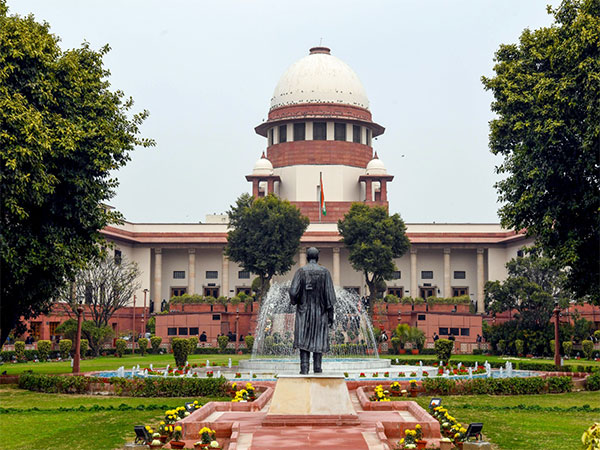
In a significant ruling touching upon the delicate intersection of constitutional rights, medical ethics and end-of-life care, the Supreme Court of India has permitted the withdrawal of life-sustaining treatment for a man who has remained in a permanent vegetative state for more than a decade. The decision is being viewed as one of the most concrete applications of the constitutional principle that the right to live with dignity under Article 21 also encompasses the right to die with dignity in exceptional circumstances.
The case concerned Harish Rana, a resident of Ghaziabad who suffered severe brain injuries in 2013 after a fall during his student years in Chandigarh. The accident left him with irreversible neurological damage, and for over thirteen years he remained in a persistent vegetative state, dependent entirely on artificial feeding and continuous medical support. Medical evaluations over the years consistently indicated that there was no realistic possibility of recovery.
After considering expert medical reports and the prolonged condition of the patient, the Supreme Court allowed the family’s plea seeking permission to discontinue life-sustaining treatment. The Court observed that when medical evidence establishes that a patient’s condition is irreversible and the treatment merely prolongs biological existence without hope of recovery, continuing such treatment may not always serve the patient’s dignity.
The bench clarified that clinically assisted nutrition and hydration constitute forms of medical treatment. Consequently, in appropriate circumstances and subject to strict safeguards, such life-prolonging measures can legally be withdrawn.
To ensure a humane and medically supervised process, the Court directed that Rana be shifted to the palliative care unit of All India Institute of Medical Sciences in New Delhi, where the withdrawal of life support would take place in accordance with established medical protocols and ethical guidelines.
Rana’s parents had been caring for him for more than a decade while he remained unresponsive and incapable of independent bodily functions. The prolonged condition, they argued before the Court, had reduced their son’s existence to mere biological survival without consciousness, communication or the possibility of rehabilitation.
Faced with this grim reality, the family approached the Supreme Court seeking permission for passive euthanasia a step they argued was necessary to restore dignity to their son’s final moments.
The Court’s decision builds upon the constitutional framework laid down in the landmark judgment of Common Cause v. Union of India (2018), where a Constitution Bench held that the right to die with dignity forms part of the fundamental right to life under Article 21 of the Constitution. That judgment recognised the legality of passive euthanasia and validated the concept of “living wills” or advance medical directives.
Earlier jurisprudence in the Aruna Shanbaug Case (2011) had first opened the door to passive euthanasia in India by allowing withdrawal of life support under judicial supervision in exceptional cases.
The present decision therefore represents a practical application of those constitutional principles, demonstrating how courts may intervene when families seek judicial approval for end-of-life decisions in the absence of a prior living will.
The ruling reflects the judiciary’s cautious attempt to balance two deeply important values: the preservation of human life and the preservation of human dignity. While Indian law continues to prohibit active euthanasia, the Court has repeatedly acknowledged that forcing a patient to remain in a state of irreversible suffering or unconscious existence may undermine the very dignity that the Constitution seeks to protect.
By permitting the withdrawal of life-sustaining treatment in this case, the Court emphasised that constitutional compassion must extend to situations where medicine can no longer restore life in any meaningful sense.
The judgment has also revived calls for Parliament to enact a comprehensive statutory framework governing end-of-life care and passive euthanasia. At present, decisions of this nature rely largely on judicial guidelines and medical board approvals, leaving significant room for procedural uncertainty.
A clear legislative regime, experts argue, could help hospitals, families and doctors navigate such deeply sensitive decisions without the need for prolonged litigation.
Beyond the immediate case, the ruling marks an important moment in India’s evolving constitutional jurisprudence on personal autonomy and medical ethics. It reaffirms that the right to life under the Constitution is not confined to mere physical survival but includes the right to live and in exceptional cases, to die with dignity.
In recognising this principle in a real and deeply human situation, the Supreme Court has once again underscored that constitutional rights must ultimately serve the dignity of the individual.
