


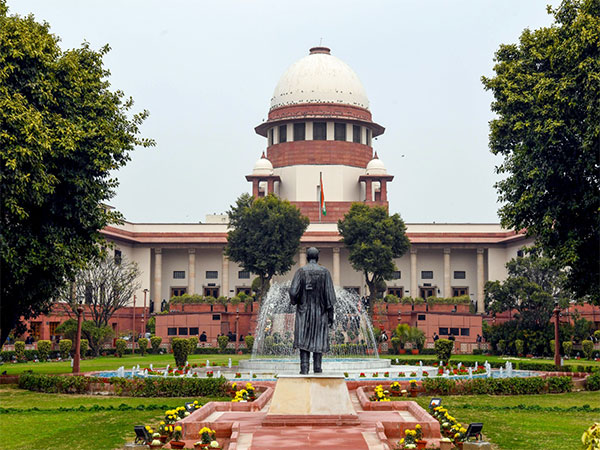
In an important clarification on procedural rights, the Supreme Court of India has reiterated that individuals who were not parties to a case but are adversely affected by the judgment are not left without remedy. Such persons may seek a review of the judgment or challenge it before the appropriate forum, provided they can demonstrate that they are genuinely aggrieved by the decision.
The observation was made by a bench comprising Justice Dipankar Datta and Justice Aravind Kumar while deciding appeals arising from a dispute concerning promotions in the Kerala Technical Education Service.
The Court emphasised that judicial decisions can sometimes affect individuals who were not directly involved in the litigation. In such situations, the law does not leave those persons remediless. If a judgment adversely impacts their rights or service conditions, they may seek appropriate relief through legal mechanisms such as a review petition or a fresh challenge before a competent forum.
The bench pointed out that in service jurisprudence, court rulings may have consequences beyond the immediate parties to the dispute. Decisions concerning recruitment rules, promotions, or eligibility conditions may indirectly affect other employees in the same cadre or service.
Therefore, individuals who can establish that they are “persons aggrieved” by such rulings may approach the court to protect their legal interests.
While explaining the legal position, the Court relied on several earlier judgments of the Supreme Court that recognise the rights of affected third parties.
The bench referred to the decision in K. Ajit Babu v. Union of India, which held that although review petitions are generally filed by parties to the case, persons who are genuinely aggrieved by the outcome may also seek review on limited grounds.
The Court also cited Rama Rao v. M.G. Maheshwara Rao, where it was held that individuals affected by a judgment passed without hearing them could approach the appropriate forum to ventilate their grievances.
Additionally, reliance was placed on Union of India v. Nareshkumar Badrikumar Jagad, which recognised that a non-party may seek review if they are able to demonstrate that they qualify as a “person aggrieved” by the order.
The case arose from a long-standing controversy concerning promotion rules in the Kerala Technical Education Service.
Under Rule 6A of the Kerala Technical Education Service (Amendment) Rules, 2004, certain lecturers appointed before March 27, 1990 were granted exemption from acquiring a PhD qualification for promotion if they had crossed the age of 45 at the time of notification for higher posts. The rule reflected earlier guidelines issued by the All India Council for Technical Education, which required a PhD for senior academic posts but allowed a limited relaxation period to obtain the qualification.
The rule was challenged before the Kerala High Court, where both the Single Judge and Division Bench struck it down. However, the Supreme Court later set aside those decisions in Christy James Jose v. State of Kerala, holding that failure to obtain a PhD within the prescribed period could result in stoppage of increments but could not invalidate appointments or promotions.
Following that ruling, several lecturers obtained promotions with retrospective effect in compliance with the Supreme Court’s directions.
Later, disputes emerged when other proceedings relating to promotions and reversions were filed before the Kerala Administrative Tribunal and subsequently reached the Kerala High Court.
In a 2020 judgment, the High Court held that state service rules must align with AICTE regulations and that a PhD had become mandatory for promotion to senior academic posts after March 5, 2010.
Although the appellants were not parties to those proceedings, they argued that the High Court’s directions effectively undermined the relief previously granted to them by the Supreme Court.
Accepting this argument, the apex court observed that once it had granted relief earlier and the State had implemented the order by promoting the appellants, the High Court could not issue directions that indirectly disturbed the finality of that decision. The judgment reinforces an important procedural principle in Indian law: access to judicial remedies is not strictly limited to the original parties to litigation. If a judgment has direct legal consequences for individuals who were not heard during the proceedings, they retain the right to approach the courts to protect their interests.
This principle is particularly relevant in service matters, regulatory disputes, and policy-based litigation, where judicial decisions often have wider implications for persons beyond the immediate litigants.
By reiterating that such individuals may seek review or challenge the judgment, the Supreme Court has underlined the broader commitment of the legal system to ensure fairness, procedural justice, and the right to be heard.
