


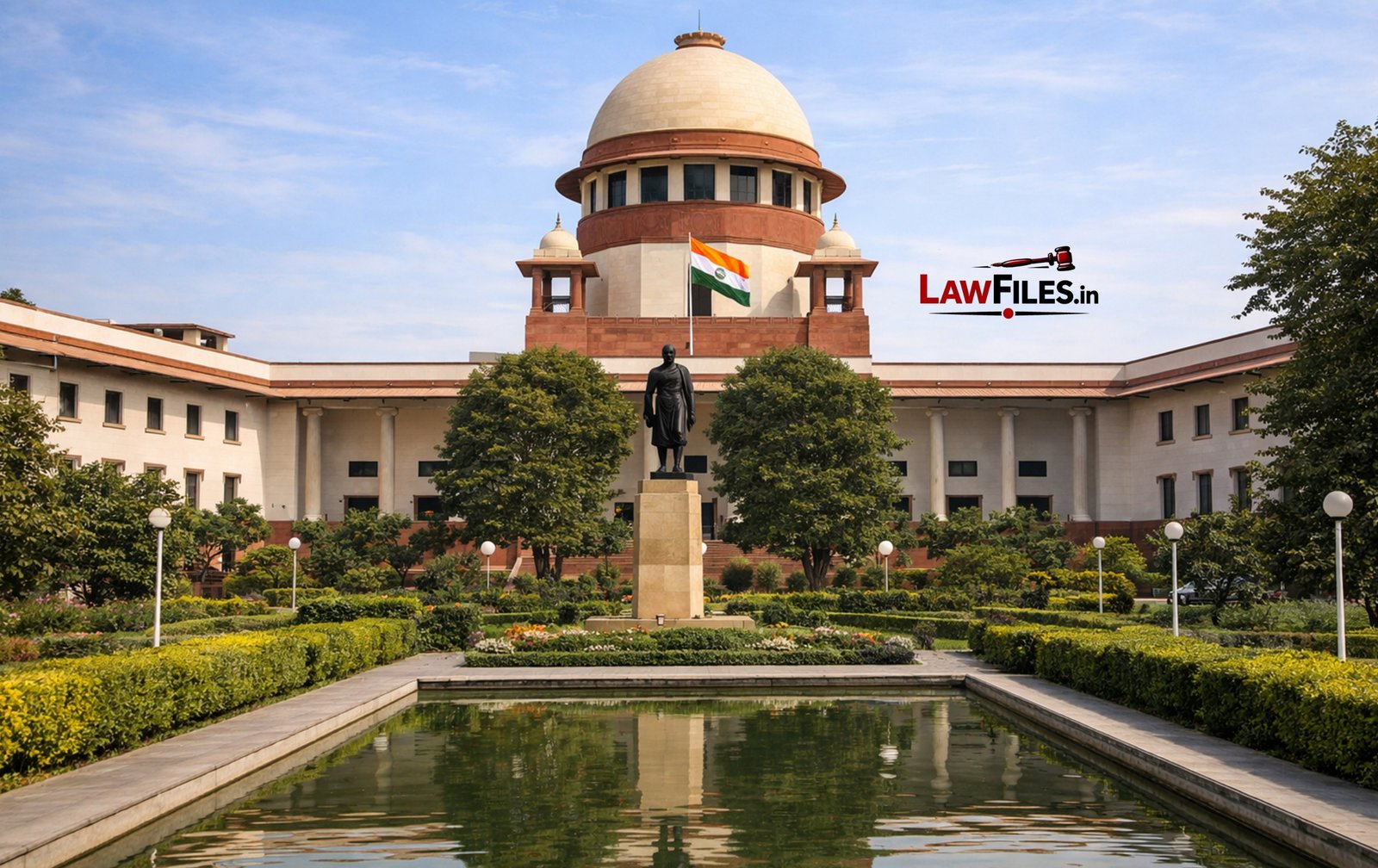
In a strong rebuke underscoring the gravity of dowry-related offences, the Supreme Court of India has criticised the Patna High Court for granting bail in a dowry death case through what it termed a “mechanical and unreasoned order”, reiterating that such serious crimes demand heightened judicial scrutiny and reasoned discretion.
A bench of Justices J.B. Pardiwala and Vijay Bishnoi not only set aside the bail granted to the accused husband but also directed that a copy of its order be placed before the Chief Justice of the Patna High Court an unusual step signalling institutional concern.
The case concerned the death of a woman found in suspicious circumstances at her matrimonial home, barely one and a half years into her marriage.
The prosecution alleged dowry-related harassment and fatal violence, with the post-mortem report revealing multiple external and internal injuries, including head trauma that led to death due to hemorrhage and shock.
The husband was booked under provisions relating to dowry death and related offences under the Bharatiya Nyaya Sanhita, 2023, and was later granted bail by the Patna High Court on grounds including period of custody. Limited number of witnesses examined
This order was challenged before the Supreme Court by the deceased’s mother. Setting aside the bail order, the Supreme Court delivered a scathing critique of the High Court’s reasoning:
The order was “wholly unsustainable” and failed to consider the seriousness of the offence.
The Court observed that the High Court had not engaged with material evidence on record. It ignored the post-mortem findings showing multiple injuries. It failed to consider the statutory presumption applicable in dowry death cases Its reasoning was limited to custody duration and trial progress
In emphatic terms, the Court noted that “The High Court has not discussed anything”, calling the order a clear instance of non-application of judicial mind.
The ruling reiterates a crucial principle that in serious offences like dowry death, bail cannot be granted in a routine or mechanical manner.
The Court emphasised that bail discretion must be guided by the gravity of offence and prima facie evidence. Courts must assess nature of injuries, circumstances of death, and statutory presumptions. Mechanical reliance on custody period or delay is legally insufficient
It relied on precedent to stress that where material indicates direct involvement in a fatal incident, courts must act with “abundance of caution”.
The Supreme Court used unusually strong language to underline the societal impact of such offences. Dowry deaths were described as a “severe blot on society” . The Court noted that despite legal prohibitions, thousands of women continue to die unnaturally due to dowry demands
This framing elevates dowry death cases beyond individual crimes, treating them as systemic human rights violations requiring strict judicial approach.
The ruling sends a clear message that unreasoned bail orders will not be tolerated, especially in serious offences. Courts must consider legal presumptions (such as those relating to dowry death) rather than treating cases as ordinary bail matters. By directing its order to be placed before the Chief Justice of the High Court, the Supreme Court has introduced an element of institutional oversight over bail adjudication.
The decision fits within a growing trend where the Supreme Court has reversed lenient or unreasoned bail orders in serious crimes, emphasised reasoned judicial orders as part of due process and insisted that personal liberty must be balanced with societal interest and victim justice
However, the ruling also raises an important tension within criminal law between the principle that “bail is the rule” and the need for stricter scrutiny in grave offences like dowry death.
The judgment reflects a balancing of competing rights under Article 21 (Accused): protection of personal liberty, right to life and dignity of the deceased requirement of reasoned and non-arbitrary judicial orders
The Court’s intervention ensures that judicial discretion does not become arbitrariness, particularly in cases involving systemic violence against women.
The Supreme Court’s ruling marks a decisive reaffirmation that bail orders in serious offences must be reasoned, evidence-based, and legally sound.
By condemning the Patna High Court’s “mechanical” approach and cancelling bail, the Court has sent a strong institutional message. In cases of dowry death, judicial discretion must be exercised with seriousness, sensitivity, and strict adherence to law not as a routine procedural formality.
The judgment strengthens both victim-centric justice and judicial accountability, ensuring that grave crimes are treated with the seriousness they demand within India’s criminal justice system.
