


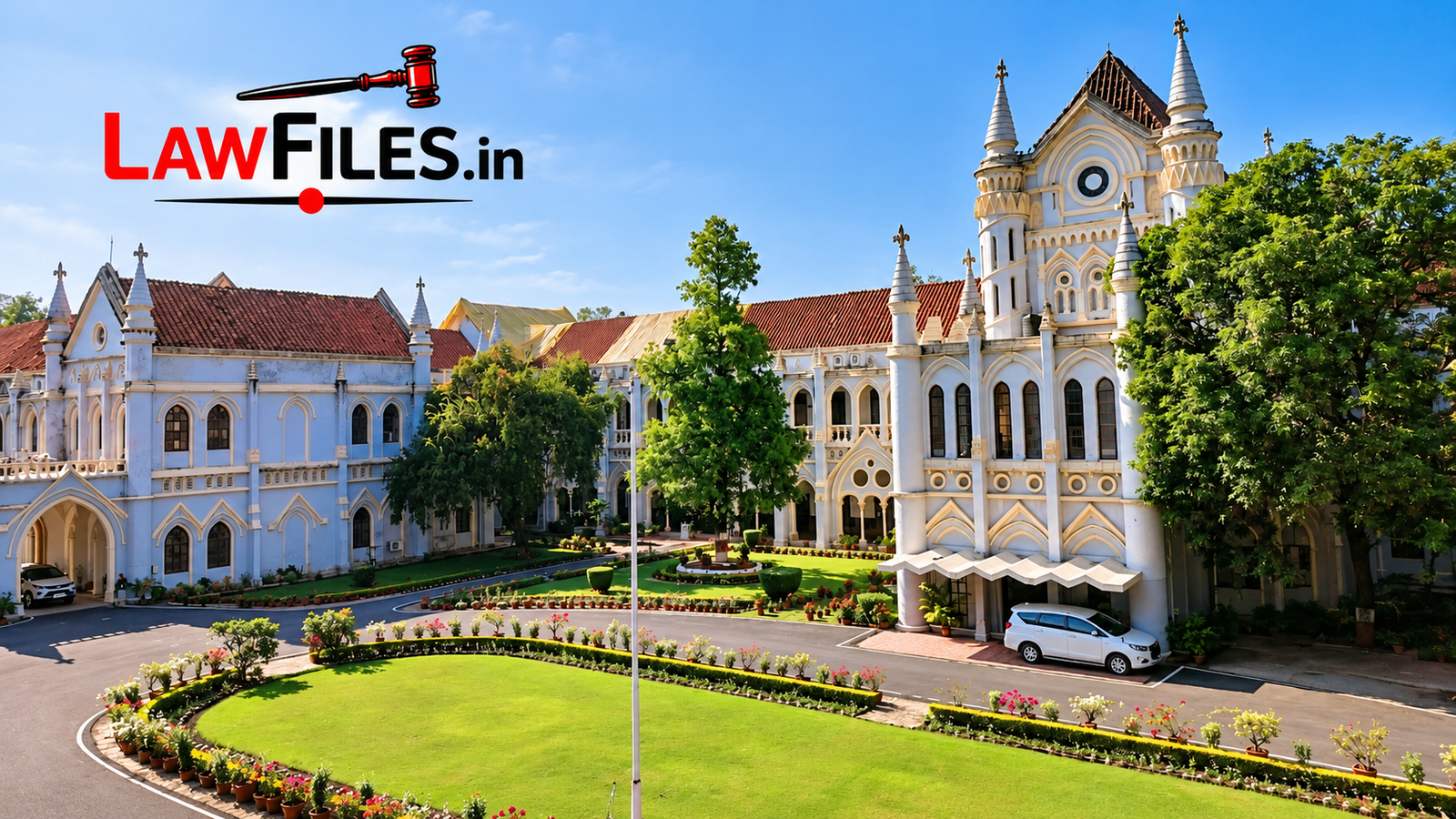
The Madhya Pradesh High Court has struck down the State’s 2019 amendment increasing reservation for Other Backward Classes (OBCs) in public employment and higher education from 14 per cent to 27 per cent, holding that the enhanced quota was not supported by sufficient empirical material or exceptional circumstances warranting a departure from the constitutional framework governing reservations. A Division Bench comprising Justice Anand Pathak and Justice Vinay Saraf delivered the decision on October 9, 2026, while deciding a large batch of connected petitions, including Ashita Dubey and Others v. State of Madhya Pradesh and Others. The judgment restores the earlier 14 per cent OBC reservation position and directs the authorities to proceed with recruitment against posts that had remained unfilled because of the prolonged litigation. The ruling is significant not because it questions the constitutional legitimacy of affirmative action, but because it examines whether the State adequately justified the particular quantum of reservation it chose to introduce.
The Bench made the distinction central to its reasoning: the dispute was not about whether OBC communities were entitled to reservation, but whether the existing 14 per cent quota could constitutionally be increased to 27 per cent on the material placed before the Court. The Court recognised the entitlement to reservation under the existing framework while finding that the case for the additional 13 percentage points had not been established. This distinction is important because the constitutional debate on reservations often becomes politically framed as a contest between those supporting affirmative action and those opposing it. The legal question is narrower and more exacting. A State may recognise historical and structural disadvantage, but when it determines the extent of reservation, it must act within constitutional limits and be able to demonstrate that its decision rests on relevant evidence rather than on a percentage selected without adequate justification.
The dispute originated in March 2019, when the then Congress government led by Kamal Nath promulgated Ordinance No. 2 of 2019, increasing OBC reservation in State public services from 14 per cent to 27 per cent. The measure was subsequently given statutory form through the Madhya Pradesh Lok Seva (Scheduled Castes, Scheduled Tribes and Other Backward Classes Reservation) Amendment Act, 2019. The increase was challenged before the High Court by candidates who contended that it breached the ceiling on reservations recognised by the Supreme Court and impaired the rights of candidates competing for public employment and postgraduate medical admissions. The litigation expanded to cover recruitment and educational admissions, with multiple petitions questioning the constitutional validity and implementation of the enhanced quota. Although the State government changed in 2020, the change in political administration did not resolve the underlying legal uncertainty, and the disputed reservation continued to affect selection processes.
The prolonged litigation also produced a practical administrative arrangement under which recruitment results were divided between 87 per cent of posts that could be processed and a remaining 13 per cent that were kept pending until the legal dispute was resolved. This approach attempted to prevent the entire recruitment process from being paralysed, while preserving the disputed portion for a later decision. But the arrangement also left candidates waiting for clarity on their prospects and created uncertainty for recruitment agencies that were required to apply a reservation policy whose validity remained under judicial scrutiny. The High Court’s final ruling therefore addresses two distinct concerns: the constitutionality of the enhanced quota and the consequences of years of uncertainty for appointments and vacancies. The Court’s directions on existing appointments and unfilled posts seek to bring the administrative consequences of the dispute to a close without treating every appointment made during the litigation in the same manner.
The central constitutional principle examined by the Bench is the general 50 per cent ceiling on vertical reservation. In Indra Sawhney v. Union of India, the Supreme Court held that reservation under Article 16(4) of the Constitution should ordinarily not exceed 50 per cent, while recognising that exceptional circumstances may justify a departure in carefully limited situations. The principle was subsequently considered in other major reservation decisions, including M. Nagaraj v. Union of India and Jaishri Laxmanrao Patil v. Chief Minister. The 50 per cent rule is not merely a mathematical formula detached from constitutional equality. It reflects the need to reconcile affirmative measures for inadequately represented backward classes with the broader guarantee of equal opportunity in public employment under Article 16. The exception is not an unrestricted power to exceed the ceiling whenever a State invokes social disadvantage; it requires a sufficiently established and constitutionally sustainable justification.
In Madhya Pradesh, the enhanced OBC quota, when combined with the existing reservations for Scheduled Castes and Scheduled Tribes, raised the total vertical reservation to 63 per cent. The challenge was therefore not confined to whether OBC communities faced disadvantage, but whether the State had demonstrated circumstances strong enough to justify crossing the established ceiling. The High Court concluded that it had not. In doing so, the Bench treated the 50 per cent rule as a binding constitutional constraint rather than a guideline that the State could disregard by simply asserting the numerical size of a backward community or the need for broader representation. The judgment reinforces the proposition that an exceptional departure must be supported by evidence explaining why the ordinary constitutional rule is inadequate in the particular circumstances.
The question of empirical justification was consequently central to the Court’s examination. Article 16(4) permits the State to make provisions for reservation in favour of a backward class of citizens which, in the State’s opinion, is not adequately represented in the services under it. The constitutional inquiry is therefore not exhausted by establishing that a community is socially or educationally disadvantaged. For reservation in public employment, the State must also address the question of inadequate representation and justify the measure adopted in response. The existence of backwardness and the quantum of reservation are related questions, but they are not interchangeable. Evidence that a community constitutes a substantial proportion of the population does not, without further analysis, establish that a particular percentage of reserved posts is constitutionally necessary or that a departure from the 50 per cent ceiling is justified.
The Bench examined material relating to OBC representation in higher education and public services, including data concerning student enrolment and participation in open competition. The judgment noted that OBC students accounted for approximately 33.87 per cent of enrolment in higher education in data relating to 2023 and referred to material indicating that OBC candidates were also securing a substantial share of open-competition seats. The Court considered this material alongside the existing reservation and concluded that the State had not demonstrated the need to increase the quota to 27 per cent. Such figures must, however, be understood in their proper context. Enrolment in higher education, representation in public employment and success in open competition measure different things. A defensible reservation policy requires the State to explain how the evidence relates to the particular constitutional objective and why it supports the quantum proposed. The legal significance of the judgment lies in the Court’s conclusion that the material before it did not establish the required justification for the enhanced quota, not in any universal proposition that a particular level of educational enrolment automatically rules out reservation.
The Court also scrutinised the material relied upon by the State to substantiate the increase. The reasoning reported from the judgment indicates that the 1983 Mahajan Commission report was too old to establish the circumstances prevailing when the amendment was introduced in 2019. The Court also examined later material, including a 2023 report concerning backward-class representation, and found deficiencies in its ability to justify the 2019 decision retrospectively. The broader principle is that data must be relevant to the question being decided, sufficiently reliable and appropriately connected to the policy measure. A report prepared after the decision may contribute to understanding social conditions, but it cannot automatically cure the absence of adequate contemporaneous justification for an earlier legislative measure. Similarly, historical evidence may illuminate the roots of disadvantage without necessarily establishing the precise quantum required decades later. Reservation policy must respond to enduring structural inequality, but the legal justification for a specific percentage must still be grounded in evidence capable of supporting that choice.
Another significant aspect of the judgment concerns consultation with the National Commission for Backward Classes. The Court examined the constitutional framework under Article 338B, including the obligation under Article 338B(9) to consult the Commission on major policy matters affecting socially and educationally backward classes, subject to the constitutional provision’s terms. The issue was not simply whether the State possessed legislative competence to enact a reservation amendment, but whether a major policy decision of this nature had been taken after following the constitutionally prescribed process. The judgment treated the absence of consultation, alongside the evidentiary deficiencies and other concerns surrounding the measure, as a relevant factor supporting judicial intervention. This aspect carries wider implications for reservation policymaking: constitutional institutions tasked with examining backward-class interests are not merely ceremonial participants, and the State must carefully consider the procedural obligations attached to major policy choices affecting the communities concerned.
The Court also criticised the manner in which the 2019 measure had been prepared and enacted, referring to haste and deficiencies in drafting. These observations reinforce an important distinction between the political desirability of a policy and its constitutional validity. A government may consider a higher quota necessary to improve representation, but the urgency or popularity of the objective cannot substitute for a reasoned legislative process. When a measure alters the balance of reservation in public employment and higher education, the supporting material, the constitutional basis and the drafting of the amendment assume particular importance. A poorly substantiated measure exposes candidates, institutions and the beneficiaries of reservation alike to years of uncertainty. In this case, the litigation persisted across changes of government and recruitment cycles, illustrating how inadequate preparation can ultimately undermine the stability of the very policy the State seeks to implement.
The High Court’s decision also raises a broader question about the relationship between judicial review and legislative discretion. Reservation policy involves complex social assessments that are ordinarily entrusted to elected governments and public institutions. Courts are not expected to formulate the ideal percentage of reservation or substitute their own policy preferences for those of the legislature. Their role is to determine whether the policy remains within constitutional boundaries, whether the relevant statutory and constitutional procedures have been followed, and whether the material relied upon can sustain the decision under review. Judicial scrutiny is therefore not equivalent to a judicial rejection of affirmative action. Rather, it ensures that a constitutionally significant policy is implemented through legally defensible means. The judgment’s distinction between the entitlement to reservation and the extent of reservation is particularly important in preserving that boundary.
The ruling also calls for caution in treating the 50 per cent ceiling as a simplistic test that resolves every reservation dispute. The constitutional jurisprudence recognises the significance of the ceiling while also addressing the possibility of exceptional circumstances. The crucial question is whether the circumstances relied upon are genuinely exceptional and supported by a convincing evidentiary foundation. Population share, historical exclusion and political representation may form part of the broader social context, but none should automatically be treated as conclusive proof that the ceiling may be crossed. Equally, the fact that a community has achieved representation in certain educational institutions or public services does not necessarily establish that all structural barriers have disappeared. The appropriate inquiry requires a careful assessment of the purpose of the reservation, the nature of the data, the degree of under-representation and the constitutional limits governing the measure.
The judgment’s immediate consequences are particularly important for candidates whose appointments had remained uncertain. The High Court protected OBC appointments made under the enhanced quota up to September 29, 2022, directing that those appointees should not be removed merely because the 27 per cent arrangement has been struck down. The Court also directed that the excess appointments within this protected group be adjusted against the relevant posts in the next three recruitment drives. By contrast, appointments made after September 29, 2022, in excess of the 14 per cent quota were not afforded the same protection. The affected excess portion of recruitment is therefore subject to the Court’s directions, and the relevant recruitment agencies have been directed to take steps to fill the 13 per cent posts that had been held back from the unreserved category within three months. These directions attempt to balance legal certainty for existing appointees with the rights of candidates who were awaiting a decision on vacancies withheld during the litigation.
The protection afforded to earlier appointments reflects the practical difficulty of undoing administrative decisions after candidates have entered public service in reliance on an operative arrangement. Constitutional adjudication does not always require the same remedy for every stage of implementation. The Court can distinguish between appointments made during a specified period and later appointments made when the administrative position had been clarified and the disputed portion was being kept pending. Such differentiation can reduce avoidable hardship while ensuring that the invalidated measure is not indefinitely continued through fresh appointments. The precise effect of the judgment will depend on the relevant recruitment records and the implementation directions issued to the Madhya Pradesh Public Service Commission, the Employees’ Selection Board and other authorities. The three-month direction is therefore significant not only as a timeline but as an attempt to convert a long-running constitutional dispute into a workable administrative outcome.
For OBC communities, the judgment should not be read as a finding that social disadvantage no longer exists or that affirmative action is constitutionally unnecessary. The Court’s ruling concerns the legality of the particular 2019 increase and the evidence offered to support it. The earlier 14 per cent reservation remains the applicable position under the judgment, but the constitutional framework does not prevent the State from undertaking a fresh, properly supported exercise if it seeks to formulate a different policy consistent with the governing law. Any such exercise would need to address the constitutional requirements, the relevant evidence and the permissible limits on reservation. A policy that seeks to improve representation must be designed in a manner that can withstand judicial scrutiny, rather than relying on the assumption that the importance of its objective will excuse deficiencies in the process.
The political response to the decision is likely to remain strong, particularly because the 27 per cent quota had become a significant issue in Madhya Pradesh’s public debate. Opposition leaders and OBC organisations have criticised the ruling and indicated that they may challenge it before the Supreme Court. Such a challenge would place the High Court’s assessment of the evidence and its application of the reservation ceiling before the appellate court. Until any stay or modification is granted, however, the High Court’s operative directions govern the authorities’ response. Political disagreement with the outcome cannot suspend a judicial order, just as the fact that a judgment has been delivered does not foreclose the statutory right to appeal. The next stage of litigation, if initiated, will need to focus on the constitutional and evidentiary questions rather than merely restating the political importance of the quota.
Ultimately, the Madhya Pradesh High Court’s decision underscores that reservation policy must be both substantively responsive to inequality and procedurally sound. The constitutional promise of equality does not require the State to ignore historical exclusion; equally, it does not permit every increase in reservation to be justified solely by invoking that history. The State must connect the evidence of disadvantage and inadequate representation to the measure adopted, respect the applicable constitutional ceiling and comply with relevant institutional safeguards. The judgment is therefore best understood as a ruling on the limits of the State’s justification for a particular increase, rather than a general verdict against reservation. Its lasting significance will depend not only on whether it survives appellate scrutiny, but also on whether future policymaking draws the appropriate lesson: durable affirmative action requires sound evidence, constitutional discipline and careful implementation, because uncertainty in reservation policy ultimately harms both intended beneficiaries and other candidates whose opportunities depend upon a predictable and lawful recruitment system.
