

Close Menu
LawFilesLawFiles

    Subscribe to Updates

    Get the latest creative news from FooBar about art, design and business.

    What's Hot

    Delhi High Court Upholds Rajpal Yadav’s Conviction in Cheque Bounce Cases; Ruling Reaffirms Sanctity of Commercial Transactions and the Deterrent Purpose of the Negotiable Instruments Act

    July 11, 2026

    Delayed Payment by Auction Purchaser Under the SARFAESI Act: Supreme Court Reinforces Mandatory Compliance With Auction Timelines; A Landmark Shift in India’s Banking Recovery Jurisprudence

    July 11, 2026

    Anil Ambani Withdraws Bombay High Court Plea Against Bank of Baroda’s Fraud Classification; Case Highlights Evolving Judicial Standards Governing RBI Fraud Tagging Framework

    July 11, 2026
    Facebook X (Twitter) Instagram Threads
    Saturday, July 11
    LawFilesLawFiles
    Facebook X (Twitter)
    • Home
      • Who We Are
      • Our Mission
      • Advisory board
      • Contact US
    • Supreme Court
    • High Courts
      • Gujarat High Court
      • Jharkhand High Court
      • Rajasthan High Court
      • Karnataka High Court
      • Andhra Pradesh High Court
      • Allahabad High Court
      • Himachal Pradesh High Court
      • Chhattisgarh High Court
      • Jammu & Kashmir and Ladakh High Court
      • Kerala High Court
      • Punjab and Haryana High Court
      • Patna High Court
      • Madhya Pradesh High Court
      • Madras High Court
      • Bombay High Court
      • Orissa High Court
      • Calcutta High Court
      • Meghalaya High Court
      • Delhi High Court
      • Manipur High Court
      • Gauhati High Court
    • Corporate
    • Taxation Laws
      • Income Tax
      • GST
      • Customs & Excise
    • Global Affairs
    • Articles
      • Sitting Judge’s’ Views
      • Senior Advocate
      • Policy Analysis
      • Tax Expert
    • PILS
      • Free/Affordable Legal Aid
      • PIL Cell
      • Law student Volunteer Cell (research & Drafting)
      • NGO & Legal services Authority Tie-ups
      • Online Legal Formats
      • Online Legal Help Form
    Subscribe Premium
    LawFilesLawFiles
    Home»High Courts»Kerala High Court Reserves Verdict on Pulsar Suni’s Plea for Suspension of Sentence in 2017 Actress Assault Case; Appeal Rekindles Debate on Post-Conviction Bail Jurisprudence
    High Courts

    Kerala High Court Reserves Verdict on Pulsar Suni’s Plea for Suspension of Sentence in 2017 Actress Assault Case; Appeal Rekindles Debate on Post-Conviction Bail Jurisprudence

    Anvita DwivediBy Anvita DwivediJuly 9, 2026No Comments7 Mins Read
    WhatsApp Facebook Twitter Copy Link
    Share
    Facebook Twitter Pinterest Copy Link WhatsApp

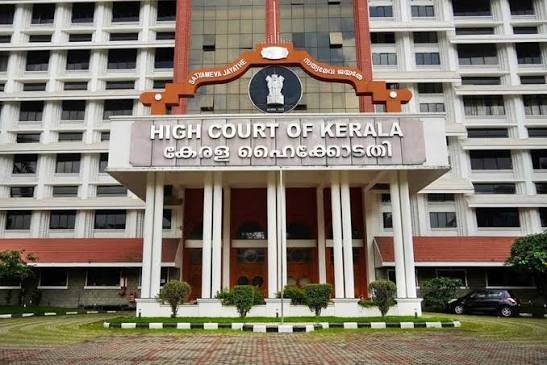
    The Kerala High Court has reserved its verdict on the application filed by Sunil N.S., popularly known as Pulsar Suni, seeking suspension of the twenty-year rigorous imprisonment imposed upon him by the Ernakulam Principal Sessions Court in the widely discussed 2017 Malayalam actress assault case. The matter came up before a Division Bench hearing the criminal appeals filed by the convicted accused against their conviction and sentence. After hearing extensive submissions from both the defence and the prosecution, the High Court deferred its decision on whether the sentence should remain suspended during the pendency of the appeal. The proceedings mark the latest stage in one of India’s most closely followed criminal prosecutions, which has consistently tested the criminal justice system on issues ranging from victim protection and fair trial rights to evidentiary appreciation and appellate review.

    The case traces its origin to the shocking incident of February 2017, when a Malayalam film actress was allegedly abducted while travelling in her vehicle, wrongfully confined, sexually assaulted inside the moving vehicle and the assault was allegedly recorded electronically. The incident generated nationwide outrage and triggered one of Kerala’s most extensive criminal investigations. A Special Investigation Team was constituted immediately after the offence, leading to the arrest of several accused, including Sunil N.S. alias Pulsar Suni, who was alleged to be the principal perpetrator. Over the years, the investigation expanded to include allegations of criminal conspiracy involving other accused persons, including actor Dileep, who was subsequently acquitted by the trial court for want of proof beyond reasonable doubt. The six persons convicted for the direct commission of the offence, including Pulsar Suni, were each sentenced to twenty years of rigorous imprisonment in December 2025.

    Following their conviction, the convicted persons preferred criminal appeals before the Kerala High Court challenging both the findings of guilt and the quantum of sentence. Alongside the appeals, applications were filed seeking suspension of sentence under Section 389 of the Code of Criminal Procedure (now reflected in the corresponding provisions of the Bharatiya Nagarik Suraksha Sanhita), contending that the conviction suffers from legal and evidentiary infirmities warranting release on bail during the pendency of the appeal. It is this limited question of suspension of sentence not the final merits of the conviction that presently occupies the High Court’s consideration.

    During the hearing, counsel appearing for Pulsar Suni argued that the conviction is liable to be reconsidered during appellate scrutiny and that the appeal raises substantial questions of law and evidence. It was submitted that appellate courts possess statutory authority to suspend execution of a sentence where the appeal presents arguable issues and continued incarceration may ultimately become irreversible if the conviction is later set aside. The defence also relied upon the settled principle that an appeal against conviction is a substantive statutory right and that the appellate court retains discretion to suspend the sentence depending upon the facts and circumstances of each case.

    The prosecution strongly opposed the plea, contending that the present case concerns an exceptionally grave offence involving abduction, sexual assault and invasion of the survivor’s dignity. The State argued that the trial court, after an exhaustive trial extending over several years, examined numerous witnesses, documentary evidence and electronic material before recording a detailed finding of guilt. It was therefore submitted that no exceptional circumstances presently exist to justify suspension of sentence, particularly where the conviction relates to offences carrying severe punishment and involving serious violence against a woman.

    The proceedings before the High Court illustrate an important distinction within criminal appellate jurisprudence. Suspension of sentence under Section 389 is fundamentally different from acquittal. An appellate court deciding such an application does not ordinarily re-appreciate the entire evidence or pronounce upon the correctness of the conviction. Instead, it undertakes a limited examination to determine whether continued incarceration should be suspended pending disposal of the appeal. Factors such as the nature of the offence, severity of punishment, prima facie strength of the appeal, possibility of early hearing, conduct of the accused and broader interests of justice ordinarily influence the exercise of judicial discretion.

    The Supreme Court has consistently held that suspension of sentence after conviction stands on a different legal footing from grant of bail before trial. Prior to conviction, every accused enjoys the constitutional presumption of innocence. Once a competent criminal court records a conviction after trial, that presumption stands displaced by a judicial finding of guilt, though the conviction remains subject to appellate scrutiny. Consequently, post-conviction suspension of sentence is governed by more stringent considerations than ordinary pre-trial bail. Appellate courts therefore exercise this jurisdiction cautiously, particularly where convictions involve offences of a grave nature carrying substantial sentences.

    Another important legal dimension emerging from the proceedings concerns the scope of appellate review in criminal cases. The right of appeal constitutes a valuable statutory safeguard against erroneous convictions. High Courts, while hearing criminal appeals, possess wide powers to reassess evidence, examine questions of law, evaluate procedural fairness and determine whether the findings recorded by the trial court withstand judicial scrutiny. At the same time, appellate courts ordinarily attach due weight to findings recorded by the trial judge, who had the advantage of observing witnesses firsthand during the trial. This balance between appellate oversight and respect for trial court findings represents a defining feature of Indian criminal procedure.

    The present proceedings also revive discussion regarding victim-centric criminal justice under the Protection of Women from Sexual Offences framework and broader constitutional principles protecting the dignity of survivors. Although the application presently concerns only suspension of sentence, courts increasingly recognise that decisions affecting post-conviction liberty must also consider the interests of victims and public confidence in the criminal justice system. Modern criminal jurisprudence therefore attempts to reconcile the rights of convicts pursuing statutory appeals with the legitimate expectation that convictions recorded after due trial should not be lightly suspended without compelling judicial reasons.

    The Kerala actress assault case has occupied a distinctive place within Indian criminal law not merely because of the identity of the persons involved but also because of the legal questions it generated throughout nearly a decade of litigation. The proceedings witnessed extensive arguments concerning electronic evidence, witness protection, media reporting, fair trial guarantees, transfer petitions, allegations of conspiracy, preservation of digital evidence and procedural safeguards available both to the prosecution and the accused. The trial court ultimately acquitted actor Dileep and three other accused while convicting six persons, including Pulsar Suni, holding that the prosecution had proved the direct offences against them beyond reasonable doubt. The State has separately challenged aspects of the acquittal, while the convicted persons have questioned their convictions before the High Court.

    From a jurisprudential perspective, the High Court’s reserved order is likely to contribute to the evolving principles governing suspension of sentence in serious criminal offences. Indian courts have repeatedly emphasised that no inflexible formula governs such applications. While personal liberty remains a cherished constitutional value under Article 21, appellate courts must simultaneously ensure that post-conviction relief does not undermine the administration of criminal justice or dilute the deterrent effect of judgments delivered after full-fledged trials.

    Whatever the eventual outcome, the High Court’s forthcoming decision will remain confined to the interim question of suspension of sentence and will not determine the ultimate merits of the criminal appeals. Those appeals will continue to require comprehensive re-examination of the evidence, legal findings and reasoning adopted by the trial court before any final adjudication is reached. The proceedings therefore serve as a reminder that criminal appellate review operates through carefully calibrated procedural stages, preserving both the convict’s statutory right of appeal and the integrity of convictions rendered after due judicial process.

    Appeal Rekindles Debate on Post-Conviction Bail Jurisprudence Kerala High Court Reserves Verdict on Pulsar Suni's Plea for Suspension of Sentence in 2017 Actress Assault Case;
    Share. WhatsApp Facebook Twitter Pinterest Email
    Anvita Dwivedi

    Related Posts

    Delhi High Court Upholds Rajpal Yadav’s Conviction in Cheque Bounce Cases; Ruling Reaffirms Sanctity of Commercial Transactions and the Deterrent Purpose of the Negotiable Instruments Act

    July 11, 2026

    Delayed Payment by Auction Purchaser Under the SARFAESI Act: Supreme Court Reinforces Mandatory Compliance With Auction Timelines; A Landmark Shift in India’s Banking Recovery Jurisprudence

    July 11, 2026

    Anil Ambani Withdraws Bombay High Court Plea Against Bank of Baroda’s Fraud Classification; Case Highlights Evolving Judicial Standards Governing RBI Fraud Tagging Framework

    July 11, 2026
    Add A Comment
    Leave A Reply Cancel Reply

    Demo
    Top Posts

    Digital Forensics Fail to convince Supreme Court: Bail Denied to Gagan Khanna in BNS Assault Case

    June 15, 2026241 Views

    Wrongful Claim Rejection Amounts to Deficiency in Service: Delhi Consumer Commission Holds Star Health Liable

    March 16, 202672 Views

    Bombay High Court Quashes POCSO Case, Directs Accused to Fund MacBook for Victim’s Education

    February 28, 202658 Views

    Supreme Court Quashes FIR Over ‘Improved’ Second Complaint: A Reminder That Criminal Law Cannot Be Built on Shifting Narratives

    June 4, 202654 Views
    Don't Miss

    Delhi High Court Upholds Rajpal Yadav’s Conviction in Cheque Bounce Cases; Ruling Reaffirms Sanctity of Commercial Transactions and the Deterrent Purpose of the Negotiable Instruments Act

    By Anvita DwivediJuly 11, 2026

    In a significant reaffirmation of India’s cheque dishonour jurisprudence, the Delhi High Court has upheld…

    Delayed Payment by Auction Purchaser Under the SARFAESI Act: Supreme Court Reinforces Mandatory Compliance With Auction Timelines; A Landmark Shift in India’s Banking Recovery Jurisprudence

    July 11, 2026

    Anil Ambani Withdraws Bombay High Court Plea Against Bank of Baroda’s Fraud Classification; Case Highlights Evolving Judicial Standards Governing RBI Fraud Tagging Framework

    July 11, 2026

    Supreme Court Examines Challenge to Navy Recruitment Rules for Group ‘B’ Non-Gazetted Officers; Notice to Centre Puts Promotional Equality and Service Jurisprudence Under Judicial Scrutiny

    July 11, 2026
    Stay In Touch
    • Facebook
    • Twitter

    Subscribe to Updates

    Get the latest creative news from SmartMag about art & design.

    Top Posts

    Digital Forensics Fail to convince Supreme Court: Bail Denied to Gagan Khanna in BNS Assault Case

    June 15, 2026241 Views

    Wrongful Claim Rejection Amounts to Deficiency in Service: Delhi Consumer Commission Holds Star Health Liable

    March 16, 202672 Views

    Bombay High Court Quashes POCSO Case, Directs Accused to Fund MacBook for Victim’s Education

    February 28, 202658 Views
    Don't Miss

    Delhi High Court Upholds Rajpal Yadav’s Conviction in Cheque Bounce Cases; Ruling Reaffirms Sanctity of Commercial Transactions and the Deterrent Purpose of the Negotiable Instruments Act

    By Anvita DwivediJuly 11, 2026

    In a significant reaffirmation of India’s cheque dishonour jurisprudence, the Delhi High Court has upheld…

    Delayed Payment by Auction Purchaser Under the SARFAESI Act: Supreme Court Reinforces Mandatory Compliance With Auction Timelines; A Landmark Shift in India’s Banking Recovery Jurisprudence

    July 11, 2026

    Anil Ambani Withdraws Bombay High Court Plea Against Bank of Baroda’s Fraud Classification; Case Highlights Evolving Judicial Standards Governing RBI Fraud Tagging Framework

    July 11, 2026

    Supreme Court Examines Challenge to Navy Recruitment Rules for Group ‘B’ Non-Gazetted Officers; Notice to Centre Puts Promotional Equality and Service Jurisprudence Under Judicial Scrutiny

    July 11, 2026
    Stay In Touch
    • Facebook
    • YouTube
    • TikTok
    • Instagram
    Top Trending
    About Us
    About Us

    LawFiles.in is a comprehensive legal news platform delivering real-time updates from the Supreme Court, High Courts, Tribunals, Corporate and Tax law, Regulators, Politics, Crime, Consumer cases, and Global Affairs.

    Email Us: lawfilesoffical@gmail.com
    Contact: +91 8800026066

    Contact Us:
    India International Centre
    40, Max Mueller Marg
    Lodhi Estate, New Delhi-110003

    Facebook X (Twitter)
    Our Picks

    Delhi High Court Upholds Rajpal Yadav’s Conviction in Cheque Bounce Cases; Ruling Reaffirms Sanctity of Commercial Transactions and the Deterrent Purpose of the Negotiable Instruments Act

    July 11, 2026

    Delayed Payment by Auction Purchaser Under the SARFAESI Act: Supreme Court Reinforces Mandatory Compliance With Auction Timelines; A Landmark Shift in India’s Banking Recovery Jurisprudence

    July 11, 2026

    Anil Ambani Withdraws Bombay High Court Plea Against Bank of Baroda’s Fraud Classification; Case Highlights Evolving Judicial Standards Governing RBI Fraud Tagging Framework

    July 11, 2026

    Supreme Court Examines Challenge to Navy Recruitment Rules for Group ‘B’ Non-Gazetted Officers; Notice to Centre Puts Promotional Equality and Service Jurisprudence Under Judicial Scrutiny

    July 11, 2026

    SCBA Condemns Abusive Conduct by Litigant in Supreme Court; Seeks Regulatory Framework for Circulation of Courtroom Videos Amid Growing Debate on Open Justice and Digital Accountability

    July 11, 2026
    Most Popular

    Madhya Pradesh High Court Examines Plea to Extend NRI Quota to Stray Vacancy Round in Medical Admissions

    February 26, 20260 Views

    Supreme Court Rules Limitation Period Under CrPC Starts When Offender’s Identity Is Known, Not From First Complaint

    February 27, 20260 Views

    Maharashtra State Consumer Commission Slams HP Employees’ Co-operative Credit Society for Enforcing Undisclosed Restriction, Orders Refund with Interest and Compensation

    March 2, 20260 Views

    NCDRC Dismisses Consumer Complaint Filed Nearly a Decade After Possession, Holds Claim Barred by Limitation

    March 2, 20260 Views

    Supreme Court CJI Uses T20 Cricket Analogy to Stress Importance of Specialization in Legal Practice

    March 2, 20260 Views
    © 2026 LawFiles. Owned by Varta24 Media.
    • Articles
    • Careers
    • Corporate
    • Global Affairs
    • Law Firms & Lawyers
    • PILS
    • Regulatory

    Type above and press Enter to search. Press Esc to cancel.