


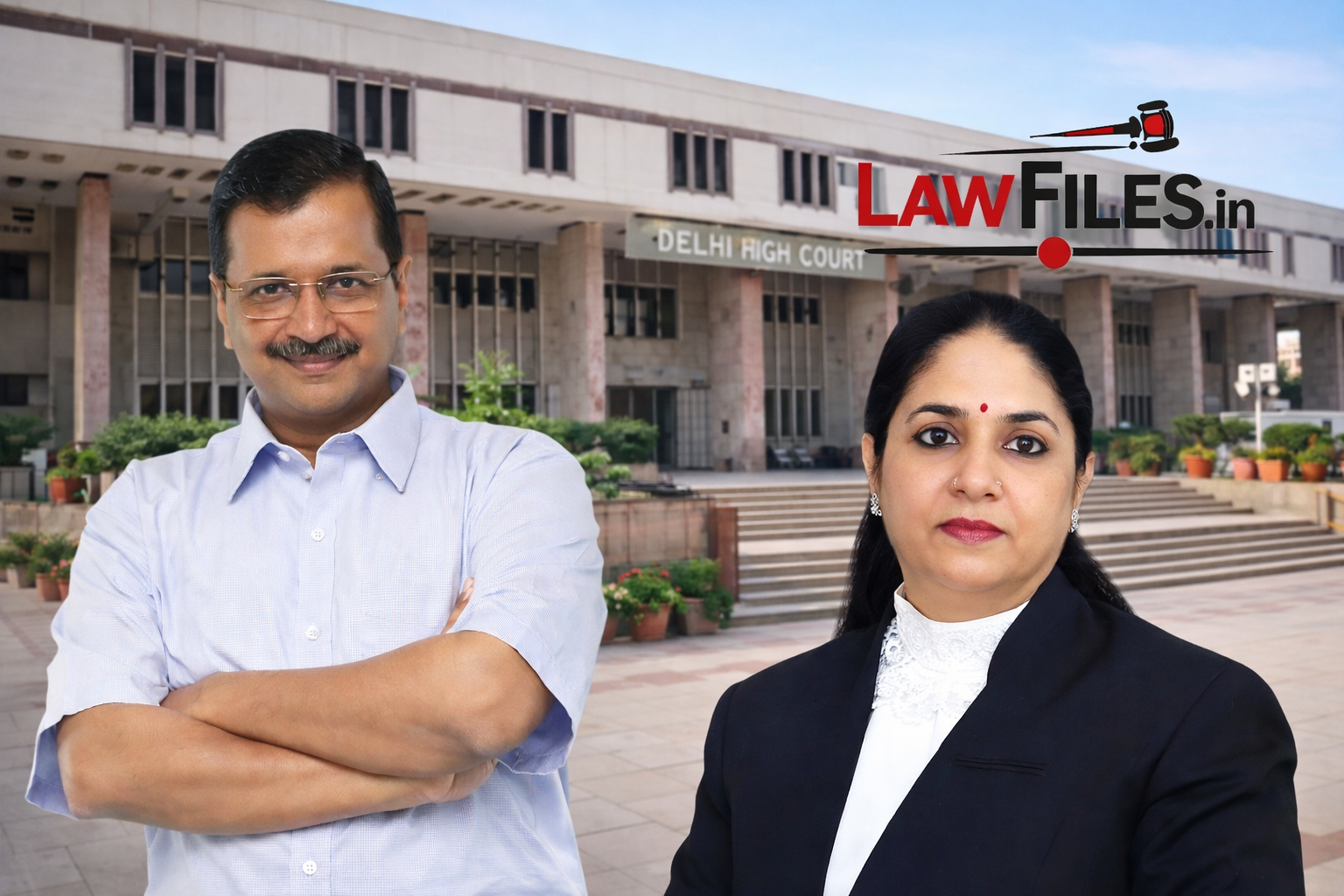
In a significant procedural development in the ongoing litigation surrounding the Delhi excise policy case, Arvind Kejriwal has moved an application before the Delhi High Court seeking the recusal of Justice Swarana Kanta Sharma from hearing the matter. The plea introduces a critical constitutional question relating to judicial impartiality, litigant confidence, and the doctrine of recusal.
The application has been filed in proceedings arising out of a petition by the Central Bureau of Investigation (CBI), which is challenging a trial court order that had discharged Kejriwal and other accused in the alleged liquor policy corruption case.
The matter is currently listed before Justice Sharma, who is seized of the revision plea filed by the CBI against the discharge order.
Notably, Kejriwal has chosen to file the recusal application personally and is expected to argue the matter in person before the Court, adding an unusual dimension to the proceedings.
The recusal plea follows a series of prior efforts by the petitioner to seek reassignment of the case. Kejriwal had earlier written to the Chief Justice of the Delhi High Court seeking transfer of the matter to another bench. The request was rejected on the administrative side, with the Court observing that allocation was in accordance with the roster. Subsequently, the issue was also escalated before the Supreme Court through a petition under Article 32.
Having failed to secure relief administratively, the present application has been moved on the judicial side, invoking the settled principles governing recusal.At the core of the application lies the assertion of a “grave, bona fide and reasonable apprehension” that the matter may not receive an impartial hearing.
Such a plea engages a well-established principle of judicial ethics that justice must not only be done but must also appear to be done. The doctrine of recusal, though not codified in statute, has evolved through constitutional jurisprudence to preserve public confidence in judicial institutions, fairness in adjudication (Article 14) and due process guarantees under Article 21
The test, as consistently applied by courts, is not actual bias but the existence of a reasonable likelihood of bias from the perspective of a fair-minded observer.
The recusal request also comes against the backdrop of ongoing judicial scrutiny of the trial court’s discharge order.
The High Court had earlier noted that certain findings of the trial court appeared “prima facie erroneous”, thereby reopening the legal debate around the discharge granted to Kejriwal and others.
Additionally, proceedings have involved challenges by investigative agencies, including attempts to expunge adverse remarks made against them by the trial court.
This evolving procedural complexity appears to have contributed to the petitioner’s apprehension regarding neutrality.
The plea raises a delicate institutional issue balancing judicial independence with litigant perception of fairness. While recusal safeguards the credibility of adjudication, courts have also cautioned against its misuse as a forum-shopping tool. The Supreme Court has, in past decisions, emphasised that recusal must be based on substantial and credible apprehension, not mere subjective dissatisfaction. Judges are equally bound by a duty not to recuse lightly, as it may disrupt judicial administration.
Thus, the present case places the Court in a position where it must evaluate whether the apprehension expressed meets the threshold of reasonableness in constitutional law.
The outcome of the recusal application could have wider ramifications. It may define the contours of recusal jurisprudence in high-profile political cases. It highlights tensions between procedural fairness and judicial continuity. It reinforces the importance of institutional transparency in adjudicatory assignments
At a systemic level, the case underscores that judicial legitimacy is as much about perception as it is about legality. The recusal plea filed by Arvind Kejriwal is not merely a procedural motion but a constitutional moment engaging the principles of natural justice, judicial ethics, and public confidence in courts.
As the Delhi High Court considers the application, its decision will likely shape not only the trajectory of the liquor policy litigation but also contribute to the evolving jurisprudence on when and how judges ought to step aside in the interest of justice.
