


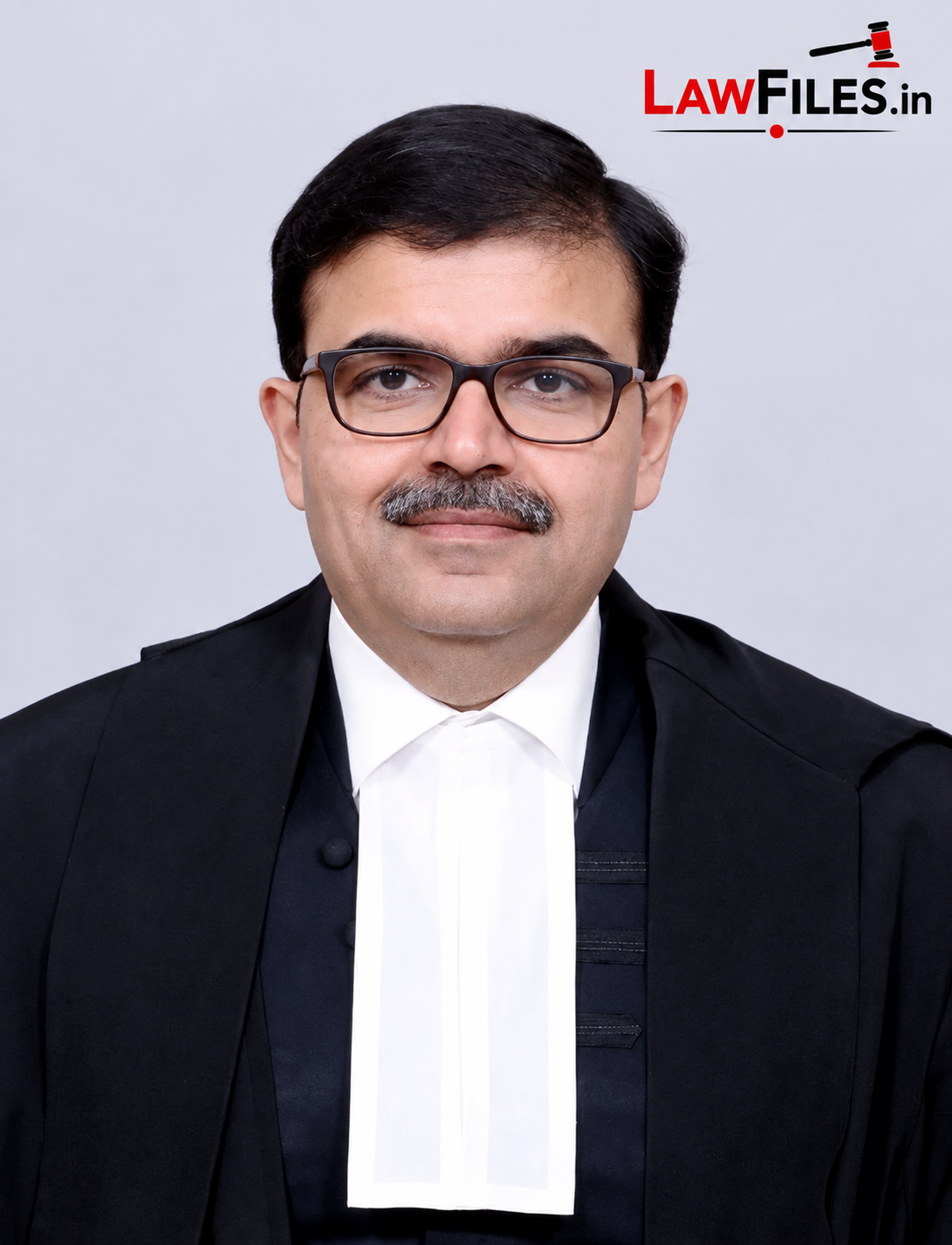
Justice Ashwani Kumar Mishra was sworn in as the Chief Justice of the Punjab and Haryana High Court on September 7, 2026, bringing to a close the uncertainty surrounding the leadership of one of the country’s important constitutional courts, but simultaneously opening a significant constitutional conversation over the role of State governments in the appointment of High Court Chief Justices. The oath was administered by Punjab Governor Gulab Chand Kataria at Lok Bhawan, Chandigarh, in the presence of Haryana Chief Minister Nayab Singh Saini, Haryana Governor Ashim Kumar Ghosh, judges of the High Court and senior officials. Punjab Chief Minister Bhagwant Mann, however, was absent from the ceremony after the Punjab Cabinet had formally objected to the appointment a day earlier.
The immediate controversy is unusual because the objection did not concern the professional qualifications or judicial record of Justice Mishra in any publicly stated substantive sense. The Punjab Government’s principal grievance was procedural. The State Cabinet alleged that the Centre had notified the appointment without waiting for Punjab’s response on the proposed elevation and consequently urged that the appointment and oath be kept in abeyance until the State’s views were obtained and considered. The Centre, on the other hand, has maintained that the constitutionally prescribed process was followed and that the State had been given an opportunity to communicate its views.
That disagreement brings the controversy directly into the larger constitutional architecture governing judicial appointments. Article 217 of the Constitution provides the framework for appointment of High Court judges, with the President making the appointment after consultation with the Chief Justice of India, the Governor of the State and, in the case of appointment of a judge other than the Chief Justice, the Chief Justice of the concerned High Court. Over the decades, however, constitutional jurisprudence has transformed the meaning of “consultation”, particularly through the Judges Cases, resulting in the present collegium system in which judicial primacy occupies a central position in appointments to the higher judiciary.
The Supreme Court Collegium headed by Chief Justice of India Surya Kant recommended Justice Mishra for appointment as Chief Justice of the Punjab and Haryana High Court on August 6, 2026. The recommendation came when Justice Mishra was already functioning as the Acting Chief Justice of the same High Court. The Union Government subsequently cleared the recommendation, and the President notified the appointment on September 5. The oath followed two days later, notwithstanding the Punjab Cabinet’s request for a pause.
The chronology is significant. Justice Mishra was not a new entrant to the institution. He had already been serving in the Punjab and Haryana High Court since July 2025 after being transferred from the Allahabad High Court. Following the elevation of then Chief Justice Sheel Nagu to the Supreme Court, he was appointed Acting Chief Justice under Article 223 on June 1, 2026. The present appointment therefore converted an existing acting arrangement into a regular Chief Justiceship.
Justice Mishra brings more than three decades of legal and judicial experience to the office. He enrolled as an advocate on May 8, 1993, and practised primarily in civil, constitutional and service matters. During his career at the Bar, he represented several governmental and public-sector bodies, including development authorities and public-sector enterprises. He was designated a Senior Advocate in 2013 and was elevated to the Allahabad High Court as an Additional Judge in February 2014, becoming a permanent judge in February 2016. He continued there until his transfer to the Punjab and Haryana High Court in July 2025.
The controversy, therefore, cannot reasonably be reduced to the identity of the individual judge. The more consequential question is whether and to what extent a State Government possesses a substantive role in determining the timing or suitability of a person recommended for appointment as Chief Justice of the High Court within the collegium system.
Punjab has relied upon the Memorandum of Procedure governing judicial appointments to support its objection. State representatives have argued that the views of the concerned State Government are contemplated during the appointment process and that the Union ought not to have proceeded to notify the appointment before receiving and considering Punjab’s response. Punjab Finance Minister Harpal Singh Cheema also referred to earlier developments concerning judicial appointments to contend that there were questions about the consistency with which the prescribed process had been followed.
The Union Government’s position, as articulated by Additional Solicitor General Satya Pal Jain, is substantially different. He has described the controversy as unnecessary and maintained that the prescribed Memorandum of Procedure was followed. According to the Union’s account, the views of both Punjab and Haryana had been sought on August 10. The dispute, therefore, is not simply about whether consultation exists as a concept, but whether the relevant State’s views were sought within the prescribed process and whether the absence of a response permits the Union to proceed after the stipulated process has been followed.
This distinction is legally crucial. Consultation is not synonymous with consent. The constitutional scheme does not make the appointment of a High Court Chief Justice contingent upon a State Government possessing a veto over the choice made through the constitutionally recognised appointment mechanism. If a State’s consent were treated as indispensable, the judicial appointment process could potentially be paralysed whenever the political executive of the State disagreed with the recommendation of the judicial collegium or the Union Government.
At the same time, the State’s argument cannot be dismissed merely by invoking judicial independence. The Memorandum of Procedure exists precisely to structure the constitutional consultation process. If it requires a particular institutional actor to be consulted, that requirement cannot be rendered meaningless. The real legal question is consequently one of procedural compliance: whether the concerned government’s views were actually sought in the manner contemplated by the governing procedure, and what legal consequence follows if the government fails to respond within the relevant period.
The episode therefore exposes a delicate tension inherent in India’s judicial appointment system. The higher judiciary has judicial primacy in the post-Second and Third Judges Cases framework, but appointments remain formally made by the President under Article 217. The executive is not completely absent from the process; neither is the State government. The constitutional design operates through consultation among institutions rather than unilateral decision-making by any one branch.
The difficulty is that the precise boundaries between consultation, concurrence and consent can become politically contested. A State Government may reasonably insist that its views be heard, particularly because the High Court exercises jurisdiction over matters involving the State and its agencies. But allowing the State executive to exercise an effective veto over the appointment of the Chief Justice could create a fundamentally different institutional arrangement from the one recognised by constitutional jurisprudence.
Judicial independence requires insulation from precisely such executive pressures. A Chief Justice may hear cases involving the State Government, challenge executive action, examine legislation, scrutinise administrative decisions and exercise constitutional review. If the executive government could effectively prevent the appointment of a particular Chief Justice because it disagreed with the choice, the perception of institutional independence could be seriously weakened.
Yet judicial independence also requires procedural legitimacy. A system in which the executive merely receives recommendations without meaningful adherence to an agreed appointment procedure can equally produce concerns about transparency and institutional accountability. The solution cannot therefore be to eliminate consultation; it must be to clearly distinguish consultation from veto and ensure that every constitutional stakeholder performs the role assigned to it.
The Punjab episode becomes even more interesting because the controversy has arisen in relation to a judge already functioning as Acting Chief Justice. Under Article 223, when the office of Chief Justice is vacant or the incumbent is unable to perform duties, the President may appoint another judge of the High Court to perform the functions of the Chief Justice. Justice Mishra had been performing precisely that role since June. His subsequent appointment as regular Chief Justice thus did not introduce an entirely unfamiliar judicial officer into the institution but formalised his leadership of the Court.
The swearing-in despite the State’s protest also demonstrates the distinction between constitutional appointment and ceremonial administration of oath. Once the President has validly appointed a person to the office under Article 217, the Governor’s role in administering the oath under the constitutional framework does not confer an independent power to refuse or indefinitely postpone the appointment merely because the State executive disagrees with it.
The Governor is therefore not positioned as an alternative adjudicator of the collegium’s recommendation. The oath is a constitutional formality accompanying assumption of office, not a second-stage approval mechanism capable of nullifying a presidential appointment.
The political symbolism of the ceremony, however, cannot be ignored. The absence of the Punjab Chief Minister, particularly after the Cabinet had passed a resolution asking that the oath be deferred, gave the event an unusual institutional backdrop. Haryana’s political leadership attended the ceremony, while Punjab’s elected executive remained absent. The empty chairs consequently became a visible representation of a deeper disagreement concerning the relationship between State governments and the Union in the administration of the higher judiciary.
But constitutional adjudication cannot ultimately be determined by ceremony or symbolism. If the dispute develops into litigation, the decisive questions would concern the constitutional scheme, the Memorandum of Procedure, the actual communication exchanged between the Union and the State, the timelines involved and the legal consequence of the State’s views not being received before the appointment was notified.
The controversy also arrives at an important moment for the High Courts nationally. Recent appointments have resulted in all 25 High Courts having regular Chief Justices, following a series of collegium recommendations and Union notifications. The completion of this process has broader institutional significance because vacancies in the office of Chief Justice can affect administrative decision-making, roster allocation, constitution of benches and the overall functioning of a High Court.
The Punjab and Haryana High Court itself is one of the country’s constitutionally significant High Courts, exercising jurisdiction over two States as well as the Union Territory of Chandigarh. Its Chief Justice therefore performs an unusually complex administrative and judicial role. Apart from presiding over important constitutional and civil matters, the Chief Justice controls the institutional roster, constitutes benches, oversees judicial administration and participates in the functioning of the High Court as a constitutional court.
Justice Mishra’s appointment consequently assumes significance beyond the question of succession. His tenure will be closely watched in an institution dealing with a wide spectrum of constitutional, criminal, commercial, service, agricultural, environmental and inter-State disputes. The Court’s jurisdiction over both Punjab and Haryana also places particular importance on institutional neutrality, especially when cases involve competing governmental interests.
Justice Mishra’s previous judicial record may provide some indication of the range of matters with which he has dealt. During his tenure at the Allahabad High Court, he heard matters involving civil and constitutional questions as well as significant criminal proceedings. He was part of the Bench that dealt with the Nithari killings matter, among other substantial cases. His transfer to Chandigarh in 2025 subsequently brought him into a High Court with a distinct institutional and regional character.
The larger constitutional lesson from the present episode is that judicial appointments require both independence and institutional clarity. A system in which the judiciary recommends, the executive processes and formally appoints, and State governments are consulted must operate according to clearly understood rules. Ambiguity at any stage creates space for precisely the kind of Centre–State confrontation that has now emerged.
The disagreement also demonstrates why reform discussions surrounding the Memorandum of Procedure continue to remain relevant. The higher judiciary’s appointment system has been criticised over the years for opacity, while executive involvement has simultaneously generated concerns regarding potential political influence. The constitutional challenge is to design a process that protects judicial independence without sacrificing transparency and procedural accountability.
The present controversy should therefore not be interpreted simply as another political disagreement between the Punjab Government and the Union Government. Its deeper importance lies in testing the institutional boundaries of the appointment mechanism itself. If the State’s role is consultative, that consultation must be meaningful but cannot become a veto. If the procedure requires the State’s views before a recommendation is processed, the Union must demonstrate compliance with that procedural requirement. Both propositions can coexist.
Justice Ashwani Kumar Mishra’s assumption of office nevertheless settles the immediate administrative question. The Punjab and Haryana High Court now has a regular Chief Justice after a period in which Justice Mishra himself had been performing the office in an acting capacity. The judicial institution must now move beyond the controversy and return attention to its primary constitutional function—the adjudication of disputes and protection of legal rights.
Ultimately, the real constitutional test will not be whether the Punjab Government agreed with Justice Mishra’s appointment. It will be whether India’s judicial appointment mechanism can accommodate legitimate institutional consultation without allowing political disagreement to become a veto over judicial independence. The Constitution places the judiciary in a position where it must frequently scrutinise the executive itself. That function requires independence from the very governments whose actions may later come before the Court.
Justice Mishra’s oath, therefore, is more than a change of office-holder. It has exposed a continuing constitutional fault line: how should India reconcile the judicial primacy developed through the Judges Cases with the participatory role of the executive and State governments contemplated by Article 217 and the Memorandum of Procedure? The present controversy may end with the appointment itself, or it may eventually invite judicial examination of the procedure. Either way, it demonstrates that the legitimacy of judicial appointments depends not only upon who is appointed, but also upon whether the constitutional process leading to that appointment remains transparent, institutionally balanced and faithful to the principle of judicial independence.
