


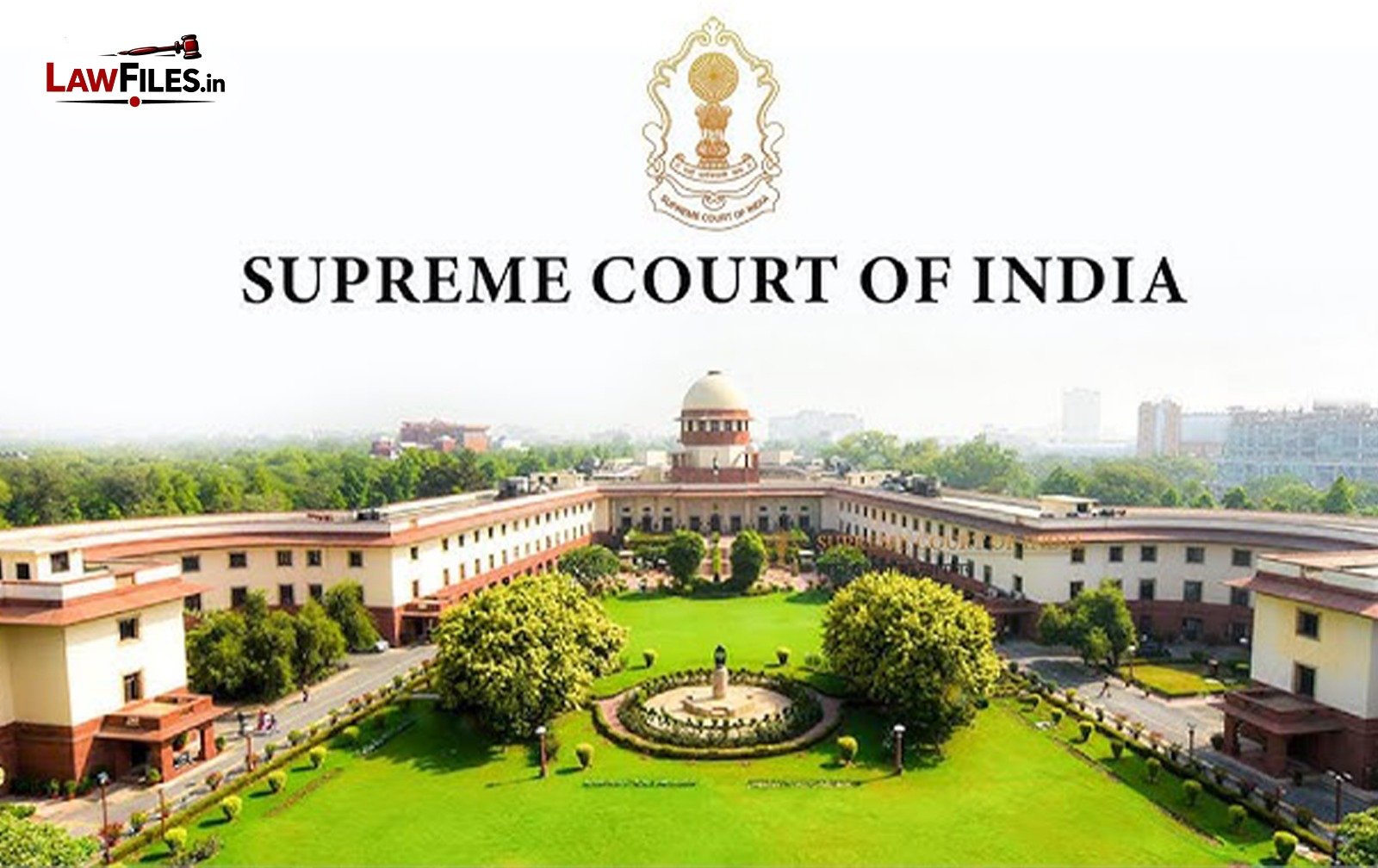
In an unusual yet institutionally significant development, the Supreme Court of India has floated a public tender inviting agencies to deploy trained personnel colloquially termed “monkey scarers” to address the persistent monkey menace in judges’ residential premises and court-linked facilities.
While seemingly administrative in nature, the move reflects the Court’s broader engagement with institutional governance, safety obligations, and public procurement frameworks.
The Supreme Court issued a notice through the Government e-Marketplace (GeM) portal inviting bids from private agencies for deployment of “Monkey Chasers/Handlers/Repellers”, coverage across judges’ residential bungalows, guest houses, and court premises, and a two-year contractual engagement period.
The proposed deployment is expected to extend to approximately 35–40 residential bungalows within a 10 km radius of the Court.
The scope of work mandates trained personnel capable of deterring monkeys without harm, ensuring safety and minimising nuisance across high-security judicial zones.
The decision must be situated within the long-standing urban wildlife conflict in Delhi, where monkey intrusions have posed risks to residential safety, public infrastructure, and institutional functioning.
Incidents of monkeys entering court corridors and residential compounds have been reported previously, highlighting the operational disruptions and safety concerns faced even within the highest constitutional institutions.
The issue is not merely anecdotal but reflects a deeper ecological imbalance driven by shrinking natural habitats, urban food availability, and cultural practices that inadvertently sustain monkey populations.
Though not arising from adjudication, the development is legally significant in three respects. The Supreme Court, beyond its adjudicatory role, functions as an administrative authority responsible for maintenance of its premises, and welfare and security of its judges.
The issuance of a tender reflects the Court acting within its administrative and executive capacity, governed by principles of transparency and fairness.
The tender process through the GeM portal underscores open market participation, standardised procurement norms, and institutional accountability in public expenditure.
Such processes are subject to broader principles of non-arbitrariness under Article 14, even when undertaken by judicial institutions.
The tender specifically contemplates non-lethal deterrence mechanisms, aligning with wildlife protection norms, and judicial precedents discouraging harm to animals. This reflects a nuanced balancing between:
Human safety and institutional integrity, and
Environmental and animal welfare considerations.
The move is not unprecedented. Similar tenders have been issued in the past, indicating that the monkey menace remains structurally unresolved, and administrative interventions have been iterative rather than definitive.
Across Delhi, authorities have experimented with relocation, sterilisation, and behavioural deterrence techniques often with limited long-term success.
This development highlights an often-overlooked dimension of constitutional courts. The judiciary is not merely a dispute-resolution body but also an administrator of physical infrastructure, security ecosystems, and residential facilities.
Ensuring safe and functional judicial environments is integral to efficient justice delivery, and Institutional dignity. The issue exemplifies how legal institutions increasingly confront non-traditional governance challenges, requiring hybrid solutions beyond purely legal adjudication.
At first glance, the hiring of “monkey scarers” may appear anecdotal. However, in constitutional terms, it represents. A court responding to real-world governance challenges through structured administrative action grounded in legal norms.
By invoking formal procurement mechanisms and emphasising humane deterrence, the Supreme Court has demonstrated that even seemingly mundane operational issues are addressed within the framework of legality, accountability, and institutional responsibility.
In doing so, the Court subtly reinforces a larger principle that the rule of law extends beyond judgments it governs how institutions function in everyday realities.
