


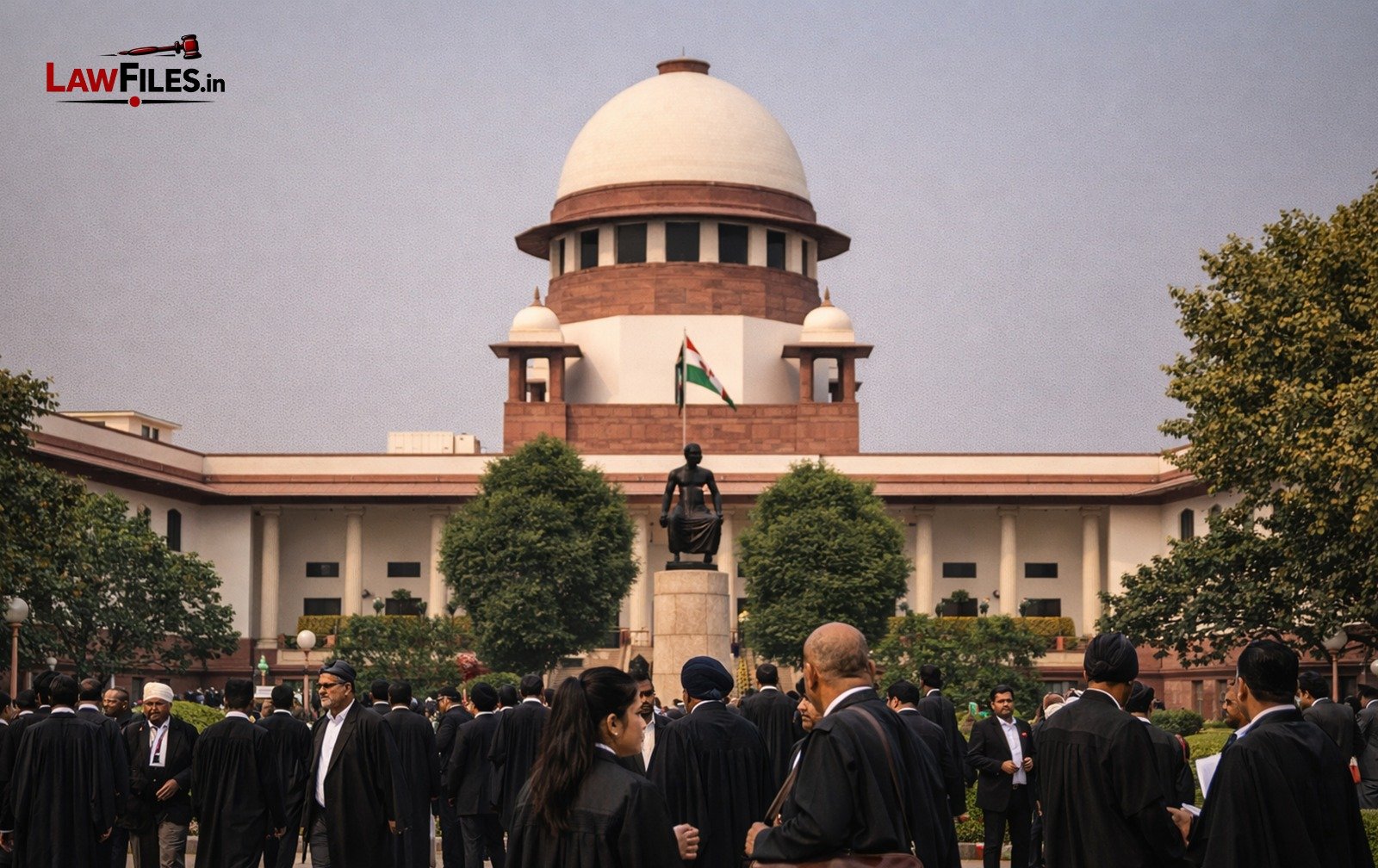
In a significant pronouncement reinforcing the principles governing service jurisprudence and compulsory retirement, the Supreme Court of India has reiterated that the “washed-off theory” cannot be invoked while determining whether a government employee is fit to be retained in service. The Court clarified that although adverse entries preceding a promotion may lose relevance when the employee is considered for future promotions, those very entries continue to remain relevant when the competent authority undertakes the far more comprehensive exercise of assessing the employee’s overall suitability for continuation in public service. In doing so, the Supreme Court has reaffirmed a long-settled yet frequently misunderstood distinction in service law that promotion evaluates merit at a particular stage of service, whereas retention in service demands an assessment of the employee’s entire career, integrity, efficiency and institutional suitability.
The controversy before the Supreme Court arose from a challenge concerning an administrative decision where the employee argued that earlier adverse service records had effectively stood “washed off” after subsequent promotions and therefore could not be relied upon while assessing his suitability for continuation in service. The employee contended that once promotional benefits had been granted despite earlier adverse remarks, those past entries ceased to possess legal relevance. The employer, however, argued that while such a principle may operate in the limited context of promotional advancement, the law governing compulsory retirement or retention in service requires consideration of the employee’s entire service record, including past conduct, integrity, efficiency and disciplinary history.
While adjudicating the dispute, the Supreme Court carefully distinguished between two fundamentally different exercises under service law. The first concerns promotion, where the administration evaluates whether an employee deserves advancement to a higher post. The second concerns the employer’s assessment regarding whether the employee should continue in public service at all. The Court observed that these two exercises pursue entirely different objectives and therefore cannot be governed by identical legal principles. Promotion seeks to reward merit and competence, whereas compulsory retirement or continuation in service primarily seeks to preserve administrative efficiency and institutional integrity.
The Court categorically held that the washed-off theory has only a limited application. Where an employee has earned promotion despite earlier adverse entries, those adverse remarks may lose significance for the purpose of subsequent promotional consideration. However, when the competent authority assesses whether the employee remains suitable to continue in public service, the authority is required to examine the employee’s entire service record, including old adverse entries, disciplinary proceedings, integrity-related observations and overall performance across the span of service. Consequently, earlier adverse material cannot automatically be ignored merely because the employee subsequently received promotion.
The judgment substantially relies upon the settled jurisprudence evolved in Pyare Mohan Lal v. State of Jharkhand, where the Supreme Court authoritatively explained that the washed-off theory is not a doctrine of universal application. The Court in that landmark decision clarified that the principle may assist an employee seeking promotion but cannot govern compulsory retirement because the latter necessarily requires evaluation of the employee’s complete service profile rather than isolated periods of satisfactory performance. The present ruling reinforces that principle and discourages selective consideration of only favourable portions of an employee’s service record.
From a constitutional perspective, the decision reflects the balance between Article 14 and the State’s obligation to maintain an efficient public administration. Equality before law does not require that every employee be retained irrespective of long-term performance or integrity concerns. Rather, constitutional fairness demands that the decision to continue or prematurely retire an employee be based upon objective consideration of the entire service record rather than isolated incidents or arbitrary assessments. The Court therefore emphasised that administrative authorities must undertake a holistic evaluation instead of relying exclusively upon recent performance or, conversely, exclusively upon remote adverse entries.
One of the most significant aspects of the judgment is its treatment of integrity-related adverse remarks. The Supreme Court observed that issues concerning honesty, integrity and moral conduct occupy a distinct position in public service jurisprudence. Even where an employee demonstrates improved efficiency in later years, earlier material raising genuine concerns regarding integrity cannot automatically disappear merely because time has passed or promotions have intervened. Public employment, particularly within government institutions, requires continued confidence in the employee’s character as well as competence.
At the same time, the Court was careful to clarify that reliance upon the entire service record does not authorise arbitrary decision-making. Administrative authorities cannot mechanically revive stale adverse entries while completely ignoring sustained improvement demonstrated during later years. Judicial precedents consistently require that greater weight ordinarily be accorded to recent performance, particularly where the employee has exhibited exemplary conduct over a substantial period. However, earlier adverse material continues to remain part of the record and may legitimately influence the overall assessment, especially where questions of integrity arise.
The ruling also revisits the legal nature of compulsory retirement. The Supreme Court has repeatedly held that compulsory retirement is not a punishment in the disciplinary sense. It is an administrative measure intended to remove employees who are no longer considered suitable for efficient public service. Since the objective is institutional efficiency rather than penal consequence, authorities are entitled to assess the employee’s entire service history instead of confining themselves to the immediate past. This distinction explains why the washed-off theory cannot logically govern decisions relating to compulsory retirement.
The judgment carries considerable importance for government departments, public sector undertakings and statutory authorities, many of which periodically undertake review exercises for identifying employees whose continuation may not serve the larger public interest. The Supreme Court has clarified that such review committees are expected to examine the complete service dossier rather than artificially excluding adverse material merely because promotions were granted at earlier stages. This approach strengthens administrative accountability while simultaneously preserving judicial oversight against arbitrary exercise of power.
Another important dimension of the decision concerns judicial review of administrative discretion. The Court reiterated that constitutional courts ordinarily do not sit as appellate authorities over decisions concerning compulsory retirement. Judicial intervention becomes justified only where the administrative decision is shown to be arbitrary, mala fide, unsupported by material or based upon irrelevant considerations. Where the competent authority has genuinely evaluated the entire service record in accordance with law, courts generally refrain from substituting their own assessment for that of the employer.
The ruling also contributes to the broader doctrine of public service efficiency, a recurring constitutional objective recognised in Indian administrative law. Government employment is not merely a matter of individual career progression; it directly affects governance, delivery of public services and public confidence in State institutions. Consequently, the administration possesses a legitimate interest in periodically reviewing whether employees continue to satisfy the standards expected of public servants. The Court’s insistence upon considering the entire service record reflects this institutional perspective.
From a policy standpoint, the judgment discourages two equally problematic extremes. On the one hand, it rejects the argument that promotions permanently erase every earlier adverse aspect of an employee’s service history. On the other, it also discourages employers from relying solely upon remote adverse entries while ignoring years of subsequent exemplary performance. Instead, the Court advocates a balanced evaluation in which every relevant aspect of service receives appropriate weight according to its significance and proximity.
The decision also has implications for future service litigation. Employees challenging compulsory retirement may no longer successfully contend that earlier adverse entries became legally irrelevant merely because they subsequently secured promotions. Equally, employers will be expected to demonstrate that they considered the service record holistically, including both favourable and unfavourable aspects, rather than selectively relying upon isolated incidents supporting a predetermined conclusion.
Importantly, the Supreme Court did not dilute the safeguards available to employees. Administrative authorities remain under a constitutional obligation to act fairly, objectively and in accordance with applicable service rules. The doctrine of the entire service record cannot become a licence for arbitrary retirement decisions. Every exercise of administrative discretion must continue to satisfy the constitutional standards of reasonableness, proportionality and non-arbitrariness embodied in Article 14.
The judgment also serves as an important reminder regarding the distinction between career advancement and career continuation. Promotion rewards demonstrated merit at a particular point in time. Retention in service, however, concerns whether the employee’s overall career reflects the standards of efficiency, integrity and reliability expected in public administration. These are conceptually different inquiries, and the legal principles governing one cannot automatically govern the other.
Ultimately, the Supreme Court’s ruling strengthens a foundational principle of Indian service law—that public service must be assessed in its entirety rather than through isolated fragments of an employee’s career. By holding that the washed-off theory does not apply when determining whether an employee should continue in service, the Court has reaffirmed that administrative authorities are entitled—and indeed obligated—to evaluate the complete service profile before reaching conclusions concerning retention. The decision reinforces a balanced constitutional philosophy: past mistakes are not necessarily erased by promotion, but neither can they alone determine an employee’s future. What matters is the holistic assessment of the entire service record, viewed through the larger lens of public interest, institutional integrity and administrative efficiency.
