

Close Menu
LawFilesLawFiles

    Subscribe to Updates

    Get the latest creative news from FooBar about art, design and business.

    What's Hot

    Due Process Before Demolition: Calcutta High Court Orders Status Quo on Abhishek Banerjee’s Diamond Harbour Office, Reaffirms Rule of Law

    July 19, 2026

    When Personal Autonomy Meets the State’s Duty to Preserve Life: Delhi High Court Declines Interim Plea to Shift Sonam Wangchuk to a Private Hospital

    July 19, 2026

    Advocacy Is Not Influencing, It Is a Public Trust: Bar Council of India Draws Ethical Boundaries for Lawyers in the Age of Social Media

    July 18, 2026
    Facebook X (Twitter) Instagram Threads
    Sunday, July 19
    LawFilesLawFiles
    Facebook X (Twitter)
    • Home
      • Who We Are
      • Our Mission
      • Advisory board
      • Contact US
    • Supreme Court
    • High Courts
      • Gujarat High Court
      • Jharkhand High Court
      • Rajasthan High Court
      • Karnataka High Court
      • Andhra Pradesh High Court
      • Allahabad High Court
      • Himachal Pradesh High Court
      • Chhattisgarh High Court
      • Jammu & Kashmir and Ladakh High Court
      • Kerala High Court
      • Punjab and Haryana High Court
      • Patna High Court
      • Madhya Pradesh High Court
      • Madras High Court
      • Bombay High Court
      • Orissa High Court
      • Calcutta High Court
      • Meghalaya High Court
      • Delhi High Court
      • Manipur High Court
      • Gauhati High Court
    • Corporate
    • Taxation Laws
      • Income Tax
      • GST
      • Customs & Excise
    • Global Affairs
    • Articles
      • Sitting Judge’s’ Views
      • Senior Advocate
      • Policy Analysis
      • Tax Expert
    • PILS
      • Free/Affordable Legal Aid
      • PIL Cell
      • Law student Volunteer Cell (research & Drafting)
      • NGO & Legal services Authority Tie-ups
      • Online Legal Formats
      • Online Legal Help Form
    Subscribe Premium
    LawFilesLawFiles
    Home»Lifestyle»DNA Before Adoption? Supreme Court Examines Nationwide Biometric Framework for Tracing Missing Children and Safeguarding Identity Rights
    Lifestyle

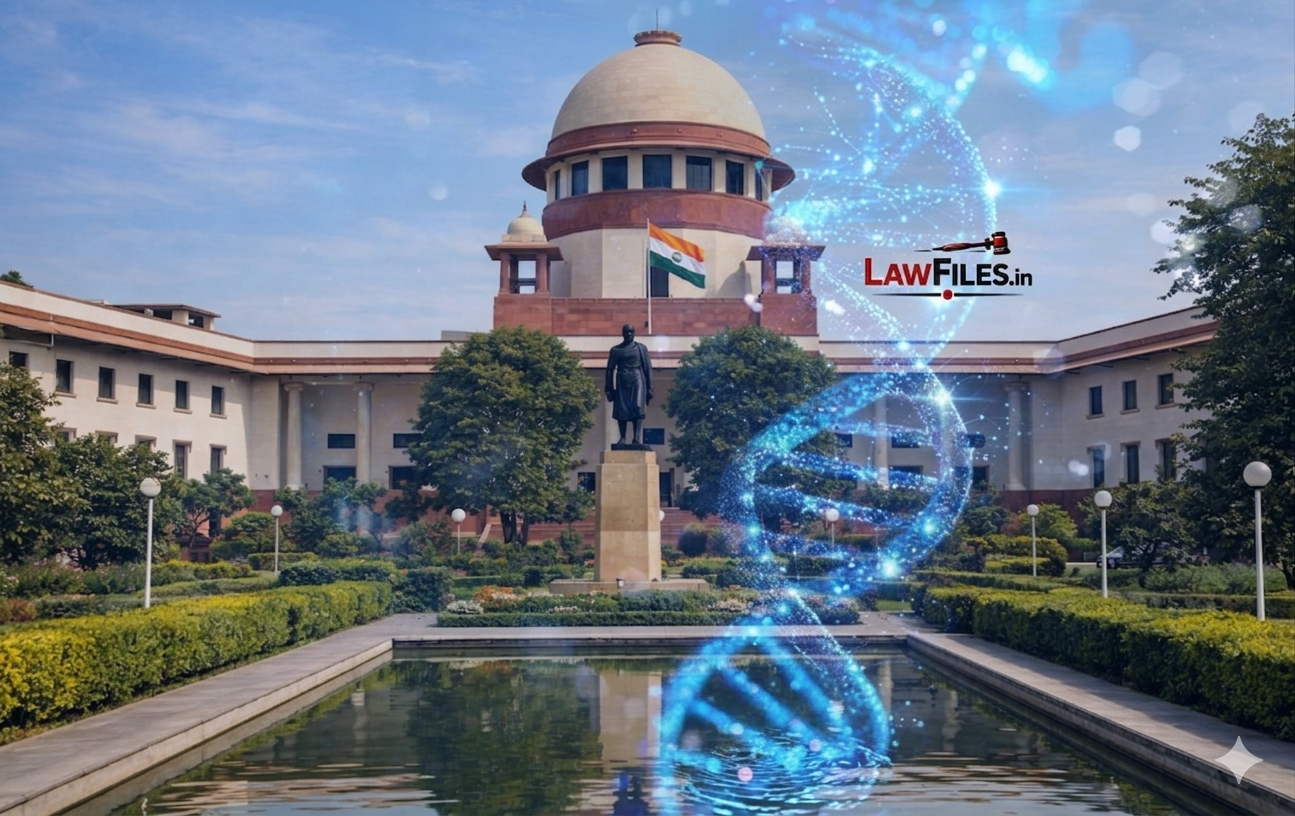
    DNA Before Adoption? Supreme Court Examines Nationwide Biometric Framework for Tracing Missing Children and Safeguarding Identity Rights

    Anvita DwivediBy Anvita DwivediApril 28, 2026No Comments4 Mins Read
    WhatsApp Facebook Twitter Copy Link
    Share
    Facebook Twitter Pinterest Copy Link WhatsApp

    In a development that places child protection jurisprudence at the forefront of constitutional discourse, the Supreme Court of India has taken up a Public Interest Litigation seeking structural reforms in the identification, rescue, and rehabilitation of missing and trafficked children. The petition, filed by advocate Reepak Kansal, calls for the creation of a National DNA and Biometric Identification System to enable scientific tracing and reunification of children with their families, while also proposing mandatory DNA verification prior to adoption.

    The matter was heard by a Bench led by Chief Justice of India Surya Kant and Justice Joymalya Bagchi, which described the issue as “very sensitive,” reflecting the Court’s awareness of the delicate balance between child welfare, privacy, and institutional capacity. While appreciating the intent behind the petition, the Court refrained from issuing immediate directions and instead called upon the petitioner to provide a concrete framework, emphasising that identification of problems must be accompanied by implementable solutions.

    At the core of the PIL lies the proposal for a centralised system integrating DNA data and biometric records of missing and rescued children. The objective is to create a scientific matching mechanism that would overcome the limitations of fragmented databases currently maintained by police, child welfare committees, and anti-trafficking units. The petition also seeks mandatory DNA sampling subject to safeguards and consent protocols of unidentified rescued children and willing biological parents, strictly for reunification and identity confirmation.

    A particularly significant aspect of the petition is the demand for DNA verification prior to adoption, aimed at preventing illegal adoptions and trafficking through misidentification. This proposal directly engages with concerns that gaps in identity verification mechanisms may enable children who are victims of trafficking or displacement to be absorbed into adoption systems without traceability to their biological origins.

    The Court’s cautious response reflects an awareness of the constitutional complexities involved. While the right to identity and family reunification is intrinsic to dignity under Article 21, mandatory DNA collection raises concerns relating to privacy, bodily autonomy, and data protection. Any nationwide biometric system would necessarily have to operate within a robust legal framework that ensures limited use, consent-based participation, and protection against misuse.

    Analytically, the PIL brings into focus the fragmentation of child protection mechanisms in India. Multiple agencies ranging from police authorities to shelter homes—operate in silos, often leading to delays or failures in tracing missing children. The proposed interoperability of databases seeks to address this structural deficiency by creating a unified, real-time system. However, such centralisation also introduces risks of overreach, particularly in the absence of a comprehensive data protection regime tailored to sensitive biological information.

    The Court’s insistence on a detailed framework signals a broader judicial trend: institutional reform through structured engagement rather than immediate directive orders. In matters involving large-scale policy interventions, particularly those implicating privacy and federal coordination, the Supreme Court has increasingly preferred to act as a constitutional facilitator rather than a policy architect.

    From a doctrinal standpoint, the case also intersects with the jurisprudence on trafficking and child rights. India’s obligations under international conventions, including the UN Convention on the Rights of the Child, mandate effective systems for identification and rehabilitation of missing children. The PIL, therefore, situates itself within both domestic constitutional guarantees and international legal commitments.

    At the same time, the proposal raises difficult normative questions. Should the State mandate DNA verification as a precondition for adoption, or would such a requirement create procedural barriers that delay placement of children in families? Can technological solutions adequately address deeply social problems such as trafficking, or do they risk creating a false sense of institutional efficiency? The answers to these questions will shape the contours of any eventual judicial direction.

    The case also underscores the evolving role of technology in governance. DNA profiling and biometric identification, while powerful tools, are not neutral instruments they carry implications for surveillance, consent, and data governance. The challenge before the Court will be to ensure that technological intervention enhances rights rather than eroding them.

    In conclusion, the Supreme Court’s engagement with the Reepak Kansal PIL marks an important moment in the development of child protection law in India. By recognising the issue as sensitive yet insisting on a structured approach, the Court has set the stage for a deeper examination of how identity, privacy, and welfare intersect in the context of missing children. The eventual outcome of this case may well determine whether India adopts a technologically driven model of child tracing and protection—or a more cautious framework that prioritises constitutional safeguards alongside administrative efficiency.

    DNA Before Adoption? Supreme Court Examines Nationwide Biometric Framework for Tracing Missing Children and Safeguarding Identity Rights
    Share. WhatsApp Facebook Twitter Pinterest Email
    Anvita Dwivedi

    Related Posts

    Due Process Before Demolition: Calcutta High Court Orders Status Quo on Abhishek Banerjee’s Diamond Harbour Office, Reaffirms Rule of Law

    July 19, 2026

    When Personal Autonomy Meets the State’s Duty to Preserve Life: Delhi High Court Declines Interim Plea to Shift Sonam Wangchuk to a Private Hospital

    July 19, 2026

    Advocacy Is Not Influencing, It Is a Public Trust: Bar Council of India Draws Ethical Boundaries for Lawyers in the Age of Social Media

    July 18, 2026
    Add A Comment
    Leave A Reply Cancel Reply

    Demo
    Top Posts

    Digital Forensics Fail to convince Supreme Court: Bail Denied to Gagan Khanna in BNS Assault Case

    June 15, 2026247 Views

    Wrongful Claim Rejection Amounts to Deficiency in Service: Delhi Consumer Commission Holds Star Health Liable

    March 16, 202673 Views

    Banking Negligence and Consumer Accountability: Supreme Court Reinforces Duty of Care in Cheque Handling

    April 16, 202669 Views

    Bombay High Court Quashes POCSO Case, Directs Accused to Fund MacBook for Victim’s Education

    February 28, 202662 Views
    Don't Miss

    Due Process Before Demolition: Calcutta High Court Orders Status Quo on Abhishek Banerjee’s Diamond Harbour Office, Reaffirms Rule of Law

    By Anvita DwivediJuly 19, 2026

    In a significant interim order delivered during a special Sunday sitting, the Calcutta High Court…

    When Personal Autonomy Meets the State’s Duty to Preserve Life: Delhi High Court Declines Interim Plea to Shift Sonam Wangchuk to a Private Hospital

    July 19, 2026

    Advocacy Is Not Influencing, It Is a Public Trust: Bar Council of India Draws Ethical Boundaries for Lawyers in the Age of Social Media

    July 18, 2026

    ‘No Passenger Is Second-Class in a Constitutional Democracy’: Supreme Court Urges Railways to Curb Overcrowding, Reconsider Terminology and Strengthen Passenger Safety

    July 18, 2026
    Stay In Touch
    • Facebook
    • Twitter

    Subscribe to Updates

    Get the latest creative news from SmartMag about art & design.

    Top Posts

    Digital Forensics Fail to convince Supreme Court: Bail Denied to Gagan Khanna in BNS Assault Case

    June 15, 2026247 Views

    Wrongful Claim Rejection Amounts to Deficiency in Service: Delhi Consumer Commission Holds Star Health Liable

    March 16, 202673 Views

    Banking Negligence and Consumer Accountability: Supreme Court Reinforces Duty of Care in Cheque Handling

    April 16, 202669 Views
    Don't Miss

    Due Process Before Demolition: Calcutta High Court Orders Status Quo on Abhishek Banerjee’s Diamond Harbour Office, Reaffirms Rule of Law

    By Anvita DwivediJuly 19, 2026

    In a significant interim order delivered during a special Sunday sitting, the Calcutta High Court…

    When Personal Autonomy Meets the State’s Duty to Preserve Life: Delhi High Court Declines Interim Plea to Shift Sonam Wangchuk to a Private Hospital

    July 19, 2026

    Advocacy Is Not Influencing, It Is a Public Trust: Bar Council of India Draws Ethical Boundaries for Lawyers in the Age of Social Media

    July 18, 2026

    ‘No Passenger Is Second-Class in a Constitutional Democracy’: Supreme Court Urges Railways to Curb Overcrowding, Reconsider Terminology and Strengthen Passenger Safety

    July 18, 2026
    Stay In Touch
    • Facebook
    • YouTube
    • TikTok
    • Instagram
    Top Trending
    About Us
    About Us

    LawFiles.in is a comprehensive legal news platform delivering real-time updates from the Supreme Court, High Courts, Tribunals, Corporate and Tax law, Regulators, Politics, Crime, Consumer cases, and Global Affairs.

    Email Us: lawfilesoffical@gmail.com
    Contact: +91 8800026066

    Contact Us:
    India International Centre
    40, Max Mueller Marg
    Lodhi Estate, New Delhi-110003

    Facebook X (Twitter)
    Our Picks

    Due Process Before Demolition: Calcutta High Court Orders Status Quo on Abhishek Banerjee’s Diamond Harbour Office, Reaffirms Rule of Law

    July 19, 2026

    When Personal Autonomy Meets the State’s Duty to Preserve Life: Delhi High Court Declines Interim Plea to Shift Sonam Wangchuk to a Private Hospital

    July 19, 2026

    Advocacy Is Not Influencing, It Is a Public Trust: Bar Council of India Draws Ethical Boundaries for Lawyers in the Age of Social Media

    July 18, 2026

    ‘No Passenger Is Second-Class in a Constitutional Democracy’: Supreme Court Urges Railways to Curb Overcrowding, Reconsider Terminology and Strengthen Passenger Safety

    July 18, 2026

    When Courts Become the Fifth Appellate Forum: Justice Ujjal Bhuyan’s Critique of the Delhi Metro Judgment Reignites India’s Arbitration Debate

    July 18, 2026
    Most Popular

    Supreme Court Rules Limitation Period Under CrPC Starts When Offender’s Identity Is Known, Not From First Complaint

    February 27, 20260 Views

    Maharashtra State Consumer Commission Slams HP Employees’ Co-operative Credit Society for Enforcing Undisclosed Restriction, Orders Refund with Interest and Compensation

    March 2, 20260 Views

    Repeated Vehicle Defects Amount to Deficiency in Service: Chandigarh Consumer Commission Awards ₹4 Lakh Compensation to Ford Owner

    March 9, 20260 Views

    Order VI Rule 17 Proviso Not Applicable to Pre-2002 Suits: Allahabad High Court Allows Amendment in 1997 Plaint

    March 9, 20260 Views

    India’s Tribunal Crisis: Supreme Court Questions Who Guards the Guardians

    March 10, 20260 Views
    © 2026 LawFiles. Owned by Varta24 Media.
    • Articles
    • Careers
    • Corporate
    • Global Affairs
    • Law Firms & Lawyers
    • PILS
    • Regulatory

    Type above and press Enter to search. Press Esc to cancel.