


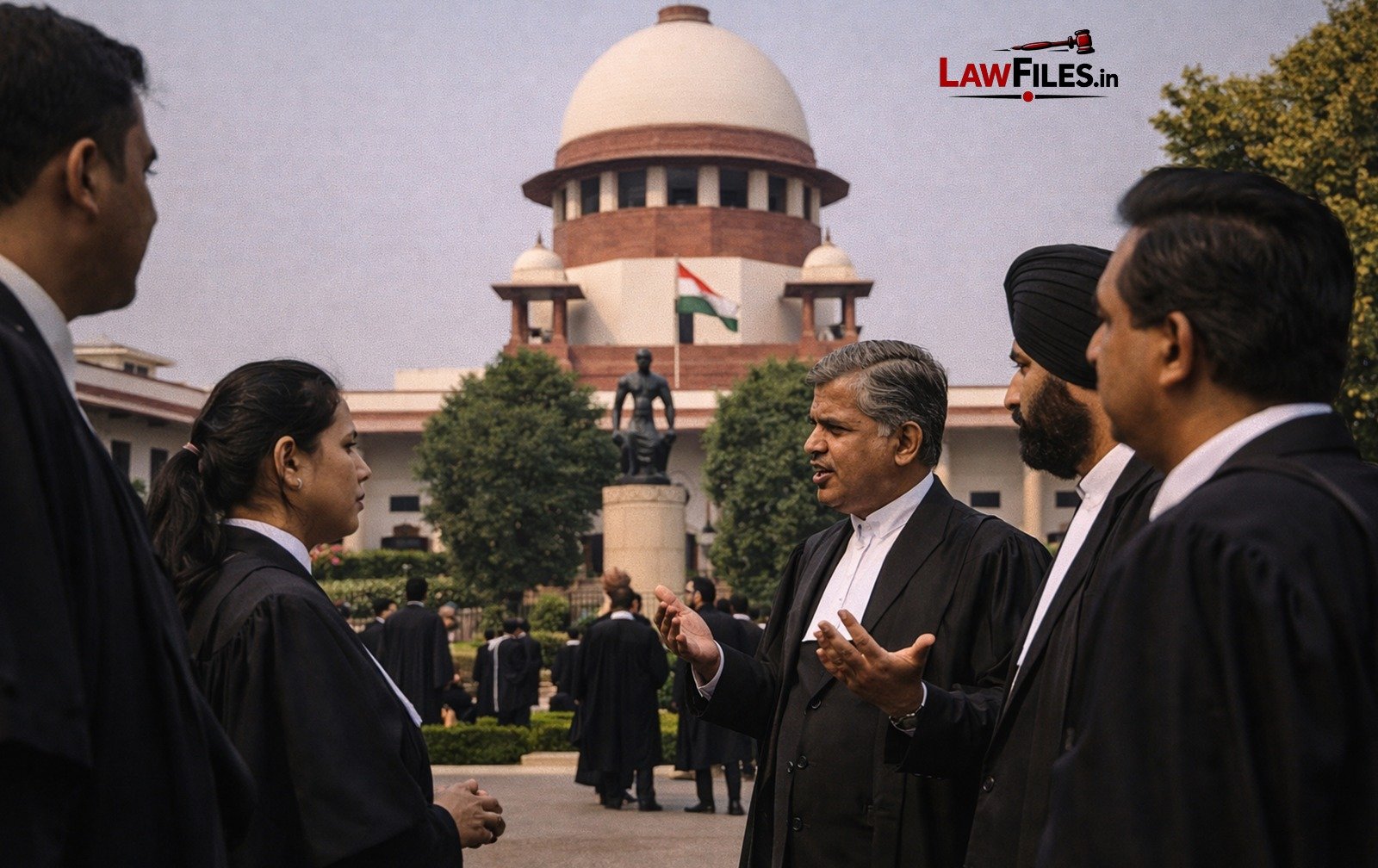
In a significant hearing concerning the functioning of India’s representative democracy, the Supreme Court of India examined the scope and interpretation of Section 151A of the Representation of the People Act, 1951, raising important questions regarding the constitutional obligation of the Election Commission of India (ECI) to conduct by-elections whenever parliamentary or legislative assembly seats fall vacant. The proceedings centred on whether the statutory exception contained in Section 151A providing that by-elections need not ordinarily be conducted where the remainder of the term of the House is less than one year constitutes a mandatory pre-condition or merely one among several factors that may influence the Election Commission’s decision. The issue goes far beyond electoral scheduling. It concerns the constitutional guarantee that every constituency should remain represented for as much of the legislative term as reasonably possible while recognising that exceptional practical circumstances may sometimes justify postponement of elections.
The matter came before the Supreme Court in the backdrop of vacancies that had remained unfilled despite the passage of considerable time. The petitioners questioned whether the Election Commission could indefinitely postpone by-elections by invoking administrative considerations without satisfying the statutory requirements contained in Section 151A. The provision, inserted into the Representation of the People Act to ensure timely filling of casual vacancies, ordinarily mandates that every by-election should be completed within six months from the date on which the vacancy occurs. However, Parliament simultaneously incorporated two exceptions—first, where the remaining term of the House is less than one year, and secondly, where the Election Commission certifies that conducting the election within the prescribed period is difficult because of circumstances beyond its control.
During the hearing, the Supreme Court carefully examined the language employed by Parliament while framing Section 151A. The Bench explored whether the statutory requirement concerning the remaining term of less than one year operates as a strict jurisdictional condition or whether it should be read harmoniously with the Election Commission’s broader constitutional powers under Article 324. The Court’s observations indicated that the interpretation of this provision has important consequences for electoral governance because it determines the extent of discretion available to the Commission when confronted with practical difficulties in organising elections.
The proceedings assume particular constitutional significance because vacancies in representative institutions directly affect democratic governance. Every vacant parliamentary or assembly constituency effectively leaves thousands, and often millions, of citizens without direct legislative representation. Unlike ordinary administrative vacancies, vacancies in elected offices impact the functioning of representative democracy itself. The constitutional philosophy underlying periodic elections therefore extends not merely to general elections but also to timely by-elections ensuring that constituents are not deprived of representation for prolonged periods.
At the heart of the dispute lies the interpretation of Section 151A, introduced through the Representation of the People (Amendment) Act, 1996. The legislative objective behind the provision was to eliminate uncertainty regarding the time within which casual vacancies should ordinarily be filled. Prior to its insertion, no uniform statutory timeline governed by-elections. Parliament therefore prescribed a six-month period while simultaneously recognising that exceptional situations could arise where immediate elections may not be feasible or necessary. The present proceedings require the Supreme Court to determine how these exceptions should be interpreted within the larger constitutional framework.
The hearing also revisits the constitutional status of the Election Commission of India under Article 324. The Commission enjoys broad constitutional authority to supervise, direct and control the conduct of elections. The Supreme Court has repeatedly recognised that Article 324 confers plenary powers upon the Commission in areas where legislation remains silent or where administrative decisions become necessary for ensuring free and fair elections. However, the Commission’s constitutional powers continue to operate alongside statutory provisions enacted by Parliament. The present controversy therefore concerns the relationship between statutory timelines prescribed by the Representation of the People Act and the Commission’s constitutional discretion in implementing those timelines.
A particularly important legal issue emerging from the proceedings concerns the distinction between mandatory and directory statutory provisions. If the one-year remainder clause is interpreted as mandatory, the Election Commission would ordinarily have no discretion to avoid conducting by-elections where more than one year of the legislative term remains, except under the limited statutory exception relating to circumstances beyond its control. Conversely, if the provision is treated as directory or illustrative, the Commission may possess greater administrative flexibility while determining whether by-elections should be conducted in particular factual situations. The Court’s interpretation is therefore likely to influence future electoral administration across the country.
From a constitutional perspective, the matter engages the democratic values embodied in Articles 14, 19 and 326, read together with the constitutional commitment to representative government. Although the Constitution does not expressly guarantee continuous representation for every constituency, its democratic structure presupposes that legislative institutions should remain as fully constituted as reasonably possible. Long-standing vacancies may undermine legislative accountability, reduce the representative character of elected bodies and weaken the relationship between citizens and their elected representatives.
The proceedings also raise important questions concerning administrative practicality. The Election Commission frequently encounters situations involving natural disasters, law and order concerns, public emergencies, security challenges or impending general elections that may affect the timing of by-elections. Parliament itself recognised this reality by permitting departures from the six-month rule where the Commission certifies that holding elections within the prescribed period is difficult due to circumstances beyond its control. The Supreme Court therefore appears to be examining not whether discretion exists, but rather the legal limits within which such discretion may be exercised.
Another noteworthy aspect of the hearing concerns the principle of purposive statutory interpretation. Courts ordinarily interpret election laws in a manner advancing democratic participation rather than restricting it. Consequently, any exception permitting constituencies to remain unrepresented must generally receive careful judicial scrutiny. The Bench’s questions during the hearing suggest that the Court is attempting to harmonise the legislative objective of ensuring prompt representation with the practical realities confronting election administrators.
The issue also has broader implications for federal governance. Vacancies arise in both Parliament and State Legislative Assemblies for numerous reasons, including resignation, death, disqualification, conviction, election being declared void, or acceptance of incompatible public office. Delays in conducting by-elections may affect not only individual constituencies but also legislative strength, government stability in closely contested assemblies and the effective functioning of parliamentary committees. Consequently, the interpretation of Section 151A possesses significance extending well beyond the immediate dispute before the Court.
The hearing further illustrates the judiciary’s continuing role in safeguarding electoral democracy without intruding upon the Commission’s operational independence. The Supreme Court has consistently recognised that the Election Commission remains an independent constitutional authority whose decisions ordinarily deserve considerable judicial deference. At the same time, constitutional independence does not exempt any authority from compliance with statutory mandates enacted by Parliament. The present proceedings therefore reflect the constitutional balance between respecting institutional autonomy and ensuring adherence to legislative requirements.
From a comparative constitutional perspective, many democracies prescribe time limits for filling legislative vacancies while simultaneously recognising exceptions based upon practical considerations or proximity to general elections. India’s statutory framework similarly attempts to reconcile democratic continuity with administrative feasibility. The Supreme Court’s interpretation is therefore expected to clarify how these competing considerations should be balanced within the Indian constitutional context.
Importantly, the Court has not yet delivered its final judgment on the issue. The proceedings presently concern the interpretation of Section 151A and the extent of the Election Commission’s statutory obligations. No final pronouncement has yet been made regarding the legality of any particular decision relating to pending by-elections. The questions posed by the Bench indicate that the Court is examining the legislative intent underlying the provision before determining the precise scope of the Commission’s discretion.
The case also highlights the constitutional principle that electoral rights are not merely procedural but institutional. Representative democracy depends not only upon periodic general elections but equally upon ensuring that unexpected vacancies are filled within a reasonable period. Every vacant seat represents an interruption in democratic representation, making timely by-elections an important component of constitutional governance rather than a purely administrative exercise.
Ultimately, the Supreme Court’s examination of Section 151A reflects a larger constitutional concern regarding the vitality of representative institutions. The outcome of the case is likely to determine the extent to which the Election Commission may exercise discretion in postponing by-elections and the circumstances under which constituencies may remain temporarily unrepresented. Whatever interpretation ultimately emerges, the proceedings reaffirm an enduring constitutional principle: the legitimacy of democratic governance rests not only upon free and fair elections but also upon ensuring that representative institutions remain as complete, accountable and continuously representative as the Constitution intends. As the Court continues to interpret the statutory framework governing by-elections, its decision is expected to become an important precedent shaping the future of electoral administration and representative democracy in India.
