


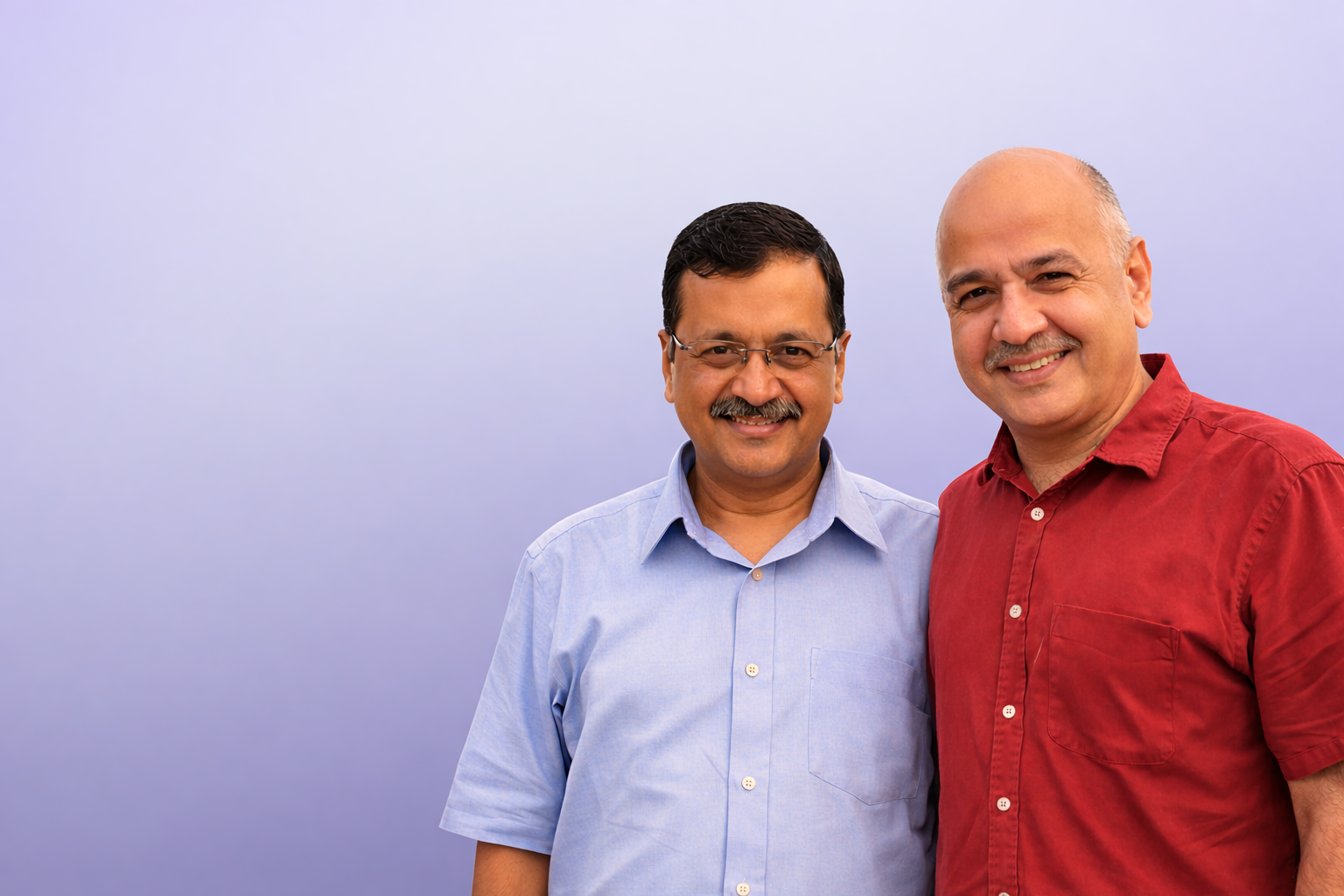
The Delhi High Court on Monday issued notice to Arvind Kejriwal, Manish Sisodia and other accused while hearing a petition filed by the Central Bureau of Investigation (CBI) challenging their discharge in the corruption case linked to the now-scrapped Delhi excise policy.
The case was taken up by Justice Swarana Kanta Sharma, who issued notice seeking responses from the accused and fixed the matter for further hearing. The Court also granted interim relief to the investigating agency by staying certain adverse observations made against it by the trial court in the discharge order.
The development follows a significant order passed on 27 February 2026 by a special court at the Rouse Avenue Court, which discharged Kejriwal, Sisodia and 21 other accused persons in the CBI corruption case concerning the Delhi excise policy.
The trial court held that the prosecution failed to produce sufficient material to establish a prima facie case of criminal conspiracy or corruption in the formulation of the policy. It concluded that the evidence placed by investigators did not meet the legal threshold required to frame charges.
The case originates from allegations relating to the 2021–22 Delhi Excise Policy, which introduced major changes in the city’s liquor licensing regime by allowing greater participation of private retailers. Investigators alleged that the policy was manipulated to benefit certain private entities and generate kickbacks.
Following the discharge order, the CBI approached the High Court arguing that the trial court had exceeded the limited scope of scrutiny required at the stage of framing charges. According to the agency, the trial judge effectively conducted a “mini-trial” by examining evidence in detail rather than determining whether the allegations disclosed a prima facie offence.
Appearing for the CBI, Solicitor General Tushar Mehta argued that the excise policy had allegedly been “manipulated” to benefit certain traders and that the investigating agency had traced financial transactions connected to the alleged conspiracy. However, the trial court discharged the accused without adequately considering the cumulative material placed on record, the agency contended.
During the hearing, the High Court also took note of strong remarks made by the trial court against the CBI in its discharge order. The trial judge had criticised the agency for implicating senior political leaders without sufficient evidence and for referring to certain alleged conspirators as part of a “South Group.”
Justice Sharma stayed these observations for the time being, indicating that the High Court would examine the legality of the discharge order before allowing such remarks against investigators to remain on record.
Another significant direction issued by the High Court concerns the parallel investigation being conducted by the Enforcement Directorate (ED) under the Prevention of Money Laundering Act.
The Court stated that the trial court should defer proceedings in the ED case until after the High Court hears the CBI’s challenge, so that conflicting outcomes in related proceedings can be avoided.
This step is legally significant because the ED’s money-laundering investigation is linked to the underlying corruption allegations being examined in the CBI case.
The Delhi excise policy case has been one of the most closely watched corruption investigations in recent years, involving senior political leaders and allegations of large-scale financial irregularities.
The High Court’s decision to issue notice signals that the legality of the trial court’s discharge order will now undergo appellate scrutiny. The outcome of the proceedings could determine whether the accused will face trial in the corruption case or whether the discharge granted by the trial court will stand.
With the High Court now seized of the matter, the case is expected to play a crucial role in shaping the next phase of litigation surrounding the controversial excise policy and the related money-laundering investigation.
