


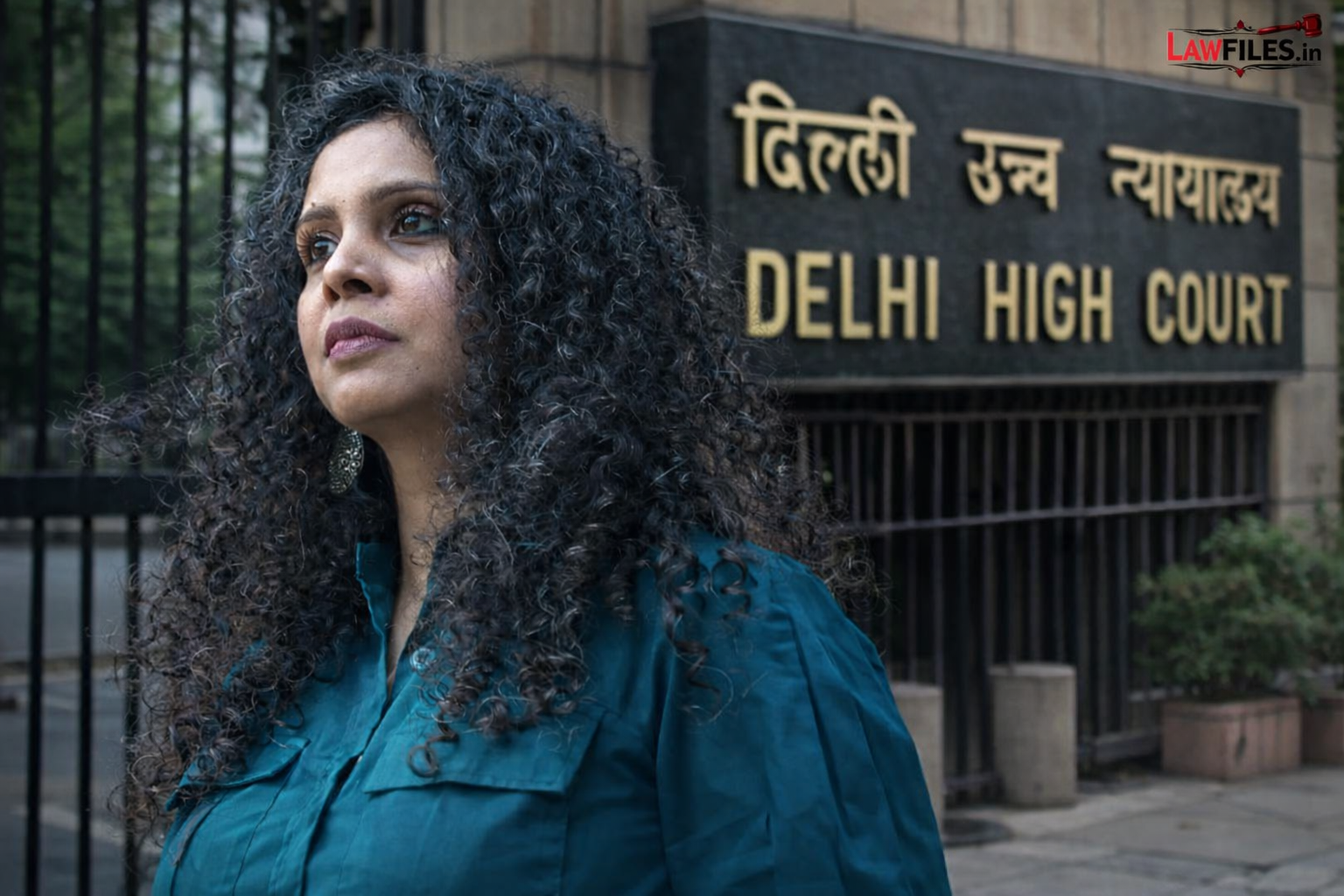
In a significant development at the intersection of free speech, platform regulation, and intermediary liability, the Delhi High Court is examining whether social media platform X Corp could lose its statutory “safe harbour” protection for failing to act against allegedly unlawful content posted by journalist Rana Ayyub.
The proceedings have brought into sharp focus the scope of due diligence obligations under India’s Information Technology framework, particularly when platforms are put on notice regarding allegedly illegal content.
The Union Government, in its submissions before the Court, has argued that X Corp’s continued inaction despite receiving “actual knowledge” of the impugned tweets through court orders and police notices constitutes a violation of statutory obligations.
Relying on Section 79(1) of the Information Technology Act, 2000 and the Intermediary Guidelines Rules, the Centre contended that intermediaries enjoy conditional immunity from liability. Such immunity is contingent upon timely removal of unlawful content upon receiving actual knowledge. Failure to comply may result in withdrawal of safe harbour protection
The affidavit emphasised that X’s inaction allegedly facilitates the continued dissemination of unlawful material, thereby breaching the due diligence requirements mandated by law.
The controversy arises from a petition alleging that certain tweets made by Rana Ayyub between earlier years were derogatory towards Hindu deities and communally sensitive in nature. The Delhi High Court, in earlier hearings, made strong prima facie observations, describing the content as “highly derogatory, inflammatory and communal”, and directed authorities as well as the platform to take appropriate action.
The Court also noted that an FIR had already been registered pursuant to a trial court order, thereby elevating the issue from mere content moderation to ongoing criminal investigation. X Corp has resisted the petition on multiple legal grounds. It argued that it is not “State” under Article 12, and therefore not directly amenable to writ jurisdiction under Article 226. It also contended that determination of whether content is unlawful should be undertaken through civil proceedings or statutory blocking mechanisms, not through writ adjudication. Lastly, It urged the Court to direct authorities to follow the Section 69A blocking procedure and the IT Blocking Rules, 2009 instead of imposing direct liability on the platform. Additionally, X suggested that any takedown direction should primarily be aimed at the originator of the content, rather than the intermediary hosting it.
At the heart of the dispute lies a crucial legal question:
When does an intermediary acquire “actual knowledge” sufficient to trigger takedown obligations? The Centre and Delhi Police argue that judicial orders, police notices and registration of FIR collectively satisfy the threshold of actual knowledge, thereby obligating immediate compliance. This interpretation aligns with evolving regulatory trends, where shortened response timelines and stricter compliance standards are being imposed on digital intermediaries.
The case foregrounds the conditional nature of safe harbour protection under section 79 shields intermediaries from liability only if they act as neutral conduits. Once notified of unlawful content, they must act expeditiously to remove or disable access. Failure to do so may expose them to direct legal liability for user-generated content. The High Court’s examination signals a possible shift towards stricter enforcement of intermediary accountability, especially in cases involving communal sensitivity and public order. The case sits at the intersection of two competing constitutional values freedom of speech and expression (Article 19(1)(a)) and reasonable restrictions in the interest of public order, morality, and incitement to offences (Article 19(2)
While intermediaries play a crucial role in enabling digital speech, the Court appears to be examining whether platform neutrality can be sustained in the face of alleged illegality and prior notice. The outcome of this case could have far-reaching consequences. It may redefine the threshold for intermediary liability in India. It could impose stricter compliance obligations on global tech platforms. It may influence how courts interpret “actual knowledge” and due diligence requirements
The present controversy exposes an uncomfortable but increasingly visible pattern in India’s digital discourse the normalisation of content that selectively targets certain religious traditions, particularly Hindu beliefs, under the protective umbrella of free speech.
What is striking is not merely the existence of such content, but the institutional hesitation especially by large digital intermediaries to act decisively even after being put on notice. This asymmetry creates a perception that while some forms of expression are swiftly moderated. However, other offensive or inflammatory ones are allowed to circulate with relative impunity.
From a constitutional standpoint, such a trend is neither benign nor protected. The freedom of speech under Article 19(1)(a) is not absolute; it is expressly subject to reasonable restrictions under Article 19(2), including those relating to public order, decency, morality, and prevention of incitement to offences. The Supreme Court, in cases such as Ramji Lal Modi v. State of Uttar Pradesh and more recently Amish Devgan v. Union of India, has clarified that speech which is deliberately designed to outrage religious feelings or disrupt communal harmony falls outside constitutional protection.
In this backdrop, the argument that intermediaries can remain neutral conduits becomes increasingly untenable. Neutrality cannot translate into passive facilitation of unlawful content, particularly where there is repeated dissemination of material that is prima facie derogatory towards religious deities or practices. Once “actual knowledge” is established through court orders, FIRs, or statutory notices the obligation to act is not discretionary but mandatory under the Information Technology Act and its allied Rules.
What is equally concerning is the broader cultural shift where mockery of certain religious traditions is reframed as dissent, satire, or liberal expression, while similar treatment of other faiths often triggers immediate regulatory or platform-level response. This selective tolerance risks creating a hierarchy of sensitivities, which is fundamentally at odds with the constitutional promise of equal respect for all religions under Articles 14 and 25.
The issue, therefore, is not about stifling free speech it is about preventing its distortion into a tool for targeted vilification. A constitutional democracy cannot permit an environment where religious dignity becomes negotiable based on ideological leanings or platform policies. The Delhi High Court’s scrutiny in the present case may well become a defining moment. If safe harbour protections are indeed made contingent upon meaningful, non-selective compliance, it would signal a long-overdue shift from platform immunity to platform accountability.
Most significantly, it could set a precedent where failure to act on judicial or police notices results in loss of statutory immunity, fundamentally altering the operational risk landscape for intermediaries. The proceedings before the Delhi High Court represent a pivotal moment in India’s evolving digital jurisprudence. The question is no longer merely about the legality of specific tweets, but about the responsibility of platforms in moderating content once alerted to its alleged unlawfulness. As the Court continues to hear the matter, its eventual ruling will likely shape the future of safe harbour protections, platform accountability, and the balance between free expression and regulatory control in India’s digital ecosystem.
