

Close Menu
LawFilesLawFiles

    Subscribe to Updates

    Get the latest creative news from FooBar about art, design and business.

    What's Hot

    The ₹6 Carry Bag That Cost ₹10,000: Delhi Consumer Commission Reinforces the Consumer’s Right to Informed Choice Against Bata

    July 20, 2026

    A Registered Gift Is Not a Revocable Promise: Andhra Pradesh High Court Reaffirms That Sub-Registrars Cannot Validate Unilateral Cancellation of Gift Deeds

    July 20, 2026

    Who Owns a Temple; The Priest, the Deity or the State? Supreme Court’s Observations Reignite Constitutional Debate on Temple Administration

    July 20, 2026
    Facebook X (Twitter) Instagram Threads
    Monday, July 20
    LawFilesLawFiles
    Facebook X (Twitter)
    • Home
      • Who We Are
      • Our Mission
      • Advisory board
      • Contact US
    • Supreme Court
    • High Courts
      • Gujarat High Court
      • Jharkhand High Court
      • Rajasthan High Court
      • Karnataka High Court
      • Andhra Pradesh High Court
      • Allahabad High Court
      • Himachal Pradesh High Court
      • Chhattisgarh High Court
      • Jammu & Kashmir and Ladakh High Court
      • Kerala High Court
      • Punjab and Haryana High Court
      • Patna High Court
      • Madhya Pradesh High Court
      • Madras High Court
      • Bombay High Court
      • Orissa High Court
      • Calcutta High Court
      • Meghalaya High Court
      • Delhi High Court
      • Manipur High Court
      • Gauhati High Court
    • Corporate
    • Taxation Laws
      • Income Tax
      • GST
      • Customs & Excise
    • Global Affairs
    • Articles
      • Sitting Judge’s’ Views
      • Senior Advocate
      • Policy Analysis
      • Tax Expert
    • PILS
      • Free/Affordable Legal Aid
      • PIL Cell
      • Law student Volunteer Cell (research & Drafting)
      • NGO & Legal services Authority Tie-ups
      • Online Legal Formats
      • Online Legal Help Form
    Subscribe Premium
    LawFilesLawFiles
    Home»Supreme Court»Default Bail and Diligence: Supreme Court Tightens the Procedural Threshold in Haldwani Riots Case
    Supreme Court

    Default Bail and Diligence: Supreme Court Tightens the Procedural Threshold in Haldwani Riots Case

    Anvita DwivediBy Anvita DwivediMay 6, 2026No Comments4 Mins Read
    WhatsApp Facebook Twitter Copy Link
    Share
    Facebook Twitter Pinterest Copy Link WhatsApp

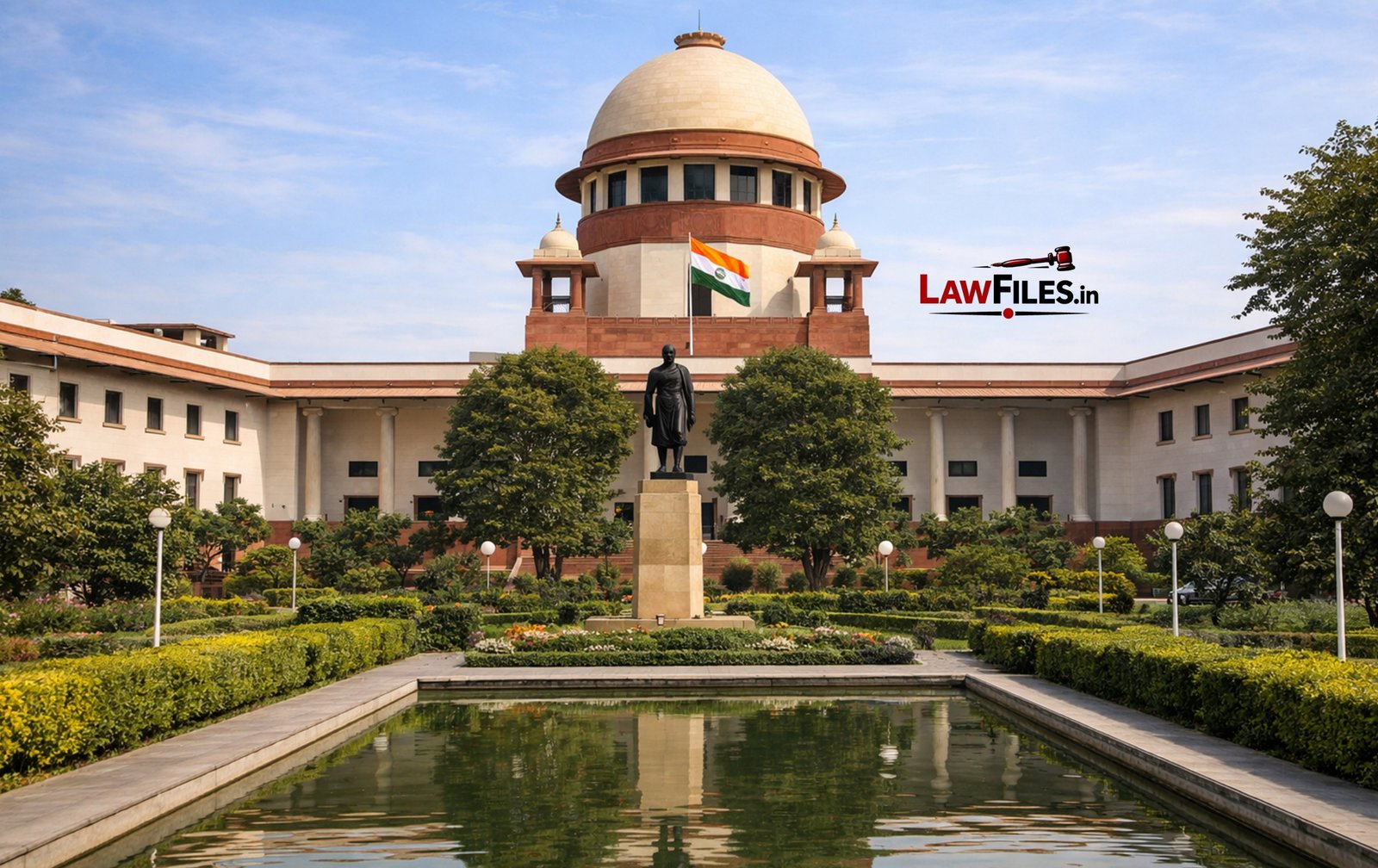
    In a significant ruling arising out of the Haldwani (Banbhoolpura) riots case, the Supreme Court of India has set aside the grant of default bail to certain accused, holding that the benefit of statutory bail cannot be sustained where the accused failed to promptly challenge the extension of time granted for investigation. The decision marks an important clarification of the procedural discipline required under Section 167(2) of the Code of Criminal Procedure (CrPC), particularly in complex criminal investigations.

    The controversy stemmed from the grant of default bail by the Uttarakhand High Court, which had held that the accused were entitled to statutory bail due to the alleged failure of the prosecution to complete investigation within the prescribed time. However, the Supreme Court found this conclusion to be legally flawed, emphasizing that the extension of time granted to investigating authorities had not been timely or effectively challenged by the accused.

    Default bail, often described as an “indefeasible right,” arises when the investigating agency fails to file a chargesheet within the statutory period. Yet, the Court underscored that this right is not absolute in a vacuum; it is contingent upon the procedural posture of the case. Where an extension of time has been granted by a competent court, the accused must contest such extension at the earliest opportunity. A failure to do so, the Court held, weakens the foundation of a subsequent claim to default bail.

    The ruling thus pivots on the principle of procedural vigilance. The Court reasoned that allowing accused persons to remain passive during the grant of extension and later invoke default bail would undermine the integrity of judicial orders and encourage tactical litigation. In this case, the accused had not promptly assailed the extension orders, thereby allowing them to attain finality. Consequently, the later invocation of default bail was held to be unsustainable.

    Importantly, the Court also criticised the High Court’s approach, characterising it as a serious error in both fact and law. It held that the High Court failed to adequately consider the procedural history and the legal effect of unchallenged extension orders. This observation signals a broader judicial concern regarding the mechanical application of default bail principles without due regard to the surrounding procedural context.

    From a doctrinal standpoint, the judgment recalibrates the balance between individual liberty and the interests of effective criminal investigation. While the jurisprudence on default bail has traditionally leaned in favour of safeguarding personal liberty, the present ruling introduces a countervailing emphasis on procedural responsibility. It suggests that the right to default bail cannot be invoked as a mere technicality divorced from the conduct of the accused during the investigation process.

    The decision also has wider implications for cases involving serious offences such as riots, organised violence, and public disorder, where investigations are often complex and time-intensive. By upholding the validity of extensions that go unchallenged, the Court has provided investigative agencies a degree of procedural protection, while simultaneously imposing a duty on the defence to act with diligence and promptness.

    At a systemic level, the ruling contributes to an evolving jurisprudence that seeks to prevent the misuse of procedural safeguards. It reinforces the idea that criminal procedure is not merely a set of technical entitlements but a structured process requiring active participation and timely assertion of rights.

    In conclusion, the Supreme Court’s intervention in the Haldwani riots case serves as a reminder that the right to default bail, though fundamental to personal liberty, operates within a framework of procedural accountability. By denying relief to accused who failed to promptly challenge the extension of investigation time, the Court has strengthened the principle that legal rights must be exercised with vigilance, not retrospectively invoked as a strategic afterthought.


    Default Bail and Diligence: Supreme Court Tightens the Procedural Threshold in Haldwani Riots Case
    Share. WhatsApp Facebook Twitter Pinterest Email
    Anvita Dwivedi

    Related Posts

    The ₹6 Carry Bag That Cost ₹10,000: Delhi Consumer Commission Reinforces the Consumer’s Right to Informed Choice Against Bata

    July 20, 2026

    A Registered Gift Is Not a Revocable Promise: Andhra Pradesh High Court Reaffirms That Sub-Registrars Cannot Validate Unilateral Cancellation of Gift Deeds

    July 20, 2026

    Who Owns a Temple; The Priest, the Deity or the State? Supreme Court’s Observations Reignite Constitutional Debate on Temple Administration

    July 20, 2026
    Add A Comment
    Leave A Reply Cancel Reply

    Demo
    Top Posts

    Digital Forensics Fail to convince Supreme Court: Bail Denied to Gagan Khanna in BNS Assault Case

    June 15, 2026248 Views

    Wrongful Claim Rejection Amounts to Deficiency in Service: Delhi Consumer Commission Holds Star Health Liable

    March 16, 202673 Views

    Banking Negligence and Consumer Accountability: Supreme Court Reinforces Duty of Care in Cheque Handling

    April 16, 202669 Views

    Bombay High Court Quashes POCSO Case, Directs Accused to Fund MacBook for Victim’s Education

    February 28, 202662 Views
    Don't Miss

    The ₹6 Carry Bag That Cost ₹10,000: Delhi Consumer Commission Reinforces the Consumer’s Right to Informed Choice Against Bata

    By Anvita DwivediJuly 20, 2026

    In a ruling that extends far beyond the nominal price of a paper carry bag,…

    A Registered Gift Is Not a Revocable Promise: Andhra Pradesh High Court Reaffirms That Sub-Registrars Cannot Validate Unilateral Cancellation of Gift Deeds

    July 20, 2026

    Who Owns a Temple; The Priest, the Deity or the State? Supreme Court’s Observations Reignite Constitutional Debate on Temple Administration

    July 20, 2026

    Fair Trial or Fishing Expedition? Supreme Court Stays Delhi High Court Order Permitting Inspection of Unrelied Electronic Evidence in Delhi Riots Conspiracy Case

    July 20, 2026
    Stay In Touch
    • Facebook
    • Twitter

    Subscribe to Updates

    Get the latest creative news from SmartMag about art & design.

    Top Posts

    Digital Forensics Fail to convince Supreme Court: Bail Denied to Gagan Khanna in BNS Assault Case

    June 15, 2026248 Views

    Wrongful Claim Rejection Amounts to Deficiency in Service: Delhi Consumer Commission Holds Star Health Liable

    March 16, 202673 Views

    Banking Negligence and Consumer Accountability: Supreme Court Reinforces Duty of Care in Cheque Handling

    April 16, 202669 Views
    Don't Miss

    The ₹6 Carry Bag That Cost ₹10,000: Delhi Consumer Commission Reinforces the Consumer’s Right to Informed Choice Against Bata

    By Anvita DwivediJuly 20, 2026

    In a ruling that extends far beyond the nominal price of a paper carry bag,…

    A Registered Gift Is Not a Revocable Promise: Andhra Pradesh High Court Reaffirms That Sub-Registrars Cannot Validate Unilateral Cancellation of Gift Deeds

    July 20, 2026

    Who Owns a Temple; The Priest, the Deity or the State? Supreme Court’s Observations Reignite Constitutional Debate on Temple Administration

    July 20, 2026

    Fair Trial or Fishing Expedition? Supreme Court Stays Delhi High Court Order Permitting Inspection of Unrelied Electronic Evidence in Delhi Riots Conspiracy Case

    July 20, 2026
    Stay In Touch
    • Facebook
    • YouTube
    • TikTok
    • Instagram
    Top Trending
    About Us
    About Us

    LawFiles.in is a comprehensive legal news platform delivering real-time updates from the Supreme Court, High Courts, Tribunals, Corporate and Tax law, Regulators, Politics, Crime, Consumer cases, and Global Affairs.

    Email Us: lawfilesoffical@gmail.com
    Contact: +91 8800026066

    Contact Us:
    India International Centre
    40, Max Mueller Marg
    Lodhi Estate, New Delhi-110003

    Facebook X (Twitter)
    Our Picks

    The ₹6 Carry Bag That Cost ₹10,000: Delhi Consumer Commission Reinforces the Consumer’s Right to Informed Choice Against Bata

    July 20, 2026

    A Registered Gift Is Not a Revocable Promise: Andhra Pradesh High Court Reaffirms That Sub-Registrars Cannot Validate Unilateral Cancellation of Gift Deeds

    July 20, 2026

    Who Owns a Temple; The Priest, the Deity or the State? Supreme Court’s Observations Reignite Constitutional Debate on Temple Administration

    July 20, 2026

    Fair Trial or Fishing Expedition? Supreme Court Stays Delhi High Court Order Permitting Inspection of Unrelied Electronic Evidence in Delhi Riots Conspiracy Case

    July 20, 2026

    Executive Discretion Ends Where Judicial Mandate Begins: Supreme Court Pulls Up Centre Over Delay in Conferring President’s Gallantry Award on Former Police Officer

    July 20, 2026
    Most Popular

    Supreme Court Rules Limitation Period Under CrPC Starts When Offender’s Identity Is Known, Not From First Complaint

    February 27, 20260 Views

    Maharashtra State Consumer Commission Slams HP Employees’ Co-operative Credit Society for Enforcing Undisclosed Restriction, Orders Refund with Interest and Compensation

    March 2, 20260 Views

    Repeated Vehicle Defects Amount to Deficiency in Service: Chandigarh Consumer Commission Awards ₹4 Lakh Compensation to Ford Owner

    March 9, 20260 Views

    Order VI Rule 17 Proviso Not Applicable to Pre-2002 Suits: Allahabad High Court Allows Amendment in 1997 Plaint

    March 9, 20260 Views

    India’s Tribunal Crisis: Supreme Court Questions Who Guards the Guardians

    March 10, 20260 Views
    © 2026 LawFiles. Owned by Varta24 Media.
    • Articles
    • Careers
    • Corporate
    • Global Affairs
    • Law Firms & Lawyers
    • PILS
    • Regulatory

    Type above and press Enter to search. Press Esc to cancel.