

Close Menu
LawFilesLawFiles

    Subscribe to Updates

    Get the latest creative news from FooBar about art, design and business.

    What's Hot

    Advocacy Is Not Influencing, It Is a Public Trust: Bar Council of India Draws Ethical Boundaries for Lawyers in the Age of Social Media

    July 18, 2026

    ‘No Passenger Is Second-Class in a Constitutional Democracy’: Supreme Court Urges Railways to Curb Overcrowding, Reconsider Terminology and Strengthen Passenger Safety

    July 18, 2026

    Electoral Exclusion Is Not Citizenship Determination: Supreme Court Reaffirms Constitutional Limits on Election Commission’s Powers in West Bengal SIR Proceedings

    July 17, 2026
    Facebook X (Twitter) Instagram Threads
    Saturday, July 18
    LawFilesLawFiles
    Facebook X (Twitter)
    • Home
      • Who We Are
      • Our Mission
      • Advisory board
      • Contact US
    • Supreme Court
    • High Courts
      • Gujarat High Court
      • Jharkhand High Court
      • Rajasthan High Court
      • Karnataka High Court
      • Andhra Pradesh High Court
      • Allahabad High Court
      • Himachal Pradesh High Court
      • Chhattisgarh High Court
      • Jammu & Kashmir and Ladakh High Court
      • Kerala High Court
      • Punjab and Haryana High Court
      • Patna High Court
      • Madhya Pradesh High Court
      • Madras High Court
      • Bombay High Court
      • Orissa High Court
      • Calcutta High Court
      • Meghalaya High Court
      • Delhi High Court
      • Manipur High Court
      • Gauhati High Court
    • Corporate
    • Taxation Laws
      • Income Tax
      • GST
      • Customs & Excise
    • Global Affairs
    • Articles
      • Sitting Judge’s’ Views
      • Senior Advocate
      • Policy Analysis
      • Tax Expert
    • PILS
      • Free/Affordable Legal Aid
      • PIL Cell
      • Law student Volunteer Cell (research & Drafting)
      • NGO & Legal services Authority Tie-ups
      • Online Legal Formats
      • Online Legal Help Form
    Subscribe Premium
    LawFilesLawFiles
    Home»Articles»Custodial Death and State Liability : A Critical Analysis of the Allahabad High Court’s ₹10 Lakh Compensation Judgment
    Articles

    Custodial Death and State Liability : A Critical Analysis of the Allahabad High Court’s ₹10 Lakh Compensation Judgment

    Anvita DwivediBy Anvita DwivediFebruary 22, 2026Updated:February 22, 2026No Comments4 Mins Read
    WhatsApp Facebook Twitter Copy Link
    Share
    Facebook Twitter Pinterest Copy Link WhatsApp


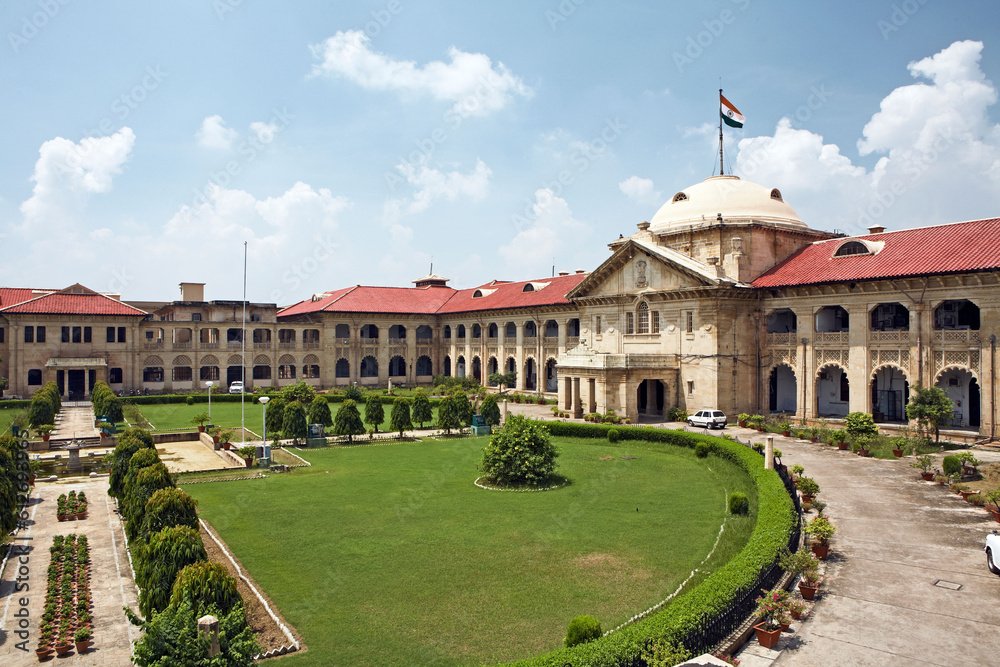
    On 20 February 2026, a Division Bench of the Allahabad High Court (Justice Shekhar B. Saraf and Justice Manjive Shukla) delivered a landmark ruling holding the State “absolutely liable” for the unnatural custodial death of a prisoner who died by suicide while in prison custody, and directed compensation of ₹10 lakh to the deceased’s legal heirs. The bench also directed the formulation of guidelines for fixing compensation in custodial death cases.

    This principle is crucial because it places a non-delegable duty on the State as the custodian of life to protect all persons in custody, regardless of their guilt, age, or status. The judgment rejects the State’s attempt to treat suicide as an event beyond its responsibility, noting that custodial conditions and supervision directly impact detainees’ safety

    The case arose when a minor undertrial, lodged in Pilibhit District Jail, took his own life in custody in February 2024. Though a judicial inquest and post-mortem identified the cause as suicide, the Court rejected the simplistic view that suicide absolves the State of liability. Citing settled constitutional precedents including the idea that fundamental rights do not evaporate the moment a person enters custody the Court held that custodial deaths (even if by suicide) strike at human dignity and the rule of law. It emphasized that when the State assumes custody of a person, it also assumes responsibility for their safety.

    The High Court awarded ₹10 lakh significantly higher than the NHRC’s ₹3 lakh recommendation recognizing the gravity of the violation and need for meaningful redress.

    To standardize compensation awards, the Bench further directed the State to draft guidelines possibly employing multiplier methods similar to those in Motor Vehicles Act compensation fixations (considering age, income, dependents). Such structured norms could ensure fairness and predictability in custodial death awards and avoid ad hoc decision-making.

    The Court rejected the argument that suicide is an independent voluntary act breaking the chain of causation. It observed that a person in custody is under the complete dominion and supervision of the State. Surveillance, mental health assessment, segregation protocols, and preventive measures are all part of the State’s custodial obligations.

    Thus, the Court effectively applied a standard akin to strict or absolute liability in constitutional adjudication: once death occurs in custody under unnatural circumstances, the burden shifts decisively toward the State.

    This approach aligns with the principle that the State cannot evade responsibility by characterizing the death as self-inflicted when the environment of confinement itself may have contributed to vulnerability.

    The Court relied on established constitutional tort jurisprudence, particularly: Rudal Sah v. State of Bihar which recognised monetary compensation as an enforceable public law remedy for unlawful detention and Nilabati Behera v. State of Orissa which unequivocally held that sovereign immunity does not apply to violations of fundamental rights in custodial death cases.

    Drawing from these precedents, the High Court reiterated that public law compensation is distinct from private tort remedies. It is not contingent upon proof of individual fault in the conventional sense. Instead, it flows from the breach of a fundamental right by the State or its instrumentalities.

    More importantly, the Court directed the State to frame uniform guidelines for quantifying compensation, possibly drawing from multiplier methods used in motor accident claims.

    This direction is jurisprudentially significant because compensation in custodial death cases has historically been inconsistent. By encouraging structured norms, the Court aims to: Reduce arbitrariness, Ensure parity across cases and Avoid prolonged litigation for grieving families.

    The Allahabad High Court’s ruling affirms a foundational constitutional principle: the State cannot disclaim responsibility for life once it has assumed custody of the person. By categorising custodial suicide as an unnatural death attracting absolute liability, the Court has clarified doctrinal ambiguities and reinforced Article 21’s protective ambit.

    In a legal landscape where custodial deaths continue to test the credibility of the criminal justice system, this judgment serves as a reminder that constitutional guarantees do not end at prison gates. They begin there with heightened intensity.

    Allahabad High Court
    Share. WhatsApp Facebook Twitter Pinterest Email
    Anvita Dwivedi

    Related Posts

    Advocacy Is Not Influencing, It Is a Public Trust: Bar Council of India Draws Ethical Boundaries for Lawyers in the Age of Social Media

    July 18, 2026

    ‘No Passenger Is Second-Class in a Constitutional Democracy’: Supreme Court Urges Railways to Curb Overcrowding, Reconsider Terminology and Strengthen Passenger Safety

    July 18, 2026

    Electoral Exclusion Is Not Citizenship Determination: Supreme Court Reaffirms Constitutional Limits on Election Commission’s Powers in West Bengal SIR Proceedings

    July 17, 2026
    Add A Comment
    Leave A Reply Cancel Reply

    Demo
    Top Posts

    Digital Forensics Fail to convince Supreme Court: Bail Denied to Gagan Khanna in BNS Assault Case

    June 15, 2026245 Views

    Wrongful Claim Rejection Amounts to Deficiency in Service: Delhi Consumer Commission Holds Star Health Liable

    March 16, 202673 Views

    Banking Negligence and Consumer Accountability: Supreme Court Reinforces Duty of Care in Cheque Handling

    April 16, 202668 Views

    Bombay High Court Quashes POCSO Case, Directs Accused to Fund MacBook for Victim’s Education

    February 28, 202662 Views
    Don't Miss

    Advocacy Is Not Influencing, It Is a Public Trust: Bar Council of India Draws Ethical Boundaries for Lawyers in the Age of Social Media

    By Anvita DwivediJuly 18, 2026

    In one of the most significant regulatory interventions concerning the legal profession in the digital…

    ‘No Passenger Is Second-Class in a Constitutional Democracy’: Supreme Court Urges Railways to Curb Overcrowding, Reconsider Terminology and Strengthen Passenger Safety

    July 18, 2026

    Electoral Exclusion Is Not Citizenship Determination: Supreme Court Reaffirms Constitutional Limits on Election Commission’s Powers in West Bengal SIR Proceedings

    July 17, 2026

    Witness Protection, Fair Trial and Investigative Neutrality: Supreme Court Records UP Police Report Clearing Ashish Mishra and Ajay Mishra in Separate Witness Intimidation Probe

    July 16, 2026
    Stay In Touch
    • Facebook
    • Twitter

    Subscribe to Updates

    Get the latest creative news from SmartMag about art & design.

    Top Posts

    Digital Forensics Fail to convince Supreme Court: Bail Denied to Gagan Khanna in BNS Assault Case

    June 15, 2026245 Views

    Wrongful Claim Rejection Amounts to Deficiency in Service: Delhi Consumer Commission Holds Star Health Liable

    March 16, 202673 Views

    Banking Negligence and Consumer Accountability: Supreme Court Reinforces Duty of Care in Cheque Handling

    April 16, 202668 Views
    Don't Miss

    Advocacy Is Not Influencing, It Is a Public Trust: Bar Council of India Draws Ethical Boundaries for Lawyers in the Age of Social Media

    By Anvita DwivediJuly 18, 2026

    In one of the most significant regulatory interventions concerning the legal profession in the digital…

    ‘No Passenger Is Second-Class in a Constitutional Democracy’: Supreme Court Urges Railways to Curb Overcrowding, Reconsider Terminology and Strengthen Passenger Safety

    July 18, 2026

    Electoral Exclusion Is Not Citizenship Determination: Supreme Court Reaffirms Constitutional Limits on Election Commission’s Powers in West Bengal SIR Proceedings

    July 17, 2026

    Witness Protection, Fair Trial and Investigative Neutrality: Supreme Court Records UP Police Report Clearing Ashish Mishra and Ajay Mishra in Separate Witness Intimidation Probe

    July 16, 2026
    Stay In Touch
    • Facebook
    • YouTube
    • TikTok
    • Instagram
    Top Trending
    About Us
    About Us

    LawFiles.in is a comprehensive legal news platform delivering real-time updates from the Supreme Court, High Courts, Tribunals, Corporate and Tax law, Regulators, Politics, Crime, Consumer cases, and Global Affairs.

    Email Us: lawfilesoffical@gmail.com
    Contact: +91 8800026066

    Contact Us:
    India International Centre
    40, Max Mueller Marg
    Lodhi Estate, New Delhi-110003

    Facebook X (Twitter)
    Our Picks

    Advocacy Is Not Influencing, It Is a Public Trust: Bar Council of India Draws Ethical Boundaries for Lawyers in the Age of Social Media

    July 18, 2026

    ‘No Passenger Is Second-Class in a Constitutional Democracy’: Supreme Court Urges Railways to Curb Overcrowding, Reconsider Terminology and Strengthen Passenger Safety

    July 18, 2026

    Electoral Exclusion Is Not Citizenship Determination: Supreme Court Reaffirms Constitutional Limits on Election Commission’s Powers in West Bengal SIR Proceedings

    July 17, 2026

    Witness Protection, Fair Trial and Investigative Neutrality: Supreme Court Records UP Police Report Clearing Ashish Mishra and Ajay Mishra in Separate Witness Intimidation Probe

    July 16, 2026

    Remission Is a Constitutional Process, Not an Automatic Right: Supreme Court Directs Odisha Government to Decide Dara Singh’s Premature Release Plea in Graham Staines Murder Case

    July 15, 2026
    Most Popular

    Supreme Court Rules Limitation Period Under CrPC Starts When Offender’s Identity Is Known, Not From First Complaint

    February 27, 20260 Views

    Maharashtra State Consumer Commission Slams HP Employees’ Co-operative Credit Society for Enforcing Undisclosed Restriction, Orders Refund with Interest and Compensation

    March 2, 20260 Views

    Repeated Vehicle Defects Amount to Deficiency in Service: Chandigarh Consumer Commission Awards ₹4 Lakh Compensation to Ford Owner

    March 9, 20260 Views

    Order VI Rule 17 Proviso Not Applicable to Pre-2002 Suits: Allahabad High Court Allows Amendment in 1997 Plaint

    March 9, 20260 Views

    India’s Tribunal Crisis: Supreme Court Questions Who Guards the Guardians

    March 10, 20260 Views
    © 2026 LawFiles. Owned by Varta24 Media.
    • Articles
    • Careers
    • Corporate
    • Global Affairs
    • Law Firms & Lawyers
    • PILS
    • Regulatory

    Type above and press Enter to search. Press Esc to cancel.