


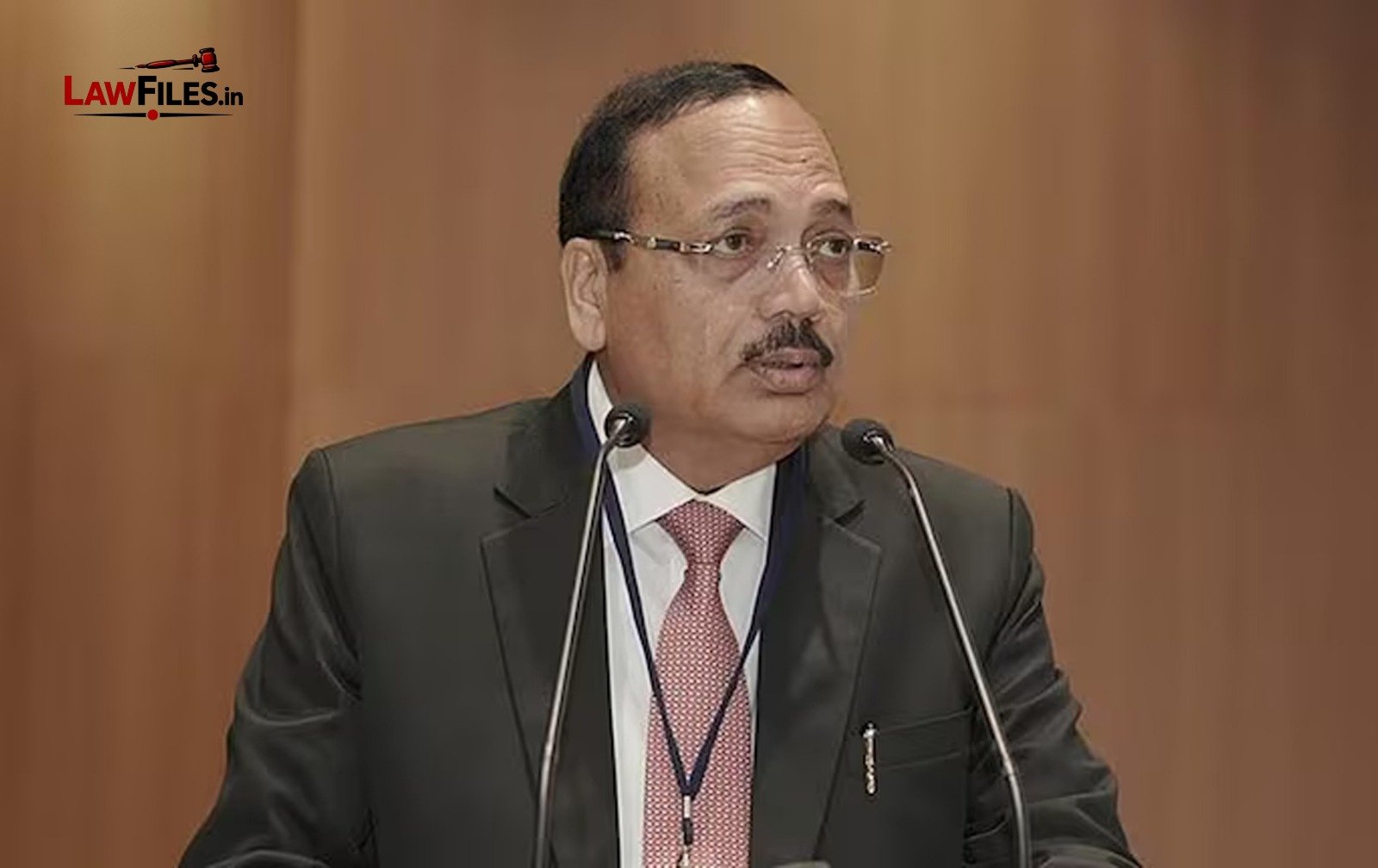
Chief Justice of India Surya Kant has responded to the extraordinary complaints raised by Supreme Court Judge Justice Sandeep Mehta concerning the functioning of Rajasthan High Court Acting Chief Justice Justice Sanjeev Prakash Sharma, making it clear that allegations against a sitting constitutional court judge cannot be adjudicated through competing narratives in the public domain. The CJI has stated that the concerns raised by Justice Mehta have been taken note of and are being examined at the appropriate institutional level. At the same time, he emphasised that Justice Sharma must be given a fair opportunity to respond before any conclusion is reached. The development places an unusually sensitive issue concerning judicial administration, institutional accountability and the credibility of the higher judiciary before the Supreme Court’s internal constitutional mechanisms.
The controversy became public after Justice Mehta, whose parent High Court is the Rajasthan High Court, addressed three communications to the Chief Justice of India dated August 2, August 10 and August 17, 2026. In those communications, Justice Mehta requested that a regular Chief Justice from another High Court be appointed to head the Rajasthan High Court and that Justice Sharma, who is presently functioning as Acting Chief Justice, be transferred out of Rajasthan. The complaints reportedly raised concerns extending to alleged maladministration, exercise of roster powers, treatment of judicial officers, administrative decisions and alleged favouritism. These remain allegations and have not been judicially established.
The CJI’s response assumes particular importance because it does not treat the allegations as either established or dismissed. Instead, the response places the controversy within the institutional architecture governing complaints against judges of the higher judiciary. Justice Surya Kant has stated that the contents of Justice Mehta’s letters cannot be adjudicated in the public domain and that the concerned judge must be afforded a fair opportunity to place his response before any conclusion is reached. The central principle underlying the response is therefore elementary but fundamental to constitutional governance: an allegation, however serious the source from which it originates, cannot automatically become a finding of misconduct merely by entering the public domain. (livelaw.in)
This insistence upon institutional procedure is particularly significant because the allegation does not concern an ordinary public official but a sitting judge of a constitutional court. Judges of High Courts exercise powers involving personal liberty, property, government action, criminal prosecution and constitutional rights. At the same time, they operate within an institutional hierarchy in which questions concerning judicial administration can have consequences for the independence and functioning of the court itself. Any mechanism designed to examine allegations against a judge must therefore achieve two objectives simultaneously: it must be capable of addressing genuine concerns seriously, while ensuring that untested accusations do not become substitutes for proof.
Justice Mehta’s complaints, as reported, go substantially beyond a disagreement over an individual judicial order. One of the recurring concerns raised in his communications relates to the exercise of administrative powers associated with the Chief Justice’s position as the “master of the roster”. The Chief Justice of a High Court has an important administrative responsibility in determining the constitution of benches and allocation of judicial work. Although the precise manner in which roster powers are exercised may vary institutionally, the power is not merely ceremonial. Decisions concerning listing and allocation determine which Bench hears particular categories of cases and therefore form part of the structural administration of judicial work.
Justice Mehta reportedly alleged that certain matters which had been listed before other benches were withdrawn and placed before Justice Sharma’s Bench without adequate justification. He questioned whether such changes reflected an appropriate exercise of administrative discretion. These allegations are particularly sensitive because roster allocation occupies a unique position in the constitutional structure of High Courts. The Chief Justice possesses administrative authority over the roster, but the exercise of that authority must remain connected with institutional requirements rather than personal or extraneous considerations.
The legal importance of the roster question lies in the distinction between administrative control and arbitrary control. The Chief Justice necessarily requires substantial administrative authority to organise the functioning of a High Court. Without a central roster mechanism, conflicting assignments and uncertainty over jurisdiction could seriously impair the administration of justice. Yet the existence of administrative discretion does not mean that its exercise is beyond institutional scrutiny. If allegations arise that roster powers are being used selectively to influence the outcome or forum of particular litigation, those allegations necessarily implicate the institutional integrity of the court itself.
At the same time, it would be legally inappropriate to infer wrongdoing merely from the fact that a matter was transferred from one Bench to another. High Court rosters change routinely for legitimate reasons, including administrative exigencies, changes in subject allocation, recusal, availability of judges and revision of the roster. Even an unusual listing decision does not, without more, establish manipulation. The crucial question is whether there is credible material showing that administrative power was exercised for an improper purpose. That is precisely the kind of factual and institutional question that cannot responsibly be resolved through media reports alone.
The complaints also reportedly refer to concerns regarding the treatment of fellow judicial officers. Justice Mehta referred to complaints allegedly received from judges of the Rajasthan High Court concerning the conduct of the Acting Chief Justice. One communication reportedly concerned allegations of vindictive action against the wife of a sitting Rajasthan High Court judge who is a senior judicial officer in the State’s district judiciary. These allegations, like the others, remain unverified in judicial proceedings and must be distinguished from established findings. Their significance lies in the fact that they concern the internal working environment of a constitutional institution and therefore raise questions about administrative leadership rather than simply individual judicial decisions.
Judicial administration has an important but sometimes overlooked constitutional dimension. A High Court Chief Justice is not merely the senior-most judge hearing cases. The office carries responsibility for roster allocation, administrative supervision, interaction with the subordinate judiciary, infrastructure, court functioning and coordination with legal-services institutions. The legitimacy of these decisions depends upon confidence that administrative powers are exercised impartially and for institutional purposes. Where such confidence is seriously questioned by serving or former judges, the institutional response becomes important irrespective of whether the allegations are ultimately established.
The controversy also concerns the appointment of a regular Chief Justice for Rajasthan. Justice Sharma has been functioning as Acting Chief Justice for approximately ten months following the retirement of the previous Chief Justice, Justice S. Shriram, in September 2025. Justice Mehta has argued that the continued absence of a regular Chief Justice has contributed to the administrative concerns he has raised and has urged that a permanent Chief Justice from another High Court be appointed. The CJI, in response, has indicated that the Collegium is working towards appointments of regular Chief Justices in High Courts. (livelaw.in)
The prolonged use of an Acting Chief Justice arrangement raises a broader institutional question. An acting arrangement is constitutionally permissible and can be necessary when appointments are pending. But where such arrangements continue for an extended period, the distinction between temporary administration and stable institutional leadership becomes increasingly relevant. A High Court is a complex constitutional institution, and continuity in its administrative leadership can affect roster management, infrastructure decisions, judicial appointments and coordination with subordinate courts. The existence of an Acting Chief Justice is not itself evidence of dysfunction, but prolonged vacancies can create legitimate administrative concerns.
The complaints also reportedly referred to the history of Justice Sharma’s transfers. Justice Mehta pointed to an earlier Collegium recommendation concerning Justice Sharma’s transfer and questioned the subsequent decision permitting his return to Rajasthan. This part of the controversy illustrates the distinction between a Collegium decision and an individual judge’s assessment of that decision. Judicial transfers are matters of institutional administration and are governed by constitutional conventions and the established Collegium process. A previous recommendation or transfer decision, by itself, cannot establish present misconduct. Any inference concerning the reasons for a past Collegium decision would require access to the actual institutional record and cannot safely be derived from later allegations.
Another issue raised by Justice Mehta reportedly concerns the exercise of administrative powers in relation to a newly constructed district court complex at Jodhpur. According to the allegations, the building, containing approximately 40 courtrooms, had been functionally complete for some time but its inauguration had been delayed while changes to the infrastructure were directed. Justice Mehta characterised the episode as an example of administrative inefficiency, while ultimately noting that the facility was inaugurated following intervention at the level of the Supreme Court.
The controversy surrounding court infrastructure may appear mundane compared with allegations concerning judicial integrity, but it is institutionally relevant. Courts cannot effectively administer justice without adequate courtrooms, staff, technology and basic infrastructure. Delays in operationalising completed judicial buildings can contribute to overcrowding, reliance on rented premises and logistical difficulties for litigants, lawyers and judicial officers. Yet administrative disagreement over the optimal use or modification of a building is not necessarily misconduct. The legal significance again depends upon whether the decision was arbitrary, motivated by improper considerations or simply a matter of differing administrative judgment.
Justice Mehta’s communications also reportedly referred to allegations of favouritism towards certain lawyers and litigants. Particular cases were cited in support of the claim, including disputes concerning the condonation of delay and other judicial orders. Such allegations require an especially careful distinction between an incorrect judicial decision and an improper exercise of judicial power. Judges inevitably make decisions that one party considers legally wrong. A judicial order does not become evidence of favouritism merely because it benefits one litigant or is subsequently questioned. Establishing misconduct would require substantially more: evidence of improper purpose, conflict of interest, extraneous influence or a demonstrable departure from judicial duty.
This distinction is vital to preserving judicial independence. If every controversial order could be treated as evidence of corruption or bias, judges could become vulnerable to institutional pressure simply for deciding difficult cases. Judicial independence requires that judges be free to make decisions without fear that an unpopular outcome will result in administrative retaliation. But independence does not mean immunity from accountability. The constitutional challenge lies in establishing a mechanism through which genuine concerns can be examined without allowing unsubstantiated allegations to become weapons against judicial independence.
The CJI’s response appears designed precisely around this balance. By stating that Justice Sharma must be given an opportunity to respond, the CJI has invoked the basic principle of audi alteram partem—the right to be heard before an adverse conclusion is reached. Although the doctrine is most commonly discussed in administrative and quasi-judicial proceedings, its underlying fairness principle is equally important in institutional disciplinary processes. A judge facing allegations concerning integrity or administrative misconduct should not be condemned solely on the basis of another person’s complaint without being allowed to answer the allegations.
The CJI’s observation that the matter cannot be decided through “competing claims in the media” is therefore more than a comment about publicity. It is a statement about the proper institutional location of accountability. The public has a legitimate interest in the integrity of the judiciary, but public interest in judicial accountability cannot mean that allegations are adjudicated through news reports, social-media commentary or competing public statements. Evidence must be evaluated by the competent institution through a process capable of testing competing versions of events.
This principle becomes even more important when the allegations originate from within the judiciary itself. A complaint by a serving Supreme Court judge against a serving High Court judge naturally carries institutional weight. But institutional weight is not the same thing as proof. The authority of the complainant cannot eliminate the respondent’s right to be heard. Equally, the seriousness of the allegations means that they cannot simply be ignored. The proper response lies between those two extremes: neither public conviction nor institutional inaction, but a credible process of examination.
The episode also illustrates the importance of internal accountability mechanisms within the higher judiciary. Unlike ordinary government employees, judges of constitutional courts occupy a constitutionally protected position and cannot be subjected to ordinary departmental disciplinary proceedings. Their removal is governed by the constitutional mechanism under Articles 124 and 217 read with the parliamentary process under Article 124(4) and the Judges (Inquiry) Act, 1968. But not every complaint concerning a judge necessarily rises to the level of removal. Institutional mechanisms therefore have to distinguish between matters warranting administrative action, concerns requiring clarification, complaints requiring further inquiry and allegations serious enough to trigger formal constitutional proceedings.
The CJI’s statement that any decision regarding Justice Sharma’s continuation, transfer or other administrative action will be taken by the competent institutional authority after considering the relevant material reflects this layered approach. The possible outcomes are not limited to a binary choice between “guilty” and “innocent”. Depending upon what the institutional examination reveals, the appropriate response could involve administrative reassignment, transfer, appointment of a regular Chief Justice, further inquiry or no action. The precise course must depend upon the material available and the response provided by the concerned judge.
The issue of transfer is particularly sensitive. Judicial transfers can be a legitimate administrative tool, but they must not be used as a punitive device without due process. The Supreme Court has repeatedly recognised the importance of judicial independence in the context of transfers. A judge cannot be made vulnerable to arbitrary transfer merely because a particular judgment displeased an administrative superior. At the same time, transfer may be considered as part of the institutional management of High Courts where justified by constitutional and administrative considerations. The distinction between legitimate institutional transfer and punitive displacement is therefore crucial.
Justice Mehta’s request for Justice Sharma’s transfer must consequently be examined within this constitutional framework rather than treated as automatically determinative. The fact that the request comes from a Supreme Court judge makes it serious, but the authority to decide the administrative consequence lies within the established institutional mechanism. The CJI’s statement expressly acknowledges this by indicating that the competent authority will consider the material and the response before taking any decision.
The controversy also raises questions about transparency within the judiciary. Judicial independence and institutional transparency are sometimes presented as opposing values, but the two can coexist. The judiciary requires confidentiality in certain internal deliberations, particularly while complaints against sitting judges are being examined. At the same time, excessive opacity can fuel speculation and weaken public confidence. The challenge for the Supreme Court Collegium is therefore to provide as much institutional clarity as possible without compromising the fairness of the process or prejudicing the judge concerned.
This is where the CJI’s public statement is significant. Rather than commenting upon the merits of individual allegations, he has disclosed the procedural position: the concerns have been taken note of, the matter is being examined, the concerned judge will have an opportunity to respond and any decision will be taken by the competent institutional authority. This provides a measure of public reassurance without converting the institutional process into a public trial.
The controversy also coincides with reported concerns from the Rajasthan High Court Bar. The Rajasthan High Court Advocates Association at Jodhpur reportedly wrote to the CJI on August 25 seeking the transfer of Justice Sharma and appointment of a regular Chief Justice, citing concerns regarding harmony between the Bar and Bench. The letter came shortly before the allegations made by Justice Mehta became public. (indianexpress.com)
The existence of a Bar association communication may add institutional context, but it must not be treated as independent proof of the allegations. Bar associations can legitimately communicate concerns regarding court functioning, listing, infrastructure or professional relations. However, criticism from members of the Bar cannot substitute for a judicial or institutional finding concerning the integrity of a judge. The constitutional system requires complaints to be assessed on evidence rather than through accumulation of public pressure.
The controversy also demonstrates why the office of the Chief Justice of a High Court carries a distinctive constitutional responsibility. The “master of the roster” doctrine gives the Chief Justice administrative authority to constitute benches and allocate judicial business. The power exists for institutional efficiency, but its exercise is closely connected with perceptions of fairness. A litigant may accept an adverse decision more readily if there is confidence that the matter was heard by a Bench constituted through a neutral and transparent process. Conversely, allegations of unexplained roster changes can affect public confidence even before any legal finding is made.
That is why institutional mechanisms for roster management matter. Clear rules, consistent practice and recorded administrative reasons can reduce the possibility of allegations concerning selective listing. While every administrative decision cannot necessarily be accompanied by a detailed public explanation, a robust internal system should make it possible to demonstrate that decisions were taken for legitimate institutional reasons if subsequently questioned.
The case also highlights the distinction between judicial accountability and judicial popularity. A judge is not required to make decisions that satisfy the Bar, litigants, government or even fellow judges. Constitutional adjudication frequently requires decisions that are unpopular or controversial. Accountability must therefore be tied to legal and ethical standards rather than the popularity of particular judgments or administrative choices. The institutional process must be strong enough to protect both principles simultaneously.
The CJI’s insistence upon a fair opportunity to respond is therefore not merely procedural courtesy. It is essential to preserving the legitimacy of whatever decision ultimately emerges. If action is taken without hearing Justice Sharma, the resulting decision could itself become vulnerable to criticism. Conversely, if the concerns raised by Justice Mehta are not meaningfully examined, the judiciary risks sending the opposite message—that internal complaints concerning judicial administration are incapable of producing institutional accountability.
The present episode consequently places the Supreme Court Collegium in a difficult but important position. It must assess serious allegations while avoiding prejudgment, protect the institutional reputation of the Rajasthan High Court without undermining the independence of the Acting Chief Justice, and decide whether any administrative intervention is warranted without allowing public controversy to dictate the outcome.
There is also a larger institutional lesson concerning the use of informal communication among judges. Complaints relating to the functioning of another judge can arise through private conversations, letters or institutional channels. Once such material enters the public domain, however, the character of the dispute changes. Confidential concerns become subjects of public debate, and the institution faces pressure to respond publicly even though the underlying process may require confidentiality. The CJI’s response recognises this tension by providing a limited public clarification while refusing to adjudicate the allegations publicly.
The episode further demonstrates that judicial administration is itself an area requiring professional accountability. Much of the public discourse concerning judicial independence focuses upon judgments, constitutional interpretation and appointments. Yet the day-to-day administration of courts—rosters, listings, infrastructure, subordinate judiciary, staff and legal-services institutions—can directly affect access to justice. Poor administration can create delays and unequal access even when individual judgments remain legally sound. Institutional leadership therefore deserves the same seriousness as adjudicatory independence.
At the same time, the answer cannot be to subject every administrative decision of a Chief Justice to constant external scrutiny. Courts require a degree of administrative autonomy to function efficiently. Excessive intervention by external authorities could itself undermine judicial independence. The proper mechanism must therefore be one in which accountability is exercised principally through the judiciary’s own constitutional structures, with transparent and reasoned institutional decisions wherever disclosure is legally and practically possible.
The current controversy also comes at a moment when the Supreme Court Collegium is reportedly working towards filling vacancies in the offices of regular Chief Justices of High Courts. The CJI has indicated that this process is underway. That institutional development may eventually provide a separate solution to the immediate administrative question concerning Rajasthan, independent of the allegations against Justice Sharma. The appointment of a regular Chief Justice is, however, an institutional decision that must follow the established Collegium process rather than being treated as an automatic consequence of a complaint. (livelaw.in)
Justice Sharma’s reported retirement date of September 26 adds another dimension to the matter. The relatively short period before retirement makes the question of immediate administrative action particularly sensitive. On one hand, if serious allegations affecting institutional functioning are established, the proximity of retirement cannot by itself make the concerns irrelevant. On the other hand, the short remaining tenure reinforces the need for an efficient process so that decisions are not based upon assumptions or left unresolved merely because the institutional window is brief.
The broader constitutional significance of the episode lies in the fact that judicial independence does not mean institutional silence. A judiciary capable of protecting constitutional rights must also possess mechanisms through which concerns about its own functioning can be examined. But those mechanisms must be different from political or media adjudication. The independence of the judiciary requires both accountability within law and protection against accountability through public pressure.
The CJI’s response thus represents a cautious institutional approach. He has neither endorsed Justice Mehta’s allegations nor dismissed them. He has confirmed that the concerns are being examined, insisted upon a fair opportunity for Justice Sharma to respond and rejected the idea that the matter can be resolved through competing claims in the media. In constitutional terms, this is an affirmation that due process applies even within the judiciary itself.
Ultimately, the Rajasthan High Court controversy is not merely a dispute between two judges. It is a test of how India’s higher judiciary handles allegations concerning the administration and integrity of one of its own institutions. The credibility of the eventual outcome will depend not only upon what decision is reached but upon whether the process is demonstrably fair, independent and sufficiently rigorous. Judicial independence cannot mean that judges are beyond scrutiny, just as judicial accountability cannot mean that allegations become findings merely because they are made publicly. The constitutional balance requires an institution strong enough to examine serious complaints without prejudice, protect the dignity of the judge concerned without suppressing legitimate concerns, and take corrective action where the material warrants it. The CJI’s decision to keep the matter within the established institutional mechanism is therefore not an evasion of accountability; properly implemented, it is the necessary first step towards ensuring that accountability itself remains consistent with the rule of law.
