


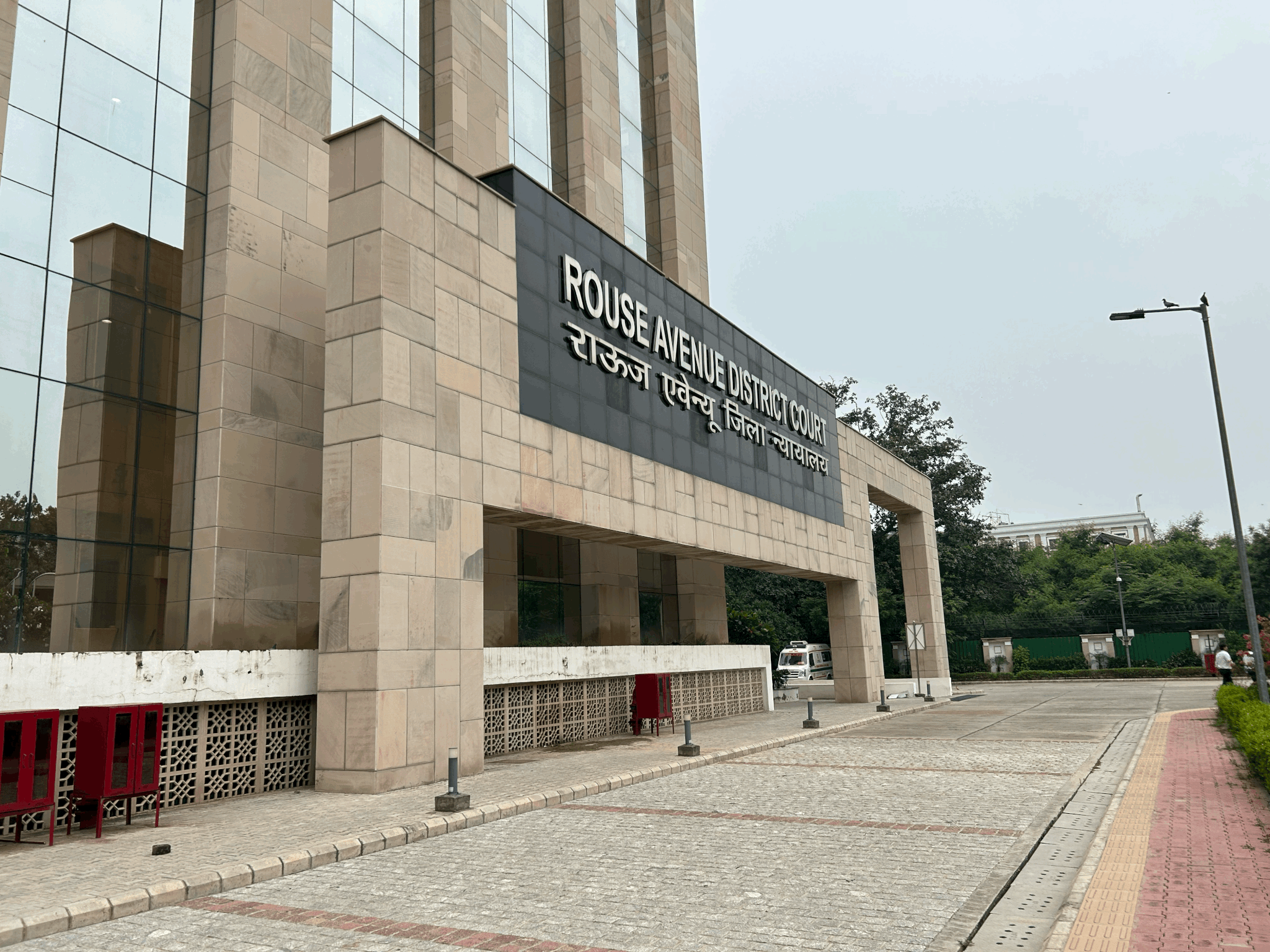
New Delhi, February 27, 2026: In a significant judicial decision, a special court at the Rouse Avenue Court Complex has discharged Arvind Kejriwal the national convenor of the Aam Aadmi Party (AAP) and former Chief Minister of Delhi along with Manish Sisodia, former Deputy Chief Minister, in the Central Bureau of Investigation (CBI)’s high-profile excise policy corruption case. The order also cleared all other accused, bringing a major turnaround to nearly three years of legal confrontation.
Court’s Rationale: No Prima Facie Case, Flawed Chargesheet
Presiding Special Judge Jitendra Singh declined to take cognizance of the CBI’s chargesheet, observing that the prosecution failed to establish even a prima facie basis for prosecution. The judgement noted that the voluminous chargesheet contained “internal contradictions”, “misleading averments”, and material gaps unsupported by witness testimony or corroboration.
In strong judicial language, the court stated that serious criminal allegations including conspiracy and corruption must be supported by credible evidence, not inference or conjecture. It emphasised that implicating individuals, especially those holding or having held high constitutional office, without cogent material undermines the rule of law and public confidence in the justice system.
The case stemmed from alleged irregularities in the Delhi Excise (Liquor) Policy for 2021-22, which sought a comprehensive reform of the capital’s liquor trade and revenue regime. In July 2022, the then Chief Secretary submitted a report to the Lieutenant Governor flagging procedural lapses and estimated fiscal losses of over ₹580 crore claims that formed the foundation of the CBI’s investigation and prosecutions.
The CBI’s FIR accused Sisodia of driving the excise policy without necessary approvals, and asserted that undue favours were extended to private entities in return for benefits. The Enforcement Directorate (ED) concurrently pursued a separate money-laundering case linked to the same policy.
Manish Sisodia had spent approximately 530 days in judicial custody, and Arvind Kejriwal was incarcerated for around 156 days across two periods before being granted bail by the Supreme Court in 2024.
In its order, the trial court also directed a departmental inquiry into the conduct of the CBI’s Investigating Officer (IO), signalling judicial concern over investigative practices.
Immediately after the verdict, Arvind Kejriwal was visibly emotional, breaking down in tears and stating publicly that the court’s decision vindicated his stance of innocence. His wife, Sunita Kejriwal, welcomed the judgement, declaring that “truth always prevails” in a free society.
The legal setback for the CBI is poised to have far-reaching political and procedural implications, particularly in how high-stakes corruption investigations are carried out and framed in cases involving senior elected figures.
