


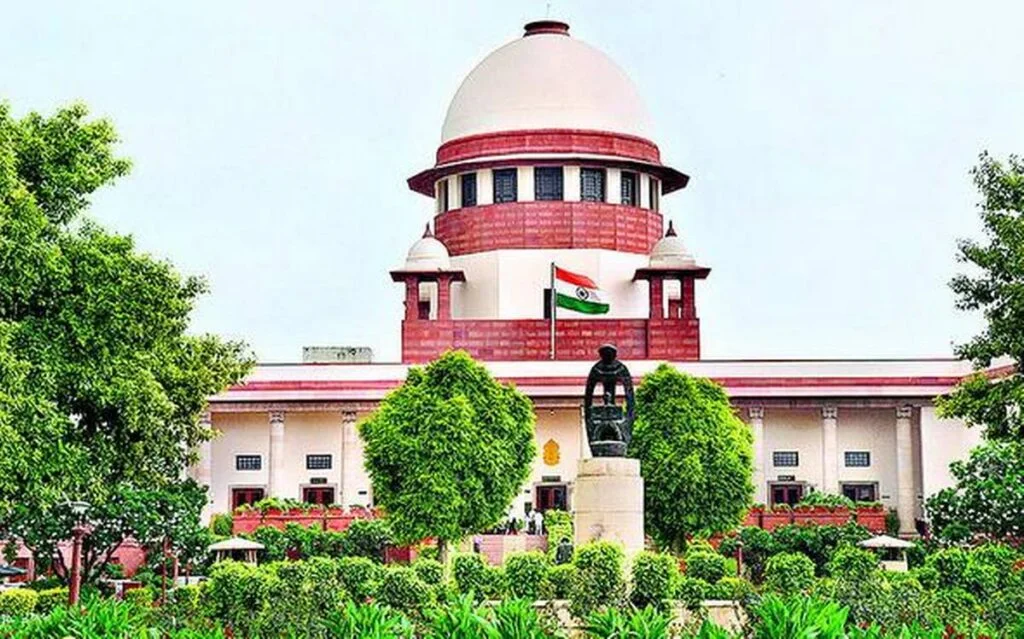
When Sonam Wangchuk — the soft-spoken Ladakhi innovator turned fierce environmental voice — was locked away under the National Security Act, the legal battle to free him was always going to be messy. But few could have predicted just how drawn out and frustrating that fight would become. On Monday, March 10, India’s Supreme Court once again postponed hearing the habeas corpus petition challenging his detention, pushing it to March 17. For Wangchuk’s family, supporters, and the broader public watching this case unfold, it was yet another week of waiting — and the silence from the bench was loud enough to echo across the country.
The petition before the court has been filed by Wangchuk’s wife, Dr Gitanjali Angmo. It is a deeply personal battle — a woman going through the country’s highest constitutional institution to demand that her husband’s imprisonment be declared unlawful. The plea specifically seeks to have his preventive detention under the National Security Act, 1980, struck down as illegal. But the matter has been moving at a pace that many find troubling, given the stakes involved.
The adjournment on Monday came about because Solicitor General Tushar Mehta, who represents the Union government, was unwell and absent from court. Additional Solicitor General KM Nataraj informed the bench of this, and the two-judge bench — comprising Justice Aravind Kumar and Justice PB Varale — agreed to reschedule the hearing. On the surface, it is a procedural matter. Government lawyers fall ill. Courts accommodate such realities. But it stings particularly hard here because this is not the first postponement. Just two weeks earlier, on February 26, the matter had similarly been adjourned — and at that point, the court had explicitly said it would reserve the matter for a final judgment at the very next sitting.
That promise has now been pushed back by another week.
Senior Advocate Kapil Sibal, who is arguing on behalf of Dr Angmo, chose not to make any lengthy legal objection when told of the delay. But he did say something quietly powerful. He remarked, in an oral observation, that this repeated deferral was sending a “wrong signal” across the nation. It was a restrained remark, but the weight behind it was unmistakable.
What makes the legal battle particularly compelling is the core of what Sibal has been arguing before the bench. His central contention is that Wangchuk’s detention is built on a foundation of facts that simply do not exist. According to him, the detention order attributed to Wangchuk a series of highly inflammatory statements — including that he allegedly wanted to “overthrow” the government. But when the Union itself placed on record the translated versions of Wangchuk’s speeches, those specific statements were nowhere to be found.
In other words, Sibal argues, the government locked a man up based on things he never actually said.
This discrepancy did not go unnoticed by the court itself. During an earlier round of arguments, the bench asked pointed questions about the translation accuracy. Justice Aravind Kumar made a telling observation — that in the age of artificial intelligence, translation tools carry an accuracy rate of around 98%, making significant translation errors difficult to justify. Justice Varale went a step further, remarking that the translation of Wangchuk’s words should carry no trace of malice. Following these observations, the bench had directed the Union government to place authentic translations of the speeches on record — the very issue Solicitor General Mehta had intended to address before his illness intervened.
The case now carries the weight of more than just one man’s liberty. Sonam Wangchuk is not an obscure figure. He is a celebrated climate activist and innovator, the real-world inspiration behind the character in a beloved Bollywood film, and a tireless voice for Ladakh’s rights and ecological future. His detention under a law designed for serious threats to national security has raised serious questions in public discourse about whether the state is using preventive detention as a tool to silence dissent rather than protect the country.
As the matter stands adjourned until March 17, the question that hangs in the air is simple — and troubling: how long does a man wait for justice while the courts find time?
