

Close Menu
LawFilesLawFiles

    Subscribe to Updates

    Get the latest creative news from FooBar about art, design and business.

    What's Hot

    Advocacy Is Not Influencing, It Is a Public Trust: Bar Council of India Draws Ethical Boundaries for Lawyers in the Age of Social Media

    July 18, 2026

    ‘No Passenger Is Second-Class in a Constitutional Democracy’: Supreme Court Urges Railways to Curb Overcrowding, Reconsider Terminology and Strengthen Passenger Safety

    July 18, 2026

    Electoral Exclusion Is Not Citizenship Determination: Supreme Court Reaffirms Constitutional Limits on Election Commission’s Powers in West Bengal SIR Proceedings

    July 17, 2026
    Facebook X (Twitter) Instagram Threads
    Saturday, July 18
    LawFilesLawFiles
    Facebook X (Twitter)
    • Home
      • Who We Are
      • Our Mission
      • Advisory board
      • Contact US
    • Supreme Court
    • High Courts
      • Gujarat High Court
      • Jharkhand High Court
      • Rajasthan High Court
      • Karnataka High Court
      • Andhra Pradesh High Court
      • Allahabad High Court
      • Himachal Pradesh High Court
      • Chhattisgarh High Court
      • Jammu & Kashmir and Ladakh High Court
      • Kerala High Court
      • Punjab and Haryana High Court
      • Patna High Court
      • Madhya Pradesh High Court
      • Madras High Court
      • Bombay High Court
      • Orissa High Court
      • Calcutta High Court
      • Meghalaya High Court
      • Delhi High Court
      • Manipur High Court
      • Gauhati High Court
    • Corporate
    • Taxation Laws
      • Income Tax
      • GST
      • Customs & Excise
    • Global Affairs
    • Articles
      • Sitting Judge’s’ Views
      • Senior Advocate
      • Policy Analysis
      • Tax Expert
    • PILS
      • Free/Affordable Legal Aid
      • PIL Cell
      • Law student Volunteer Cell (research & Drafting)
      • NGO & Legal services Authority Tie-ups
      • Online Legal Formats
      • Online Legal Help Form
    Subscribe Premium
    LawFilesLawFiles
    Home»Political News»Free Speech or Incitement? Calcutta High Court Plea Against Suvendu Adhikari Rekindles Debate on Political Speech Limits
    Political News

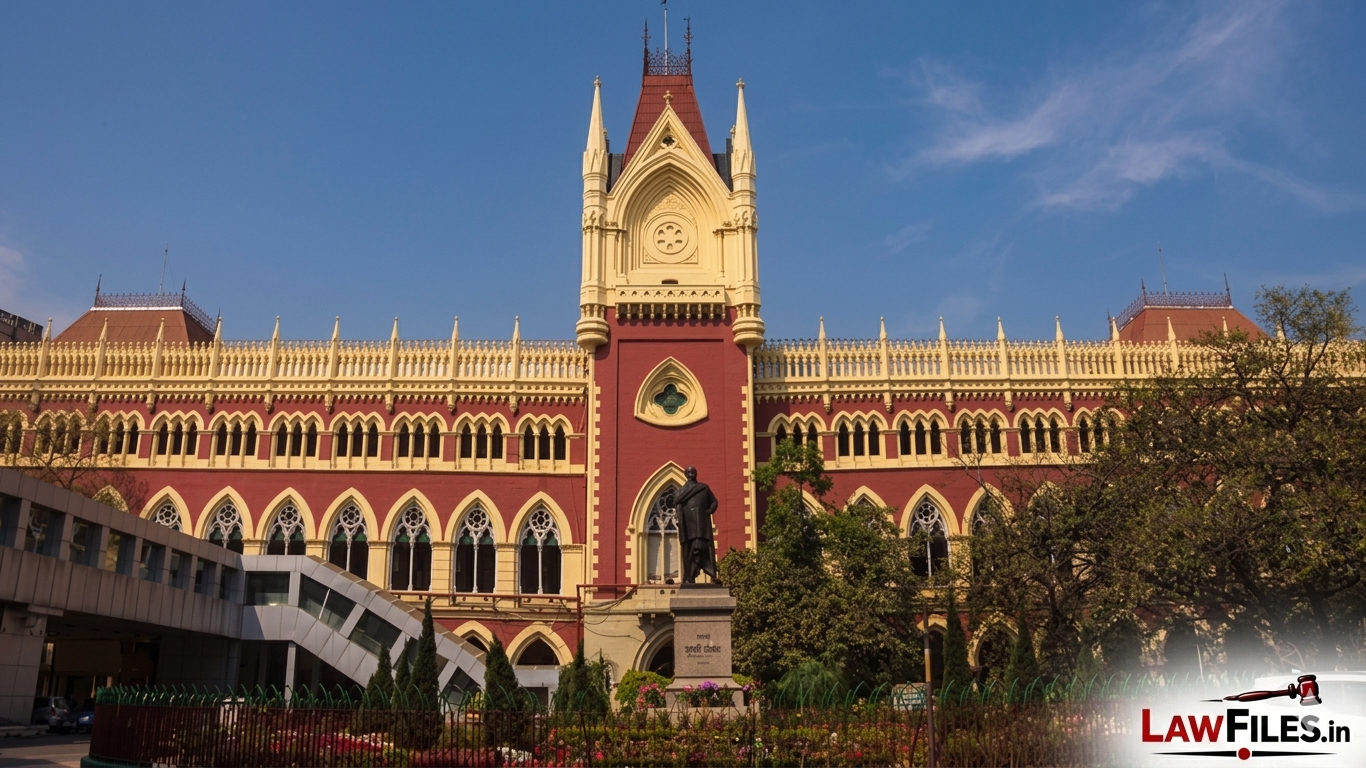
    Free Speech or Incitement? Calcutta High Court Plea Against Suvendu Adhikari Rekindles Debate on Political Speech Limits

    Anvita DwivediBy Anvita DwivediApril 16, 2026No Comments4 Mins Read
    WhatsApp Facebook Twitter Copy Link
    Share
    Facebook Twitter Pinterest Copy Link WhatsApp

    A recent plea before the Calcutta High Court seeking action against Suvendu Adhikari over allegedly inflammatory remarks made during a rally in Bhawanipore has once again brought into focus a recurring constitutional tension the fragile boundary between protected political speech and punishable incitement.

    The petition, filed in the nature of a public interest action, urges the Court to direct authorities to initiate appropriate legal proceedings against the Leader of Opposition, alleging that his statements at the rally were capable of provoking communal disharmony and disturbing public order. While the High Court is yet to adjudicate the merits, the very invocation of writ jurisdiction reflects the growing trend of judicialisation of political speech controversies in India.

    The controversy traces its origins to a political rally in Bhawanipore, a politically sensitive constituency in Kolkata, where Adhikari is alleged to have made remarks that were perceived by the petitioner as inflammatory and divisive. Notably, similar allegations have surfaced in the past, with FIRs being registered against him for allegedly communal or provocative statements during public events. These recurring legal challenges situate the present plea within a broader pattern of contentious political speech intersecting with criminal law mechanisms.

    At a legal level, the plea raises issues under provisions of the Bharatiya Nyaya Sanhita (formerly IPC), particularly those dealing with promoting enmity between groups, public mischief, and incitement to violence. However, the threshold for criminalising speech in a constitutional democracy remains high. The Supreme Court has repeatedly held that mere offensive or controversial statements do not suffice; there must be a proximate connection between the speech and a likelihood of public disorder.

    This doctrinal position stems from landmark rulings such as Shreya Singhal v. Union of India, where the Court emphasised that only speech amounting to “incitement” and not mere “advocacy” can be restricted. The present case thus sits squarely within this jurisprudential framework requiring courts to assess not only the content of speech but also its context, intent, and impact.

    What complicates the issue further is the inherently political nature of the speech in question. As Leader of the Opposition, Adhikari occupies a position that is both representative and adversarial, often engaging in sharp criticism of the ruling dispensation. Courts have traditionally exercised caution in intervening in such contexts, recognising that robust political debate even when uncomfortable is central to democratic functioning.

    At the same time, the increasing frequency of such petitions indicates a growing reliance on legal forums to address political rhetoric. This raises an important concern:
    are courts being drawn into arenas better suited for electoral and public accountability?

    The Calcutta High Court itself has previously been seized of multiple petitions involving Adhikari, including challenges to FIRs and allegations of politically motivated prosecution. This backdrop underscores the highly polarised political environment in West Bengal, where legal proceedings often mirror political contestation.

    From a constitutional standpoint, the case embodies a classic conflict between:

    • Freedom of speech under Article 19(1)(a)
    • Reasonable restrictions under Article 19(2), particularly public order and incitement

    The difficulty lies in drawing a principled line. Over-regulation risks chilling political expression, while under-regulation risks normalising inflammatory rhetoric with real-world consequences.

    A critical aspect that the Court may have to consider is the standard of judicial intervention at the threshold stage. Should courts direct immediate action based on allegations of inflammatory speech, or should they defer to investigative authorities to assess whether the statutory ingredients of an offence are met? This question is central to maintaining the balance between judicial oversight and executive function.

    The case also reflects a broader shift in Indian constitutional practice, where Public Interest Litigations are increasingly invoked to regulate speech. While PILs have historically expanded access to justice, their use in politically sensitive matters raises concerns about forum selection, selective targeting, and potential misuse.

    From a critical perspective, the present plea is less about one speech and more about the evolving role of courts in policing political discourse. The judiciary is being called upon to act as a constitutional gatekeeper of speech, a role that is both necessary and fraught with institutional risks.

    In conclusion, the Calcutta High Court’s consideration of the plea will likely go beyond the specifics of the Bhawanipore rally. It will contribute to an ongoing constitutional conversation:

    where should the line be drawn between democratic dissent and unlawful incitement?

    The answer, as always, will depend not only on legal doctrine, but on the Court’s ability to balance free expression, public order, and institutional restraint in an increasingly polarised political landscape.

    Calcutta High Court Plea Against Suvendu Adhikari Rekindles Debate on Political Speech Limits Free Speech or Incitement?
    Share. WhatsApp Facebook Twitter Pinterest Email
    Anvita Dwivedi

    Related Posts

    Advocacy Is Not Influencing, It Is a Public Trust: Bar Council of India Draws Ethical Boundaries for Lawyers in the Age of Social Media

    July 18, 2026

    ‘No Passenger Is Second-Class in a Constitutional Democracy’: Supreme Court Urges Railways to Curb Overcrowding, Reconsider Terminology and Strengthen Passenger Safety

    July 18, 2026

    Electoral Exclusion Is Not Citizenship Determination: Supreme Court Reaffirms Constitutional Limits on Election Commission’s Powers in West Bengal SIR Proceedings

    July 17, 2026
    Add A Comment
    Leave A Reply Cancel Reply

    Demo
    Top Posts

    Digital Forensics Fail to convince Supreme Court: Bail Denied to Gagan Khanna in BNS Assault Case

    June 15, 2026245 Views

    Wrongful Claim Rejection Amounts to Deficiency in Service: Delhi Consumer Commission Holds Star Health Liable

    March 16, 202673 Views

    Banking Negligence and Consumer Accountability: Supreme Court Reinforces Duty of Care in Cheque Handling

    April 16, 202668 Views

    Bombay High Court Quashes POCSO Case, Directs Accused to Fund MacBook for Victim’s Education

    February 28, 202662 Views
    Don't Miss

    Advocacy Is Not Influencing, It Is a Public Trust: Bar Council of India Draws Ethical Boundaries for Lawyers in the Age of Social Media

    By Anvita DwivediJuly 18, 2026

    In one of the most significant regulatory interventions concerning the legal profession in the digital…

    ‘No Passenger Is Second-Class in a Constitutional Democracy’: Supreme Court Urges Railways to Curb Overcrowding, Reconsider Terminology and Strengthen Passenger Safety

    July 18, 2026

    Electoral Exclusion Is Not Citizenship Determination: Supreme Court Reaffirms Constitutional Limits on Election Commission’s Powers in West Bengal SIR Proceedings

    July 17, 2026

    Witness Protection, Fair Trial and Investigative Neutrality: Supreme Court Records UP Police Report Clearing Ashish Mishra and Ajay Mishra in Separate Witness Intimidation Probe

    July 16, 2026
    Stay In Touch
    • Facebook
    • Twitter

    Subscribe to Updates

    Get the latest creative news from SmartMag about art & design.

    Top Posts

    Digital Forensics Fail to convince Supreme Court: Bail Denied to Gagan Khanna in BNS Assault Case

    June 15, 2026245 Views

    Wrongful Claim Rejection Amounts to Deficiency in Service: Delhi Consumer Commission Holds Star Health Liable

    March 16, 202673 Views

    Banking Negligence and Consumer Accountability: Supreme Court Reinforces Duty of Care in Cheque Handling

    April 16, 202668 Views
    Don't Miss

    Advocacy Is Not Influencing, It Is a Public Trust: Bar Council of India Draws Ethical Boundaries for Lawyers in the Age of Social Media

    By Anvita DwivediJuly 18, 2026

    In one of the most significant regulatory interventions concerning the legal profession in the digital…

    ‘No Passenger Is Second-Class in a Constitutional Democracy’: Supreme Court Urges Railways to Curb Overcrowding, Reconsider Terminology and Strengthen Passenger Safety

    July 18, 2026

    Electoral Exclusion Is Not Citizenship Determination: Supreme Court Reaffirms Constitutional Limits on Election Commission’s Powers in West Bengal SIR Proceedings

    July 17, 2026

    Witness Protection, Fair Trial and Investigative Neutrality: Supreme Court Records UP Police Report Clearing Ashish Mishra and Ajay Mishra in Separate Witness Intimidation Probe

    July 16, 2026
    Stay In Touch
    • Facebook
    • YouTube
    • TikTok
    • Instagram
    Top Trending
    About Us
    About Us

    LawFiles.in is a comprehensive legal news platform delivering real-time updates from the Supreme Court, High Courts, Tribunals, Corporate and Tax law, Regulators, Politics, Crime, Consumer cases, and Global Affairs.

    Email Us: lawfilesoffical@gmail.com
    Contact: +91 8800026066

    Contact Us:
    India International Centre
    40, Max Mueller Marg
    Lodhi Estate, New Delhi-110003

    Facebook X (Twitter)
    Our Picks

    Advocacy Is Not Influencing, It Is a Public Trust: Bar Council of India Draws Ethical Boundaries for Lawyers in the Age of Social Media

    July 18, 2026

    ‘No Passenger Is Second-Class in a Constitutional Democracy’: Supreme Court Urges Railways to Curb Overcrowding, Reconsider Terminology and Strengthen Passenger Safety

    July 18, 2026

    Electoral Exclusion Is Not Citizenship Determination: Supreme Court Reaffirms Constitutional Limits on Election Commission’s Powers in West Bengal SIR Proceedings

    July 17, 2026

    Witness Protection, Fair Trial and Investigative Neutrality: Supreme Court Records UP Police Report Clearing Ashish Mishra and Ajay Mishra in Separate Witness Intimidation Probe

    July 16, 2026

    Remission Is a Constitutional Process, Not an Automatic Right: Supreme Court Directs Odisha Government to Decide Dara Singh’s Premature Release Plea in Graham Staines Murder Case

    July 15, 2026
    Most Popular

    Supreme Court Rules Limitation Period Under CrPC Starts When Offender’s Identity Is Known, Not From First Complaint

    February 27, 20260 Views

    Maharashtra State Consumer Commission Slams HP Employees’ Co-operative Credit Society for Enforcing Undisclosed Restriction, Orders Refund with Interest and Compensation

    March 2, 20260 Views

    Repeated Vehicle Defects Amount to Deficiency in Service: Chandigarh Consumer Commission Awards ₹4 Lakh Compensation to Ford Owner

    March 9, 20260 Views

    Order VI Rule 17 Proviso Not Applicable to Pre-2002 Suits: Allahabad High Court Allows Amendment in 1997 Plaint

    March 9, 20260 Views

    India’s Tribunal Crisis: Supreme Court Questions Who Guards the Guardians

    March 10, 20260 Views
    © 2026 LawFiles. Owned by Varta24 Media.
    • Articles
    • Careers
    • Corporate
    • Global Affairs
    • Law Firms & Lawyers
    • PILS
    • Regulatory

    Type above and press Enter to search. Press Esc to cancel.