

Close Menu
LawFilesLawFiles

    Subscribe to Updates

    Get the latest creative news from FooBar about art, design and business.

    What's Hot

    Supreme Court Reaffirms Finality of CoC-Approved Resolution Plans: Why This Judgment Matters for Future Insolvency Professionals

    June 1, 2026

    Supreme Court Reaffirms Finality of CoC-Approved Resolution Plans: Why This Judgment Matters for Future Insolvency Professionals

    June 1, 2026

    NUSRL Ranchi Invites Submissions for “Kautilya’s Take” Policy Blog: A Valuable Opportunity for Law Students and Young Researchers

    June 1, 2026
    Facebook X (Twitter) Instagram Threads
    Monday, June 1
    LawFilesLawFiles
    Facebook X (Twitter)
    • Home
      • Who We Are
      • Our Mission
      • Advisory board
      • Contact US
    • Supreme Court
    • High Courts
      • Gujarat High Court
      • Jharkhand High Court
      • Rajasthan High Court
      • Karnataka High Court
      • Andhra Pradesh High Court
      • Allahabad High Court
      • Himachal Pradesh High Court
      • Chhattisgarh High Court
      • Jammu & Kashmir and Ladakh High Court
      • Kerala High Court
      • Punjab and Haryana High Court
      • Patna High Court
      • Madhya Pradesh High Court
      • Madras High Court
      • Bombay High Court
      • Orissa High Court
      • Calcutta High Court
      • Meghalaya High Court
      • Delhi High Court
      • Manipur High Court
      • Gauhati High Court
    • Corporate
    • Taxation Laws
      • Income Tax
      • GST
      • Customs & Excise
    • Global Affairs
    • Articles
      • Sitting Judge’s’ Views
      • Senior Advocate
      • Policy Analysis
      • Tax Expert
    • PILS
      • Free/Affordable Legal Aid
      • PIL Cell
      • Law student Volunteer Cell (research & Drafting)
      • NGO & Legal services Authority Tie-ups
      • Online Legal Formats
      • Online Legal Help Form
    Subscribe Premium
    LawFilesLawFiles
    Home»High Courts»Retirement Before Removal: Justice Shekhar Yadav’s Exit Exposes Structural Gaps in Judicial Accountability
    High Courts

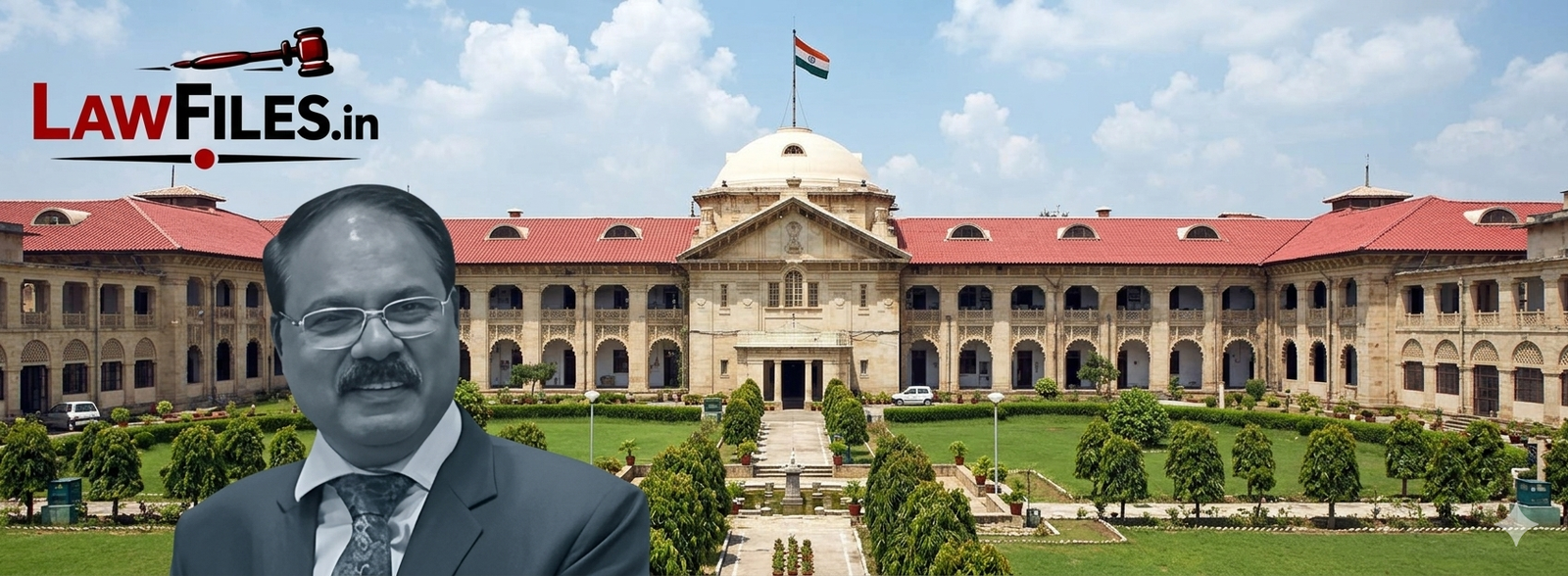
    Retirement Before Removal: Justice Shekhar Yadav’s Exit Exposes Structural Gaps in Judicial Accountability

    Anvita DwivediBy Anvita DwivediApril 15, 2026No Comments3 Mins Read
    WhatsApp Facebook Twitter Copy Link
    Share
    Facebook Twitter Pinterest Copy Link WhatsApp

    The retirement of Allahabad High Court judge Justice Shekhar Kumar Yadav, while an impeachment motion against him remained pending in Parliament, has brought into sharp focus a fundamental institutional paradox within India’s constitutional framework the absence of an effective and time-bound mechanism for judicial accountability.

    While the event formally marks the end of a judicial tenure, its implications extend far beyond an individual judge. It raises a deeper and more uncomfortable question:
    can a constitutional system that provides for removal of judges fail to operationalise it in practice?

    Justice Yadav demitted office on April 15, 2026, even as impeachment proceedings initiated in the Rajya Sabha remained incomplete. The motion for his removal had been triggered by controversial remarks made in December 2024 during a public event, where statements attributed to him—touching upon majoritarian governance and minority communities—sparked widespread criticism and calls for accountability.

    Despite the gravity of the allegations, the impeachment process failed to advance to a conclusive stage. Procedural delays, including verification of signatures and lack of institutional momentum, ensured that the motion remained pending for over a year. With his retirement, the proceedings now stand effectively terminated, as the constitutional mechanism for impeachment applies only to sitting judges.

    At his farewell address, Justice Yadav defended his position, asserting that his remarks had been “misrepresented” and that he had always maintained impartiality on the Bench. Yet, the legal significance of the episode lies not in competing narratives, but in the systemic inability to adjudicate them within the framework provided by the Constitution.

    The Indian Constitution envisages impeachment as the sole mechanism for removing judges of the higher judiciary, requiring a rigorous parliamentary process involving a special majority. While this high threshold is intended to preserve judicial independence, the present case demonstrates its unintended consequence practical inoperability.

    Unlike other accountability mechanisms in constitutional democracies, India’s impeachment process suffers from absence of defined timelines, heavy reliance on political consensus and procedural complexity susceptible to delay

    As a result, even serious allegations may remain unresolved, creating what legal commentators have described as an “accountability vacuum.” The episode also highlights a jurisdictional overlap between institutional actors. Following the controversy, the Supreme Court Collegium reportedly considered initiating an in-house inquiry. However, once impeachment proceedings were set in motion in Parliament, the matter was effectively treated as falling within the legislative domain.

    This institutional ambiguity where neither the judiciary nor Parliament fully completes the process reveals a structural lacuna in India’s accountability design. From a constitutional perspective, the case sits at the intersection of two competing imperatives: Judicial independence, which requires insulation from political pressure and Judicial accountability, which demands mechanisms to address misconduct

    The present framework appears to prioritise the former to such an extent that the latter risks becoming illusory in practice. The implications of this episode are not merely procedural they are normative. Public confidence in the judiciary rests not only on independence, but also on perceived integrity and accountability. When allegations against a sitting judge remain unexamined due to procedural delays, it risks undermining institutional legitimacy.

    This concern is particularly acute in cases involving public statements by judges, where the boundary between personal expression and judicial propriety becomes blurred. The absence of a conclusive process leaves both the allegations and the defence untested, creating a lingering ambiguity.


    Justice Shekhar Yadav’s Exit Exposes Structural Gaps in Judicial Accountability Retirement Before Removal
    Share. WhatsApp Facebook Twitter Pinterest Email
    Anvita Dwivedi

    Related Posts

    Supreme Court Gets Five New Judges: A Strategic Expansion That May Reshape the Apex Court’s Constitutional Future

    June 1, 2026

    Supreme Court Warns Against Weaponisation of POCSO in Matrimonial Battles, Flags “Uglier Side” of Family Litigation

    May 30, 2026

    Supreme Court Declares Timely Trauma Care an Integral Part of Right to Life

    May 29, 2026
    Add A Comment
    Leave A Reply Cancel Reply

    Demo
    Top Posts

    Wrongful Claim Rejection Amounts to Deficiency in Service: Delhi Consumer Commission Holds Star Health Liable

    March 16, 202667 Views

    Bombay High Court Quashes POCSO Case, Directs Accused to Fund MacBook for Victim’s Education

    February 28, 202650 Views

    Siyahat Meri Syahi Se: A Journey That Transforms Travel into Thought and Entrepreneurship

    March 18, 202643 Views

    Banking Negligence and Consumer Accountability: Supreme Court Reinforces Duty of Care in Cheque Handling

    April 16, 202635 Views
    Don't Miss

    Supreme Court Reaffirms Finality of CoC-Approved Resolution Plans: Why This Judgment Matters for Future Insolvency Professionals

    By Anvita DwivediJune 1, 2026

    In a significant ruling under the Insolvency and Bankruptcy Code, 2016 (IBC), the Supreme Court…

    Supreme Court Reaffirms Finality of CoC-Approved Resolution Plans: Why This Judgment Matters for Future Insolvency Professionals

    June 1, 2026

    NUSRL Ranchi Invites Submissions for “Kautilya’s Take” Policy Blog: A Valuable Opportunity for Law Students and Young Researchers

    June 1, 2026

    Allahabad High Court’s Intervention in Conversion Plea Rekindles Debate on Religious Freedom, Administrative Power, and UP’s Anti-Conversion Law

    June 1, 2026
    Stay In Touch
    • Facebook
    • Twitter

    Subscribe to Updates

    Get the latest creative news from SmartMag about art & design.

    Top Posts

    Wrongful Claim Rejection Amounts to Deficiency in Service: Delhi Consumer Commission Holds Star Health Liable

    March 16, 202667 Views

    Bombay High Court Quashes POCSO Case, Directs Accused to Fund MacBook for Victim’s Education

    February 28, 202650 Views

    Siyahat Meri Syahi Se: A Journey That Transforms Travel into Thought and Entrepreneurship

    March 18, 202643 Views
    Don't Miss

    Supreme Court Reaffirms Finality of CoC-Approved Resolution Plans: Why This Judgment Matters for Future Insolvency Professionals

    By Anvita DwivediJune 1, 2026

    In a significant ruling under the Insolvency and Bankruptcy Code, 2016 (IBC), the Supreme Court…

    Supreme Court Reaffirms Finality of CoC-Approved Resolution Plans: Why This Judgment Matters for Future Insolvency Professionals

    June 1, 2026

    NUSRL Ranchi Invites Submissions for “Kautilya’s Take” Policy Blog: A Valuable Opportunity for Law Students and Young Researchers

    June 1, 2026

    Allahabad High Court’s Intervention in Conversion Plea Rekindles Debate on Religious Freedom, Administrative Power, and UP’s Anti-Conversion Law

    June 1, 2026
    Stay In Touch
    • Facebook
    • YouTube
    • TikTok
    • Instagram
    Top Trending
    About Us
    About Us

    LawFiles.in is a comprehensive legal news platform delivering real-time updates from the Supreme Court, High Courts, Tribunals, Corporate and Tax law, Regulators, Politics, Crime, Consumer cases, and Global Affairs.

    Email Us: lawfilesoffical@gmail.com
    Contact: +91 8800026066

    Contact Us:
    India International Centre
    40, Max Mueller Marg
    Lodhi Estate, New Delhi-110003

    Facebook X (Twitter)
    Our Picks

    Supreme Court Reaffirms Finality of CoC-Approved Resolution Plans: Why This Judgment Matters for Future Insolvency Professionals

    June 1, 2026

    Supreme Court Reaffirms Finality of CoC-Approved Resolution Plans: Why This Judgment Matters for Future Insolvency Professionals

    June 1, 2026

    NUSRL Ranchi Invites Submissions for “Kautilya’s Take” Policy Blog: A Valuable Opportunity for Law Students and Young Researchers

    June 1, 2026

    Allahabad High Court’s Intervention in Conversion Plea Rekindles Debate on Religious Freedom, Administrative Power, and UP’s Anti-Conversion Law

    June 1, 2026

    Supreme Court Rejects Demolition of Navi Mumbai Mall, Signals Shift from Punitive Urban Governance to Proportional Justice

    June 1, 2026
    Most Popular

    ED Can Arrest Even If FIRs Are Added to ECIR Later: Punjab & Haryana High Court

    January 30, 20260 Views

    Custodial Death and State Liability : A Critical Analysis of the Allahabad High Court’s ₹10 Lakh Compensation Judgment

    February 22, 20260 Views

    Gujarat High Court Commutes Death Sentence in Child Rape-Murder; Reinforces Capital Sentencing Standards in Light of MP High Court Precedent

    February 23, 20260 Views

    Delhi Family Court Rules Against Enforcement of Australian Property Orders in Shikhar Dhawan Matrimonial Dispute

    February 25, 20260 Views

    Supreme Court Stays Criminal Proceedings Against Jharkhand CM Hemant Soren Over Alleged ED Summons Defiance

    February 25, 20260 Views
    © 2026 LawFiles. Owned by Varta24 Media.
    • Articles
    • Careers
    • Corporate
    • Global Affairs
    • Law Firms & Lawyers
    • PILS
    • Regulatory

    Type above and press Enter to search. Press Esc to cancel.