


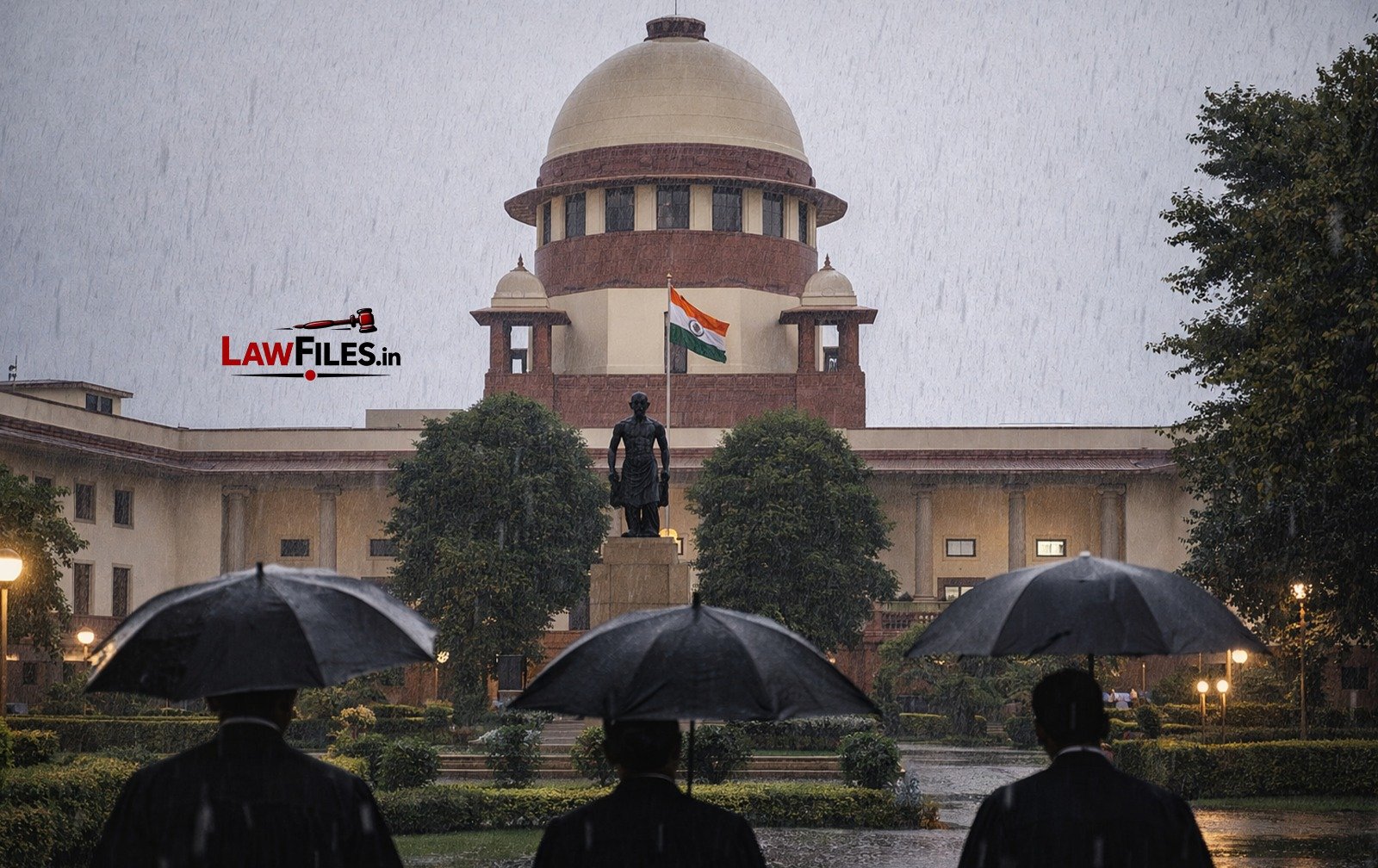
In a moment of profound constitutional significance, a nine-judge Constitution Bench of the Supreme Court of India has commenced hearings in the long-pending Sabarimala reference, marking a decisive shift from a temple-entry dispute to a foundational examination of religious freedom, equality, and judicial review.
The proceedings, which resumed after years of dormancy, are poised to redefine the contours of Articles 25 and 26 of the Constitution, potentially reshaping the jurisprudence governing the intersection of faith and fundamental rights. The Sabarimala controversy traces its origins to the 2018 judgment that permitted entry of women of all age groups into the Sabarimala temple, striking down the traditional exclusion of women aged 10–50. However, subsequent review petitions led to a 2019 reference of broader constitutional questions to a larger bench.
Now, a nine-judge bench led by Chief Justice Justice Surya Kant, along with Justices including Justice B.V. Nagarathna and others, has taken up the matter not to revisit the correctness of the 2018 ruling directly, but to answer larger constitutional questions that transcend Sabarimala itself.
At the heart of the proceedings lie seven far-reaching constitutional issues, including the scope of religious freedom under Article 25. The interplay between individual rights and denominational autonomy under Article 26 is necessary to decide whether religious practices are subject to constitutional morality. The extent of judicial review over “essential religious practices” includes the question whether outsiders can challenge religious customs through PILs
These questions collectively transform the case into a constitutional adjudication of unprecedented breadth, extending beyond Hindu religious practices to potentially impact multiple faiths and traditions. A central issue emerging during the hearing is the continued validity of the “essential religious practices” (ERP) test, a judicially evolved doctrine used to determine which religious practices merit constitutional protection.
The Solicitor General, appearing for the Union, has argued that courts should not determine what constitutes an essential religious practice, contending that such inquiries fall outside judicial competence and are better left to the legislature.
This challenge, if accepted, could significantly curtail judicial intervention in religious matters, altering decades of constitutional jurisprudence.
The hearing has also witnessed pointed observations from the Bench on gender-based exclusion. Justice Justice B.V. Nagarathna raised critical concerns regarding the logic of exclusion tied to menstrual status, remarking that the notion of treating women as “untouchable” for certain days cannot be constitutionally sustained.
This observation revives the equality debate under Article 14 (Equality before law), Article 15 (Non-discrimination) and Article 17 (Abolition of untouchability). The Court’s engagement indicates that gender justice remains central to the constitutional inquiry, even as the bench frames broader doctrinal principles.
The Sabarimala reference is no longer confined to a single temple dispute. It now encompasses a wider set of cases involving entry rights of women in mosques, religious identity issues in inter-faith marriages. Practices such as excommunication in religious communities. This consolidation underscores that the Court is attempting to evolve a uniform constitutional standard governing religion and individual rights across faiths.
The proceedings reflect a deeper constitutional tension how far can courts intervene in matters of faith without infringing religious autonomy? On one hand, the Constitution guarantees freedom of religion; on the other, it subjects such freedom to public order, morality, health, and other fundamental rights. The present hearing seeks to clarify whether “morality” refers to societal morality or constitutional morality, a distinction that could decisively influence outcomes in future cases.
The implications of the case are far-reaching. It may redefine the scope of judicial review in religious matters. It could recalibrate the balance between individual rights and collective religious freedoms. It may also determine whether constitutional morality overrides religious traditions. Given its potential to impact multiple religious practices across India, the case is being viewed as one of the most consequential constitutional hearings in recent years.
The revival of the Sabarimala reference before a nine-judge bench marks a critical moment in India’s constitutional evolution. What began as a dispute over temple entry has now matured into a comprehensive judicial inquiry into the nature of religious freedom, equality, and constitutional governance.
As the Supreme Court of India navigates these complex questions, its eventual ruling will likely shape the trajectory of faith-based rights and constitutional interpretation for decades to come determining not only what the Constitution permits, but how it reconciles tradition with transformative justice.
