


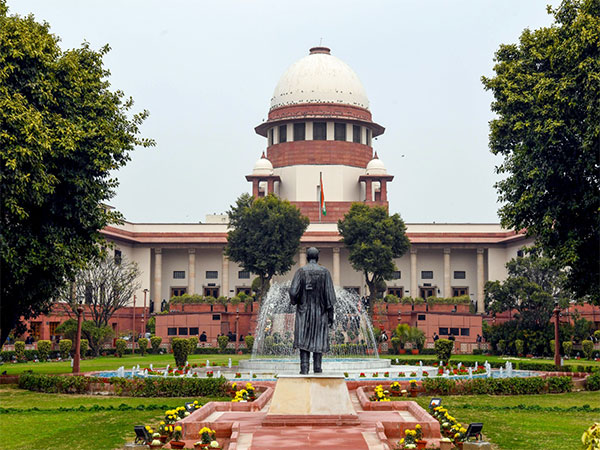
New Delhi, 5 March 2026: In a rare and extraordinary move highlighting concerns over judicial delays, the Supreme Court of India has transferred a set of criminal revision petitions pending before the Allahabad High Court to itself after noting that the High Court had reserved judgment nearly six years ago without delivering a verdict. The apex court said such prolonged inaction had the potential to infringe the litigants’ fundamental rights and warranted exceptional intervention.
The case arose from a petition filed before the Supreme Court complaining that the Allahabad High Court had reserved orders in three criminal revision petitions in 2020 but had not pronounced any judgment since then. The matters were connected to proceedings stemming from a 1994 murder case, where the trial and subsequent appellate process had already stretched over decades.
Faced with the extraordinary delay, the Supreme Court invoked Article 139A of the Constitution of India, a provision that empowers the Court to transfer cases from High Courts to itself when circumstances require. The bench observed that while the apex court ordinarily does not entertain petitions under Article 32 merely seeking directions regarding listing or disposal of matters in High Courts, the present case was exceptional because the continued delay had effectively stalled the course of justice.
The Supreme Court underscored that judicial delays in pronouncing reserved judgments can severely affect litigants’ rights and undermine public confidence in the justice system. The Court noted that the petitions had remained pending for years after arguments were completed, leaving the parties in a state of legal uncertainty.
In view of this situation, the bench ordered that the criminal revision petitions be withdrawn from the Allahabad High Court and transferred to the Supreme Court itself, where they will now be heard and decided.
The issue of delayed pronouncement of judgments is not new in Indian jurisprudence. In the landmark decision of Anil Rai v. State of Bihar (2001), the Supreme Court laid down guidelines stating that judgments should ordinarily be delivered within a reasonable time after arguments conclude, and if delays occur, parties may seek administrative or judicial remedies.
Subsequent rulings and administrative directions have reiterated that if judgments remain reserved for prolonged periods, courts must take corrective measures including reassignment of cases or monitoring mechanisms to prevent miscarriage of justice.
Legal commentators have long warned that delayed judgments can undermine one of the foundational principles of justice the maxim “justice delayed is justice denied.” Courts themselves have recognised that prolonged uncertainty not only burdens litigants but also disrupts the criminal justice process, especially in cases where appeals or revisions affect liberty and criminal liability.
The Supreme Court has previously expressed concern about delayed verdicts across courts and has periodically directed High Courts to track and report cases where judgments remain reserved for extended periods.
The decision to transfer cases from a High Court to the Supreme Court is rare and constitutionally significant, reflecting the Court’s willingness to intervene where procedural stagnation threatens the fairness of the judicial process. By assuming jurisdiction over the delayed matters, the Supreme Court signaled that institutional accountability and timely justice are essential components of the rule of law.
The order is likely to reignite discussion within the legal community about the need for stricter timelines and administrative monitoring mechanisms for reserved judgments, particularly in High Courts dealing with heavy caseloads.
The Supreme Court’s intervention serves as a stark reminder that judicial delays cannot be allowed to indefinitely suspend litigants’ rights. By transferring the long-pending matters to itself, the apex court has sought to restore momentum in a case that had effectively remained frozen for years reaffirming that the justice system must deliver not only correct outcomes but also timely decisions.
