


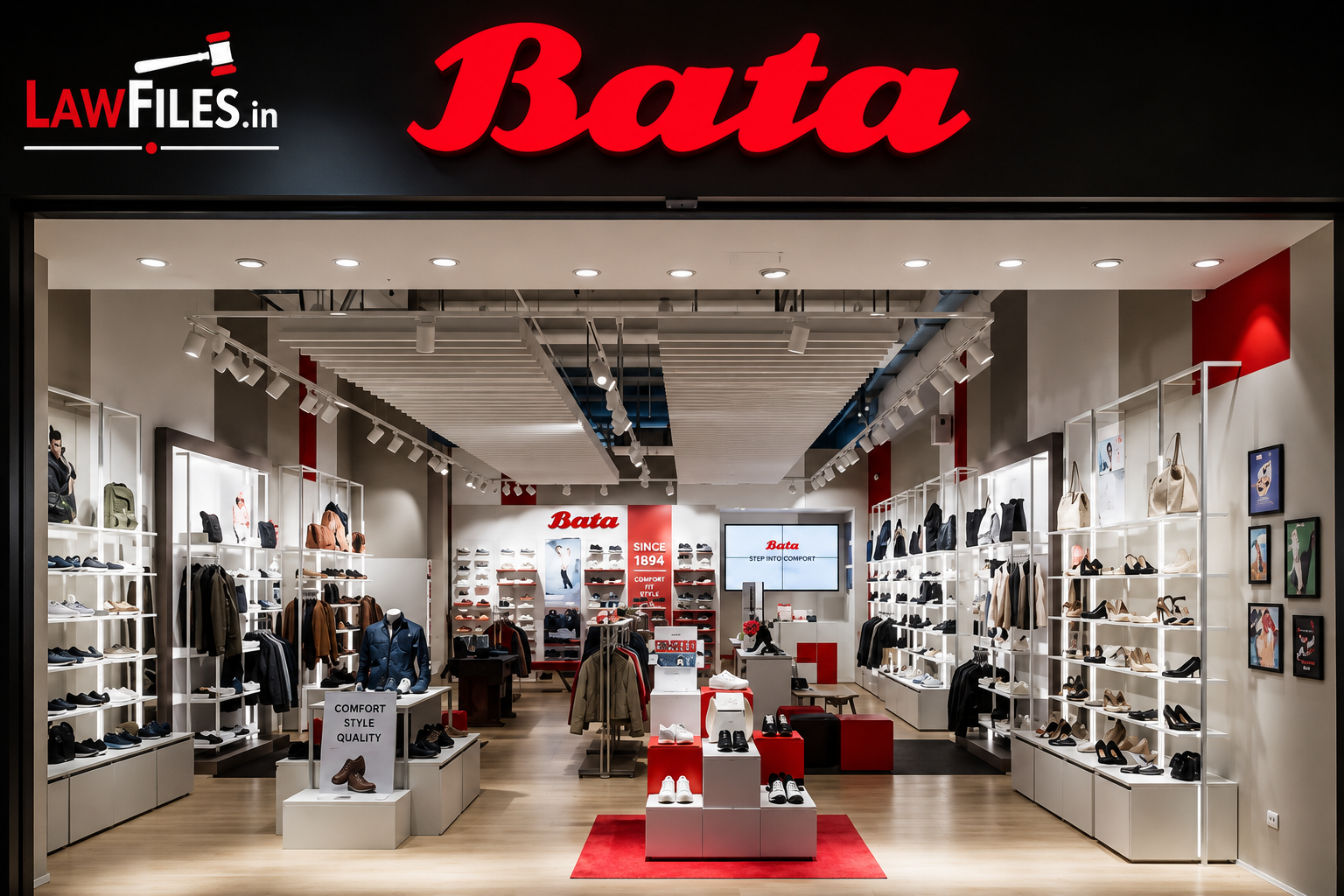
In a ruling that extends far beyond the nominal price of a paper carry bag, the South Delhi District Consumer Disputes Redressal Commission has once again reaffirmed a fundamental principle of modern consumer jurisprudence that a consumer’s consent is meaningful only when it is informed. Holding Bata India Ltd. liable for deficiency in service and unfair trade practice, the Commission directed the footwear retailer to pay ₹10,000 towards compensation and litigation expenses after finding that the company had charged a customer ₹6 for a plain paper carry bag without prominently informing customers in advance that such a charge would be levied. While the Commission did not hold that retailers are legally bound to provide every carry bag free of cost, it made an equally significant distinction: charging for a carry bag is permissible only when the consumer has prior knowledge of the charge and a genuine opportunity to make an informed decision.
The complaint arose after a customer purchased a pair of shoes from a Bata outlet for ₹1,499 in May 2023. Upon reaching the billing counter, she was informed that an additional ₹6 would be charged for a plain paper carry bag required to carry the purchased footwear. According to the complainant, no notice, display board or signage anywhere inside the store indicated that carry bags were chargeable. She objected to the additional charge and questioned the rationale behind asking a customer to pay extra merely to carry goods already purchased from the store. The complaint further alleged that the sales staff behaved discourteously, leaving her with little practical option but to pay the additional amount. She thereafter approached the Consumer Commission alleging deficiency in service and unfair trade practice under the Consumer Protection Act, 2019.
Before the Commission, Bata defended its policy by contending that the paper carry bag was not branded, contained the mandatory declarations under the Legal Metrology regime and bore a sticker indicating its price. The company submitted that the carry bag constituted a separate product sold only after obtaining the customer’s oral consent. Bata further argued that it had adopted this policy pursuant to environmental considerations and in line with judicial observations distinguishing plain paper bags from branded promotional bags. The retailer also produced photographs from certain stores showing display boards informing consumers that carry bags were chargeable.
The Commission, however, carefully distinguished between the legality of charging for a plain carry bag and the legality of the manner in which the charge was imposed. Examining the photographs produced by the complainant, the Commission found that there was no prominent display inside the concerned store informing consumers that they would have to pay separately for the carry bag or that they should bring their own reusable bags if they wished to avoid the charge. The absence of prior disclosure deprived the consumer of an informed choice before completing the purchase. It was this failure not the mere act of charging ₹6 that constituted the deficiency in service.
The Commission observed that if a retailer intends to levy a separate charge for an unbranded paper carry bag, the customer must be informed before reaching the billing counter. Only then can the consumer decide whether to purchase the bag, carry an alternative reusable bag or make other arrangements. Information disclosed only after the purchase decision has effectively been made cannot be treated as informed consent because the consumer is placed in a position where refusal becomes largely impractical.
This distinction represents one of the most important aspects of the judgment. The Commission expressly rejected the broader argument that every retailer is legally obliged to provide paper carry bags free of cost. Instead, it relied upon the evolving jurisprudence of the National Consumer Disputes Redressal Commission (NCDRC), which has recognised that plain, non-promotional carry bags may legitimately be sold separately, provided the customer is informed beforehand through prominent notices and the option of declining the bag remains genuine.
The ruling is firmly rooted in the philosophy underlying the Consumer Protection Act, 2019, which recognises that consumers possess not merely contractual rights but also statutory rights relating to information, choice, transparency and fair dealing. One of the primary objectives of consumer law is to eliminate informational asymmetry between businesses and consumers. Commercial entities routinely possess superior bargaining power, pricing information and product knowledge. The law therefore requires sellers to disclose material facts that may influence purchasing decisions. Hidden charges imposed only at the point of billing undermine that objective because they prevent consumers from making informed economic choices.
From a constitutional perspective, the judgment also reflects the broader jurisprudential evolution of the “right to know” within Indian law. Although most frequently discussed in the context of governance and transparency, the right to receive accurate and timely information has increasingly found recognition in consumer jurisprudence. In commercial transactions, meaningful consent depends upon adequate disclosure. A consumer cannot meaningfully exercise freedom of choice if significant components of the transaction remain undisclosed until the final stage of payment.
The controversy surrounding carry bag charges has generated extensive litigation across India over the past decade. Earlier consumer fora frequently held that retailers engaging customers to carry bags bearing the retailer’s own logo or promotional material were effectively compelling consumers to become unpaid advertising agents. In such cases, several fora concluded that charging separately for branded bags constituted an unfair trade practice because the retailer simultaneously obtained advertising value while recovering the cost from the consumer. Decisions involving Bata, Westside and other retail chains repeatedly criticised this practice.
Over time, however, consumer jurisprudence has evolved. Courts and consumer commissions have increasingly recognised a distinction between branded promotional bags and plain, non-branded paper bags supplied primarily for environmental compliance. This shift reflects the growing influence of environmental policy, particularly following restrictions on single-use plastics and the encouragement of reusable or biodegradable packaging. The legal issue therefore no longer centres solely upon whether retailers may charge for carry bags, but upon how those charges are communicated to consumers.
The present judgment demonstrates this evolution with considerable clarity. The Commission accepted Bata’s submission that the carry bag supplied in the present case was plain and did not carry promotional branding. Nevertheless, it held the retailer liable because the information regarding additional charges was not prominently displayed at the relevant store, notwithstanding the company’s broader policy or displays at other outlets. This emphasises an important compliance principle: corporate policy alone is insufficient if implementation at the retail level fails to meet legal standards.
The decision also illustrates the expanding scope of the concept of unfair trade practice under consumer law. Traditionally, unfair trade practices were associated with false advertising, deceptive representations or misleading claims regarding products. Contemporary consumer jurisprudence increasingly recognises that opaque pricing practices may also constitute unfair trade practices where they prevent consumers from making informed purchasing decisions. Hidden convenience fees, undisclosed service charges, surprise packaging costs and other post-selection charges are now examined through the same legal lens.
Another noteworthy aspect concerns the practical realities of retail commerce. The Commission acknowledged that consumers purchasing footwear cannot reasonably be expected to leave the store carrying shoes in their hands. By waiting until the billing counter to disclose the additional charge, the retailer effectively reduced the consumer’s ability to refuse the bag. This reasoning aligns with the broader doctrine that consent obtained under circumstances where meaningful alternatives are absent cannot readily be characterised as fully voluntary.
The judgment further highlights the interaction between consumer protection law and environmental policy. Retailers frequently justify carry bag charges by referring to environmental concerns and governmental efforts to discourage disposable packaging. While these objectives are undoubtedly legitimate, the Commission implicitly recognised that environmental responsibility cannot justify inadequate disclosure. Sustainable commercial practices must coexist with consumer rights rather than displace them. Encouraging consumers to carry reusable bags is entirely consistent with consumer protection provided they receive prior notice enabling them to make that choice.
From a compliance perspective, the ruling carries important implications for the retail industry. Businesses charging separately for paper or cloth carry bags should ensure that clear, prominent and conspicuous notices are displayed at store entrances, product display areas and billing counters. Pricing policies should be communicated before consumers complete their shopping rather than being revealed only during payment. Staff training also becomes critical because inconsistent implementation across different outlets may expose businesses to consumer claims notwithstanding otherwise lawful corporate policies.
The decision also reinforces the growing willingness of consumer fora to scrutinise even low-value disputes where broader questions of consumer rights arise. Although the monetary value of the disputed carry bag was merely ₹6, the Commission awarded compensation because the issue concerned a recurring commercial practice capable of affecting thousands of consumers. Modern consumer law recognises that the gravity of a legal principle cannot always be measured by the financial value of the individual transaction.
Ultimately, the Delhi Consumer Commission’s ruling is not a judgment against retailers charging for plain carry bags. Rather, it is a judgment in favour of transparency, informed consent and consumer autonomy. It affirms that businesses remain free to adopt commercially and environmentally sustainable pricing models, but those models must be implemented honestly and openly. Hidden charges introduced only at the billing counter undermine the very foundation of consumer choice.
The broader constitutional message emerging from the decision is equally significant. Markets function efficiently only when information flows freely between buyers and sellers. Consumer protection legislation therefore seeks not to eliminate commercial freedom but to ensure that commercial freedom is exercised fairly. By holding Bata accountable for failing to prominently disclose its carry bag charges before purchase, the Commission has reaffirmed a principle that resonates across all sectors of commerce: a consumer’s choice is genuine only when it is informed, and transparency remains the first obligation of every responsible marketplace.
