


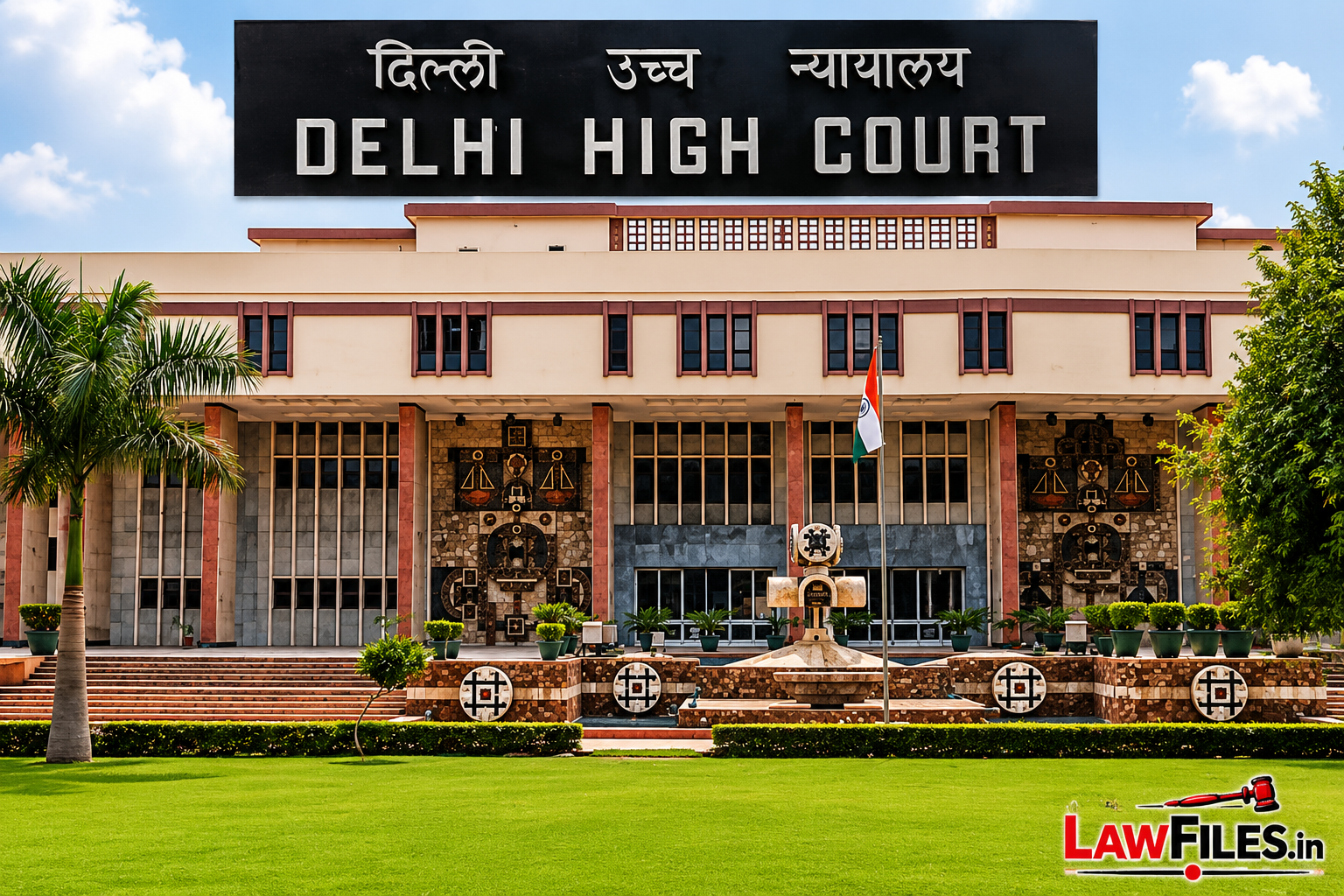
In one of the largest conferments of senior designation in recent years, the Delhi High Court has approved the designation of 85 advocates as Senior Advocates, including 11 women lawyers, reaffirming the institution’s continuing effort to recognise professional excellence while strengthening the leadership of the Bar. The decision was approved by the Full Court following recommendations made by the Permanent Committee constituted under the Delhi High Court’s Senior Advocate Designation Rules. The Committee comprised Chief Justice Devendra Kumar Upadhyaya, Justice V. Kameswar Rao, Justice Nitin Wasudeo Sambre, Delhi High Court Bar Association President N. Hariharan, Additional Solicitor General Chetan Sharma and Senior Advocate Sanjay Jain. The conferment marks a significant institutional exercise because designation as a Senior Advocate represents one of the highest professional recognitions available to advocates under Indian law and carries implications extending beyond individual achievement to the broader quality of advocacy before constitutional courts.
Among the 85 advocates designated, 11 women advocates have been conferred senior status, namely Sangeeta Bharti, Abha Malhotra, Maneesha Dhir, Mamta Tiwari, Amrit Kaur, Beenashaw Nanda, Warisha Farasat, Rajeshwari N., Anju Bhattacharya, Kanika Aghotri and Manali Singhal. Although women continue to remain numerically underrepresented among Senior Advocates across the country, the inclusion of eleven women in a single designation exercise represents a notable step towards improving gender diversity within the senior ranks of the legal profession. The development reflects the gradual transformation of the Indian Bar, where increasing numbers of women advocates are assuming leadership roles in constitutional, commercial, criminal, arbitration and public law litigation.
The designation of a Senior Advocate is governed by Section 16 of the Advocates Act, 1961, which classifies advocates into two categories—Senior Advocates and other advocates. Unlike ordinary professional advancement, senior designation is not conferred upon application alone but represents formal judicial recognition that an advocate has attained exceptional standing by virtue of legal ability, specialised knowledge, integrity, advocacy skills and contribution to the administration of justice. Once designated, Senior Advocates occupy a distinct position within the legal profession and are expected to maintain the highest standards of professional ethics while adhering to restrictions prescribed under the Bar Council of India Rules, including limitations on direct client engagement and drafting of pleadings except through an Advocate-on-Record or instructing advocate.
The present exercise also reflects the profound transformation that the process of senior designation has undergone over the past decade. Earlier, conferment of the Senior gown was often criticised for lacking transparency, with allegations that subjective considerations occasionally overshadowed objective evaluation. Responding to these concerns, the Supreme Court in Indira Jaising v. Supreme Court of India (2017) fundamentally restructured the designation process by directing every High Court and the Supreme Court to adopt transparent and objective criteria. The judgment mandated constitution of Permanent Committees, publication of applications, invitation of suggestions from the Bar, structured evaluation through a point-based system and reasoned decision-making by the Full Court. The Delhi High Court thereafter framed comprehensive High Court of Delhi Designation of Senior Advocate Rules, 2024, further institutionalising the selection mechanism.
The significance of these reforms extends beyond procedural fairness. By introducing measurable evaluation parameters such as reported judgments argued by the candidate, years of practice, publications, contribution to legal education, pro bono work, domain expertise and interview performance, the designation process has increasingly shifted towards objective professional assessment rather than purely subjective institutional perception. This evolution has enhanced public confidence in one of the judiciary’s most important professional recognition mechanisms while simultaneously preserving judicial discretion in assessing advocacy excellence.
From a constitutional perspective, the office of a Senior Advocate occupies a unique position within India’s justice delivery system. Although the designation carries neither judicial authority nor administrative powers, Senior Advocates frequently appear in matters involving constitutional interpretation, commercial disputes, arbitration, taxation, criminal appeals and questions of substantial public importance. Their specialised advocacy assists constitutional courts in resolving complex legal questions, thereby contributing to the development of Indian jurisprudence. Consequently, the designation serves not merely as an honour bestowed upon individual practitioners but also as an institutional investment in the quality of legal assistance available to courts.
The Delhi High Court’s decision is particularly significant because of the Court’s position as one of India’s foremost constitutional and commercial courts. The High Court regularly adjudicates matters involving constitutional governance, intellectual property, competition law, international arbitration, insolvency, taxation, telecommunications, media law and complex commercial litigation. The increasing sophistication of these disputes requires a Bar possessing deep subject-matter expertise capable of assisting the Court in navigating intricate questions of law. Expansion of the pool of Senior Advocates therefore strengthens the institutional capacity of the Court itself by ensuring availability of experienced counsel across specialised branches of legal practice.
The inclusion of eleven women among the designated advocates also merits separate consideration within the larger discourse on gender representation in the legal profession. While women today constitute a substantial proportion of young practitioners entering the Bar, their representation at the highest levels of litigation has historically remained comparatively limited. Structural barriers relating to mentorship, briefing patterns, visibility before constitutional courts and access to complex commercial litigation have often affected career progression. Increasing designation of women as Senior Advocates therefore carries symbolic as well as institutional significance by recognising professional merit while encouraging greater diversity within the leadership of the Bar.
The decision also illustrates the continuing evolution of judicial institutions towards greater transparency and accountability. The Supreme Court’s intervention in Indira Jaising fundamentally altered the philosophy underlying senior designation by recognising that institutional credibility depends not merely upon fairness but also upon demonstrable transparency. Publication of objective criteria, structured evaluation and participation of representatives from the Bar ensure that the designation process commands greater legitimacy among practitioners and the public alike.
From the standpoint of professional ethics, designation as a Senior Advocate also carries heightened responsibilities. Senior Advocates are expected to uphold the dignity of the profession, mentor younger members of the Bar, assist courts with fairness and independence, and contribute to the development of legal scholarship. Courts have repeatedly observed that the Senior gown is not merely a professional distinction but a continuing obligation to maintain exemplary standards of advocacy, courtesy and ethical conduct. The conferment therefore signifies recognition of past achievement as well as expectation of future institutional leadership.
Another noteworthy aspect is the broader impact upon the administration of justice. High-quality advocacy plays a critical role in constitutional adjudication, particularly where courts confront novel questions involving technology, artificial intelligence, insolvency, constitutional rights, environmental regulation and international commerce. Recognition of advocates possessing specialised expertise contributes directly to improving judicial decision-making by ensuring that courts receive comprehensive assistance on increasingly complex legal issues.
The Delhi High Court’s decision also reflects an institutional continuity with earlier reforms introduced by the Court. Over the past several years, the High Court has modernised its designation process by removing procedural barriers, refining eligibility criteria and strengthening evaluation mechanisms. These reforms collectively demonstrate the judiciary’s commitment to ensuring that professional recognition remains firmly anchored in merit, integrity and demonstrable contribution to the legal system rather than seniority alone.
Ultimately, the conferment of Senior designation upon 85 advocates represents more than a ceremonial recognition of individual professional success. It reflects the judiciary’s continuing effort to strengthen the institutional quality of advocacy, promote transparency in professional recognition and encourage excellence within the legal profession. As constitutional litigation becomes increasingly specialised and legally sophisticated, the role of Senior Advocates assumes even greater significance in assisting courts on complex questions of law. The Delhi High Court’s latest designation exercise therefore stands as an important institutional milestone, reinforcing the enduring principle that excellence at the Bar remains indispensable to the effective administration of justice and the continued evolution of India’s constitutional democracy.
