


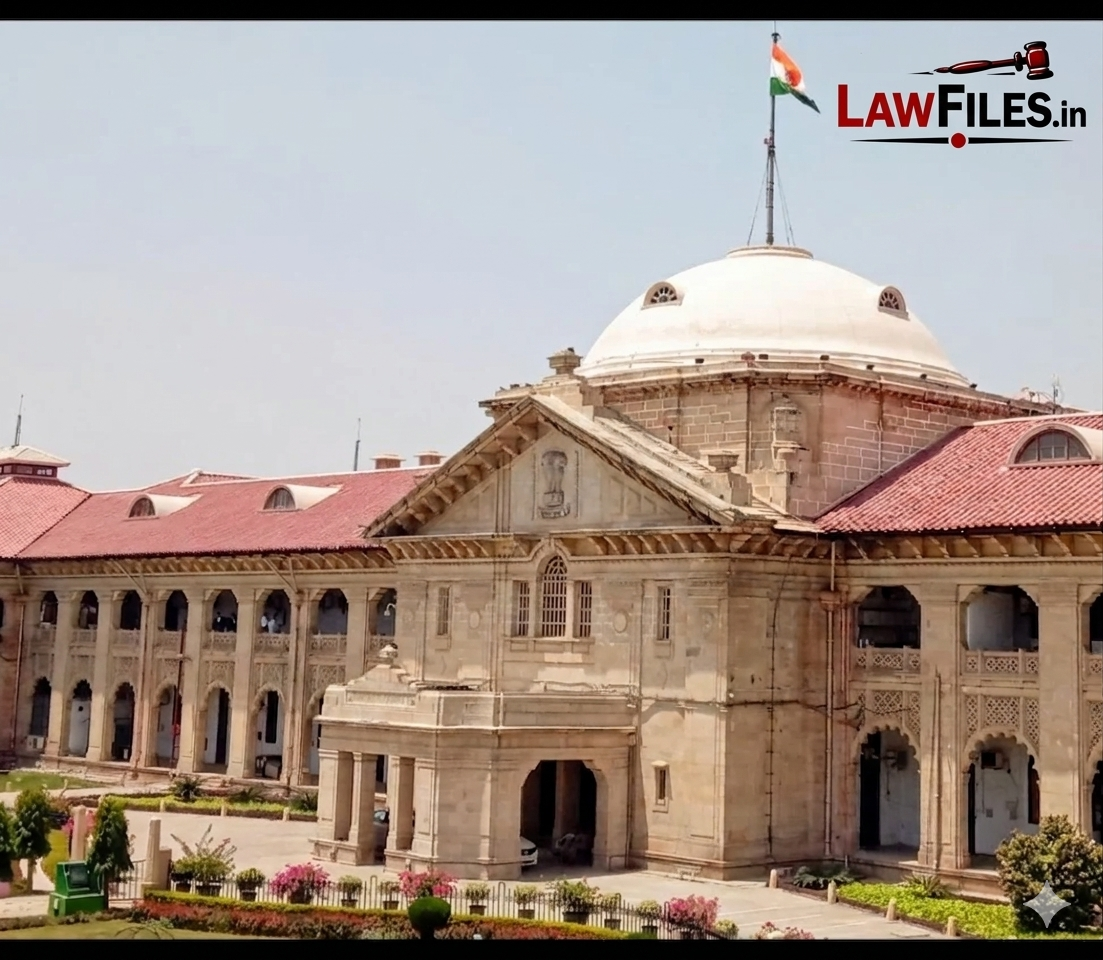
The filing of a Public Interest Litigation before the Lucknow Bench of the Allahabad High Court seeking a Central Bureau of Investigation (CBI) probe into the alleged embezzlement of donations at the Shri Ram Janmabhoomi Mandir has triggered a significant legal debate extending far beyond the immediate allegations. While the controversy presently concerns claims of financial irregularities involving cash, gold, silver, and other offerings made by devotees, the litigation ultimately raises a deeper constitutional question: to what extent can institutions managing large-scale public religious donations remain insulated from judicial scrutiny and standards of financial accountability?
The PIL, reportedly filed by advocate Mohit Ashok, seeks directions for an independent and court-monitored investigation by the CBI into allegations of misappropriation of temple donations. The petition also seeks a forensic audit of the accounts maintained by the Shri Ram Janmabhoomi Teerth Kshetra Trust through the Comptroller and Auditor General of India (CAG). According to reports, the petitioner has argued that the scale of donations received by the temple and the public nature of the trust’s activities warrant a higher degree of transparency than that ordinarily expected from private religious institutions.
The controversy emerged after reports surfaced alleging discrepancies in the handling of donations received from devotees. Media reports referred to allegations involving certain trust employees, claims regarding irregularities in cash accounting procedures, and assertions that preliminary recoveries had been made during police investigations. The petition relies heavily upon these reports and contends that an independent probe is necessary to ascertain whether the allegations have any factual basis. Importantly, the allegations remain subject to investigation, and no judicial finding regarding wrongdoing has yet been recorded.
The Shri Ram Janmabhoomi Mandir occupies a unique legal and constitutional position. Unlike an ordinary religious institution, the temple emerged from one of the most consequential constitutional and property disputes in Indian legal history. Following the Supreme Court’s decision in M. Siddiq (D) Through LRs v. Mahant Suresh Das (2019), the Union Government established the Shri Ram Janmabhoomi Teerth Kshetra Trust for the construction and management of the temple. Consequently, questions concerning the governance of the Trust inevitably attract heightened public attention because the institution derives legitimacy from a process deeply intertwined with constitutional adjudication and governmental action.
From a legal perspective, the PIL presents a fascinating question concerning the nature of fiduciary responsibility in religious trusts. Indian courts have consistently held that trustees managing religious or charitable institutions occupy fiduciary positions and are obligated to administer trust property in a transparent and accountable manner. Where donations are received from millions of devotees across the country, the fiduciary obligation assumes even greater significance because the trustees effectively become custodians of public faith and public contributions. The present litigation therefore raises questions not merely about financial accounting but about the broader legal obligations attached to custodianship of religious institutions.
A particularly noteworthy aspect of the petition is its demand for a CAG audit. Traditionally, the Comptroller and Auditor General examines the accounts of government departments and public authorities. Whether a trust established for temple administration can be subjected to such scrutiny may become an important issue before the Court. The petitioner appears to argue that the scale of public involvement, the origins of the trust, and the nature of donations justify extraordinary oversight measures. If accepted, such arguments could significantly influence the future regulation of major religious institutions across India.
The matter has also acquired significance because parallel developments have already prompted governmental action. In response to allegations concerning donation management, the Uttar Pradesh Government constituted a Special Investigation Team (SIT) to examine the claims and trace the alleged money trail. The existence of an ongoing SIT investigation may become a critical factor in determining whether judicial intervention through a CBI probe is presently warranted. Courts have generally held that a CBI investigation should not be ordered routinely and is justified only in exceptional circumstances where existing investigative mechanisms appear inadequate or compromised.
The jurisprudence governing court-ordered CBI investigations provides an important backdrop to the dispute. The Supreme Court has repeatedly held that directing a CBI inquiry is an extraordinary power to be exercised sparingly. Decisions such as State of West Bengal v. Committee for Protection of Democratic Rights emphasize that courts must be satisfied that the circumstances warrant transfer of investigation from local authorities to a central agency. Consequently, the Allahabad High Court’s assessment is likely to focus not only on the allegations themselves but also on whether existing investigative processes are capable of conducting a fair and effective inquiry.
Beyond the immediate allegations, the PIL reflects a broader trend in Indian public law: the increasing demand for accountability from institutions that manage substantial public resources, irrespective of whether those institutions are governmental, charitable, or religious. In recent years, courts have witnessed growing litigation involving temple administration, charitable trusts, religious endowments, and public donations. The common thread running through these disputes is the principle that public confidence depends upon institutional transparency.
Newspaper analyses of the controversy have highlighted another important dimension—the impact of such allegations on public faith. Religious institutions derive their legitimacy not merely from legal structures but also from the confidence reposed in them by devotees. Allegations concerning financial irregularities, even before they are proven, can affect public perception and generate demands for greater institutional openness. From this perspective, transparency may ultimately serve the interests of the institution itself by preserving public trust.
At the same time, constitutional principles require caution against equating allegations with guilt. The mere filing of a PIL or emergence of media reports cannot substitute a legally established finding of wrongdoing. Courts are therefore expected to balance two competing considerations: the need for accountability and the presumption that institutions and individuals remain innocent unless evidence demonstrates otherwise. The High Court’s eventual approach is likely to reflect this delicate balance.
For legal practitioners, the case offers important insights into the law governing public interest litigation, religious trusts, fiduciary accountability, and court-monitored investigations. It also illustrates the circumstances under which courts may be called upon to examine the governance structures of institutions that, while not strictly governmental, exercise significant public influence.
For law students and scholars, the dispute presents an opportunity to study the intersection of constitutional law, trust law, administrative accountability, and religious governance. The proceedings may ultimately contribute to the evolving jurisprudence on how transparency obligations apply to institutions managing large-scale public donations.
Ultimately, the significance of the Allahabad High Court proceedings extends beyond the question of whether any financial irregularity occurred. The litigation touches upon a foundational principle of democratic governance: institutions entrusted with public confidence must remain accountable to the public they serve. Whether the Court ultimately orders a CBI investigation, relies upon the ongoing SIT inquiry, or adopts another course altogether, the case is likely to become an important reference point in the continuing dialogue between faith, institutional autonomy, and legal accountability in contemporary India.
