


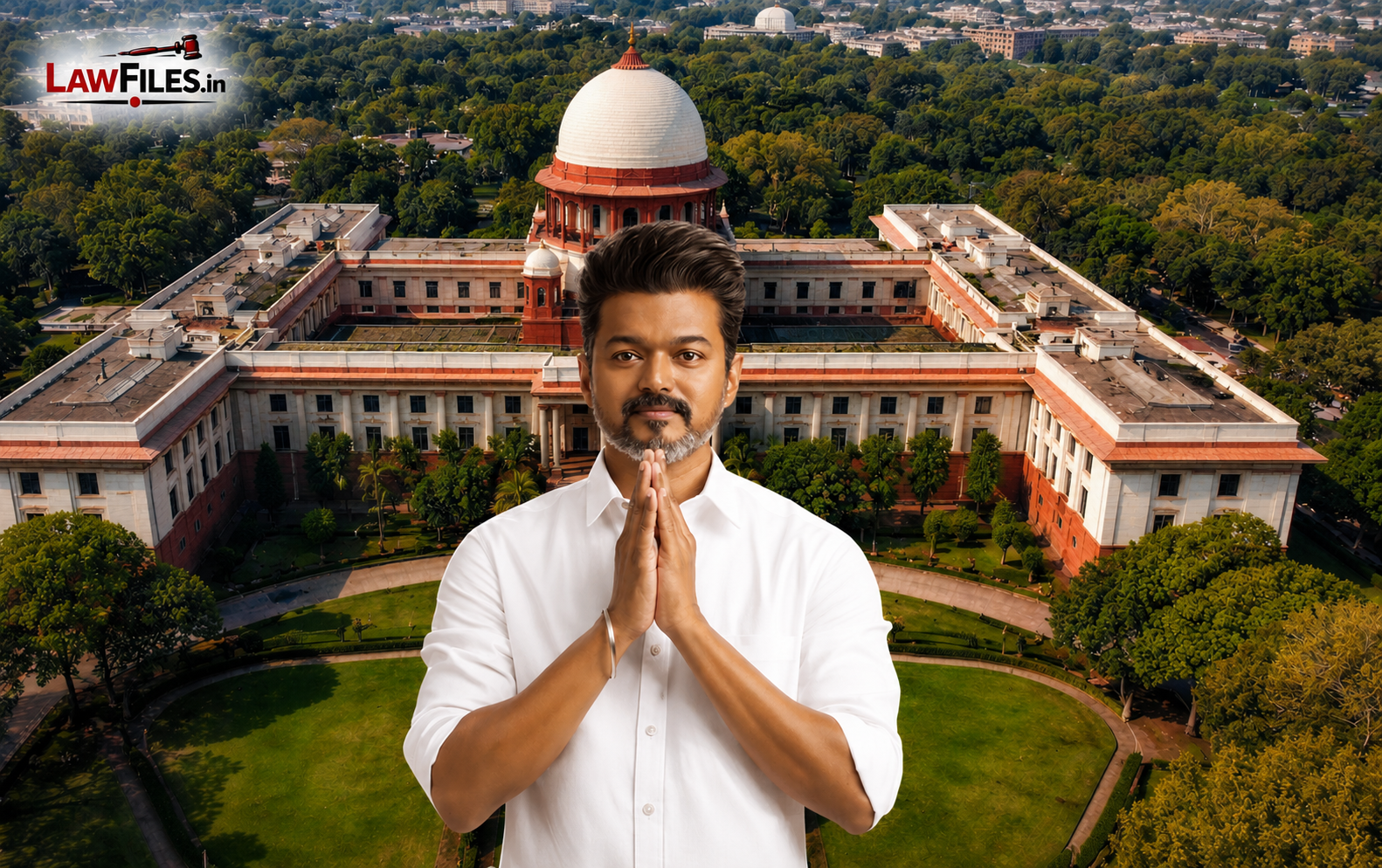
The political atmosphere in Tamil Nadu has heated up significantly following a new legal challenge in the highest court of the country. A Public Interest Litigation (PIL) has been filed in the Supreme Court of India, demanding a full-scale investigation by the Central Bureau of Investigation (CBI) into the recent assembly floor test. The petition alleges that massive corruption, bribery, and political horse-trading took place behind the scenes to help the newly formed government secure its majority.
The entire argument circles back to the major assembly vote that took place on May 13, 2026. During this session, the newly appointed Chief Minister.
The legal battle started, in Tamil Nadu assembly elections. The state assembly has a total of 234 seats, which means any political party needs at least 118 seats to prove it has a majority and form a stable government on its own. Joseph Vijay and his newly formed party, the Tamilaga Vettri Kazhagam (TVK), performed incredibly well by winning 108 seats. While this made them the single largest party in the state, they were still short by 10 seats. Because they did not have a clear majority on their own, the party had to look for outside help from other political factions to cross the finish line.
A major legal crisis erupted when the Madras High Court stepped in and temporarily banned a key TVK lawmaker, R. Sreenivasa Sethupathi, from voting. Sethupathi had won his seat by the narrowest margin possible—just one single vote against a rival candidate from the DMK. Because the runner-up challenged the election results in court, the judge ruled that Sethupathi could not participate in the upcoming trust vote. This sudden decision stripped the TVK of a crucial vote on the literal eve of the election, leaving them with an incredibly tight safety margin and forcing the party into a desperate, zero-hour scramble to secure more backing.
Despite the intense pressure and the loss of a lawmaker, the trust vote took place on May 13, 2026. When the final votes were counted, the TVK government didn’t just survive—they won by a landslide. Chief Minister Vijay secured 144 votes in his favor, while only 22 lawmakers voted against him. The party managed this massive leap by gathering support from a mixed group of political allies, including the Congress, Left parties, VCK, and IUML. However, what caught everyone’s attention was that they also secured the support of 12 opposition and rebel MLAs who backed the TVK overnight. The incredibly fast and sudden way these rival politicians changed their minds is exactly what triggered suspicion across the state, leading to the current Supreme Court case.
The lawsuit takes a direct and aggressive swing at how the new government secured its majority, explicitly claiming that core democratic values were completely thrown out the window during the high-stakes assembly floor test. According to the petition, the TVK managed to pass its confidence motion not by political consensus, but through widespread financial corruption. The plea alleges that the ruling party systematically organized the distribution of “huge amounts of money” and handed over massive cash payouts directly to certain lawmakers from rival camps to buy off their political loyalty. By painting a picture of an election day influenced by cash rather than conscience, the petitioner argues that the floor of the assembly was essentially turned into a marketplace where votes were bought and sold to artificially lock in power.
A major pillar of the corruption claim focuses on how several opposition lawmakers chose to vote during the state proceedings. In Indian politics, parties issue a mandatory voting instruction known as a “whip,” which all their legislators are legally and ethically obligated to follow. The Supreme Court petition highlights a highly controversial move: multiple politicians from opposing factions openly turned their backs on their own party high commands on the day of the vote. Even though these lawmakers did not officially leave their original teams to join the ruling TVK government, they blatantly violated their parties’ explicit whip directions. The plea asserts that these individuals chose to defy their leadership solely because they were enticed by illegal monetary rewards and alternative benefits, further undermining the fairness of the legislative process.
Beyond the immediate exchange of paper money and cash envelopes, the lawsuit reveals a deeper, structural level of political bribery that allegedly took place behind closed doors. The petition asserts that a calculated “quid pro quo” deal was struck between the TVK leadership and the shifting opposition lawmakers. This means that in exchange for their crucial votes on the assembly floor, these defecting politicians were secretly promised highly lucrative government construction projects and development contract works. By offering them access to profitable state-funded business opportunities, the ruling faction allegedly created an ongoing financial incentive for these lawmakers to compromise their political positions. The petitioner points to these long-term business promises as definitive proof that the entire trust vote victory was manufactured through unlawful, corrupt favors.
The primary relief sought by the petitioner is an immediate, full scale investigation by the Central Bureau of Investigation (CBI) into the financial and political dealings surrounding the floor test. The plea argues that because local state police and investigative bodies operate under the influence of the current ruling state government, an independent federal agency is absolutely necessary to uncover the truth. The petitioner is asking the Supreme Court to personally monitor this CBI probe, which would force investigators to submit regular progress reports directly to the judges. The goal of this requested investigation is to map out the entire money trail, expose the secret backroom deals, and identify every single individual involved in organizing the alleged bribery and horse-trading.
Going a step further than a standard investigation, the lawsuit makes a heavy-hitting demand for the total dissolution of the current Tamil Nadu Legislative Assembly. The petitioner argues that the entire trust vote process was so thoroughly corrupted and illegal that the current government has completely lost its democratic legitimacy. According to the plea, allowing an assembly built on purchased majorities to continue functioning is a direct violation of the fundamental rights of the citizens, who voted for an entirely different mandate. By calling for the immediate dismantling of the state legislature, the petition aims to strip the TVK administration of its lawmaking powers, arguing that a clean slate is the only way to restore democratic integrity to the state.
To ensure that the state is not left in a chaotic power vacuum while the corruption is being investigated, the plea explicitly requests the immediate imposition of President’s Rule in Tamil Nadu. Under this extreme constitutional measure, the local state government would be completely suspended, and governing authority would be transferred directly to the Governor and the central government in New Delhi. The petitioner insists that those accused of buying their way into power cannot be trusted to run the state administration while facing a major corruption inquiry. The lawsuit argues that temporary federal rule is the only safe option to keep Tamil Nadu running smoothly, safely, and neutrally until the CBI finishes its work and the truth is fully brought to light.
The petition, filed by K.K. Ramesh, a resident of Madurai, claims that democratic principles were completely thrown out the window. According to the plea, the TVK managed to secure the crucial signatures and support of 12 opposition MLAs almost overnight through unlawful means. The petitioner alleges that “huge amounts of money” were distributed directly to several legislators to buy their votes. Furthermore, the plea points out that multiple opposition MLAs went against their own parties’ official whip directions during the voting process because they were allegedly enticed by these financial benefits and promises of lucrative government contracts.
Given the severity of these allegations, the petitioner argues that the entire trust vote process was completely fraudulent, illegal, and stripped of democratic legitimacy. To challenge the validity of the floor test, the lawsuit was deliberately filed under Article 32 of the Constitution, which allows citizens to approach the country’s highest court directly when fundamental democratic rights are threatened. Through this plea, the Supreme Court is being urged to take immediate, extraordinary action by overriding local authorities and handing the case over to the Central Bureau of Investigation (CBI) for a strict, court-monitored probe. However, the petition goes far beyond a standard investigation; it demands that the judiciary completely dissolve the current Tamil Nadu Legislative Assembly, declaring it permanently tainted by corruption. To prevent those accused of horse-trading from exercising any political authority while the truth is being uncovered, the plea asks the Supreme Court to step in and recommend the immediate imposition of President’s Rule, effectively freezing local governance and transferring total control of the state directly to the central government.
