


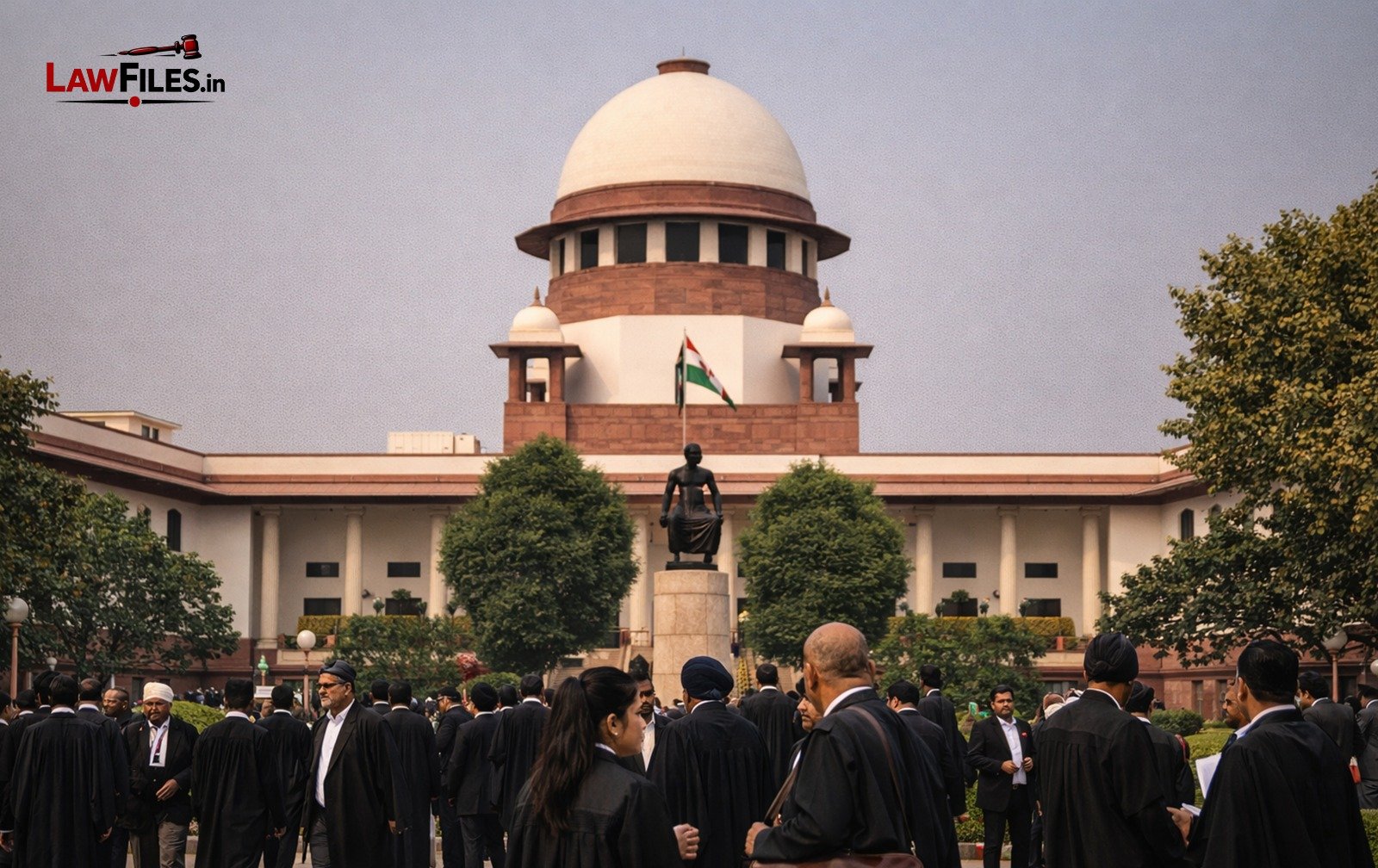
In a legally significant and intellectually consequential observation, the Supreme Court has recommended that the Law Commission of India revisit Section 306 of the Indian Succession Act, 1925, to examine whether tortious claims against a deceased wrongdoer should survive and continue against his or her legal heirs. The Court’s remarks reopen a long-standing debate rooted in colonial common law principles, compelling renewed scrutiny of whether Indian civil liability jurisprudence remains compatible with contemporary constitutional notions of fairness, accountability, and victim compensation.
The recommendation emerged in a case involving allegations of medical negligence where the doctor accused of negligent conduct died during the pendency of proceedings. His legal heirs challenged continuation of liability against them, arguing that under Section 306 of the Indian Succession Act, certain personal causes of action extinguish upon the death of the alleged wrongdoer. The Supreme Court, while ultimately affirming continuation of pecuniary claims against the deceased’s estate, observed that the statutory framework itself may require reconsideration in light of modern legal realities.
At the centre of the controversy lies the old common law maxim actio personalis moritur cum persona a personal action dies with the person. Historically inherited from English common law, the doctrine essentially means that certain personal tort claims cannot survive either against or in favour of a deceased person. Traditionally, causes of action involving defamation, assault, or personal injuries were treated as extinguished upon death because such claims were viewed as intrinsically personal in character.
Section 306 of the Indian Succession Act substantially incorporates this principle into Indian statutory law. The provision generally allows rights and liabilities to survive to legal representatives, but specifically carves out exceptions for claims involving defamation, assault, or other personal injuries not causing death, as well as situations where relief becomes meaningless after death. The present dispute required the Supreme Court to interpret the extent and rationale of these exceptions.
The Bench comprising Justice J.K. Maheshwari and Justice Atul S. Chandurkar ultimately held that claims involving pecuniary consequences arising from alleged negligence could continue against the deceased’s estate. However, while interpreting Section 306, the Court simultaneously acknowledged a deeper policy problem within the statutory framework itself. Referring to developments in English law where tortious liabilities increasingly survive against estates of deceased wrongdoers, the Court suggested that India may need to reconsider whether the colonial-era rule remains justified in contemporary society.
The Court observed that the issue is best examined through institutional and policy-oriented debate rather than isolated judicial interpretation. Consequently, it recommended that the Law Commission evaluate whether Section 306 should be expanded to permit broader survival of tortious claims against legal representatives, particularly in cases involving pecuniary losses caused by negligent or wrongful acts of deceased persons.
Critically analysed, the recommendation raises profound jurisprudential questions regarding the nature and purpose of civil liability itself. Tort law fundamentally aims to compensate victims for harm caused by wrongful conduct. However, if liability automatically extinguishes upon the wrongdoer’s death, victims may be denied meaningful compensation despite having suffered demonstrable loss. The Supreme Court’s observations therefore challenge the fairness of a legal principle that may arbitrarily defeat legitimate civil claims solely because the wrongdoer died before adjudication concluded.
The issue becomes especially significant in professional negligence cases such as medical malpractice, where litigation often extends for years. If claims automatically terminate upon the death of a doctor, lawyer, engineer, or other professional accused of negligence, victims and their families may effectively lose access to compensation despite substantial pecuniary loss or suffering. The Court appears to have recognised that such outcomes may conflict with evolving notions of corrective justice and accountability.
Historically, the doctrine that personal actions die with the person emerged in a very different legal and social context. Early common law systems viewed many tort claims as closely tied to personal honour or bodily integrity rather than economic compensation. Over time, however, modern legal systems increasingly shifted toward recognising tort law as a mechanism for financial redress and loss allocation. Consequently, several jurisdictions gradually diluted or abolished the rigid common law rule.
English law itself underwent major transformation in this area through legislative reforms permitting survival of many tortious causes of action against estates. The Supreme Court’s reference to English developments therefore reflects awareness that Indian law continues to retain aspects of a doctrine that even its originating jurisdiction substantially modified long ago.
The judgment also reflects the judiciary’s broader willingness to question colonial-era legal principles surviving within Indian statutory frameworks. Over recent decades, constitutional courts increasingly scrutinised inherited doctrines that appear inconsistent with modern constitutional values of fairness, equality, and substantive justice. The present recommendation forms part of this larger judicial trend toward re-evaluating archaic legal assumptions within contemporary democratic constitutionalism.
Another important dimension concerns the relationship between inheritance and liability. Traditionally, legal heirs inherit assets of a deceased person subject to certain obligations and liabilities attached to the estate. The Supreme Court clarified that any surviving liability would extend only to the extent of property inherited by legal representatives and not beyond it. This observation is significant because it attempts to balance victim compensation with fairness toward heirs who themselves committed no wrongdoing.
The Court’s reasoning therefore does not advocate imposing unlimited personal liability upon family members. Rather, it questions whether estates benefiting from inherited assets should remain insulated from legitimate civil claims arising from wrongful acts committed by the deceased during his or her lifetime.
Critically, the recommendation may have far-reaching implications beyond medical negligence. Expansion of Section 306 could potentially affect multiple categories of civil litigation including professional negligence, motor accident compensation, consumer disputes, financial fraud claims, and other tortious actions involving pecuniary loss. Consequently, any legislative reform in this area would likely reshape significant portions of Indian civil liability jurisprudence.
The issue additionally intersects with constitutional principles under Article 14 concerning arbitrariness and equal treatment. Victims of negligence or wrongful conduct may presently face vastly different legal outcomes depending purely upon whether the alleged wrongdoer survives litigation proceedings. Such distinctions may increasingly appear difficult to justify within a legal system committed to substantive fairness and rationality.
At another level, the Court’s observations reveal growing judicial recognition that procedural or technical doctrines should not defeat substantive justice. Indian constitutional jurisprudence over recent decades repeatedly emphasised that legal processes must facilitate fair adjudication rather than create arbitrary barriers to legitimate claims. The present recommendation extends this philosophy into the domain of succession and tort law.
The judgment also illustrates the evolving role of the Supreme Court itself in shaping broader legal reform discourse. Increasingly, constitutional courts do not merely adjudicate disputes but also identify structural gaps within statutory frameworks requiring legislative reconsideration. By recommending Law Commission examination, the Court effectively initiated a conversation concerning the future direction of Indian civil liability law.
Interestingly, the recommendation comes at a time when the Indian judiciary itself is undergoing institutional expansion and modernisation. Recently, the sanctioned strength of the Supreme Court was increased from 34 to 38 judges through a presidential ordinance aimed at strengthening adjudicatory capacity amid rising constitutional and commercial litigation.
The historical growth of the Supreme Court mirrors the expanding complexity of India’s legal system. When the Constitution came into force in 1950, the Court consisted of only eight judges including the Chief Justice of India. Over subsequent decades, Parliament repeatedly increased judicial strength through amendments in 1956, 1960, 1977, 1986, 2009, 2019, and most recently in 2026 as constitutional governance, commercial disputes, and civil litigation became increasingly complex.
Today, the Supreme Court routinely adjudicates questions involving constitutional morality, digital governance, taxation, anti-terror laws, succession, and evolving civil liability doctrines. The present recommendation concerning Section 306 demonstrates how the Court increasingly engages not merely with statutory interpretation but with larger jurisprudential and policy concerns regarding fairness within the legal system.
Another notable aspect of the judgment lies in its implicit recognition that law must evolve alongside social and economic realities. In modern economies, professional services, insurance structures, and institutional liabilities have significantly transformed how harm and compensation operate. A rigid nineteenth-century rule extinguishing claims upon death may therefore no longer adequately reflect contemporary expectations regarding accountability and victim protection.
The recommendation may also revive broader academic debate concerning codification of tort law in India. Unlike several jurisdictions, India continues to rely heavily upon judge-made tort principles derived from common law traditions rather than a comprehensive statutory tort code. Questions regarding survival of actions, damages, negligence standards, and liability therefore frequently depend upon fragmented judicial interpretation and colonial-era doctrines.
Ultimately, the Supreme Court’s suggestion that Section 306 of the Indian Succession Act requires reconsideration represents more than a technical observation on succession law. It signals judicial willingness to re-examine inherited legal doctrines through the lens of modern constitutional values and contemporary civil justice principles. By questioning whether tortious liability should automatically disappear with the wrongdoer’s death, the Court has reopened a fundamental debate concerning accountability, victim compensation, and the future direction of Indian civil liability jurisprudence.
